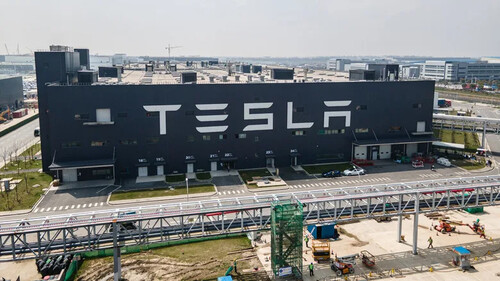
Image Credit: Neeraj Kumar Singal/LinkedIn.In September 2020, Tesla rolled out its Battery Day presentation with the kind of confidence usually reserved for moonshots and military hardware. The company claimed its new 4680 battery cell would deliver five times the energy, six times the power, and 16 percent more driving range than existing designs.The cylindrical cell, named after its dimensions, 46mm wide and 80mm tall, was pitched as the foundation for cheaper EVs, longer range, and faster charging. For Tesla fans, the reveal felt like another “iPhone moment” for the auto industry.Elon Musk even tied the technology to a future $25,000 Tesla that could push electric vehicles into true mass-market territory. Now, nearly six years later, real-world data is painting a less glamorous picture.AdvertisementAdvertisementIndependent testing and certification figures show Tesla’s in-house 4680 batteries are underperforming compared with the supplier-made battery packs they were supposed to replace. Energy density trails Panasonic’s older 2170 cells by roughly 13 percent.European versions of the updated Model Y equipped with Tesla’s 4680 packs also show lower range figures than earlier LG-powered versions of the same vehicle. That is not how revolutions are supposed to look.Silicon Valley Has Seen This Movie BeforeThe story carries echoes of past technology overpromises. In the late 1990s, fuel cells were expected to wipe out internal combustion engines.Image Credit: Tesla.A decade later, hydrogen hype faded as infrastructure costs ballooned. Around the same period, Segway scooters were pitched as devices that would redesign cities. Instead, they became tourist attractions and mall security tools.AdvertisementAdvertisementBattery history itself is full of these sharp turns. General Motors spent billions on nickel-metal hydride batteries for the EV1 before lithium-ion chemistry took over the industry. Early Nissan Leaf owners discovered how brutally heat could degrade first-generation battery packs in Arizona summers.Tesla’s challenge is different. The company already dominates EV sales and helped force legacy automakers into electrification. That makes the 4680 stumble more significant. This was not a startup experiment. It was meant to become Tesla’s manufacturing backbone.The company’s acquisition of Maxwell Technologies in 2019 was central to that ambition. Maxwell’s dry-electrode manufacturing process promised cheaper and simpler battery production. Musk later admitted the process proved far harder than expected.That admission is contextual because battery manufacturing is notoriously unforgiving. Tiny defects inside cells can create heat buildup, shorter lifespan, or inconsistent charging behavior. Researchers have long warned that scaling lithium-ion technology from lab breakthroughs to industrial production can take years longer than executives anticipate.The Charging Problem Is Becoming Harder to IgnoreThe most painful issue for owners may not even be range. It is charging. Tests cited by Electrek and Autoblog show 4680-equipped Model Ys losing charging speed aggressively once the battery passes roughly one-third capacity.AdvertisementAdvertisementIn some cases, charging sessions from 10 to 80 percent stretched beyond 40 minutes. That’s noticeably slower than older Tesla packs using Panasonic cells, and it creates an awkward contradiction.Tesla built its brand partly on convenience. Faster Supercharging helped neutralize range anxiety and gave the company a major edge over rivals. Now some lower-cost lithium iron phosphate batteries from Chinese suppliers are posting better real-world charging performance than Tesla’s flagship cell design.Online reaction has been fierce. Reddit discussions surrounding the issue have become crowded with frustrated owners and skeptics questioning whether Tesla prioritized manufacturing cost savings over customer-facing performance.Why The Stakes Extend Beyond One BatteryThe timing could not be worse for Tesla. Chinese battery giants such as CATL and BYD are pushing sodium-ion and semi-solid-state technologies into production, while traditional automakers are steadily improving their supply chains.AdvertisementAdvertisementMeanwhile, Tesla’s future product plans are deeply tied to the 4680 architecture. The Cybertruck, Tesla Semi, and next-generation low-cost platform all rely on variations of the same battery strategy.That leaves Tesla in an uncomfortable spot. The company that once embarrassed the automotive establishment now risks being outpaced in the very technology it helped popularize.For years, Tesla treated battery engineering as its secret weapon. The 4680 program was supposed to widen that advantage. Instead, it has exposed how brutally difficult battery chemistry becomes when theory meets highways, charging stations, heat cycles, and impatient drivers.Sources: electrek.coAdvertisementAdvertisementIf you want more stories like this, follow Guessing Headlights on Yahoo so you don’t miss what’s coming next.