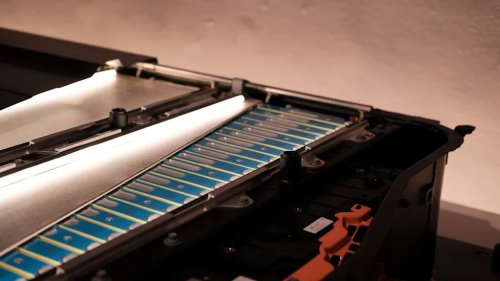
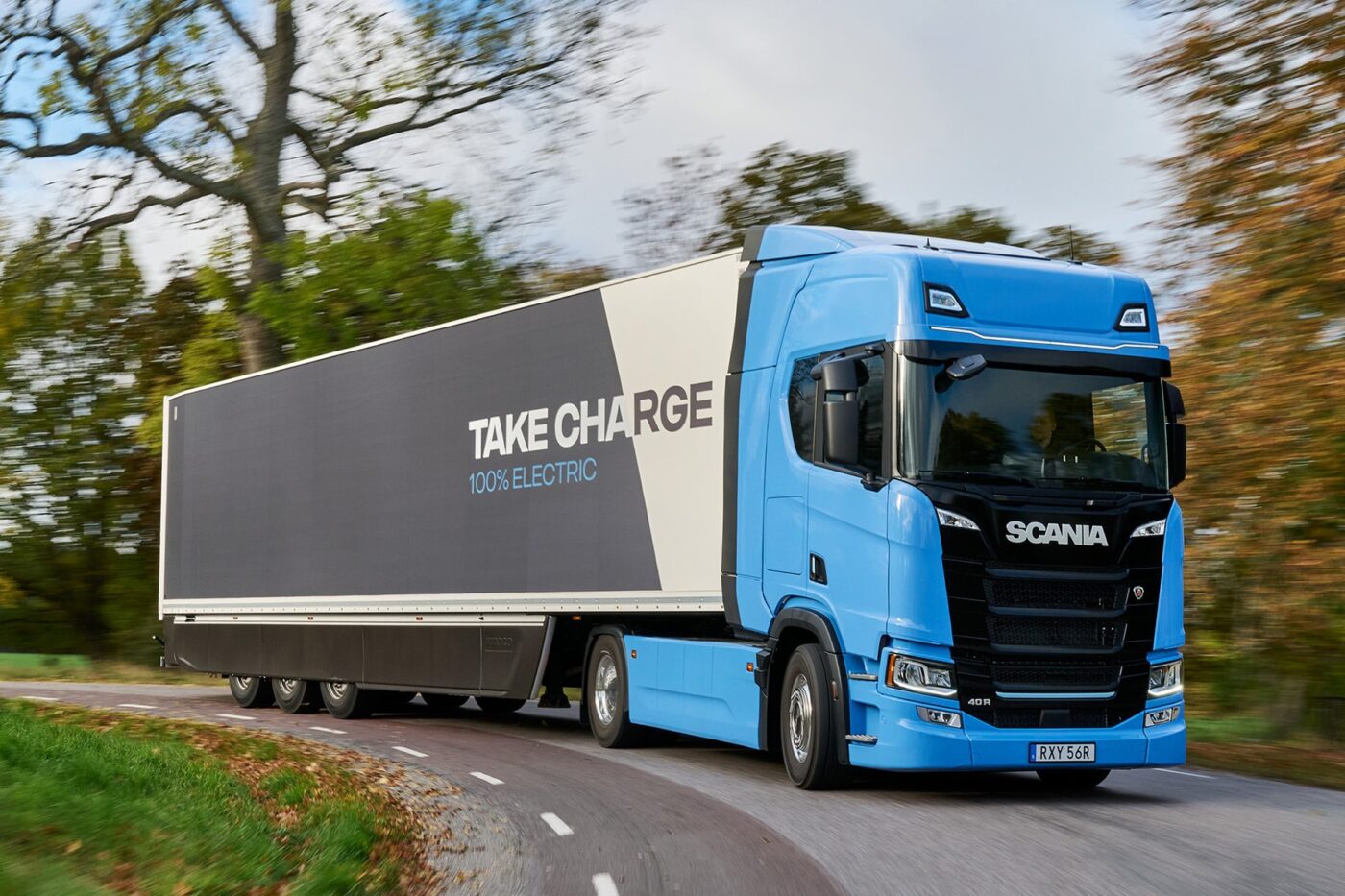
Image: ScaniaScania originally planned to equip its battery-electric trucks with cells from Northvolt and target an energy capacity of up to 728 kWh. However, after Northvolt’s insolvency disrupted these plans, Scania switched to batteries from sister company MAN. MAN assembles the NMC batteries — with a gross capacity of 89 kWh and a net capacity of 80 kWh — at its Nuremberg plant and uses them across its battery-electric truck and long-distance bus portfolio.Using this technology, Scania currently offers battery-electric trucks with up to six battery packs, resulting in a maximum capacity of 534 kWh gross or 480 kWh net, similar to MAN. In this configuration, the manufacturers often cite a range of 500 kilometres, although the actual figure can vary significantly depending on the truck variant, body type and driving profile.Scania had previously announced plans to introduce a new battery pack under the cab, enabling net battery options of 400 and 560 kWh. This configuration involves installing five or seven packs, respectively. The Swedish manufacturer has now confirmed that these options are available for order.Scania also states that, in some applications, the new maximum configuration can achieve ranges of ‘well beyond 800 km on a single charge.’ This leap is substantial, likely because these figures are not conservative range estimates but rather maximum values determined under optimal conditions—more on this below.Regarding the new 400 kWh battery option, Scania specifies that it offers a range of 350 kilometres while maintaining the maximum legally permissible payload. This is made possible by the additional two tonnes allowed for electric vehicles under EU regulations compared to diesel trucks. Scania highlights that this battery variant enables electric fleets to operate ‘without it reducing the payload’ compared to diesel vehicles.Scania emphasises that the new option ‘enables operators to optimise battery capacity for the vast majority of transport needs. Heavy loads, advanced bodywork and long-haulage transport assignments can now be electrified with improved operational precision.’ The positioning of the batteries can be adjusted to accommodate a wide range of body types and applications.To contextualise the claimed range of 800 kilometres or more, a comparison with sister company MAN is helpful. The German manufacturer recently stated that its eTGX truck can achieve ranges of up to 570 kilometres for standard semi-trailer applications and up to 830 kilometres for swap-body vehicles in solo operation. The fine print reveals that these are internally determined figures, defined by MAN as maximum ‘up-to values’ that are achievable under ‘optimal conditions'(e.g., 20 °C ambient temperature, 60 % payload). These values are not based on officially certified range figures.Since MAN’s internal maximum figure of 830 kilometres refers to a 6×2 chassis with seven battery packs, this provides a direct comparison to Scania. While Scania does not explicitly state that its own figures are internally determined, given the shared technology platform within the Traton Group, anything else would be surprising.In any case, range is not the most critical factor for truck drivers, given mandatory rest breaks. Scania also highlights this point while announcing that the MCS charging option announced last year is now available for order for its battery-electric trucks. However, the manufacturer has not specified when these vehicles will be delivered. As is well known, the MCS charging standard is not yet finalised.Tobias Ejderhamn, Global Manager of Transformation & New Business at Scania, emphasised that the new battery module under the cab optimises the placement of truck batteries to benefit transport companies, stating: “With the right battery set-up, MCS and a good charging strategy […] our customers can easily solve the range versus payload question.”“Scania can now offer transport operators a comprehensive path to electrification and sustainable transport; one that is reliable, seamless, and commercially viable,” added Lars Gustafsson, Head of Solutions Management, Scania. “With these two new additions to customers’ armoury it has become even easier and more attractive to make the change to electric transport.”Scania tests bidirectional charging using MCSIndependently of this, Scania recently demonstrated a bidirectional MCS charging process with one of its battery-electric trucks. During the vehicle-to-grid (V2G) feed-in, the system achieved up to 1,000 amperes and 750 kW.“Electric trucks will not only consume electricity, they can also become an active resource in the energy system,” Ejderhamn commented. “This shift transforms the fleet operator’s role from solely providing transport services to also offering energy flexibility.”According to Scania, the tested system enables secure real-time communication between the truck, the charging station, and energy management systems. This allows charging and discharging processes to be dynamically controlled—aligned with transport requirements and current grid conditions.“What makes this significant is not only the bi-directional energy flow itself, but the ability to combine megawatt charging with intelligent energy management,” added Yorben Muller, Product Manager Charging, Traton. “To our knowledge, this is one of the world’s first demonstrations of vehicle-to-grid functionality using MCS for heavy commercial vehicles. The truck, charger and energy system can communicate with each other in real time, creating the foundation for heavy electric vehicles to become active and controllable assets in the energy system.”Just a few weeks ago, the SPIRIT-E project partners demonstrated bidirectional charging with a MAN truck, feeding 325 kW back into the grid. However, this involved a CCS charging process, not MCS.scania.com (battery pack), scania.com (bidirectional charging), man.eu (range eTGX)



















 +77 others