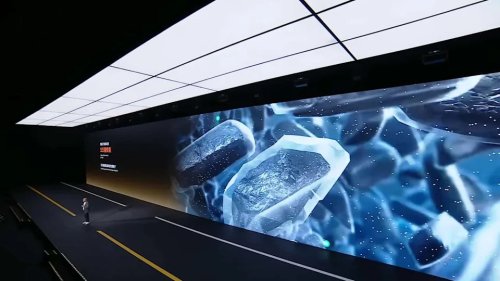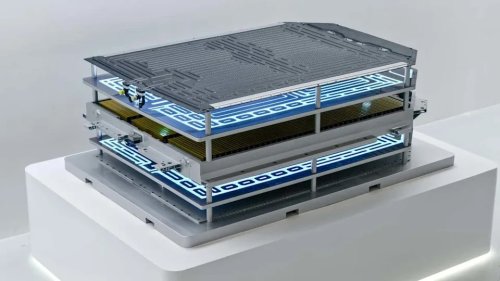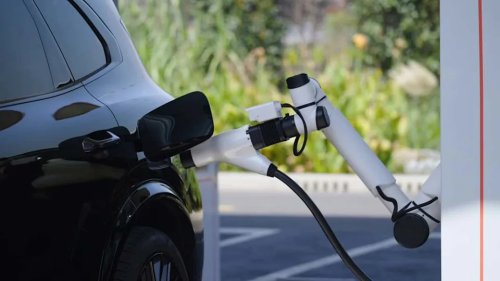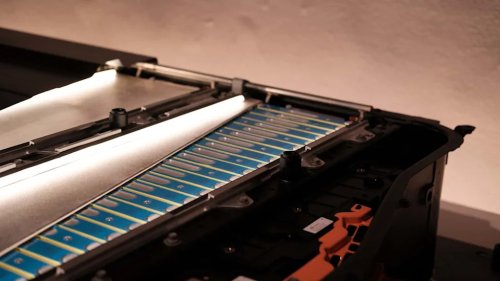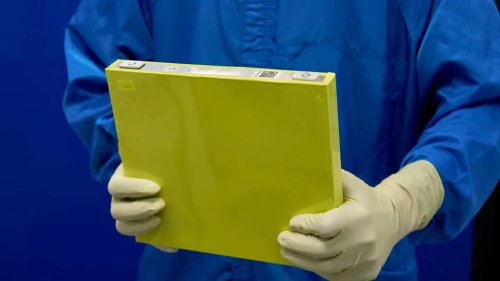



















BYD’s new patent describes a dual-electrolyte cathode structure combining halide and sulfide materials. Image rendered by CNC Understand China EV’s Market Real-time notifications when critical EV data is released All important data in one place 2,000,000+ data points Become a member BYD has published a patent application describing a cathode composite structure for solid-state batteries, revealing another material approach under research as the automaker develops next-generation battery technology, according to Sina. The China National Intellectual Property Administration (CNIPA) published patent application CN202510126712.6 (publication number CN122474592A) on July 28, 2026. The filing describes a cathode structure combining halide and sulfide electrolytes, but it does not confirm production plans, vehicle application, or commercial availability. New BYD patent combines halide and sulfide electrolyte materials According to the CNIPA filing, BYD’s patent covers a cathode composite material and preparation method for solid-state battery applications. The design uses two electrolyte particle systems: smaller-particle halide electrolytes and larger-particle sulfide electrolytes. These materials are combined with the cathode active material to form a composite electrode structure. The approach addresses one of the key engineering challenges in all-solid-state batteries: maintaining stable contact between solid materials during repeated charging and discharging. BYD Group Chief Scientist Lian Yubo previously identified solid-solid interface stability as one of the main technical obstacles to the industrialisation of all-solid-state batteries, describing the technology as being in a “tackling stage.” The newly published filing provides details about BYD’s material design strategy, but the patent does not include production validation data or confirm testing in vehicles. Patent adds to BYD’s broader solid-state battery research The latest filing follows earlier BYD disclosures related to solid-state battery materials. In May 2026, it was revealed that BYD filed another patent covering a composite solid electrolyte membrane using inorganic solid electrolyte particles combined with a polymer electrolyte fibre network. That filing was part of a broader industry movement toward the development of sulfide-based solid-state batteries. BYD has also disclosed earlier cathode-related patents, including CN113725405A, which involves a cathode composite structure, and CN121237834A, which covers a dual-layer cathode coating design. BYD Lithium Battery CTO Sun Huajun previously stated that the cathode active material proportion in BYD’s all-solid-state battery architecture had exceeded 85%. The company has not released detailed testing conditions or performance figures associated with that statement. Patent activity provides visibility into research direction, but it does not necessarily indicate that a technology is ready for vehicle production. Solid-state battery commercialisation remains a long-term challenge The wider battery industry has increasingly focused on solid-state technology, but manufacturers have also highlighted the difficulty of moving from laboratory research to large-scale production. Previous CarNewsChina reporting noted that discussions around CATL and BYD’s solid-state battery production lines highlighted the importance of distinguishing manufacturing investments from actual commercial readiness. Battery standards and technical definitions also affect how different battery systems are classified. CATL Chairman Robin Zeng has also argued that large-scale adoption of solid-state batteries remains years away, citing manufacturing and technical challenges before the technology can reach mass-market vehicle volumes. Research led by Wu Fan at the Institute of Physics, Chinese Academy of Sciences, found that smaller sulfide electrolyte particles improved capacity retention by nearly 18 percentage points compared with larger particles under equivalent laboratory conditions. The findings provide industry context but are not measurements from BYD’s battery program. BYD’s latest CNIPA publication adds another publicly available detail about its solid-state battery research. Whether the dual-electrolyte cathode structure will progress to commercial production remains undisclosed. Most important news in your inbox. Recaps · scheduled All you need, in one email. Instant alerts · real-time Ping me when an article goes live. 0 of 27 topics selected Bundle into one email per day — instead of one email per article No spam · Unsubscribe with one click · Change settings anytime