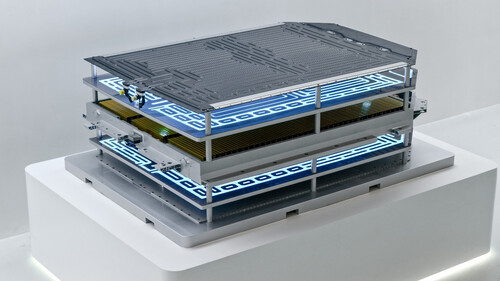
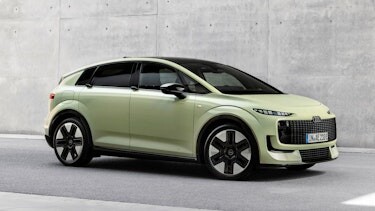
Geely Golden Brick Battery - Ultra Short SeriesThe automaker has a novel solution to slow down battery degradation. Here's what we know.Geely Auto Group's new electric vehicle battery can handle charging speeds north of a 1,000 kilowatts.Such ultra-fast charging speeds can accelerate aging in an EV battery, if not properly engineered.Geely.When it comes to fast-charging speeds, Chinese automakers are in the stratosphere, comfortably above everyone else. While 600 kilowatts is the peak we've seen from Western companies, with planned roll outs of 750 kW chargers, Chinese automakers like BYD and Geely Auto Group have already surpassed the 1,000 kW mark for passenger cars and are now locked in a battle to one-up each other.Charging EVs at such monster speeds frequently can adversely impact the long-term health of the battery. That's why battery companies try striking a balance between longevity and fast charging. Overly leaning in one direction can cause a disaster at the other end.So when Chinese juggernaut Geely Auto Group revealed its absurdly powerful 2.2 megawatt charger last week at a launch event in Ningbo, China, the automaker spent a lot of time explaining how it was managing aging on its new battery.While the charger can dispense 2.2 MW from a single gun, some high-end EVs under the Geely Auto Group will peak at around 1,100 kW. The company said it was the first in the world where two EVs can pull megawatt speeds from the same station.Jerry Gan, the CEO of Geely Auto Group, did not downplay the potential effects of megawatt charging on battery health. "We do not advocate fast-charging technologies at the expense of lifespan," Gan said. "If a battery frequently fast-charged is not maintained or repaired, its lifespan suffers irreversible decline," he added.Geely Golden Brick Battery - Ultra Short SeriesThe company's new Ultra Short Blade Battery can peak at nearly 1,100 kilowatts. In a demo, the automaker showed a Lynk & Co 10 getting charged from 10-97% in just 8 minutes and 40 seconds. That's comfortably faster than the fastest-charging EVs in the U.S., like the Lucid Gravity and the Porsche Cayenne Electric, which peak at 400 kilowatts. The upcoming Mercedes-AMT GT will peak at 600 kW. Most mass-market models in the U.S. average at around 30 minutes for a 10-80% charge.Geely said it had incorporated several technologies to prevent accelerated aging in its new battery. It even increased the new battery's warranty from eight years, 150,000 kilometers (93,205 miles) to eight years, 200,000 km (124,000 miles), as a show of confidence in its long-term health. Before diving into Geely's solutions for battery aging, it's worth understanding what causes degradation in the first place.How Fast-Charging Accelerates Battery DegradationThe automaker said aging comes down to two root causes: lithium plating and extreme temperatures. Megawatt speeds accounted for 60% of the heat generated in the battery, mainly because current pushed through the cells' internal paths. About 35% came from electrochemical reactions and the rest from what the company called "entropic" heat, the kind that comes from electrode reactions.Geely Lithium Plating And Dendrites ExplainerLithium plating is another major cause of degradation. It happens when ions flood the anode, the part of the cell where electrons travel during charging. This rush can cause some ions to accumulate on the anode's surface, as they don't get properly absorbed. Excessive flooding causes lithium dendrites, tiny spikes that grow inside a cell, which can cause short circuits and permanently damage the battery.How Did Geely Solve This Problem?Ren Xiangfei, the chief engineering scientist at Geely Auto Group, said the company made changes to the cell, the raw materials inside, the manufacturing process, and introduced a new AI-powered charger management system to prevent the battery from crossing its thermal limits."In an ideal world, the ions settle into the graphite evenly and smoothly," Xiangfei said.The Ultra Short Blade Battery cell, for starters, comes in two main sizes: 395 mm and 370 mm in length. Both are smaller than Geely's 580 mm cell and what the automaker claimed was common in the industry, around 960 mm. The smaller cell size reduces the migration path for the ions—distance traveled in simple terms—during charging and discharging. That shorter journey also lowers internal resistance and reduces heat generation.Geely 2.2 MW Smart ChargingThe company also made structural changes to both the cathode and the anode to prevent lithium plating, Xiangfei said. On the cathode, "high entropy elements" allowed widening the pathways through which the ions move from the cathode to the anode. "Like turning a single lane into a multi-lane highway," he added. The structural modifications to the graphite anode, he said, were equivalent to "building a flyover."To prevent ions from accumulating, a new "lithium pulse restoration" technology was implemented. A "micro amplitude pulse current" is injected into the anode at a specific frequency to reduce the ion accumulation at the anode surface. The process was like using a massage gun on muscles after a workout to relieve the tension, Xiangfei said.The other big cause of battery aging is heat. To manage that, an "end-to-end five-point liquid cooling system" works in harmony across several components. Those include the on-site energy storage battery, power module, charger, charging port, and the EV battery. An AI-powered system called Xingrui PowerMind predicts battery temperatures 30 seconds in advance and adjusts speeds in real time.Geely 2.2 MW Smart ChargingThe thermal management is designed to keep the battery's average temperature at 55 degrees Celsius, with a ceiling of 65 degrees Celsius. The 65C threshold is a new national standard in China that went into effect this July to prevent batteries from overheating.What Geely Isn't Telling YouAs you can probably tell by now, the automaker went all guns blazing with the new battery and charging technology. However, it's one thing to make big claims and another to have the technology truly democratized.BYD's megawatt charging speeds triggered debates this spring when a blogger claimed to have ran independent charging tests on a Fangchengbao Tai 3 electric SUV. His recorded maximum temperature of 76.42 degrees Celsius was higher than what the vehicle displayed, around 71C. He said in a social media post that BYD had reported him to the police.It could be years before we see the long term impacts of megawatt charging on battery health, since the technology only started getting commercialized at scale in China last year. However, if Geely's extended battery warranty is anything to go by, the company feels pretty confident about it. We'll see in due time if customers feel the same.It's also worth noting that degradation varies a lot depending on driving behavior, charging habits, climate, and the underlying technology itself. While some Western studies have indeed shown that fast-charging frequently accelerates battery aging, others have shown that modern EV battery tech has come a long way and can comfortably handle frequent fast-charging with minimal aging.In other words, you don't need to worry about the impact of your neighborhood Tesla Supercharger on your battery. It's also advisable to follow the manufacturer-recommended charging practices for your EV to keep the battery in the best possible shape. Use a home charger for your daily driving needs if you can, and don't shy away from a public fast-charger on longer journeys. As technology progresses, you'll have less and less to worry about.Geely's New EV Charger Is Absurdly Powerful: 2.2 MegawattsChina's Best-Selling EV Can Drift Really WellThis Chinese SUV Has Built-In Propellers So It Can Drive Across WaterThink Chinese Cars Aren't Safe? These New Crash Tests Say Otherwise