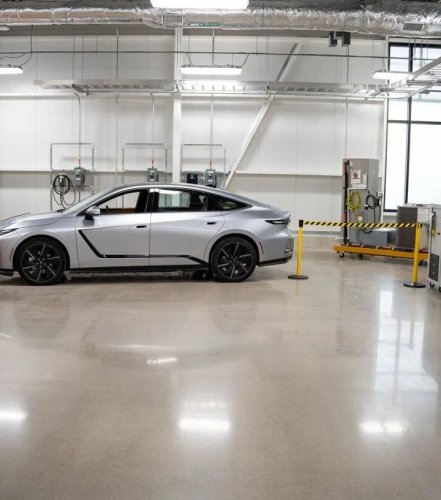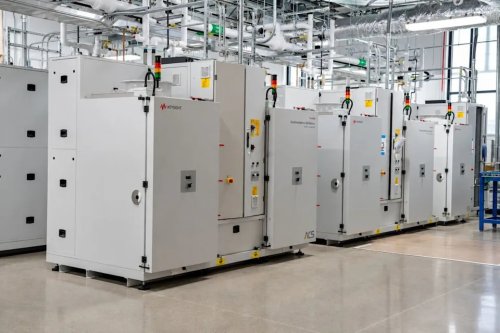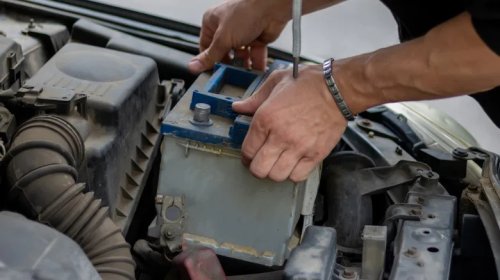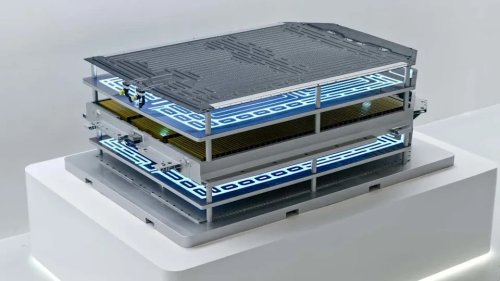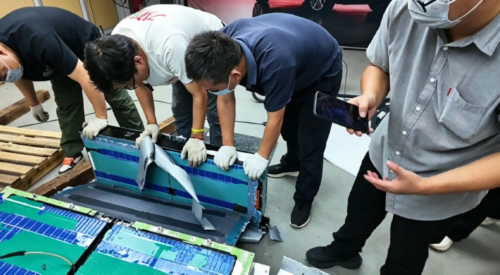
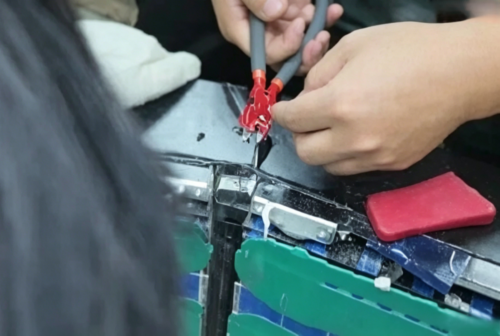
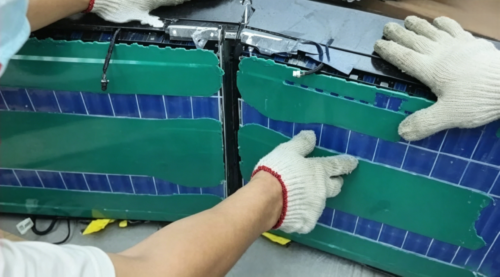



















BYD’s second-generation Blade Battery pack examined during a teardown analysis. Credit: Cai Shen Dao Understand China EV’s Market Real-time notifications when critical EV data is released All important data in one place 2,000,000+ data points Become a member BYD’s second-generation Blade Battery temperature testing dispute has escalated after automotive blogger Cai Shen Dao said the automaker filed a police report against him over his fast-charging battery tests. The development follows months of debate surrounding externally measured battery temperatures, a battery teardown, a laboratory retest, and regulatory action against Cai’s social media accounts. In a Weibo post published on July 30, Cai said BYD reported him to the Songjiang District Police Station in Shanghai. He added that he submitted hundreds of pages of test records and supporting materials to investigators. BYD and the Shanghai Songjiang police have not publicly confirmed the reported filing, its acceptance status, or whether any formal investigation has been opened. The development follows administrative action taken earlier this month by the Shenzhen Cyberspace Administration. Official summaries published by Chinese state media said regulators restricted the “Cai Shen Dao” account under China’s Qinglang campaign, citing the publication and dissemination of misleading product testing information and damage to enterprise goodwill. The measures included restrictions on posting, commenting, and account monetisation, according to Sina. Blade Battery temperature test triggered dispute The dispute began in May, when Cai livestreamed a fast-charging test of a Fangchengbao Tai 3 equipped with BYD’s second-generation Blade Battery. During the test, the vehicle was charged from 8% to 97% state of charge. Five externally mounted temperature probes recorded a peak surface temperature of 76.42°C, while the vehicle’s battery management system (BMS) displayed approximately 71.0°C. The probes recorded a maximum temperature difference of about 6.5°C, depending on placement. The measurements focused on localised external cell-surface temperatures rather than internal cell temperatures. The dispute later centred partly on whether externally measured surface readings could be directly compared with BMS temperature data, which represents vehicle monitoring information from the production battery system. The livestream measurements did not establish battery failure or thermal runaway. Cai Shen Dao commissioned an accredited Blade Battery temperature retest. Battery teardown exposed pack structure Later in May, Cai’s team conducted a destructive teardown of a second-generation Blade Battery pack after freezing it for around 40 hours. The teardown required approximately eight hours of cutting, grinding, and mechanical disassembly. According to observations published by the team, the battery pack contained 170 cells connected in series, used a grid-like reinforcement structure and direct refrigerant cooling, weighed approximately 572 kg, and achieved an estimated 73.6% pack integration efficiency. Because the process damaged structural adhesives, cooling interfaces, and protective insulation, the dismantled battery no longer represented factory-sealed operating conditions. Laboratory retest recorded similar surface temperature readings After his social media accounts were restricted, Cai commissioned the Guolian Research Institute, also known as the China National Power Battery Innovation Centre, to repeat the charging experiment under laboratory conditions. The institute tested a Fangchengbao Tai 3 AWD equipped with a 78.72 kWh LFP battery. During charging from 7% to 97% state of charge, completed in 8 minutes and 32 seconds, the test recorded a peak charging current of approximately 1,200 A. The laboratory reported a peak localised cell-surface temperature of 78.5°C during charging. The vehicle’s BMS recorded approximately 70.5°C at the same time, resulting in a difference of approximately 8°C between the external surface probes and the onboard monitoring system. The laboratory measurements were taken using probes attached to exposed cell surfaces rather than through the original production battery pack structure. The results, therefore, reflected localised surface temperatures under modified test conditions rather than temperatures measured from a factory-sealed battery assembly. Disassembled BYD Blade Battery pack showing internal cells and structural components. Cai publishes alleged communication records On July 31, Cai published screenshots that he said showed an agency he identified as representing BYD contacted him on May 5, one day before his original battery livestream, regarding possible commercial cooperation. The screenshots were uploaded through Cai’s Weibo account. Their authenticity, the identity of the counterparty, and the relationship between the alleged agency and BYD have not been independently verified by BYD, law enforcement authorities, or a court. In the same statement, Cai accused BYD of using regulatory and legal channels to oppose his testing activities and cited China’s draft Anti-Network Violence Law. The draft legislation addresses issues including coordinated online commercial defamation, but no authority has indicated that it applies to the current dispute. The case remains unresolved, with no public court judgment, police findings, or official investigation results released regarding the reported filing. Most important news in your inbox. Recaps · scheduled All you need, in one email. Instant alerts · real-time Ping me when an article goes live. 0 of 27 topics selected Bundle into one email per day — instead of one email per article No spam · Unsubscribe with one click · Change settings anytime