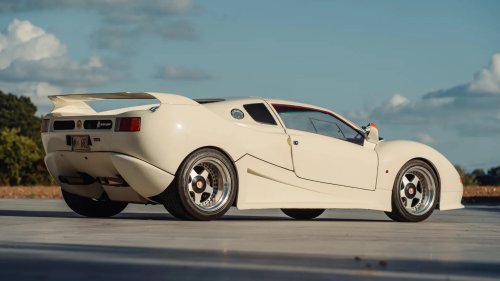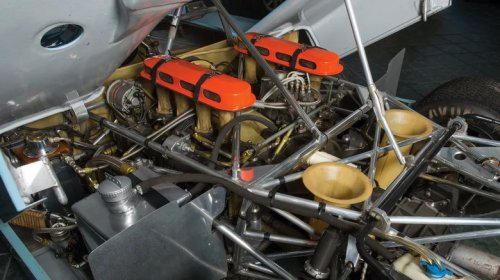


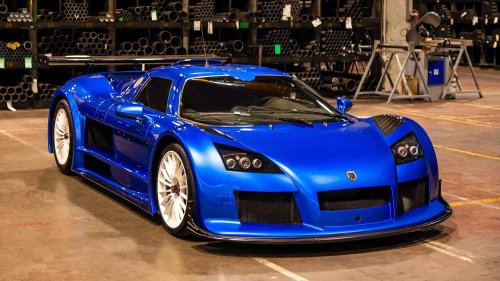



















Have you ever had a random, obscure supercar pop into your head after years of forgetting it existed at all? Maybe you saw it in your favorite car mag growing up, or unlocked it in your favorite video game, only to race it six times total and never so much as recall it again. The list of cars that fits that description is longer than you might think, but let’s focus on one which, for a number of reasons, is particularly special. It has all the power, all the crazy aero, and all the supercar prerequisites but almost none of the recognition that comes with it. How An Audi Quattro Engineer Escaped Corporate Limits To Build A Hypercar Gumpert Automobile It takes a person of phenomenal ability and circumstance to even attempt to start a bespoke supercar manufacturing operation, let alone to get a project off the drawing board. This especially fits the mold for a German man by the name of Roland Gumpert. Gumpert’s first automotive gig after graduating from engineering school came working for Audi at their main R&D hub in the Bavarian city of Ingolstadt in the late 1960s. There, he was a project overseer for the Audi 50 supermini project – the very same that spawned the iconic Volkswagen Polo. From there, Gumpert pivoted to the military industrial side of the business, designing the four-wheel drive system for the Volkswagen Type 183 “Iltis” army jeep.Coincidentally, a lightly modified Type 183 would go on to win the 1980 running of the world-famous Dakar rally. It was a feather in the cap of a man who’d one day endeavor to build his own race-bred street machines. By 1981, Gumpert was a shot-caller at Audi Sport, the same group that developed the Quattro all-wheel-drive system. Audi Sport won no fewer than four WRC titles during Gumpert's tenure, but Gumpert's real breakthrough came when he finally broke free from corporate constraints in 2001. Audi Gave The Green Light For A New Supercar Before The R8 Audi Media The turn of the 2000s would be a pivotal time in Roland Gumpert’s career. Now the head of sales and marketing for VW-Audi of China by the late '90s, Gumpert must have felt his ambition stretched beyond that of the group mailing his paychecks was limited. A man of his caliber was bound to start designing a supercar eventually, and the process started for Gumpert after his return to Germany in 2001. There, he was approached by the equally skilled and motivated engineer, Roland Meyer, about working together towards a shared dream of designing a race car for the road.Not yet free of his contractual obligations with Audi, Gumpert was green-lit to work on his own project under the assumption it’d actually make it to production one day. Only then, if a viable consumer product with an Audi powertrain resulted from the project, would they deem it worthy of diverting Gumpert's attention from their own agenda. Gumpert Apollo: Goofy Name, A Serious Hypercar Contender GumpertIt must be said, for how insane it looks, and for how Earth-shatteringly quick it was, what people remember the most about the Gumpert Apollo isn’t the car itself, but its name. But even with a silly name, and even if the bodywork looked a little suspect from more than a few angles, there’s a definite method behind the mad design. As should be evident by now, every curve and every line of an Apollo’s exterior is designed for unparalleled aerodynamic downforce. At the cost of a slightly stocky drag coefficient of 0.42, Gumpert claimed with enough speed, the Apollo could theoretically drive upside down—much like a Formula 1 car. Combined with the impressive aero were radical gullwing doors, a mid-rear engine layout, and a chassis honed from super-strong 41xx tube steel, with the option of body panels made of carbon fiber or old-fashioned fiberglass. Presentation-grade small-scale models were ready for presentation by the end of 2001, and a one-to-one-scale model was ready before the end of 2005. Production then began by the start of the following year, out of the small town of Altenburg in Central Germany.The subsequent design used the same 4.2-liter V8 engine you’d find in the beloved C5-series Audi RS6 and a six-speed sequential transaxle. The oiling system was swapped from a traditional wet-sumps system to a more durable dry-sump unit, and the turbochargers are larger, forcing more air into an already high-strung, rev-happy engine. In standard Audi form, a 2002 RS6 packed 450 horsepower and as much as 428 lb-ft of torque. In the Apollo? That figure jumps to 650 horses and 627 lb-ft of twist. For some context, that’s more power than a Mercedes SLR McLaren, Porsche Carrera GT, and a Lamborghini Murcielago. It's nearly as much grunt as a Ferrari Enzo in a car that produces considerably more downforce—let that sink in.Gumpert The results shouldn't be surprising: zero to 60 in three seconds flat, and sometimes even faster with a well-prepped road surface. Using its race-bred double transverse control arm suspension and adjustable coilover shocks front and rear, the Apollo maintained level cornering at low speeds, when the wing couldn’t make a literal ton of downforce. Later upgrades like 2007’s Apollo Sport and 2009’s Apollo S upped the ante with more boost, larger wings, and enhanced aerodynamics packages from hood to hatch. With horsepower figures that push 800 in its most aggressive engine tune, it's no wonder that the Apollo once held the iconic Top Gear Test Track's lap record for nearly three years at 1:17.1. It also lapped the Nürburgring’s Nordschleife in 7:11.57. In the era before hybrid-drive hypercars, that was almost unheard of. A World-Class Performance Machine, But Not a Success Gumpert By all accounts, the Gumpert Apollo, whatever the performance spec, was an all-time great performance car. It championed novel ideas, like the concept of a turn-key race-ready hypercar you can legally drive on the road and break-neck development cycles bankrolled by massive OEMs. But this alone doesn't move metal. With a launch price starting at $400,000 back in 2004 and eclipsing seven figures for later models with street-legal packages, only around 150 units were built before exorbitant operating costs forced production to stop in 2012.RM Sotheby's Auctions Had it survived, a more laid-back two-door Gumpert “Fast Touring” car called the Tornante concept was rumored to be headed for production, Apollo variants of ever greater speed and power. Instead, the assets and intellectual rights for Gumpert Sportwagenmanufaktur GmbH were sold off to a group based out of Hong Kong called Team Venture, then owners of the De Tomaso IP as well. In the end, Roland Gumpert formally left the group after the sale, reorganizing his company into what's known today as Apollo Automobil. Together with the Italian Apollo Automobil, makers of the all-electric Aspark Owl, the group markets the Apollo’s spiritual successor, a Ferrari V12-powered hypercar called the Intensa Emozione.Sources: Hemmings