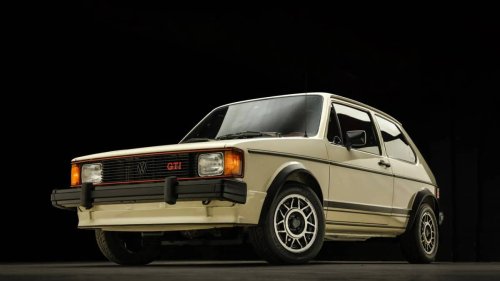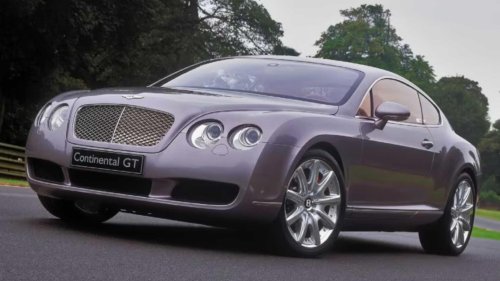
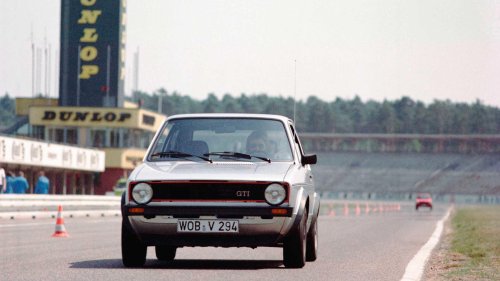
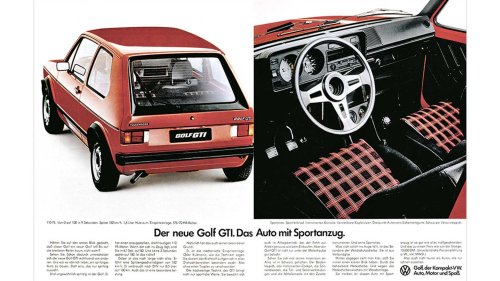
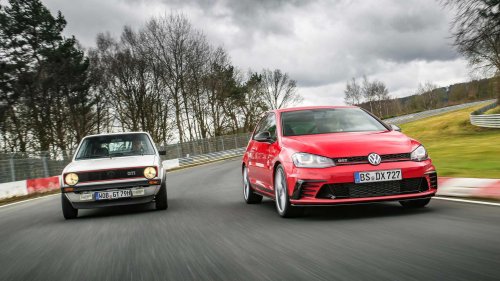



















Few words are as uninspiring as "economy." It’s almost anti-fun, promising a cheap feel and poor performance. And while the vast majority of economy cars are standard, fairly boring commuter vehicles for people who don’t really care about a car beyond getting from A to B, that’s not true for all of them. One went on to create the entire hot hatch genre. UPDATE: 2026/04/07 06:21 EST BY JARED SOLOMON This article has been updated to include additional context on the rise of the hot hatch segment and the lasting impact of the original Golf GTI. Though Antithetical, Economy And Performance Can Exist FordBuying a car is an exercise in compromise. You can have new, but you’ll have to deal with depreciation. You can have fun, but you'll have less practicality. You can have performance, but at the expense of cost. Or, that’s what you’d think.Okay, you might have to rethink your definition of performance. There isn’t really going to be a “cheap” Ferrari or Lamborghini or Porsche, at least by most peoples’ standards. But performance is relative and, in the world of performance, it’s not just one number that matters. Power matters for sure, but the weight of the vehicle it’s shoving is a much bigger factor. A Greyhound Bus has 460 horsepower, but with a weight in the double-digit tons, it's not going to be quick.This is how cars like the Mini Cooper S, Suzuki Swift, and Ford Fiesta (RIP), all of which have less than 200 horsepower, have similar power-to-weight ratios as cars like the 2005 Bentley Continental and 2008 BMW X5. Smaller car, smaller weight, more fun to drive.EdmundsOf course, economical can also mean being fuel-efficient, and again, economical cars can lay claim to better figures here. Why drive a Conti that gets ~16 mpg when you can get over 50 mpg in the Fiesta? We’ll concede that “performance” doesn’t usually refer to how many miles you can squeeze out of your tank, but it’s another point to economical.While this is all well and good, performance and economy cars today all have one common ancestor to thank. That car created the modern hot hatch genre and, what’s more, its manufacturer didn’t even want to make it. The Volkswagen Golf GTI Showed Drivers Didn’t Have To Settle VolkswagenVolkswagen has always made cars for the masses, to the point that the name literally translates to “people’s car”. Its cars were mass-manufactured, economical, and loved enough that the Beetle and Camper became iconic cars of the 1960s, representing freedom and independence. But, as the 1960s drew to a close, it was looking increasingly antiquated. Air-cooled, rear-engined, and rear-wheel-driven, the Beetle (which was first released in 1938) was starting to lag behind competitors. So in 1974, VW released the Volkswagen Golf.The Golf, known as the Rabbit in the USA and Canada to retain the animal-themed name, flipped the Beetle around, opting for water cooling, a front-mounted engine, and front-wheel-drive. This helped the car to handle better, have more efficient cooling, and better fuel economy than the Beetle, all of which were needed compared to competitors.VolkswagenThe design also went against the Beetle. Gone were the rounded curves and cheerful expression that Herbie had made so popular, and in was a Guigiaro-penned hatchback with straight lines and a far boxier aesthetic. It was all a clear departure from what had worked for the company to that point, and a considerable risk given the business was beginning to struggle. Luckily for VW, though, it was an immediate success, selling one million units in its first 31 months on sale.As soon as any perfectly good car exists, there are people who want to make it go faster. And unsurprisingly for a company like VW, there were a few who saw what the Golf was achieving but wanted a little bit more. A six-man team led by Anton Konrad (VW’s then Chief Press Officer) clandestinely worked on a sportier Golf, the idea being to attract younger people and those interested in motorsport.The problem was that VW higher-ups weren’t convinced by the plans. The car was a conservative, commuter-friendly workhorse and was never meant to be "fun." Add to that the financial position VW found itself in, and manufacturing new parts to make the car sportier wasn’t top of its priority list. But with early mock-ups showing that parts could be reused or recycled from other cars, a middle ground was met and just 5,000 units would be made, which would make it eligible for motorsport through homologation. And, in 1976, the first ones would roll off the line.VolkswagenThat first Volkswagen Golf GTI would house a 1.6-liter fuel-injected inline-four engine, capable of 108 horsepower and 103 pound-feet of torque—a considerable upgrade from the base Golf's 1.1-liter engine that made 50 horsepower and 58 pound-feet. Even at the highest end, a stock Golf equipped with the 1.5-liter engine would only make 69 horsepower and 81 pound-feet. It wasn’t just power where the GTI differentiated itself, though, as a few stylistic changes made their way through.In keeping with the sportier edge of the car, the GTI had some artistic flair, like wheel arches, tartan seats, a golf ball-style gear knob, and a red grille trim. Subtle enough that it retained the Golf look, but still designated itself as the sporty one. The car was an immediate revelation. While the power alone wasn't going to win any awards, it was fast for its class—demolishing other hatches and putting it up around saloons like the BMW 2002 tii or the Alfa Romeo Alfasud Ti as all would run to 60 mph in around nine seconds.VolkswagenThe 5,000 quickly sold out. Buyers and reviewers were equally impressed by the car and, by the end of the first-gen production run in 1983, some 461,690 units had been sold - over 92 times what VW had originally thought possible. Those first examples have held their price too, selling for a shade under $20,000 on average. How The Hot Hatch Formula Took Over The Industry What the original Volkswagen Golf GTI proved was simple but revolutionary: you didn’t need massive power to have serious fun behind the wheel. That formula—lightweight body, modest power, sharp handling, and everyday usability—quickly caught on, and other automakers rushed to replicate it.By the 1980s and 1990s, nearly every major brand had its own take on the hot hatch. Peugeot had the 205 GTI, Honda introduced the Civic Si and later Type R models, and Ford answered with performance versions of the Fiesta and Escort. Each followed the same blueprint established by the GTI but added their own twist.What made hot hatches so appealing was their accessibility. They offered performance that could rival sports cars in real-world driving conditions, while still being practical, affordable, and efficient enough for daily use. That balance is what helped the segment explode in popularity and remain relevant decades later.Even today, the DNA of the original GTI lives on in cars that blend performance with practicality—something that traces directly back to that small, rebellious project inside Volkswagen. The Golf Has Come A Fairway VolkswagenOkay, the Golf followed VW’s emerging pattern of naming their cars after winds (the Passat being the first and named for the trade winds, before 1974 saw the Scirocco named after the Mediterranean Sirocco wind and the Golf named Gulf Stream), but the car has come a fair way since its release, while still remaining remarkably true to its first iteration.Since that first car in 1976, the Golf GTI has evolved alongside its non-Grand Touring Injection brothers. Now in its eighth generation, the base model Mk8 Golf GTI makes 265 horsepower and will hit 60 mph in 5.9 seconds en route to 155 mph. Anyone brave (or rich) enough can pick up the GTI Edition 50 version, which packs 325 horsepower, will reach 60 mph in 5.3 seconds, and tops out at 168 mph.The current-gen car might not be troubling performance cars in the same way that the first model did, but it’s remained the archetype for the hot hatch. The model, which turns 50 this year, has sold over 2.5 million units, and has an all-electric version expected soon to take it to nine generations. And that’s not a bad legacy for a car that nobody wanted to make. Why The Original Golf GTI Still Matters Today Nearly 50 years later, the original Golf GTI isn’t just remembered as a great car—it’s recognized as one of the most influential vehicles ever built. It fundamentally changed how manufacturers and buyers think about performance.Before the GTI, performance cars were typically large, expensive, and often impractical. The GTI flipped that idea on its head by proving that driving enjoyment could come in a compact, affordable package. It democratized performance in a way few cars ever have.Today, that legacy is more important than ever. As the automotive industry shifts toward electrification and stricter emissions standards, the core principles of the GTI—efficiency, lightweight design, and smart engineering—are becoming even more relevant.Modern performance EVs may deliver massive power figures, but the idea of maximizing fun through balance rather than brute force is something the original GTI pioneered. It’s a philosophy that continues to shape performance cars across every segment.Sources: Parkers.co.uk, Ford, Volkswagen, Top Gear, Carwow, Classic.com