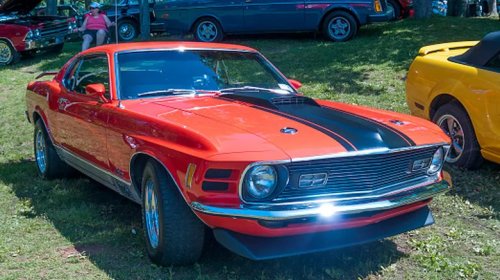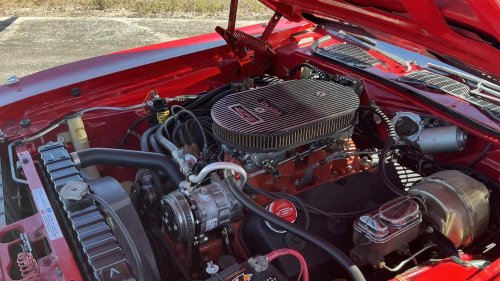
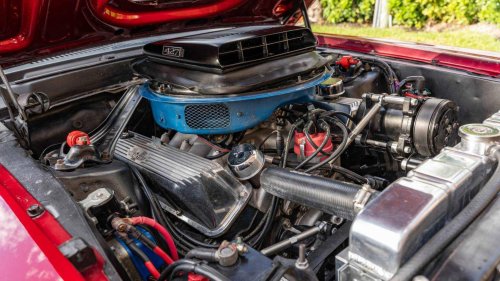
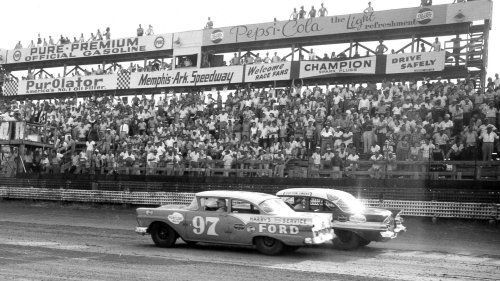
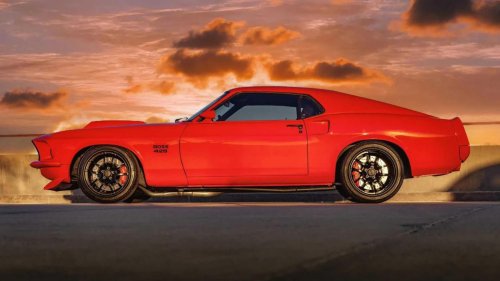
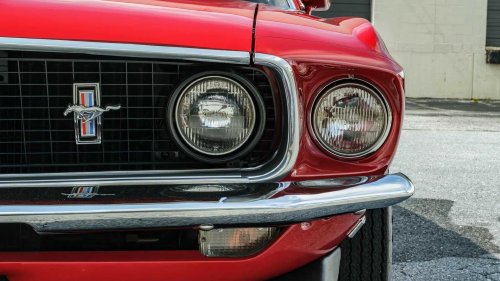
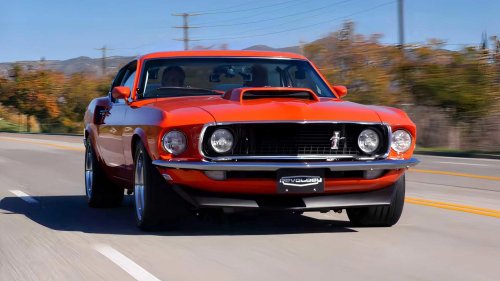
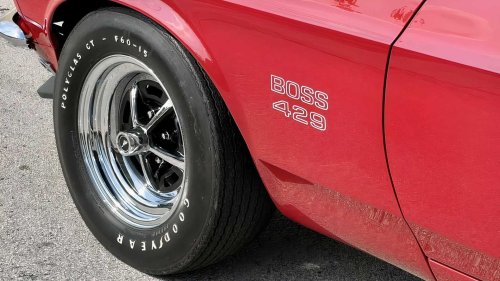
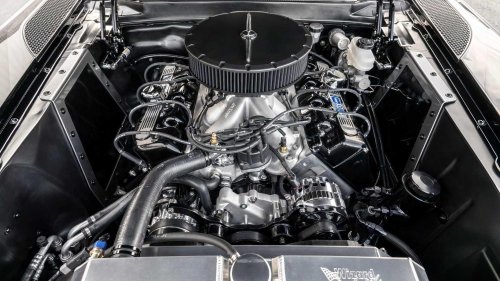
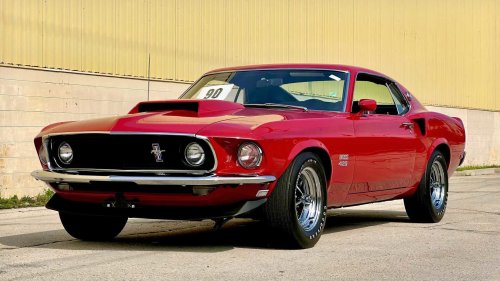
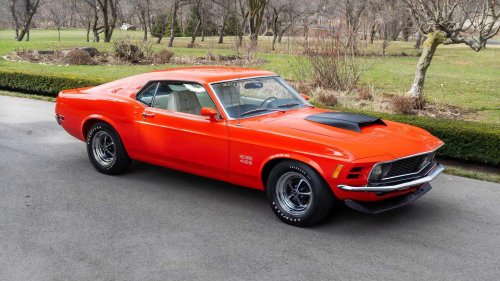
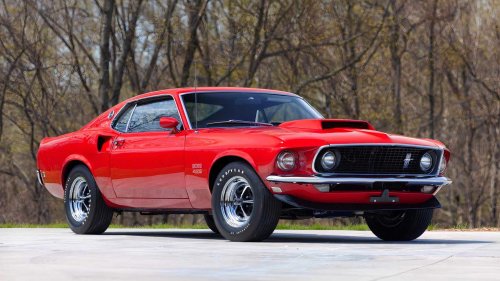
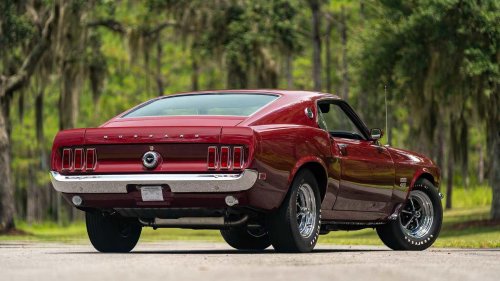



















Motorsport is not just fast cars, adrenaline, and the thrill of the race. It is also the most ruthless development program in the automotive world, where technology gets pushed further in a single season than road cars manage in a decade. And sometimes, just sometimes, that technology has to come home. One American automaker built a race engine so big it would not fit in the car they built it for. So they shoved it into a completely different car instead, reworked the entire front end to make it physically possible, moved the battery to the trunk to clear the space, and deleted the air conditioning because there was simply no room left.Then they underrated it by a hundred horsepower to keep insurance companies from losing their minds, sold it to the public, and drove it to the racetrack. This engine, officially rated at 375 horsepower with 450 pound-feet of torque, was built for one purpose and one purpose only: to go racing. The road car was the admission fee. Ford could not care less whether you daily drove it. They needed your signature on a purchase order so they could take the engine to the track. What they created in the process accidentally became one of the most collectible and iconic Mustangs ever built. Ford Needed A Weapon To Beat The Hemi And Nothing In The Parts Bin Would Do Bring A Trailer The late 1960s was the peak era of NASCAR's horsepower wars, and the trigger was Chrysler. The 426 Hemi arrived and immediately left everything else in smoke. It was so dominant that NASCAR banned it. Initially, the Hemi had no production road car equivalent, which violated homologation rules. Chrysler responded by pulling out of the 1965 season entirely. The boycott hit attendance numbers hard enough that NASCAR reversed course, but with conditions: Chrysler had to build a production version of the Hemi and sell close to 1,000 units to the public before the engine could race. That decision changed everything. Suddenly, manufacturers had to put their race engines into showroom cars. The road car became the key to the racetrack, not the other way around. The Aero Wars And The Arms Race That Pushed Detroit To The Edge Bring a Trailer With the Hemi back and dominating, Ford found themselves in a fight with an aging weapon. The FE 427 side-oiler was closing in on its performance limits. Ford tried to answer with the SOHC 427, a single overhead cam version pushing over 600 horsepower. NASCAR immediately banned it. Bill France Sr. had looked straight at Ford's best card and said no. The aero war that followed produced some of the most insane road-legal machines ever built. The Plymouth Superbird had a two-foot-tall rear wing and a nose cone that looked like it belonged on a fighter jet. These cars were built for oval superspeedways, cracking 200 mph. Detroit had completely lost the plot, and it was magnificent. The Homologation Rule That Forced Race Engines Onto Showroom Floors NASCAR Hall of FameNASCAR's homologation requirement was straightforward and brutal in its consequences: to race an engine, you had to sell at least 500 road-legal cars fitted with it to the public. Not engine units sitting in a warehouse. Actual cars, registered, sold, on the road. That rule is why normal families in 1969 ended up with genuine race engines in their driveways. Ford needed something that could match the Hemi on the superspeedways, and they needed it in a production car. The road car was not a product. It was a bureaucratic requirement. The admission fee to go racing. The Boss 429 Was A NASCAR Engine Stuffed Into A Mustang It Was Never Designed For Ford Ford's engineers developed the new 429 cubic-inch semi-hemispherical V8 for one destination: the high-banked ovals of NASCAR's Grand National Division. It was based on Ford's 385 engine family but was heavily modified for racing. The aluminum cylinder heads featured crescent-shaped combustion chambers, Ford's answer to Chrysler's hemispherical design. The exhaust ports were so large they earned the engine the nickname "Shotgun Motor." In NASCAR trim, this engine pushed well over 600 horsepower. The problem was where to put it. The Mustang was selected as the homologation vehiclespecifically because Ford wanted the brand's name associated with the racing program. But the Boss 429 engine did not fit a standard Mustang engine bay. Not even close. Ford Built The 429 For NASCAR — Then Had To Rework An Entire Car To Fit It Bring A Trailer Every single Boss 429 Mustang was shipped as a partially built body from Ford's Rouge plant to Kar Kraft in Brighton, Michigan. Kar Kraft was not a random conversion shop. They were Ford's specialist engineering contractor, the same outfit that helped build the Le Mans-winning GT40. At their Brighton facility, Kar Kraft cut and re-engineered the front end of each Mustang to accommodate the engine, widening the shock towers and completely revising the suspension geometry. The battery was relocated to the trunk. Air conditioning was deleted entirely because the massive engine left no room for a compressor. Every car received a KK number and a special NASCAR identification plate inside the driver's door jamb. The car literally told you on the door why it existed. No other muscle car was ever that honest about its own purpose. Kar Kraft And The Art Of Shoving 429 Cubic Inches Into A Pony Car Jay Leno Garage / Youtube The Boss 429 carries the largest factory hood scoop ever installed on a production Mustang, and that record still stands more than five decades later. All cars came with a four-speed manual transmission only. No automatic was ever offered. The front disc brakes, heavy-duty suspension, and trunk-mounted battery were all mandatory, not optional. This car came exactly one way: stripped of convenience, stuffed with race hardware, and wearing a door badge that explained the entire situation in two lines of text. The exterior was deliberately understated compared to other Mustang performance models of the era. No spoiler, no window louvers, none of the visual drama that usually screamed performance in 1969. The only external identification was the Boss 429 decals on the front fenders and that enormous functional hood scoop. It was, in every sense, a sleeper with a racing license. The Worst Muscle Car You Could Buy And Ford Didn't Care Bring A TrailerFord officially rated the Boss 429 at 375 horsepower and 450 lb-ft of torque. To keep those numbers manageable and insurance premiums from going completely off the charts, Ford deliberately fitted the engine with a mild camshaft, a smog pump, and a conservative carburetor setup. The result was that testers consistently found the car slower in a straight line than expected from a 429 cubic-inch big-block. The engine's enormous ports were sized for 7,000 rpm on a superspeedway, not 3,000 rpm pulling away from a traffic light. On the street, it felt lazy at low revs. That was by design. A Detuned Race Engine That Felt Tame On The Street Trick RidesThe actual output was widely believed to be higher than the official figure. Crane Cams dyno testing in 1970 measured 352-366 horsepower at the crank in stock configuration, broadly consistent with Ford's stated rating but well short of the street mythology. In NASCAR race trim, the same basic architecture produced well over 600 horsepower. The gap between those two numbers tells you everything about how much Ford had dialed it back for the showroom. Some early S-code cars came with magnesium valve covers and fewer emissions controls, closer to full race specification than anything else Ford officially sold. Ford Did Not Want You To Drive It, They Needed You To Buy It Bring A Trailer The Boss 429 was priced at nearly $5,000 new, roughly twice the cost of a base Mustang and around $1,500 more than the Boss 302. That price was not an accident. Ford wanted to discourage casual buyers and filter purchases toward collectors, racers, and people who understood exactly what they were getting. The irony was brutal. By the time Ford had met the homologation requirement and delivered enough Boss 429s to dealerships, the company had already changed direction internally. A leadership change at Ford saw the stock car racing program quietly shut down. The Boss 429 never got its chance to race in the application it was built for. It was a weapon that arrived after the war it was designed to fight had already ended. The Homologation Special That Became A Million-Dollar Legend Via Mecum Auctions Most muscle cars of the era were thrashed by teenagers and left to rust. The Boss 429 was too expensive, too strange, and too raw for casual abuse. Ford built 859 examples in 1969 and 499 in 1970, for a total production run of 1,359 cars. The survival rate is unusually high for a muscle car. The combination of high price, specialist appeal, and KK documentation meant most owners treated these cars as significant from day one. Early S-code engines were sometimes pulled for tractor pulls and drag applications, but the bodies and paperwork typically survived. What The Boss 429 Commands At Auction Today Mecum A car built purely to satisfy a rulebook, fitted with a race engine that was deliberately made to feel ordinary, sold at a price designed to discourage most buyers, and then immediately rendered purposeless by a change in corporate direction, that car now sells for over $500,000 at auction for exceptional examples. Fair-condition cars with number-matching engines regularly clear $250,000. The most documented, lowest-mileage examples have sold for over a million dollars. Aged Like A Fine Wine, Getting The Respect It Deserves Mecum Auctions For what was essentially a bureaucratic exercise disguised as a muscle car, that is the most American success story in automotive history. The GTO got the magazine covers. The Chevelle has got street credibility. The Boss 429 got the racing pedigree, the rarity, and eventually, the money. That is vindication. The Boss 429 aged exactly like the finest wine, completely ignored when it was young, and worth a fortune once the world finally caught up to what it actually was.