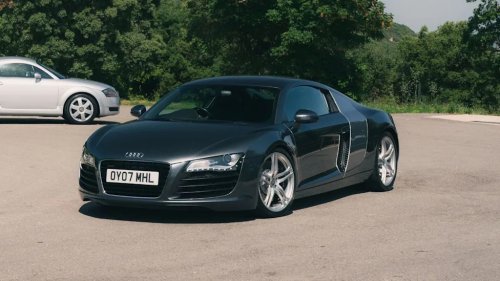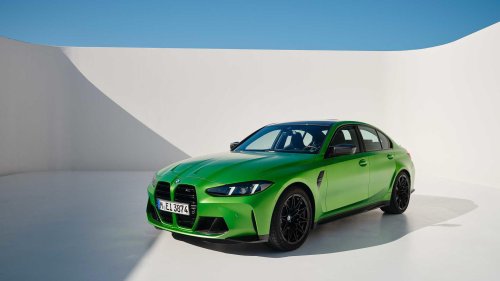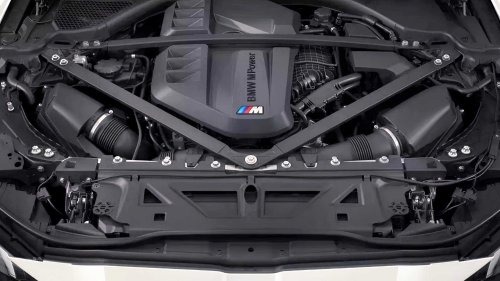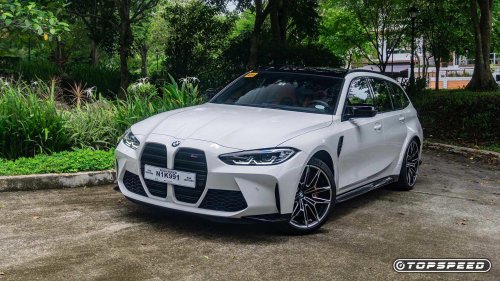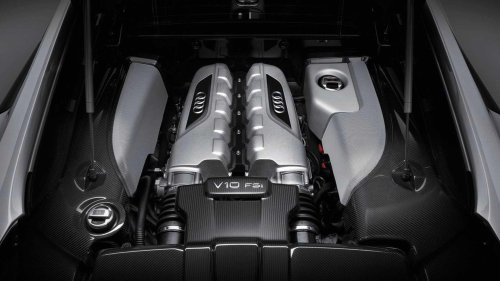
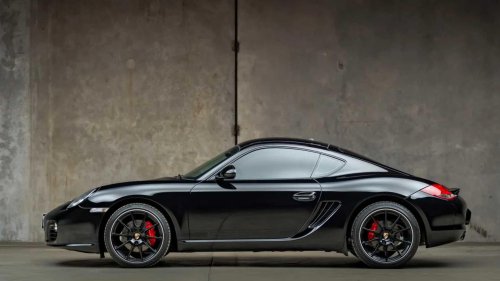
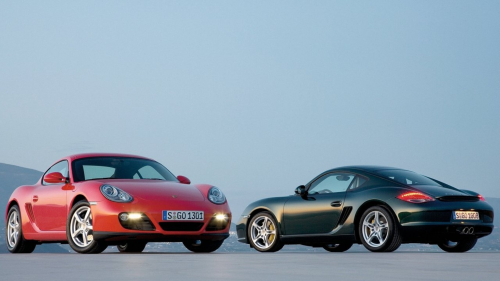
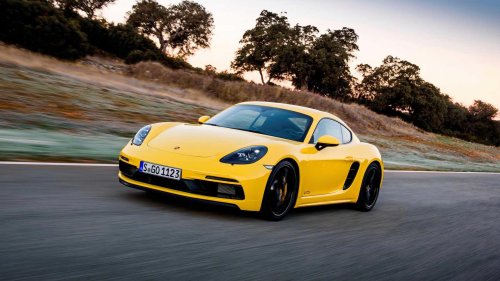



















The sports car segment has been relentlessly chasing more power and more speed for increasingly larger models. Supercar brands such as Ferrari and Lamborghini have now routinely breached the 1,000 horsepower barrier with their road cars, and hypercars have gone even further, with carmakers such as Bugatti and Koenigsegg pushing the limits past the 1,500 horsepower threshold. Yet in order to build the fastest and most powerful car, manufacturers have had to let go of other attributes. Characteristics such as lightness, nimbleness and manual transmissions often help make the driving experience more genuine and connected, but cannot coexist with the technology that helps these cars break records. While supercars and hypercars’ record-breaking power outputs make headlines, being the fastest and most powerful isn’t the be-all and end-all of all sports cars, and though rare, low-horsepower performance cars can challenge the power hierarchy, as this beloved sports car proves. A Crash-Course On Sports Car Hierarchy Via: Audi To minimize various costs across production, it is common for manufacturers to use the same engines, platforms and other components from one model to another, and underneath distinct design and badging, some cars have more similarities than they show. Yet in order for it to make sense commercially, manufacturers need to protect their established hierarchy, by calibrating performance across their line, from one model to another.BMW's M2 model clearly illustrates this structure. Fitted with a 3.0-liter inline-six, the M2 uses the same S58B30T0 engine found in the M3 and M4 models, which according to BMW differs "only in a small number of details." In order to keep the hierarchy intact, BMW trimmed the power output to 473 horsepower in the M2, while the M3 and M4 models both start at 473 horsepower. The M3 and M4's Competition and CS variants offer up to 543 horsepower from the same engine, clearly indicating how the more you spend on a higher model, the more horsepower you get to unlock.Things are more delicate when different brands within the same group share components. As two brands owned by the Volkswagen Group, Audi and Lamborghini have shared the same V10 engine respectively in their R8 V10 and Gallardo LP560-4 supercars. However, the R8’s power output was held to around 525 horsepower, against the Gallardo's 552 horsepower. Created out of necessity, this gap was engineered to keep the power structure within the group. With Audi offering a wide variety of more affordable vehicles and Lamborghini exclusively focusing on high-performance machines, the Gallardo was given the upper hand with an additional 27 horsepower over the R8 V10. The Hierarchy Problem With Mid-Engined Sports Cars Bring a Trailer The issue of hierarchy gets complicated whenever a manufacturer wants to offer a mid-engine setup for a lower-tier sports car in its lineup. While engines can be more easily tuned up or down from one model to another, there is more to a mid-mounted engine than just a simple placement. With the heaviest component of the car positioned between the axles, a mid-engined car has less mass hanging over either end. This structure allows for sharper turn-in, more neutral cornering behavior, and far greater precision when swiftly changing direction, hence why the mid-engined layout is often the go-to layout for most high-performance machines. When manufacturers want to offer this platform lower down the range, they can keep restricting power output to keep numbers in order, but what happens when the lower-tier sports car offers a mid–engine configuration, while the higher-up, flagship sports car under the same brand comes with a rear-engine configuration? Detuning The Flat-Six For The Porsche Cayman Collecting Cars When Porsche first launched the Cayman S in 2005, it precisely introduced just that: a mid-engine configuration to a lower-tier sports car, under its flagship, rear-engined 911 sports car. The 987 Cayman S used a mid-mounted 3.4-liter flat-six, against the 3.6-liter unit in the 997 Carrera at the time, keeping below the 300 horsepower threshold at around 295 horsepower, while the Carrera and Carrera S produced around 325 and 355 horsepower respectively. The Cayman S kept a deliberate power gap with the 911, but this new mid-engine layout helped it create a character of its own, distinct from the 911, with journalists testing the Cayman for the very first time noticing its handling abilities and reporting that even Porsche engineers privately considered the Cayman to be the finest-handling Porsche of the era, even when compared to any 911 then in production. How Detuning The Cayman Made It Better Than The 911 Porsche Always destined to be positioned beneath the 911, the Porsche Cayman’s power output was deliberately kept slightly below the Carrera models, yet paired with the mid-engine layout, the Cayman’s “lack” of horsepower turned into an advantage. As the fixed-roof version of the Boxster, the Cayman got a stiffer shell over the convertible architecture the Boxster was built around. This allowed the Cayman to run sharper springs and dampers for a firmer ride, while the flat-six’s low and central positioning allowed for an ideal distribution of mass. Because there was no excess power destabilizing the car’s balance, it allowed the Cayman to take corners with ease, while on the other hand, the 911's more complex rear-engine dynamics made it harder to engineer it.With so much potential at hand, the following 981-generation GT4 variant took the Cayman formula even further. Borrowing the 3.8-liter flat-six from the 911 Carrera S and pairing it with a six-speed manual, the GT4 also featured larger brakes, a lower ride height, and a chassis almost entirely made up of 911 GT3 components. The two-time World Rally Champion and development driver Walter Röhrl even described the GT4 as a “perfect handling car.” He also added that the 911 GT3’s extra power made it better suited for a circuit like the Nürburgring, but that on a twisty mountain road, the GT4 was the right Porsche to be in. The Cayman Challenged The 911 And Made A Name For Itself Porsche The current 718-generation Cayman has reinforced the hierarchy order with the 911, all while continuing to sharpen its identity. Abandoning the flat-six for its entry model, the Cayman now starts with a 2.0-liter turbocharged flat-four engine. On the more powerful GT4 variant, the 718 Cayman trades its flat-four for a 4.0-liter naturally aspirated flat-six producing 414 horsepower, putting the GT4 above the current entry-level 911 Carrera’s 388 horsepower. The top of the line GT4 RS pushes those boundaries even further. With a power output of 493 horsepower, the GT4 RS puts the Cayman into a territory that would have been unthinkable when the original Cayman was launched.Sports cars that can challenge flagship models, like the Cayman did with the 911, are a rare breed. But the Cayman demonstrates that even with power restrictions, a car’s layout is enough to defy the established model hierarchy. While most Cayman variants keep a power output below that of a 911 Carrera, performance variants like the GT4 and GT4 RS prove that the Cayman does not just live in the shadow of the 911, and that structure can matter more than power.