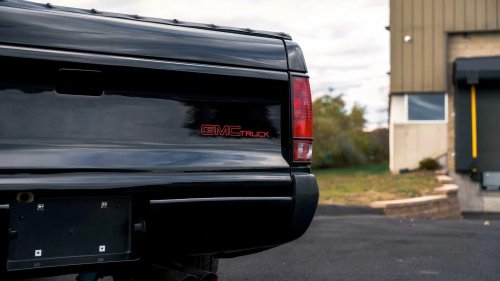
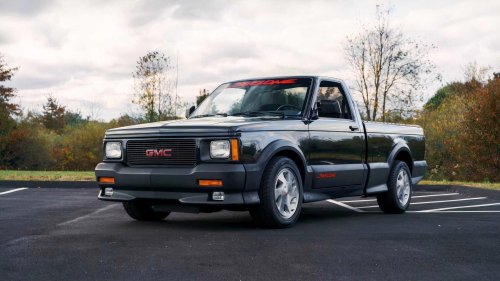
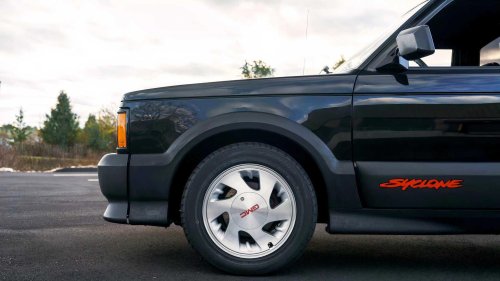
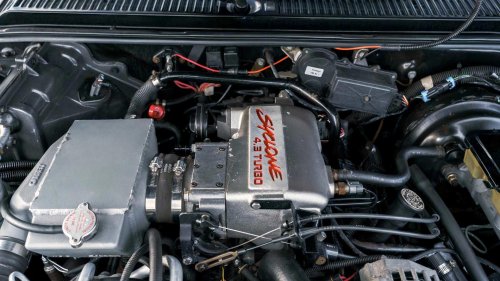
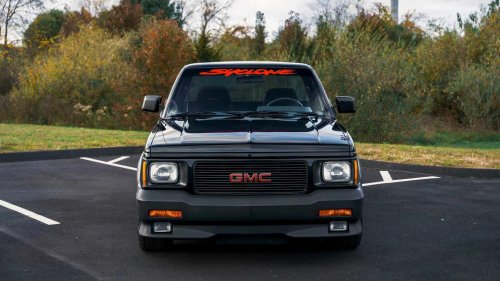
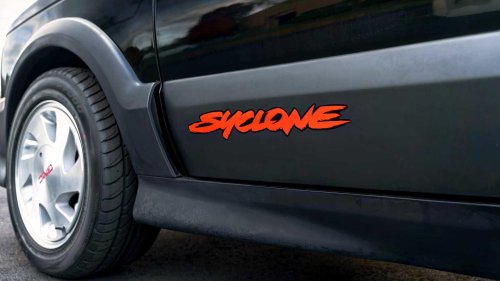
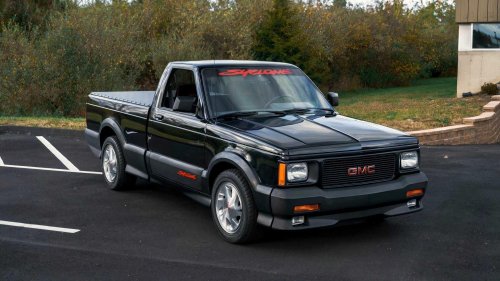
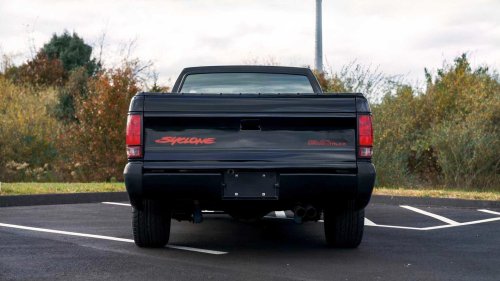
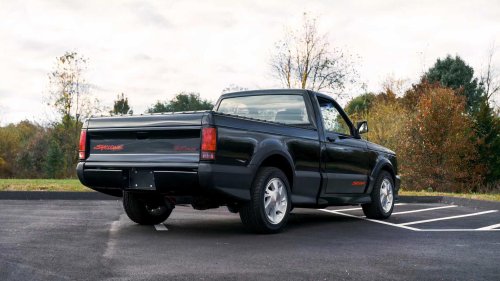
For most of automotive history, performance and practicality lived in completely separate worlds. You picked one or the other. Nobody was building a pickup truck with sports-car ambitions, and nobody thought they needed to. Then one brand looked at that wall between the two worlds and decided to tear it down. What it built embarrassed cars costing three times the price. And it walked away from all of it before most people knew what they had missed. That is still one of the great untold stories in American truck history. The Lane Nobody Dared Cross Bring a Trailer The truck world had its lane, and it stayed in it. Pickups were the workhorses of the American road. They hauled equipment, moved families, and put in miles without complaint. Performance lived separately, in V8 muscle cars and sports coupes that couldn't carry much more than a weekend bag. Detroit built both. Nobody thought to combine them. That gap sat wide open for years, and the industry was perfectly happy to leave it there. Performance Had One Job Back Then Bring A Trailer Performance had a clear meaning back then. A coupe, a muscle car, or a V8 with a deep exhaust note. Those were the machines that got the blood moving. Fast, loud, and genuinely fun to drive. The trade-off was the whole point. They returned terrible mileage, demanded constant attention, and couldn't comfortably seat more than two. You gave up practicality for the thrill, and everyone accepted that deal. Truck drivers had no interest in the thrill. They wanted reliability, strong mileage, and a vehicle that could earn its keep doing real work. The two worlds stayed entirely separate, and nobody in the industry thought to question why. Detroit Built Both. Just Never Together. Detroit Free Press Detroit knew how to do both. The engineers building Corvettes worked a few floors from the people putting together heavy-duty pickups. But combining those two worlds never made it to a product meeting. A truck that could run with sports cars wasn't in any brief. Truck buyers wanted efficiency and durability. Sports car buyers wanted a sports car. The overlap was assumed to be zero. It wasn't. The customer who wanted to haul gear on weekdays and embarrass sports cars on weekends existed. He just didn't have a product built for him. Nobody saw the gap as an opportunity. Nobody except one team inside General Motors. One Team Crossed The Line Via: Mecum Auctions The brand behind this truck didn't take the safe road. They weren't trying to build a sports car with a truck bed attached. They were trying to build something that could genuinely compete with the performance cars of the era, without losing what made it useful as a truck. Every engineering choice pointed the same direction. The decisions were unconventional. The results were explosive. The V8 Never Even Got A Phone Call MecumThe obvious call for a performance truck was a V8. They didn't make it. Instead, the team took the 4.3-liter V6 already sitting in the standard production Sonoma and threw a turbocharger at it. The result was not what anyone expected from a V6. Output came in at 280 horsepower and 350 lb-ft of torque. Big numbers for a compact pickup in 1991. A four-speed automatic was the only transmission on offer, paired with an all-wheel drive system borrowed from the Chevrolet Astro van that split power 35 percent to the front axle and 65 percent to the rear. That distribution turned out to be everything. 0-60 In 4.3. In A Truck. Via Mecum The numbers weren't just impressive on paper. They held up on the road. Period testing clocked the 0-60 mph run at 4.3 seconds, putting this truck ahead of a lot of sports cars that cost considerably more. The quarter-mile came in at 13.4 seconds at 98 mph. For a production pickup in 1991, that was genuinely wild. The all-wheel drive system was the reason. Rear-wheel drive performance cars scrambled for traction off the line. This truck planted itself and pulled hard from the start. Not just quick on paper, but quick in a way that showed up consistently, on demand. The GMC Syclone Was Never Supposed To Happen Bring a TrailerThe truck that did all of this was the GMC Syclone. It started life as a standard GMC Sonoma, was converted by Production Automotive Services in Troy, Michigan, and came out as something the market had no frame of reference for. All 1991 examples left the factory in black, with red Syclone badging on both doors and the tailgate. It sold through dealerships during the 1991 model year and then, almost as fast as it arrived, vanished. The Spec Sheet Was Understating It Mecum The Syclone was built around one objective: leave sports cars behind from a standing start. That turbocharged V6 fed into an AWD system that kept both axles working simultaneously, eliminating the traction loss that plagued rear-wheel-drive performance cars at the start. The result was a truck that felt even faster than its impressive numbers suggested, because those numbers didn't capture how cleanly it launched. It was also the first production pickup to come standard with four-wheel anti-lock brakes, which was a genuine engineering statement in 1991. A 500-pound payload cap told you what it was designed to haul on paper. The quarter-mile times told you what it was actually built to do. It Beat A Ferrari. In A Drag Race. Off A Dealer Lot. Mecum The Syclone's most talked-about moment came when it lined up against a Ferrari 384t in a drag race that nobody who witnessed it ever forgot. A factory-built pickup against one of the most celebrated exotics on the planet. The Syclone won the quarter-mile by four-tenths of a second. It also stopped from 70 mph in 183 feet, four feet shorter than the Ferrari. The AWD drivetrain hooked up hard from the line every time. The Ferrari, a rear-wheel drive machine built for roads rather than drag strips, could not match the launch. A pickup bought off a dealer lot had just beaten a prancing horse. That is a sentence that still sounds impossible today. The Fastest Getaway In Truck History Via Mecum The Syclone did a textbook disappearing act. At the peak of its momentum, with the enthusiast community finally waking up to exactly what it was, GMC pulled it from the market. Said goodbye and never came back. That is part of what turned it into the kind of vehicle people still argue about decades later. It didn't give the market nearly enough time to figure out what it was dealing with. 2,998 Units. One Year. Done Via Mecum Production ran almost entirely through the 1991 model year. GMC built 2,995 examples before winding down to just three trucks in 1992, for a total of 2,998 units. For a vehicle that performed the way it did, that was a tiny number. By the time word had spread through the enthusiast community, the trucks were already gone from showrooms. Most buyers never got the chance to see one in person. The ones who did moved quickly, or didn't move at all and spent years regretting it. Nothing about those production numbers suggested this was a truck the market would simply forget. The Market Said Not Yet. GM Said Fine. Via Mecum The short answer is that the market wasn't ready. When the Syclone launched, the segment it was creating didn't have a name yet. Most truck buyers still wanted efficiency and reliability above everything else. A starting price of over $25,000 was a tough sell for a niche that hadn't proven itself. GM looked at the early returns and decided the market was too small to justify continued production. The initial buzz faded faster than expected. Production stopped. The people who had already bought one didn't broadcast it. They just drove them, and kept quiet about what they had. It Left Early. The Legend Didn't. Via Mecum The people who knew what the Syclone was could never quite let it go. Part of that is the rarity. Under 3,000 examples ever built means finding a clean survivor is genuinely difficult. Part of it is the story. A truck that beat a Ferrari in a head to head does not age badly. The enthusiast community never forgot it. The collector market eventually proved why. Six Figures For A Factory Pickup Truck Mecum The prices tell the story. Now, a good-condition Syclone is valued at $30,900 in July 2024, up from $27,300 in early 2023. Low-mileage examples have pushed well past that on the open market: a 6,000-mile truck sold for $90,000 on Bring a Trailer in 2022, and delivery-mileage examples have cleared six figures at auction. Collectors are paying those numbers for a combination that is hard to replicate anywhere else. Extreme rarity, a legitimate performance record, and a story so good it sounds invented. The people who loved the Syclone in 1991 still love it. The people who missed it are now paying seriously for a second chance. Thirty Years Later, The Syclone Was Right Mecum The performance truck market the Syclone helped define is now a crowded segment. Ram, Ford, and Chevy all have serious entries. What was once a gap nobody aimed at is now a proven category with real money behind it. That makes the case for a revival stronger, not weaker. A modern Syclone, built on a compact platform and paired with a turbocharged hybrid powertrain, would slot directly into demand that already exists. The original was not a gimmick. It was a truck that backed up every claim it made. The market took 30 years to catch up. That is the definition of ahead of its time.