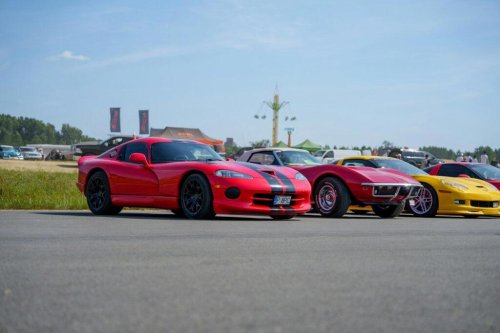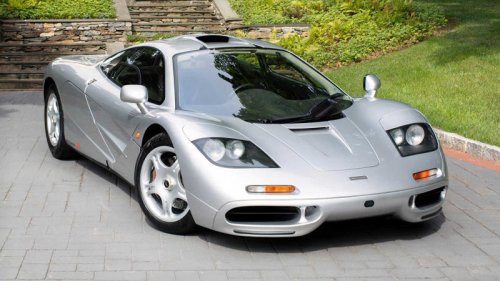
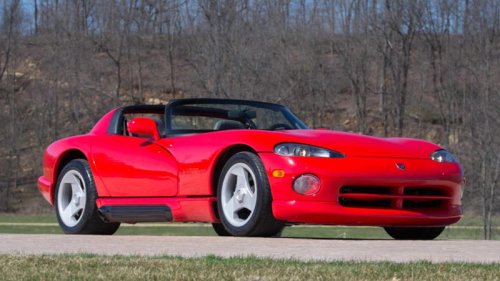
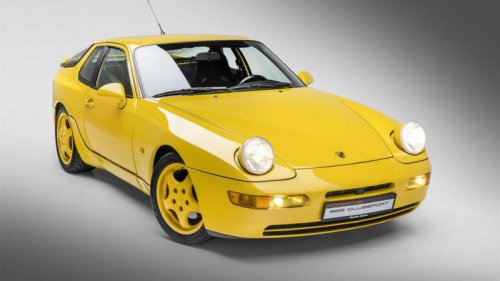
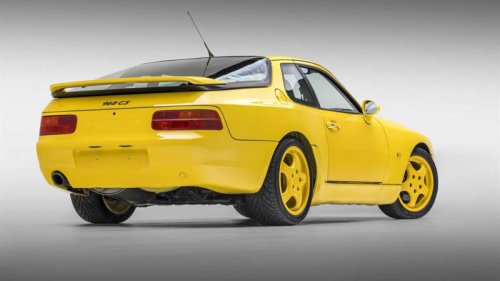
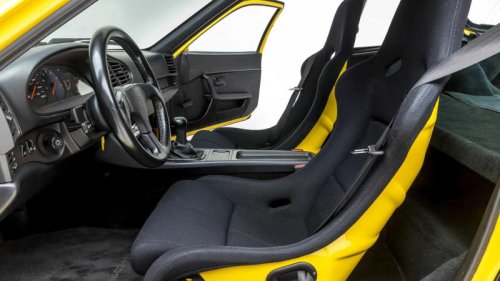
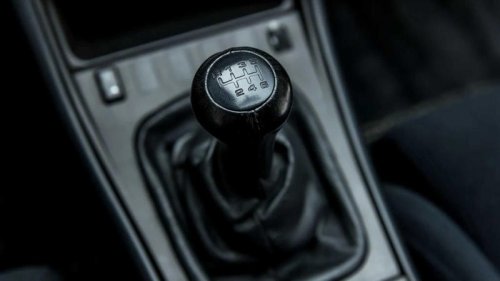
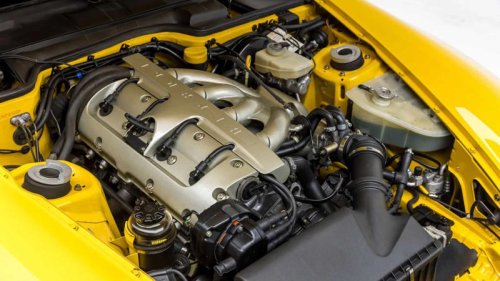
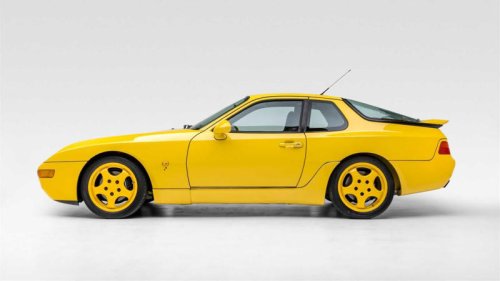



















A lot of cars, in retrospect, make perfect sense, even if they may have passed a lot of people by when they were launched. While models like the OG Pontiac GTO and Ford Mustang captured the sports car zeitgeist perfectly, something like the turbocharged Anniversary Trans Am of 1989, with its boosted six-pot engine, was probably, if anything, way ahead of its time.Likewise, we can marvel at how Mazda created the original Miata in 1989 with a modest four-cylinder engine, light weight, and a manual gearbox, and somehow managed to keep that winning formula for decades while others piled on the pounds and technology. But there is one model that was born out of slow sales and lack of interest, and became the last of a historic line. The illustrious manufacturer that produced it also went in a completely new direction afterward. But does this model really represent the sweet spot for this company—and is it long overdue a revival? Sports Cars Have Changed A Lot Since The 90s McLaren It could be argued that the '90s was a turning point for performance cars. A lot of factors came together to alter the direction of sports cars, and soon they would never be the same. An economic downturn reined in a lot of overly flamboyant supercar creations, with carmakers having to adapt to target bone fide enthusiasts, rather than new-money Wall Street posers. The single-minded McLaren F1 is a good example of this. On the flip side, the Malaise Era had pretty much destroyed the muscle car genre, with an influx of excellent turbocharged and all-wheel-drive cars from Japan showing how quickly a boring-looking sedan could go. The 90s Was The Decade Of Cheap Affordable Performance Mecum The Dodge Viper RT/10 was a heroic back-to-basics approach that brought big power and big displacement back to the fore in this era. By the 2000s, the muscle car was enjoying a renaissance, with the S197 Mustang and Dodge Charger flying off the shelves. The '90s and early 2000s seemed to be awash with cheap performance, whether you chose a 'Stang GT or an Impreza WRX. We were spoiled for choice.But recently, with emissions and environmental concerns taking center stage, the industry has been forced to adapt again. EVs and hybrids offset huge curb weight with huge power. The days of Colin Chapman's theory of "simplify, then add lightness" seem to be gone for good. Consumers expect giant screens everywhere, and technology overkill helps push showroom prices to ridiculous levels. Even the Honda Civic Type-R went from around $37,000 in 2020 to $47,000 in 2025—and that's a Honda hatchback. But there was a car in the '90s that was not only practical, fast, and relatively affordable, it was also exotic, rare, and, get this, cheaper than the standard model in the lineup. We want it back, please. Porsche's 968 Club Sport Is A Sports Car From Another Time Bring A Trailer When the Porsche 968 Club Sport was unveiled to the public at the Paris Motor Show in October 1992, almost two years after the standard 968 entered production, you might not have guessed that this would be a future legend. The car was directly related to the 924 that launched in 1976, so it wasn't exactly a spring chicken, and came off the back of the 968's reportedly low sales.The Club Sport seemed, if anything, to be a bit desperate, and considering it would be the last of its kind for Porsche, there may have been a slight whiff of failure in the air. But what the visitors to the Paris show were witnessing was the launch of arguably the best car Porsche ever built, bar none. Read reviews of this elusive car—often coming with wheels painted the same color as the body—and it is universally loved. It won Performance Car’s Car of the Year title at the time of launch too, beating a Lancia Integrale, Toyota Supra, and Ruf 911. The Porsche 968 CS Was A Rare Model Designed To Boost Sales Bring A Trailer Despite the 968's flagging sales, Porsche knew it had a very good car on its hands with the finely-balanced standard luxury model. The CS would be a lighter, more hardcore version but retained the 3.0-liter, naturally aspirated, water-cooled four-cylinder engine. Like the standard 968, the 968 Club Sport used the Variocam variable valve timing system. The Club Sport sat on lighter forged alloy wheels, with lower, stiffer suspension settings. Braking performance came from large, ventilated discs. The 968 Went On A Diet Bring A Trailer Then came the diet. While a small rear spoiler was added, Porsche removed the rear wiper. The sound insulation was removed next, as were the rear seats. The electrically adjustable front seats of the 968 were replaced by single-piece Recaro bucket seats with a fixed back, painted in the same color as the exterior paint. The electric windows became wind-up and the standard, the electric trunk release was removed, and air conditioning went in the bin. If you went full weight-saving, this trimmed off 110 lbs. The result on the road was a revelation, with testers not only finding it incredibly quick, but also easy to drive, forgiving and rewarding. The Porsche 968 CS Was Rare And Short Lived Bring A TrailerWhile road testers loved the CS, it wasn't enough to save the transaxle Porsche line. There would be no more two-door, front-engine, rear-drive Porsche. The base car became the Boxster in 1996 with a mid-engine layout. There are, of course, the front-engine Panamera and Cayenne, but these are larger sedans and SUVs, rather than all-out sports cars. According to figures from the world’s largest official Porsche club, the Porsche Club of North America, it’s thought that just 1,538 968 Club Sport models were made. Production began in late 1992 and ended in 1995, when production of the 968 model range came to the end of the road. Why The CS Is Special — And Deserves A Revival Bring A Trailer 1993 Porsche 968 CS Specs Source: PorscheWith 236 hp on tap, the CS hits 60 mph in 6.2 seconds and tops out at 160 mph. It came fitted with a six-speed manual. This was peak analog sports car—just you, the road, and a well-sorted chassis. But what made the Club Sport extremely special was that this stripped-out special was cheaper than the regular luxury-equipped model.You can't help thinking that in this day and age, such rarity and focus would come at a hefty premium. The new price in the UK was £28,975 ($38.474). That's around $85,000 today, which isn't exactly dirt cheap, but that means that this motorsport-inspired Porsche special would be the same price as a modern BMW M4 today. While we love the Boxster, it seems that a more practical, front-engined Porsche coupe that is similar in size and performance (and price) to an M4, with a decent-size trunk, would be a wonderful proposition. Then the idea that if somehow this Porsche could be lightweight, simple and just mildly hybrid, the concept would be even more exciting. Buying A 968 CS Isn't As Cheap As It Once Was — But They Are Still A Bargain Bring A Trailer The CS never officially went on sale in the US, but it is a popular import. If you think about it as a rare, lightweight Porsche special, it is actually something of a bargain today. While a 1995 911 RS will cost $390,000 in 2026, you will get almost seven 968 Club Sports for that. No matter what year you go for, a 968 Club Sport has a good condition price of $58,000 in 2026, says Hagerty. With such rarity and kudos, it's not hard to imagine that these cars might skyrocket in value at some point—but only time will tell. In the meantime, the 968 CS represents a golden age of purity, focus, and usability in the world of German sports cars.Sources: Hagerty.com