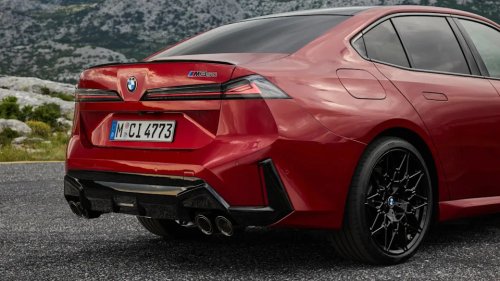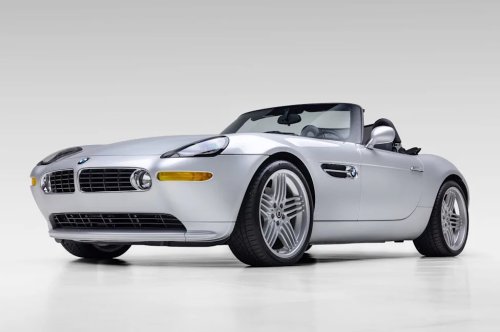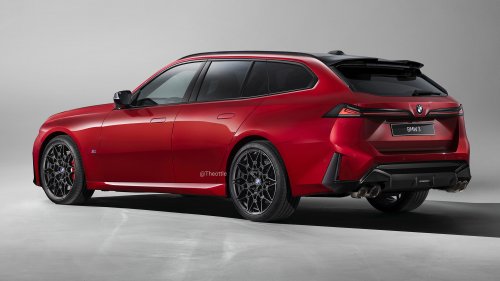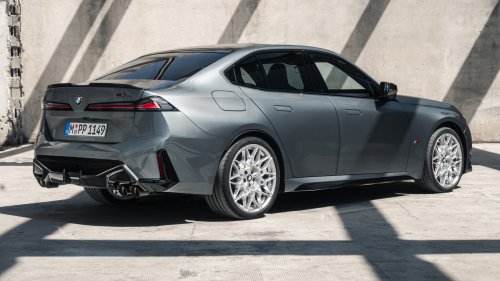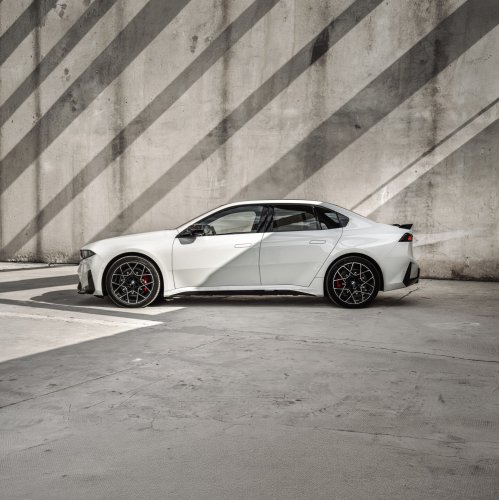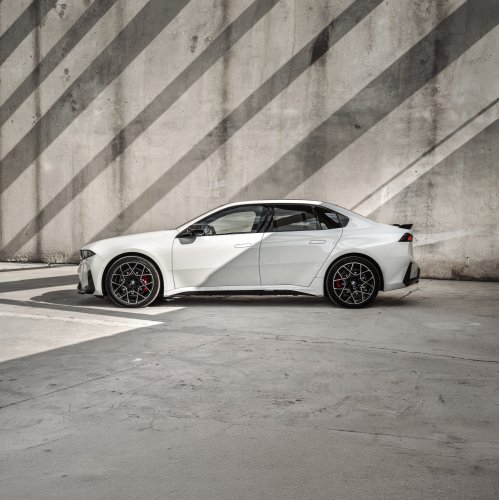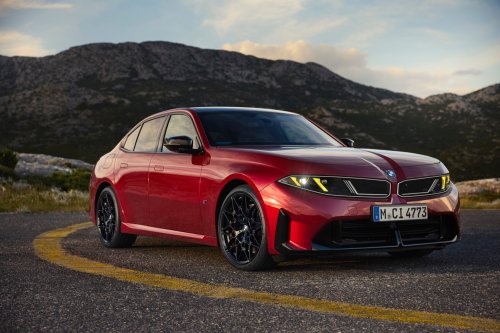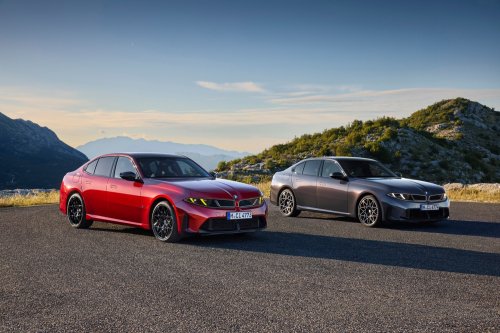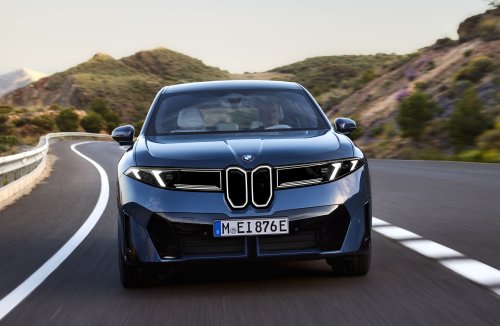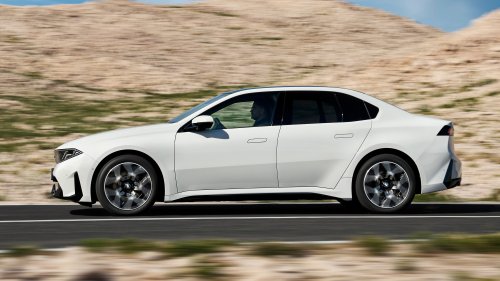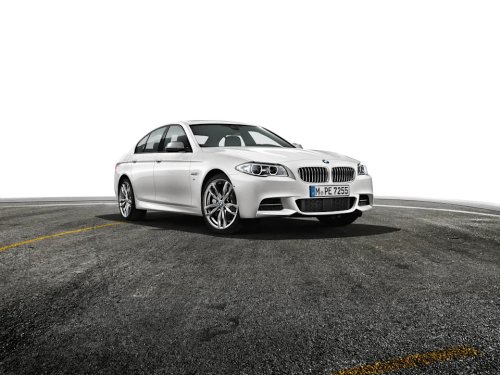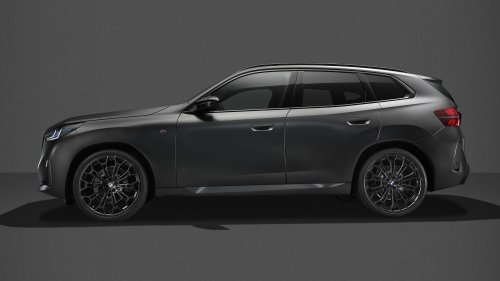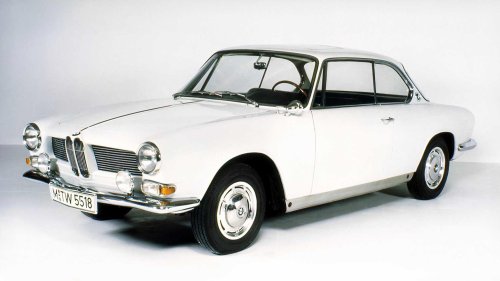
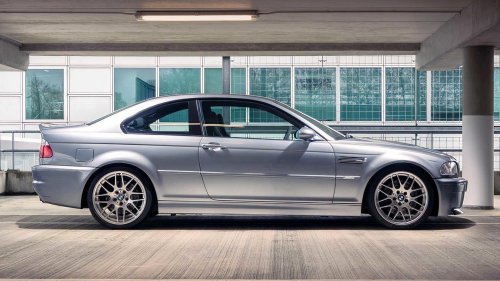
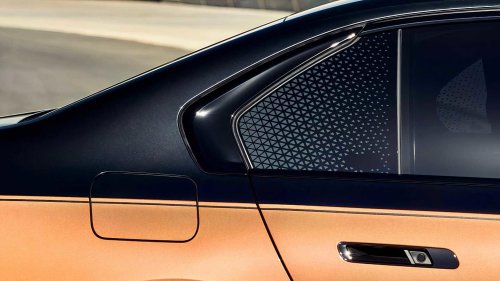
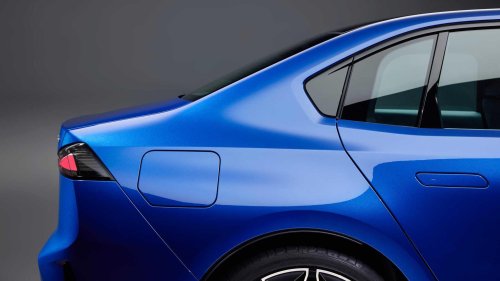
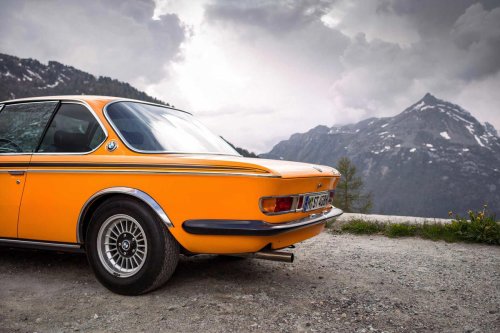



















There's a small design element in (almost) every modern BMW that makes it immediately identifiable as a part of the Bavarian brand. If you didn't know the Hofmeister Kink was special, or that it has been part of BMW's automotive design language since 1961, it's almost subliminal in effect.The Hofmeister Kink is an extra angle that appears near the base of the rearmost pillar, which would typically be a rounded curve or a point on other vehicles. It gives the rear side window an extra degree of shape. The element has been a subject of fascination for decades.The design is all the more impressive when you learn that the man named after the enduring styling flourish was known better as a people manager than a stylist. Plus, the Hofmeister Kink was as much a practical design as a visual one. The Curious Invention Of The Hofmeister Kink BMW The long-lived visual design element is named after Wilhelm Hofmeister, BMW's head of design from 1955 to 1970. Despite being best known for penning vehicles, Hofmeister was a trained engineer and a brilliant manager who oversaw the styling and body engineering for the BMW New Class line of models. Those products saved the company and helped define BMW as we know it today.The Hofmeister kink marked the beginning of a new BMW design language.– David Carp, BMW Group Design IdentityThe first BMWs to feature what later became known as the Hofmeister Kink were the 3200 CS and 1500. Specifically, Giorgetto Giugiaro worked primarily on the 3200 CS, while Hofmeister was at the helm of the 1500. Despite the projects having different design leaders, both of them wore an angled portion as part of the support for the rear pillar.BMW In German, the design is called the Hofmeister-Knick, which might be more accurate because the kink is a little nick in the bodywork. The element's function is to allow the side glass to go as far back as possible and still lower, without interfering with the rear door over the wheel arch. By allowing for more glass and extending the window farther back than a square window would allow, more light can come into the cabin. According to Chris Bangle, a later head of BMW design, the sloping rear glass shape and door design make accessing the back of a car easier.That's an engineer's explanation of the Hofmeister Kink. From an aesthetic point of view, the Hofmeister Kink endures because BMW likes how it highlights the rear-wheel-drive configuration of many of the brand's models. This layout, until quite recently anyway, was one of the core pillars of the brand's identity and philosophy. The Complications BMW We can't give all the credit to Hofmeister or Giugiaro for inventing the use of a steeply angled element at the base of a vehicle's rear pillar. Similar ideas existed decades earlier on vehicles such as the 1949 models of the Cadillac Club Coupe, the Buick Sedanette, and the Chevrolet Fleetline. In Europe, a similar styling touch appeared on the Lancia Flaminia and Flavia in the late 1950s and early 1960s,Whether it was Giugiaro, Hofmeister, or a joint decision to incorporate a kink into the rear pillar on the 3200 CS and 1500, BMW embraced this design element. The automaker doesn't claim the Hofmeister Kink is its invention. The company acknowledges that the kink was influenced by the Italian designers Giovanni Michelotti and Giorgio Giugiaro, who incorporated it into BMW's design language. It was due to Hofmeister that it remained.The Hofmeister kink fulfills at least two important design functions: on the one hand, it acts as a historical design link between the various BMW generations of the past, present and future. On the other hand, it helps create a visual transition from the ‘glasshouse’ — comprising the windows, roof and pillars — to the lower body of the car.– BMWHistory is murky about when the design became known within BMW as the Hofmeister Kink. The company's future designers tuned and trimmed it to fit generations of vehicles. Hofmeister may not have entirely invented it, but, as Bangle told Motortrend in 2015: "Wilhelm Hofmeister was one of the first design directors of BMW and, like all of us, passionate about what we do. He got his name attached to something he promoted." As David Carp, BMW Group Design Identity, put it: "The strongest design icons are not created by a strategy." A Consistent Part Of The Whole BMW The Hofmeister Kink, as a design element, is not owned by BMW, and you can find it on other makes' models – albeit taking care not to emulate BMW's shape. A consistent design element, however, is a part of the whole. This helps cement BMW's commitment to its characteristic proportions – short front and rear overhangs exaggerating the wheelbase, a stretched hood, and a set-back passenger cell. And, if there's any doubt as to what brand of car you're looking at, there's the two-part kidney-shaped radiator grille.We design moving products, both in the functional and in the emotional sense. Our design is authentic; it indicates what you can experience with our products and evokes the heritage of the brand. But our design is also geared towards the future and lends a face and soul to the cutting-edge technology that defines our products. Beyond that, our design evinces a keen attention to detail, with customers still discovering intriguing design elements years down the line.- Adrian van Hooydonk, Senior Vice President BMW Group Design, in 2012The BMW kidney grille has been around since 1933, and has shrunk and grown, then shrunk again, while morphing in general shape to suit each generation of design language. In 1933, the element was massive and vertical in style. By the 1990s, it was much smaller and more subtle, then morphed into a more squared-off style. Later, it developed more angles, then recently grew again to become massive. The kidneys shrank again after a backlash. The Kink: Then And Now BMW Unlike BMW's signature kidney grille, the Hofmeister Kink's changes over the years have been subtle while always being recognizable as a distinctively BMW flourish. It was at its boldest in the 1960s and 1970s, before safety standards raised door heights. The 1970s were a time when the driver's visibility was a big selling point, and the cabin could more accurately be described as the "greenhouse."While glass got smaller due to rising door heights, the actual roof pillars started to get thicker due to rollover safety standards, which meant the Hofmeister kink became more subtle. The Hofmeister Kink reached its peak with the E9 generation of models, as shown by the BMW 3.0 CSL (pictured below) in the mid-1970s.BMW An evolution of the Hofmeister kink started in 2018 with the 8 Series Coupe. It generated some controversy for its horizontal line that swings up and its reduced rear angle, but the look was still distinctly BMW. Meanwhile, the kink disappeared completely on a few models, such as the curious case of the BMW Z3 M Coupe.