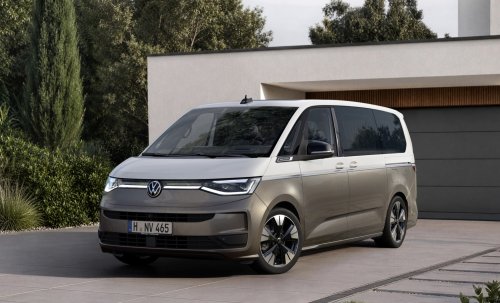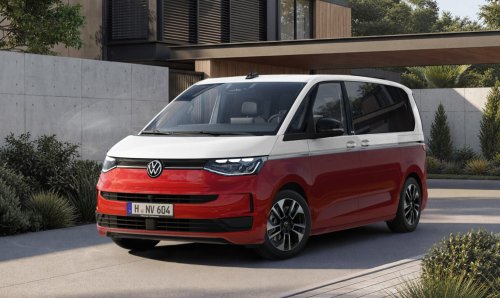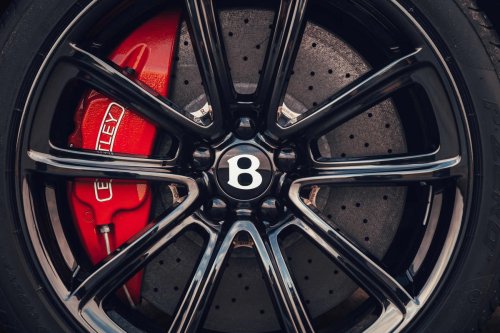
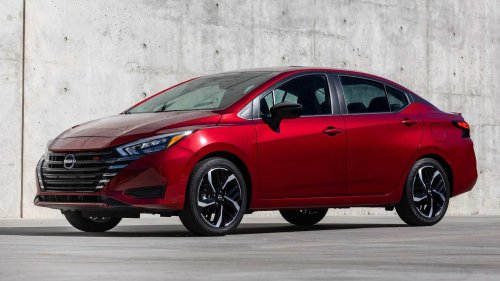
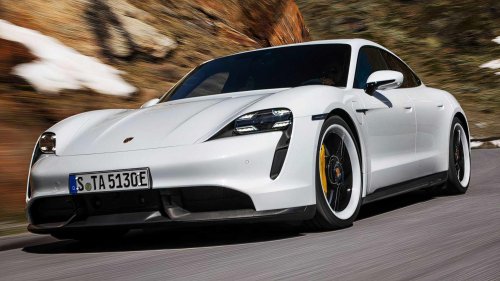
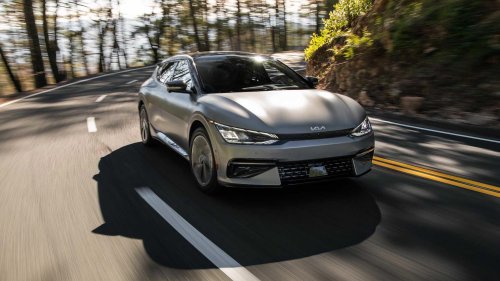




















Long before brands like Porsche, Mercedes / AMG and Cadillac made it trendy to dress up your disc brake parts so they'd display like jewelry from behind the car's spinning wheels, drum brakes were the norm. Back then, nobody loved drum brakes enough to dress them up for display with a splash of shiny metal and color, and past history meant that cars with four-wheel drum brakes were not known to stop very well or, be very safe.Then, the 90s arrived, and four-wheel disc brakes were becoming a hot item. Initially popularized in high-performing cars of the day, cars with 'four-wheel disc brakes' promoted them strongly in advertising for years as shoppers sought safer vehicles with better technology on board. At some point in the middle of all this, high-performing cars like the Dodge Viper and Porsche 911 started to dress up their disc brakes, and the trend carried downstream. More and more shoppers wanted in on four-wheel discs, and the lowly drum brake was largely wiped from existence in all but a few specific applications.BentleyIn that same timeline, drum brakes largely lived a lonely life on the rear axle of some cars and trucks where they were often left to leak and rust, and where nobody thought of them, and where they were typically covered or concealed to hide us from their unsightly looks. It was discs, not drums, that got all the attention, all the latest engineering advancements, and all the flashy visual upgrades. Well, mostly – as you'll see below.Below, we'll take a look at some recent advancements in drum brake technology and a few EVs that use it, as well as a look at why drum brakes might be poised to make a comeback.We're checking the manufacturer-provided specifications of a multitude of EVs to see which ones offer drum brakes in 2026 and provide some insight as to why they could be a great fit for the application. The Pros And Cons Of Drum BrakesNissanDrum brakes aren't commonplace on the road today, though they're still popular in some specific applications. For instance, the Toyota Tacoma only switched to rear disc brakes for its latest generation, while the previous generation ran a front disc, rear drum setup. More broadly, pickup trucks and SUVs held onto drum brakes longer than cars, commonly because drum brakes are easier to service, less complex, and constructed in a way that protects them from excess dust, dirt, mud, and water in an off-road setting.You'll find rear drum brakes on the 2025 Nissan Versa and other similar affordable cars, too. That's because drum brakes are easier to make and assemble, built from cheaper materials, and can lower the price (and potentially maintenance costs) of cars equipped with them. They're also known to operate with less drag, which can help cars to more affordably hit fuel or energy-efficiency targets. Regenerative Braking Explained PorscheWhen an EV drives down the road, its wheels – which are connected to its motors – are spinning at all times, whether or not the motor is applying power to them. When you accelerate in an EV, the motors apply power to the wheels, driving the car. When you remove your foot from the accelerator, the car coasts. Now, the wheels are spinning, but the motors aren't sending power to them. In this situation, the spinning wheels drive the electric motors instead of vice versa. When the EV's coasting wheels drive the electric motors, electricity is generated (not consumed), and stored in the battery.Press the brake pedal, and the effect is amplified. "It takes a lot of energy to power the motor and thus turn the rotor against the magnetic resistance," explains Ingo Albers, head of chassis development at the Porsche development center in Weissach. "This negative torque can be used to brake the vehicle".KiaAlbers is talking about the Porsche Taycan, but the principle works in much the same way on all EVs: when you brake, most of the deceleration comes from that magnetic resistance as the rotor turns, the level of which is controlled by the brake pedal. This magnetic resistance generates electricity and negative torque instead of heat, and does most of the work of slowing down the car.In this way, most braking in an EV is almost totally electric, with traditional friction brakes used mainly to hold the vehicle at rest when stopped, or for hard stops or panic situations where the ABS needs to engage. The amount of energy an electric motor can recover during braking continues to be an area of development, with cars like the Taycan and Ioniq 5 N able to regenerate tremendous electric braking and energy recovery before any friction and heat are required. Making a Comeback?FiatDrum brakes have popped up in a few EVs like the Volkswagen ID.3, ID.4, and ID.Buzz, and you'll also find them in the Fiat 500e. Though common misconceptions may persist in some circles, supplier Continental offers some context. In a 2022 article, they mention that drum brakes are nearly as old as the car itself, and often associated with small cars with low-performance engines. Still, they caution that this could result in an oversight of the 'existing technical features of drum brake technology itself'.These include longer service life, increased robustness, and reductions in brake dust emissions. Modern drum brake housings offer protection to the mechanisms within, keeping them away from water, sand, and salt. In turn, this can make the parts inside last longer, and easier to change or service when required.Other advances allow Continental's latest drum brake technology to generate more braking torque using lower activation force. There are no hydraulic fluids required, which reduces maintenance and improves durability and lifespan. The parking brake is also integrated into the enclosed drum, keeping it away from corrosion. Especially in harsh climates and remote locales, this extra protection against braking system corrosion can drastically extend the intervals between servicing, especially for owners of EVs who only drive on occasion. Finally, each has a wheel control unit and integrated torque sensor that allows precise modulation of each drum brake, allowing engineers to precisely tune the braking system to the vehicle's specific characteristics.According to Continental, this braking system is designed for use in both the rear axles of heavy vehicles and the front axles of light vehicles. In North America, it's likely we'll see more rear-drum equipped EVs hit the market as options continue to expand, though a four-wheel drum setup might be a tough sell.