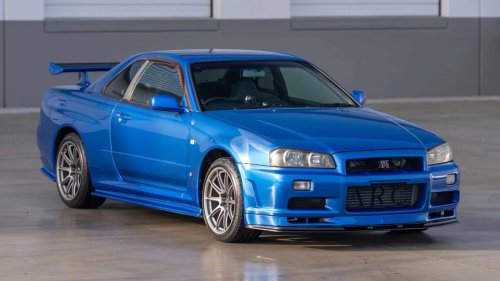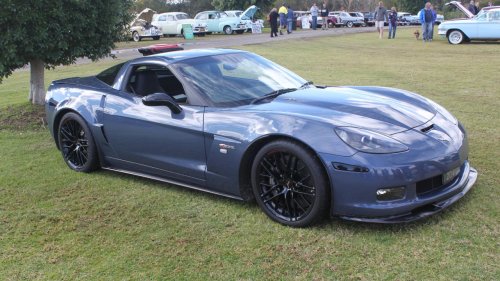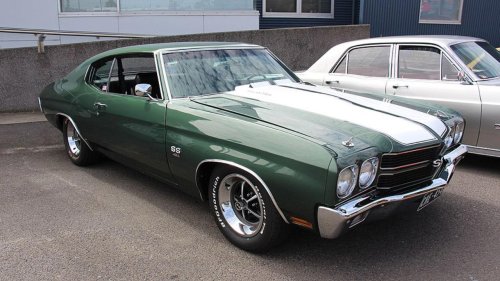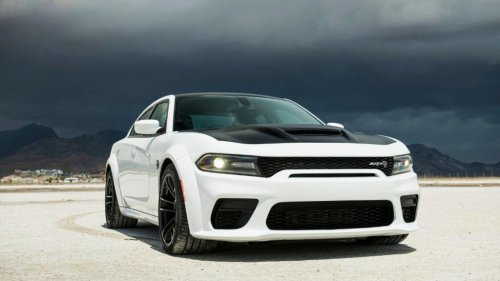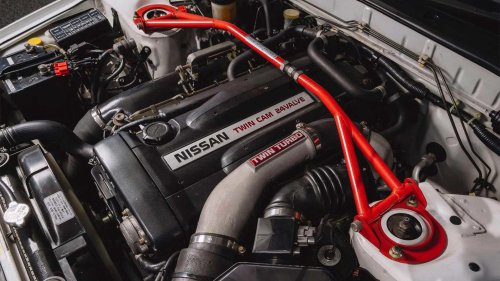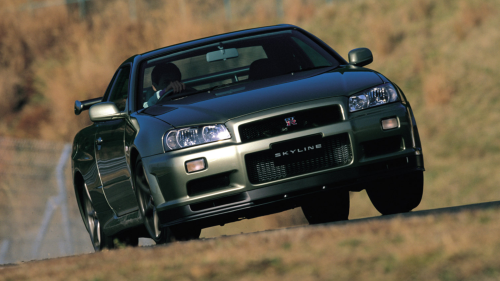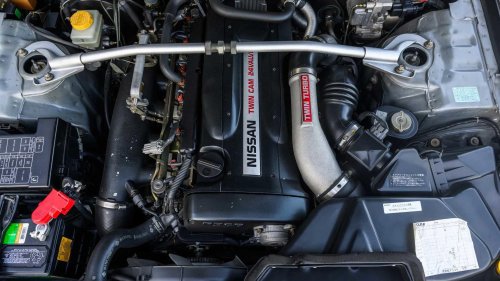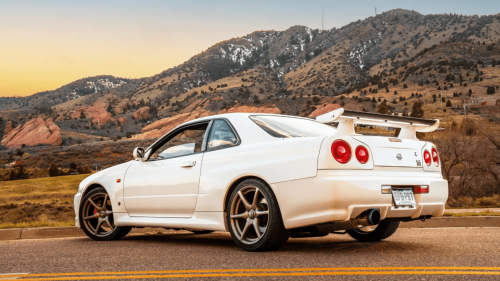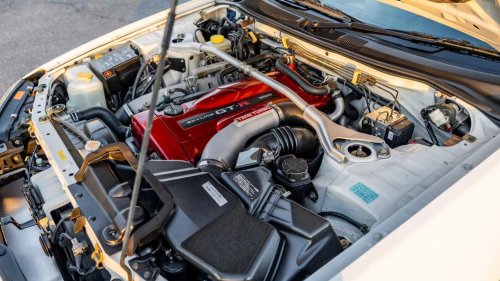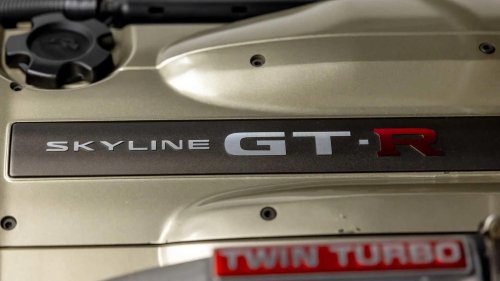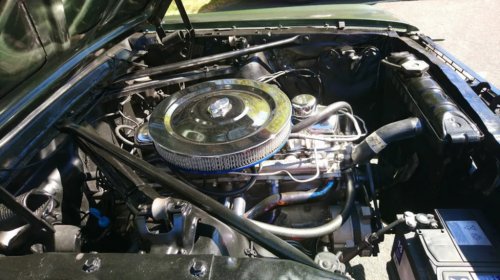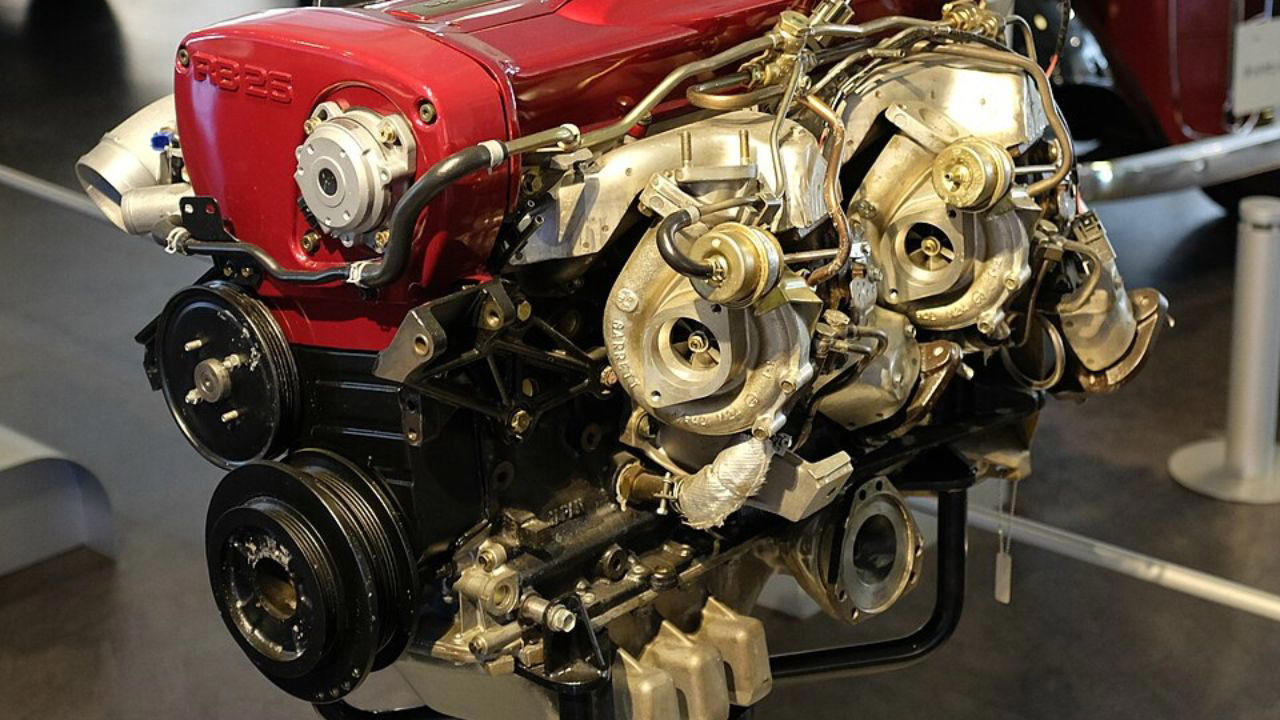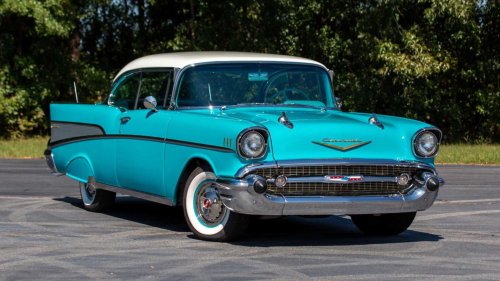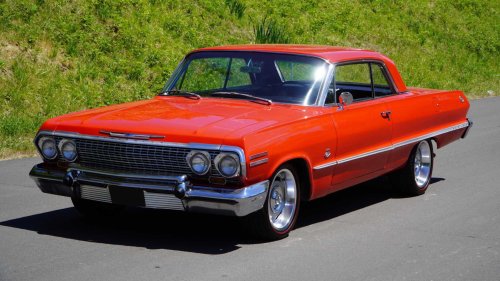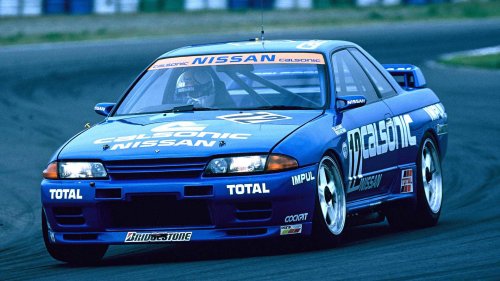
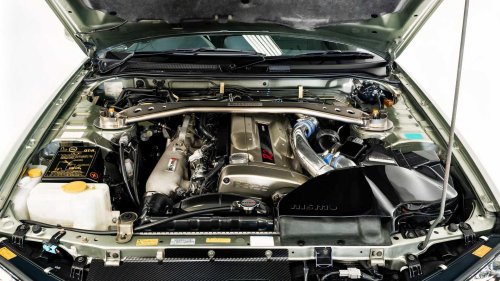
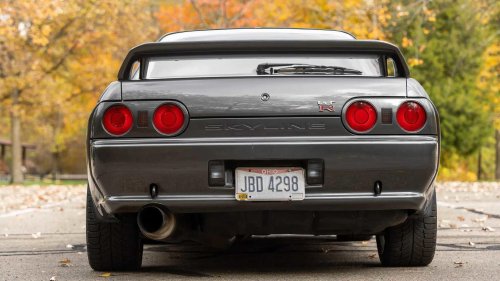
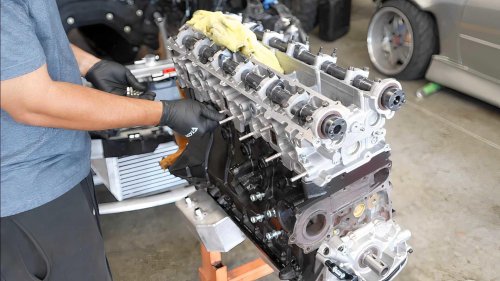
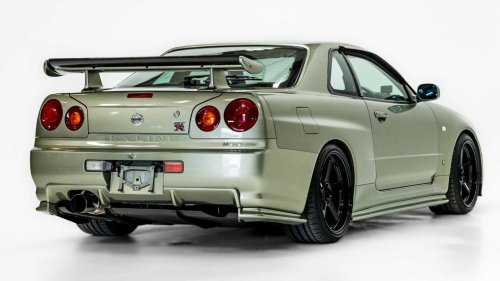

















In 1989, America's performance car market was built on a familiar foundation: displacement, V8 architecture, and the assumption that big cubes meant fast cars. The Corvette, the Mustang GT, the Camaro IROC-Z. These were the benchmarks that mattered. Nobody in Detroit seriously expected a Japanese manufacturer to unseat them, least of all with an engine displacing just 2.6 liters and running 6 cylinders in a row.But in a Nissan engineering facility in Yokohama, a team under chief engineer Naganori Ito had other plans. They were not building a car for the American market. They were building a weapon for the racetrack, designed around one objective: absolute domination. What they produced would spend the next decade making Detroit's finest look ordinary on a spec sheet, without American buyers ever knowing the thing existed. Built For The Track, Not The Showroom Nissan The starting point was motorsport, not the road. Nissan's Group A racing program had been embarrassed by the Ford Sierra RS500 Cosworth in the Japanese Touring Car Championship in 1987 and 1988. The turbocharged Cosworth 4-cylinder was producing upwards of 500 hp in race trim, and Nissan's existing RB20DET-powered GTS-R could not live with it. Incremental development was not going to be enough.The Group A regulations applied a displacement multiplier of 1.7 to turbocharged engines to determine the effective class. Nissan tested a 2.4-liter unit before settling on 2.6 liters, which placed the car in the 4,500cc class where it had the clearest path to outright victory. The displacement was a deliberate calculation, not a round number.The architecture that resulted was over-engineered by any road car standard. A cast-iron block, aluminum 24-valve twin-cam head, 6 individual 45mm throttle bodies, a parallel twin-turbo arrangement with each turbo feeding 3 cylinders, and a forged crankshaft from the factory. The iron block gave the head enough structural support to breathe freely under boost. The individual throttle bodies eliminated shared-plenum compromises and delivered the transient response of a race engine. Everything in the specification pointed toward the track.The road car arrived in August 1989 with an official 276 hp at 6,800 rpm and 260 lb-ft at 4,400 rpm, figures constrained by Japan's voluntary manufacturer agreement, capping advertised power regardless of actual output. Dyno testing of unmodified examples has consistently shown real-world wheel figures closer to 310 to 330 hp. Crank output was considerably higher than Nissan was prepared to state. The Engine That Embarrassed Detroit, The RB26DETT Bring A TrailerWhen the R32 Skyline GT-R went on sale in 1989, the American V8 landscape looked like this: the Corvette C4 made 245 hp from a 5.7-liter V8, the Mustang GT made 225 hp from a 5.0-liter V8, and the Camaro IROC-Z made 230 hp from another 5.7-liter V8. Famous names, decades of heritage, and engines with nearly twice the displacement of the RB26DETT. Nissan's twin-turbo 2.6-liter 6-cylinder was producing conservatively 310 to 330 hp at the wheels, in a car with full-time all-wheel drive and 4-wheel steering.The Corvette was Detroit's best answer, and it still needed more than twice the displacement to get within a second of the GT-R to 60 mph. The inline-six configuration gave the RB26 near-perfect primary and secondary balance, allowing Nissan to push the redline to 8,000 rpm without the harmonic issues that plagued large-displacement American engines at similar revs. The parallel twin-turbo arrangement spooled both units simultaneously, producing linear power delivery from 3,500 rpm up rather than an on-off boost hit. Americans never got the chance to buy one, but the spec sheet told the story clearly enough. Why Racing Authorities Had to Ban The RB26DETT Bring A Trailer The most compelling evidence that the RB26DETT outclassed its contemporaries is not found in a magazine test. It is written into the rulebooks changed specifically because of it. When the R32 GT-R entered the Japanese Touring Car Championship in 1990, it won every race it entered. Every single one. The R32 GT-R took 29 victories from 29 starts across four seasons and claimed the series title from 1990 to 1993. The championship effectively ceased to be competitive and eventually collapsed.Australia told the same story. The GT-R entered the Australian Touring Car Championship in 1990 against Ford and Holden V8 machinery that had dominated domestic racing for years. It won back-to-back championships in 1991 and 1992, including the Bathurst 1000 both times. Sanctioning bodies responded with weight penalties and boost-restricting pop-off valves. The GT-R won anyway. For 1993, the ATCC changed its regulations to effectively exclude turbocharged and all-wheel drive cars entirely. Australia's motoring press coined the name "Godzilla" for a reason.The competition RB26, built with engineering firm Reinik, used a reinforced version of the standard cast-iron block, forged rotating assembly, more aggressive cam profiles, and larger turbos to reach around 600 hp. That the road-going block served as the direct foundation for that output level was a clear signal of the structural margins Nissan had engineered in from the start. The Tuning Ceiling That Motorsport Built Street Alpha Podcast YouTube The RB26's tuning potential is not a happy accident. It is a consequence of the motorsports brief. The iron block, oversquare bore-to-stroke ratio (86mm bore, 73.7mm stroke), forged crank, 8.5:1 compression, and reinforced connecting rods were specified because Group A racing demanded survival under sustained high-boost operation. The road car inherited all of it.Standard internals are reliably capable of handling 600 to 650 hp, with careful builds pushing past 750 hp before forged pistons and H-beam connecting rods become necessary. On the stock block with upgraded turbos, improved fueling, and a remap, 400 to 500 hp is achievable without opening the engine. The individual throttle bodies and well-flowing head meant tuners could extract significantly more power through camshaft and porting work than a shared-plenum design allows. The factory cam profiles ran 240 degrees intake and 236 degrees exhaust, leaving real upgrade room without radical valve timing changes.The motorsport-spec N1 variant illustrated the headroom in the standard design. It used a reinforced 24U block, upgraded internals, steel-impeller turbos in place of the road car's ceramic units, and a corrected oiling system that addressed the pre-1992 R32's known oil pump weakness at high rpm. The N1 block became the preferred foundation for serious builds because it fixed the one area where the standard engine fell short while preserving everything else. What a Nissan Skyline GT-R Costs Today Bring A TrailerThe R34 commands the premium. Nissan built approximately 11,578 units, and its cultural footprint has pushed values well beyond what the numbers alone would justify. According to market data, a good-condition R34 now requires $155,000, with V-Spec Concours examples at $375,000 and above. All three generations cleared US import eligibility under the 25-year rule by 2024, and American demand has been a meaningful driver of recent price movement at the top end.The R32 is the accessible entry point at around $47,000 for a good example. Post-1992 cars are the ones to prioritize, as Nissan corrected the oil pump weakness on the crankshaft interface during that production run. Values have stabilized rather than continued to climb, making this the most rational window for buyers who want the platform without the later-car premium.The R33 is the value argument that is quietly getting harder to make. Market data shows recent R33 transactions averaging $62,100, with Concours examples above $100,000. It was the first production car to lap the Nurburgring in under eight minutes, received updated ball-bearing turbos and revised rear-wheel steering, and carries the full corrected engine specification. As R34 prices keep moving, the gap between R33 and R34 values will not hold at its current width for long.