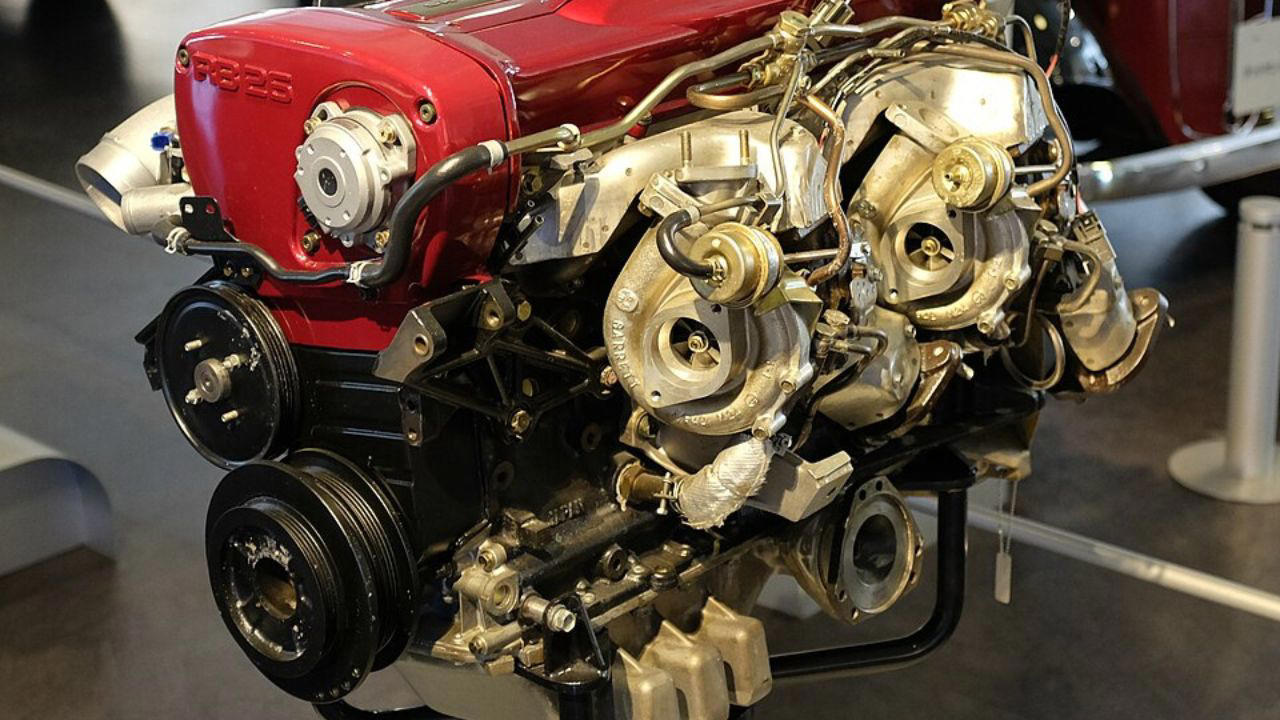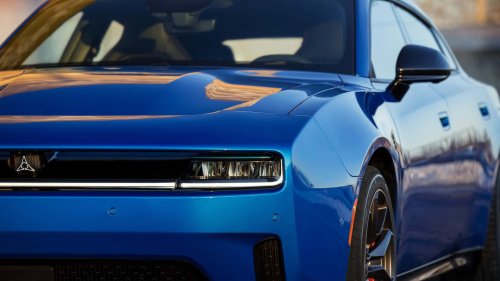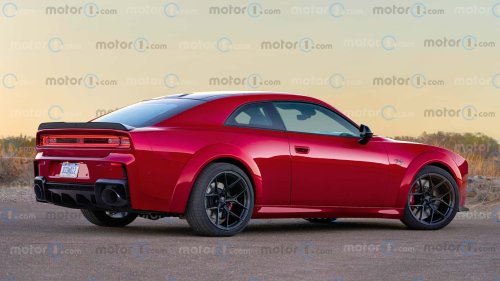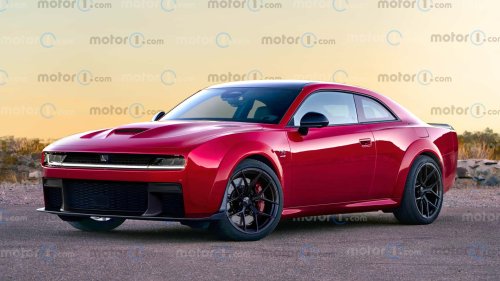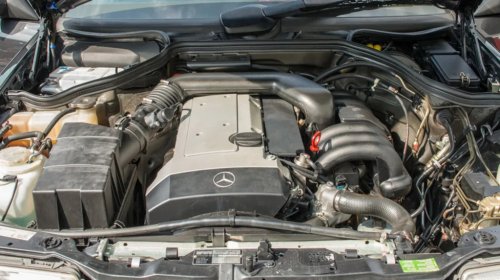
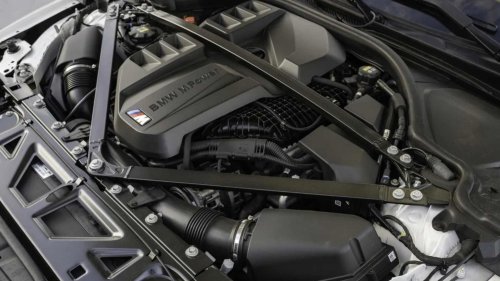
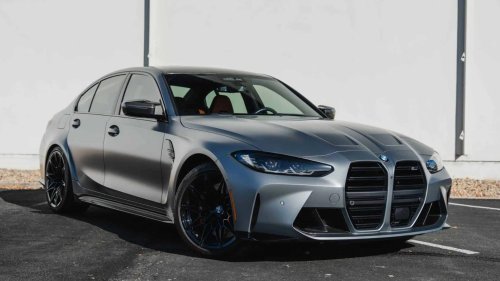
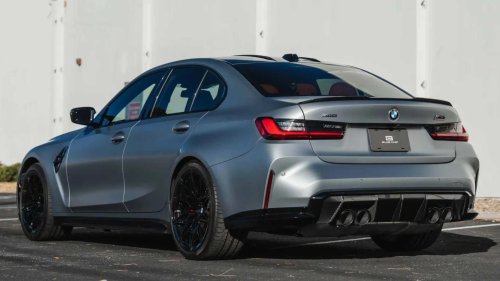
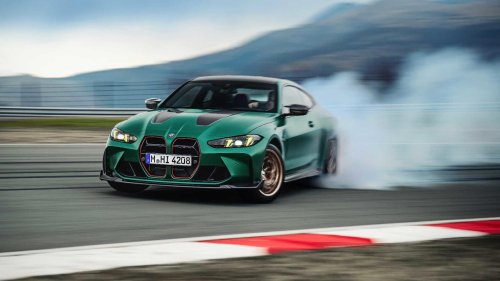
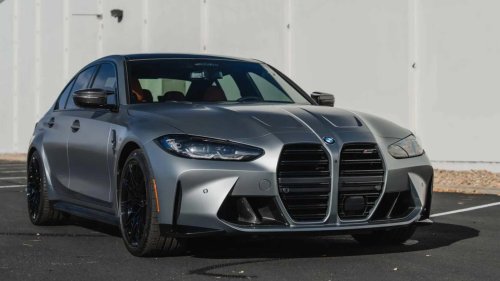
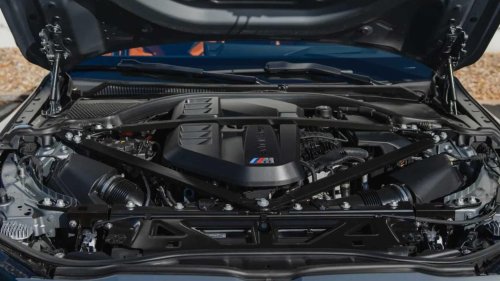
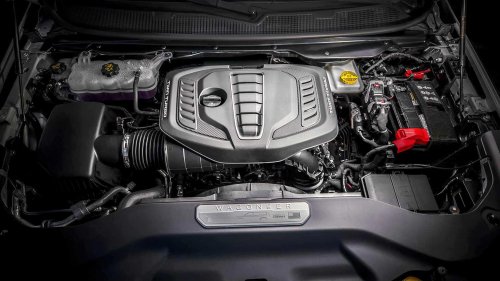
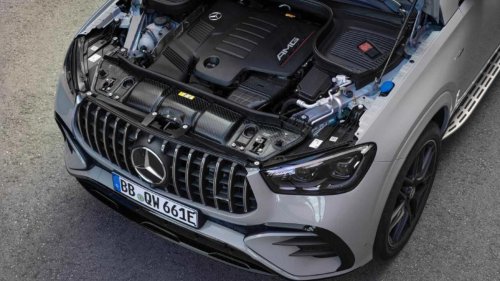
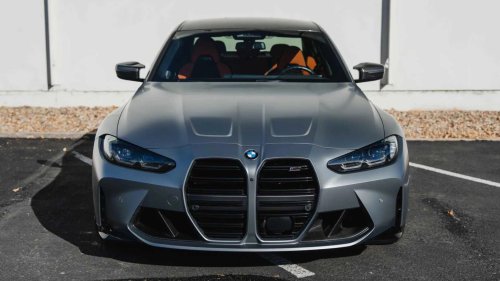



















For decades, the V8 has been the price of admission in performance cars. AMG built an empire on it. Cadillac put it in everything. American muscle turned it into a cultural identity. Eight cylinders meant you were serious.Then one manufacturer walked away from its own V8 and went back to six. The questions started immediately. Retreat, compromise, or something smarter? One inline-6 is now beating V8-powered rivals on the road and at the Nürburgring, and the answer is becoming clear. How The Best Engine Layout Got Left Behind — And Found Its Way Back Audi For most of the 1990s and 2000s, the inline-six quietly disappeared from mainstream performance cars. This is because the V6 was shorter, cheaper to develop, easier to package across front-wheel-drive and all-wheel-drive platforms, and simple to share between a family sedan and a performance flagship.An inline-six is a phenomenal layout because it has perfect primary and secondary mechanical balance. The narrow footprint makes it easier to package large turbochargers alongside the block. The separation of intake and exhaust manifolds improves thermal management in ways that a V-configuration engine cannot replicate as cleanly. On paper, it was always the better performance architecture.Stellantis Now, the industry is seemingly admitting its guilt. Mercedes-Benz brought the inline-six back in 2017. Stellantis followed with its Hurricane inline-6 unit, now producing 540 horsepower in the new Dodge Charger. Jaguar Land Rover moved back to the layout across its performance lineup. Mazda committed to it as the foundation of its next generation of rear-wheel-drive vehicles. The engine configuration that accountants killed in the 1990s is the one engineers are choosing when they have a free hand in 2026.One manufacturer never fully walked away from it. Through a generation where critics called it a step backward, they kept developing the layout, pushing the architecture harder than anyone else in the segment. This automaker built an engine that has since made the debate look one-sided. The BMW Inline-Six That Rewrote The Rules Bring a TrailerThe G80 BMW M3 Competition runs the S58, a 3.0-liter twin-turbocharged inline-six producing 503 hp and 479 lb-ft of torque. The standard M3 makes 473 hp through a six-speed manual, one of the very few sports sedans producing more than 400 hp where a third pedal is still part of the equation. Push the S58 harder, and you get 543 hp in the M3 CS and M4 CSL.The S58 uses twin mono-scroll turbochargers, a closed-deck engine block, a 3D-printed cylinder head, and a high-pressure direct injection system running at up to 350 bar. The 3D-printed head allows for cooling channels that conventional casting cannot produce, and the closed-deck block provides the rigidity needed to handle sustained high boost without long-term reliability concerns.Bring a Trailer The S58 powers the M3, M4, M2, X3 M, and X4 M. It is BMW's performance foundation across an entire model lineup, developed and refined at scale. Its performance actually has a wide range from 453-543 hp and 406-479 lb-ft of torque depending on the application.The next generation M3 will carry an updated version of the S58, expected to start at around 523 hp and incorporating a 48-volt mild-hybrid starter-generator to sharpen throttle response further. BMW is not looking to replace the inline-6 S58, rather they are working to build on what they already know works. The Inline-6 Performance That Makes The V8 Look Slow Bring a Trailer The M3 Competition xDrive in which it hit 0-60 mph in an astonishing 2.8 seconds. This is enough to beat the Cadillac CT4-V Blackwing and the Audi RS5 Sportback without breaking a sweat. The Blackwing is no slouch: 472 hp from a twin-turbo V6 and a 4.0-second 0-60 with the automatic transmission in the same test. The M3 Competition is 1.2 seconds quicker, from a smaller engine with two fewer cylinders.Bring a Trailer The AMG C63 comparison is where the story gets interesting. Mercedes dropped its twin-turbo V8 entirely and replaced it with a 2.0-liter turbocharged four-cylinder paired with an electric motor, producing a combined 671 hp and 752 lb-ft of torque. That system weighs nearly 700 lbs more than the outgoing car and sprints to 60 mph in just 2.9 seconds. Still marginally slower than the M3 Competition xDrive's 2.8 seconds.All that complexity, all that weight, and Mercedes is essentially tied with a 3.0-liter inline-six that has been on sale for years. The gap between the numbers on paper and the numbers on a timing sheet is the whole story of why engine architecture matters more than headline figures.BMW The Nürburgring makes the case even more bluntly. The M4 CS lapped the Nordschleife in 7:23.975. Much faster than the previous gen, and quicker than the M5 Competition, which carries a larger twin-turbo V8 in a bigger, heavier body. A straight-six sports sedan outrunning BMW's own V8 flagship at the world's most demanding circuit is truly remarkable.The M4 CSL pushed the argument to its logical conclusion, recording 7:18.137 at the Nordschleife. That puts an inline-six BMW among the genuinely fast cars on the most honest test track in the world, not by adding cylinders or displacement, but by getting the architecture right. Six In A Row: Why The Architecture Was Always Superior Bring a Trailer The inline-six's advantage starts with its fundamental mechanical balance. Each piston has a complementary piston moving in the opposite direction, canceling reciprocating forces completely. The cross-plane V8's bank-to-bank firing order cannot achieve this without additional counterweights, which adds complexity and mass.Turbocharging rewards this layout in a specific way. A twin-turbo inline-six uses two three-cylinder exhaust pulse groups, which improves turbo response compared to setups where pulses are shared across cylinder banks. The narrow footprint of the inline layout also makes it easier to fit large turbochargers and keeps the intake and exhaust manifolds separated, which is better for thermal management and reliability. A V8 with a "hot V" turbocharger layout can achieve a similar level of thermal management, but still run much hotter.Bring a Trailer BMW also tilts the S58 in the engine bay roughly 30 degrees to the right to keep the center of gravity as low as possible. That addresses the one traditional criticism of the inline layout that it sits too high, without giving up any of its inherent advantages.The internals are built to match the architecture's potential. The S58 uses a closed-deck block, a forged steel crankshaft, forged connecting rods, and forged aluminum pistons — a combination designed to handle sustained high boost without wearing out prematurely.The result is an engine running 9.3:1 compression, a 7,200 rpm redline, and a bore and stroke of 84mm × 90mm, tuned to deliver top-end power while the twin turbos take care of everything happening below 3,000 rpm. Essentially, the S58 is the complete, near perfect package. BMW M has even tuned one for racing applications making 1,000 hp. Every Major Brand Is Quietly Moving Back To The Straight-Six Stellantis BMW is not the only manufacturer that has arrived at the conclusion that the inline-6 is a great platform. Stellantis, Mazda, and Jaguar Land Rover have all moved back to straight-six layouts in recent years. The Dodge Charger Six-Pack produces 540 hp from the Hurricane inline-six. The nameplate most synonymous with V8 muscle in America is now making its performance argument with six cylinders, rather than a Hemi V8.Mercedes Even Mercedes-AMG acknowledged the layout's superiority when it introduced the M256 in 2017, a 3.0-liter turbocharged inline-six paired with a 48-volt mild-hybrid EQ Boost system that powers everything from the S-Class to the AMG 53 performance models. In AMG 53 trim, the M256 produces 429 hp and 384 lb-ft of torque, with the mild-hybrid system adding instant torque assistance at low revs. Mercedes understood what the inline-six offered and built an entire performance sub-brand around it.The inline-six has quietly become the default choice for automakers navigating the transition to an EV-powered future, precisely because it integrates more naturally with mild-hybrid systems than a V8 or a heavily boosted four-cylinder. Why The Inline-Six Is Now The Smarter Performance Buy Bring a TrailerThe base M3 with the S58 is available with a six-speed manual. It's one of the very few sports sedans making more than 400 hp where the driver still controls the gearbox. That option alone separates it from most of what the segment currently offers.The torque curve does something the old S65 V8 never could. Power arrives earlier and builds more linearly through the rev range, which makes the M3 faster in the real world where most driving happens between 2,000 and 5,000 rpm, not at the screaming 8,400 rpm redline. It is a more everyday usable car, but importantly, a faster one, which is not always a trade-off manufacturers get right.The tuning headroom reinforces the case further. With minor bolt-on modifications, the S58 is capable of reaching 600 hp, a ceiling that V8-powered rivals at similar price points rarely match at the same cost. The engine was built with structural headroom that goes well beyond its factory figures. The next M3 will start at around 523 hp with mild-hybrid assistance. The inline-six argument is only going to get stronger from here.Sources: BMW, BMW M, FastestLaps