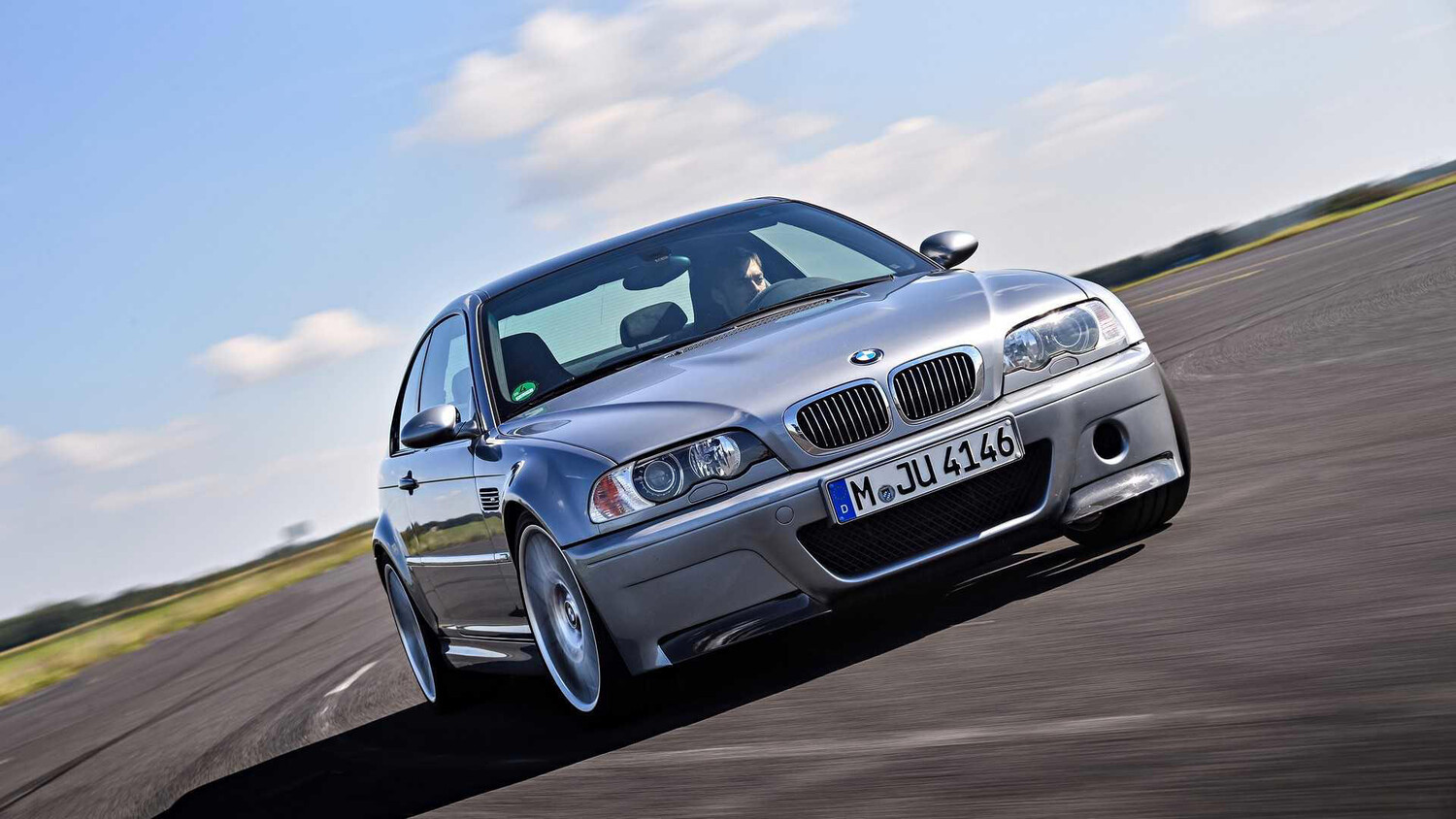
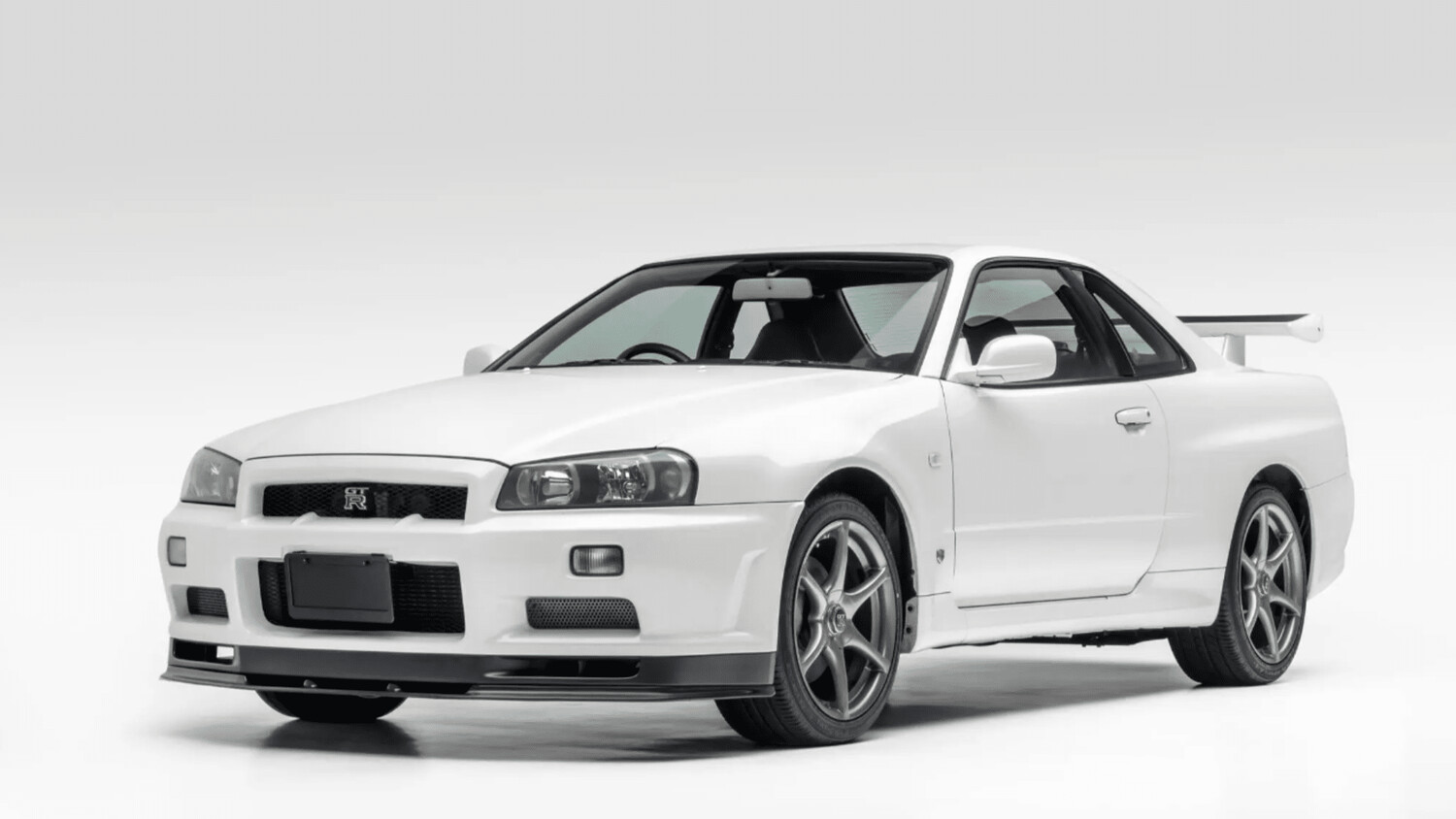
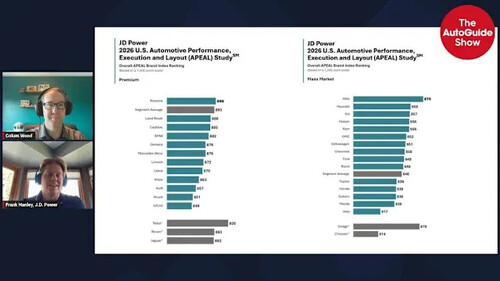
If you asked an engineer to start from a clean sheet of paper and design the perfect piston engine, there's a good chance the result would be an inline 6-cylinder. Inline, or straight sixes, are compact, strong, and have perfectly balanced primary and secondary forces. Examples fromBMW, Toyota, and Nissan are well known for their performance, but even Ford has shown an I-6 can keep up with and even outperform V8s.I've assembled the top ten inline 6s that will not only outperform V8s, but are some of the best examples ever produced. This isn't just about making horsepower on the dyno or even quarter-mile times. Honestly, it would have been easier for me to just assemble a list based on peak horsepower. Instead, things like how they perform in everyday driving, ease of tuning, and just plain old sound and feel were all considered when making the list.As with most of the lists I write, this is meant for fun and not considered a rigorous scientific endeavor. While I am relying on my experience in automotive engineering and 20 years of vehicle testing, my inner 10-year-old car enthusiast's opinion carries just as much weight in making decisions. All specs and information comes directly from the respective car manufacturers. Dodge/Jeep/Ram 3.0L Hurricane HO Twin-Turbo StellantisFirst entry, and the keyboard warriors are already pounding out all-caps diatribes about the Hurricane. One camp is screaming about Stellantis falling to the bottom of JD Power's Reliability List, while another is angry that the most powerful engine is number 10 on the list. I haven't driven a car with any version of the Hurricane yet, so I couldn't go higher. Reviews from other journalists, ones I trust, say it's a great consolation for losing the Hemi; it isn't a replacement. The most common problems seem to be a sticking thermostat, which has (reportedly) been fixed, and carbon buildup, which is inherent with Direct Injection. Maybe 0W oil isn't the best idea? Anyway. This engine hasn't been around long enough to judge long-term reliability. With more power and torque than the 392 Hemi and almost no lag, it sounds like a winner for Jeeps and sports sedans. Specs Ford Barra 4.0L Turbo Ford Total Fail, Bro. I know another big-powered engine sitting low on the list. I haven't driven this one either, but I have a good excuse. The Ford Barra inline 6 was never sold in the US. It was only used in cars in Australia and New Zealand. I don't know if the turbo spins backwards. The Barra 325T, found in the 2016 Falcon XR6 Sprint made 436 hp from the factory, but these are basically the Australian 2JZ and will do 800 hp on stock internals. Some tuners are claiming 2,000 hp with built engines. JD Power doesn't have reliability data on these, but if the Barra can survive in the hands of enthusiastic Aussies, it has to be built like a bank vault. Specs FACTOID: Most countries determine vehicle tax based on cylinder count and displacement, so the smaller six was more economical than Ford V-8s at the time. BMW S54B32HP 3.2L BMW The beauty of an inline six-cylinder is the balance and willingness to rev. The best way to enjoy that is with a naturally aspirated engine. The standard S54 is a notable engine that makes over 100hp/liter and revs to 8,000 rpm all day long. The HP version from the M3 CSL was a hot-rodded version of that, with a small power bump and some driveability improvements. The engine management used a MAP sensor instead of a MAF. The variable valve timing system was improved, and it even got a carbon fiber plenum so you could hear those individual throttle bodies sing. All S54 engines require diligent maintenance, and while they will never be cheap to maintain, being able to do some of the work will help. Newer turbocharged BMW engines are capable of far more power, but does that make them better? Specs FACTOID: The US got a watered-down version of this car called the e46 M3 Competition with several of the suspension improvements, but not the engine. BMW S55 3.0L Twin-Turbo BMWThe original S55 in F8X M3 and M4 had sledgehammer power delivery. That's not intended in a flattering way. I didn't have a lot of accuracy, and it always took a bit of wind up to deliver. When BMW took a little longer on the programming or decided to build a car for driving enthusiasts and middle-aged finance bros, it created an engine that reacts to driver inputs with linearity and predictability. Some of that programming trickled down into other F8X cars like the Competition. The engine is smooth, tractable, and produces loads of power and torque. It can handle over 700 lb-ft on stock internals and still be reliable – well, reliable for a BMW. Specs FACTOID: The M4 GTS uses water injection to increase boost pressure from 172 psi in regular M4s to 21.6 psi. Nissan RB26DETT Twin-Turbo Bring A Trailer Nissan rivals BMW in quantity and quality of I-6 engines. The RB26DETT is a cult classic from the R32/33/34 Skyline GT-Rs. These are iron block, aluminum head engines that can handle extreme amounts of boost, as tested in every way imaginable by tuners around the world. From the factory, the RB26DETT used individual throttle bodies, sodium-filled valves, and ceramic impellers in the exhaust side of the turbo. They were great for street use, but were usually replaced with steel for competition. Some of these engines had oiling problems and suffered from owners finding them too easy to tune. Specs FACTOID: Japanese car manufacturers had an unofficial agreement that cars in certain segments would be limited in horsepower. This is why so many JDM cars are rated at 276 hp, while clearly producing more. BMW S58 3.0L Twin-Turbo BMW Group The S58 isn't just an upgrade to the S55; it represents a huge step forward in the development of BMW's I-6 engines. The closed deck block is significantly more rigid than previous designs. The head utilizes a 3D printed core that offers better flow and more precise placement of the fuel injectors. The S58 is capable of big power, but also has better response than its predecessor. Not only is it capable of more power, but so far at least, it appears more reliable in both factory spec and with aftermarket tuning. Specs Mercedes-Benz M256 3.0L Single-Turbo Mercedes-Benz For decades, Mercedes was well known for I-6 engines used in luxury and performance applications. While we've mostly been talking about the I-6's ability to rev and handle boost, the smoothness of the engine makes them ideal for cars like the S-Class, which debuted the M256 in 2017. But, with different tuning, the same basic engine is also used in the AMG GT53. This is Mercedes' new tech showcase. Like AMG engines, it uses an aluminum block with the cylinder liners arc-sprayed onto the surfaces. The head is also aluminum and uses 4 valves per cylinder; the exhaust valves are sodium-filled. The 48-volt hybrid system uses an electric compressor to eliminate lag while the single turbo is spooling up. These are amazing engines that I'm not sure I would want to own a high-mileage example. Specs FACTOID: Mercedes phased out I-6s in favor of V-6s in 1999, but the M256 I-6 came back in the 2017 S-Class as part of the modular engine program Toyota/BMW B58 Twin-Scroll Turbo Bassem Girgis / HotCarsThere aren't huge differences between the B58 engine found in the Toyota Supra and the one in cars like the BMW M340i. In fact, it almost all comes down to tuning. Both the Supra and the Z4 M40i are available with a manual, and the cars' specs are similar on paper. Toyota has gone decidedly more sporty with its car's character, making it louder and feeling more eager. This is a single turbo engine, but it still doesn't exhibit much turbo lag. It may not be the legendary 2JZ, but tuners are still getting some big numbers from these cars while maintaining reliability. Japan and Europe get a 429 hp version of the B58 Supra, but tuners like Dinan can get there with just a piggyback system. Bigger builds are seeing 1,000+ hp numbers, which should make longtime Supra fans happy. Specs Factoid: Toyota claims that while this is essentially a BMW Z4, every tunable aspect of the car was touched by its engineers. Mercedes-Benz M198 Direct-Injection Karissa Hosek @ RM Sotheby's The most recognizable car in the world is powered by the least known engine. Not only was the Mercedes-Benz 300SL one of the first production cars with fuel injection, it used Bosch direct fuel injection. To maintain the low hood height Mercedes wanted for aerodynamics, the block was leaned over 50° to the left. The M198 was dry-sump, iron-block, aluminum-head, and used a huge sandcast intake manifold to make 215 hp. An optional factory sport cam bumped that to 240 hp. For comparison, a 1956 Corvette with a 4.3 V-8 only made 225 hp. In its day, the M198 was not only a brute, but was way ahead of its time technologically. It was designed for competition, so it was also tough as nails. Specs FACTOID: This was a direct gasoline direct injection engine in 1956, a technology that would take almost 50 years to return. Toyota 2JZ-GTE Twin-Turbo Bring A Trailer Let's face it, the Supra and its 2JZ wouldn't have achieved legendary status without Vin Diesel and Paul Walker. When it was new, car magazines put the car in comparisons with cars like the four-cylinder Porsche 968 and Nissan 300ZXs, it wasn't considered a supercar. It won those comparisons. The 2JZ-GTE is an iron-block, aluminum-head engine that uses twin sequential turbochargers and makes 320 hp, officially. The aftermarket is virtually unlimited for the 2JZ and stock and even mildly tuned versions are known to run for years virtually trouble-free. Many of the early problems, timing belt tensioners, and weak seals have been worked out over the years, so this might be the greatest inline six-cylinder engine of all time. Specs