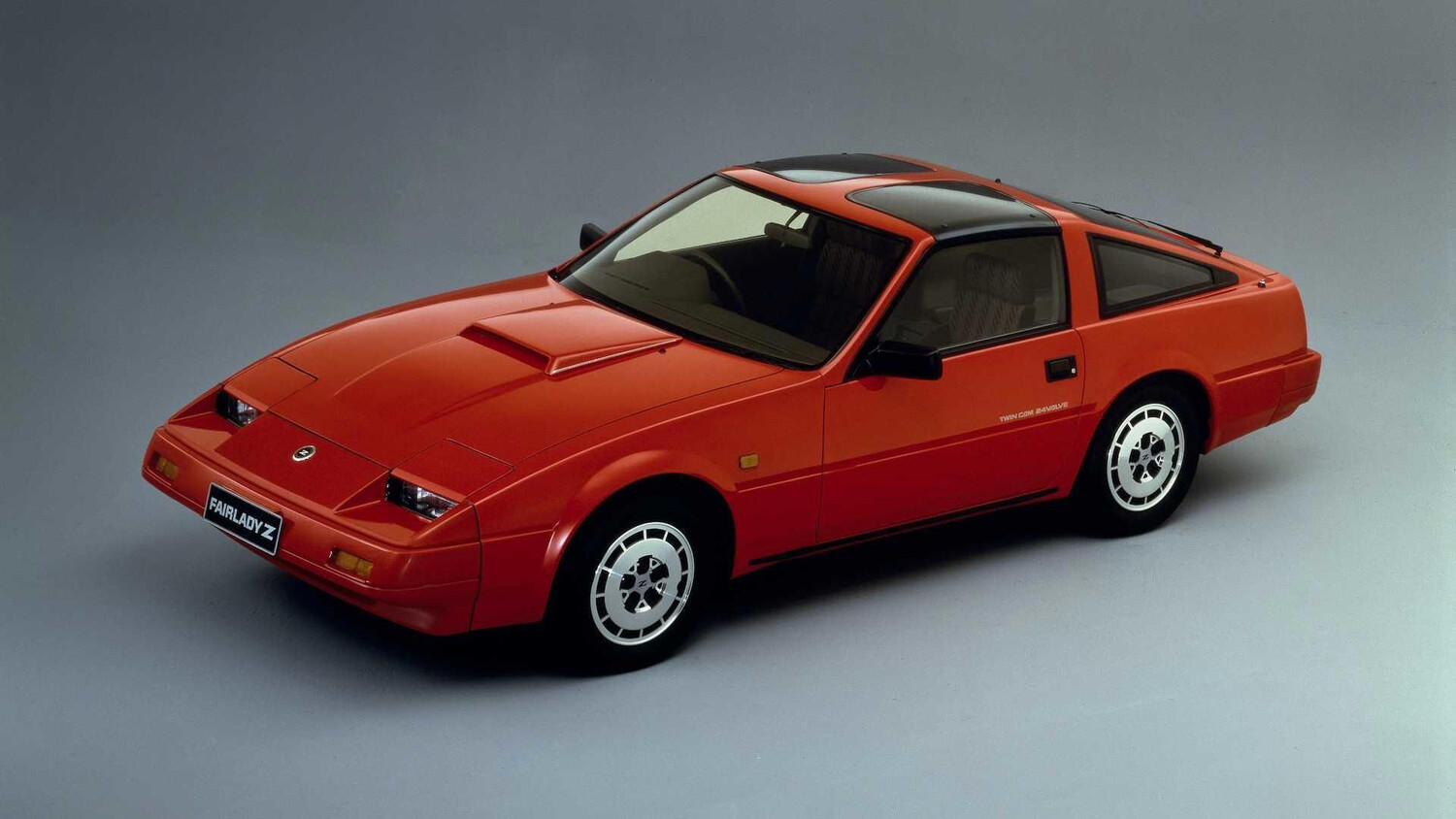
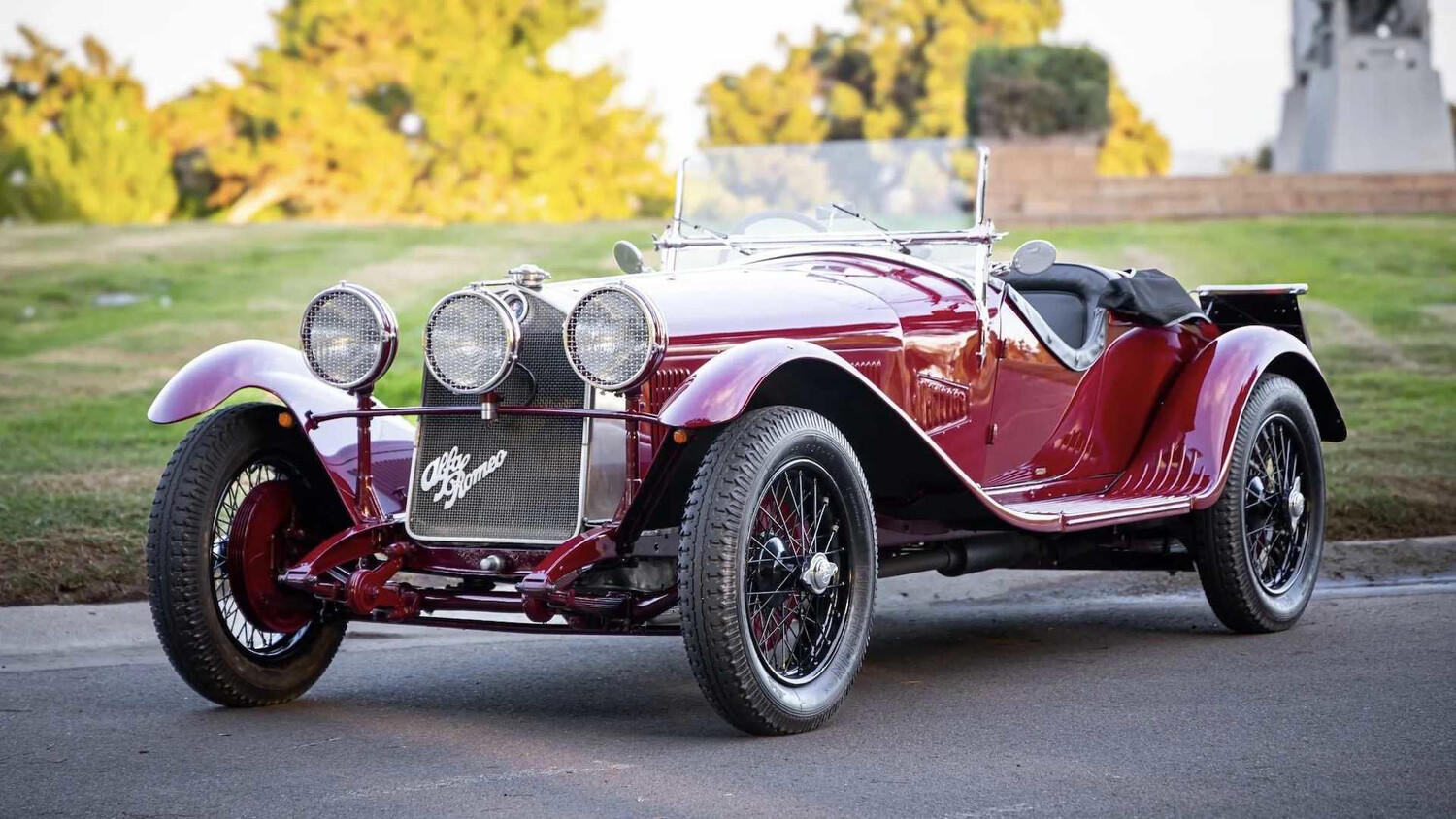
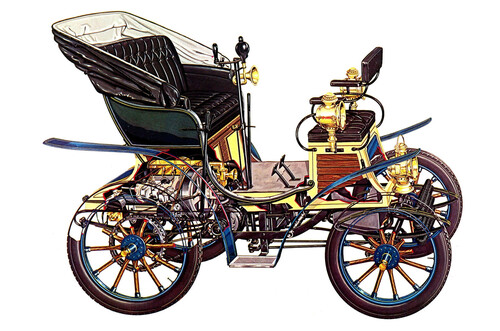
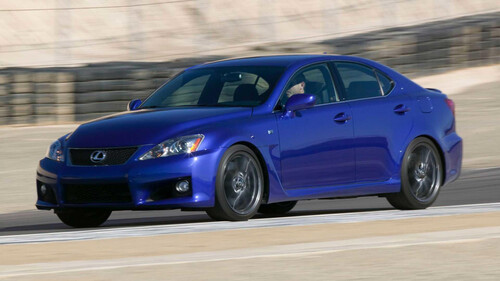
In 1903, Dutch automaker Spyker created the world's first car powered by a straight-six engine. It was powered by a massive, 8.8-liter engine that made 60 hp of power, and it was sent to all four wheels via a basic four-wheel-drive system, and it could reach a 'mind-boggling' top speed of 90 mph. But what about the other end of the scale, and (really) small-capacity straight-six engines?We list 10 production cars that were fitted with small-capacity straight-six engines, ranging from a German 1.2-liter 'six' to an all-American, 2.4-liter straight-six.A trip down the history lane, and a look at production cars fitted with small-capacity six-cylinder engines. Cars are listed according to specific engine capacity, from large to the smallest. Ford Falcon Engine Capacity: 2,359 cc 1963 Ford Falcon 114 front, three-quarterFrom 1960 to 1964, Ford installed a 2.4-liter straight-six engine in the Falcon, equipped with a one-barrel carburetor. The engine produced around 90 hp, and it didn't pack a lot of performance punch. What it did do was drink a lot less fuel than contemporary six-cylinder engines. The Falcon was the first compact car from the USA's Big Three auto companies, and it came in every format, including two and four-door sedans, two-door coupes and convertibles, station wagon variants as well as the Ranchero truck. Holden 48-215 (FX) Ute Engine Capacity: 2,170 cc 1952 Holden FX UteThey called the 2.1-liter straight-six engine installed in the Holden 48-215, commonly referred to as the FX, 'The Grey' engine. That's because the cast-iron block was finished in a distinctive gray hue. In the early 1950s, the 48-215 was Australia's first mass-produced vehicle, and the first General Motors product to wear the Holden badge.The small-capacity straight-six engine produced just 60 hp, and the power was sent to the rear wheels via a three-speed, column-shift manual gearbox. The straight-six engine has sufficient torque at lower revs to get some hauling done. It's a bit like more recent Holden V8 trucks, but just completely different. Nissan 200 ZR-II Engine Capacity: 1,998 cc 1985 Nissan 200 ZR-II T-Top front, three-quarterNow here is a rare JDM unicorn. It is the Nissan 200 ZR-II, and only around 1,000 of these T-Top sports cars were ever made, and very few made it across the Japanese border to reach international buyers. It was on sale between 1985 and 1988, and it is powered by a turbocharged two-liter version of Nissan's famed RB straight-six engine family. The engine made 178 hp in the 200 ZR, and it was the last Nissan Fairlady Z to be powered by a straight-six engine before Nissan switched over to the V6 configuration, with the latest Z boasting 400 hp and twin turbochargers. BMW 320/6 Engine Capacity: 1,991 cc 1982 BMW 320/6BMW has a long history with the straight-six engine, and in 1977 the company's E21 320/6 replaced the previous-generation, two-liter four-cylinder engine. The M20 six-cylinder engine added more power and smoother operation to the deal, bolstering BMW's premium and more upmarket image. The 1,991 cc engine produced 120 hp and 116 lb-ft of torque, ensuring a 112 mph top speed. The M20 engine, breathing through a four-barrel carburetor, served in the 320/6 until 1982.The 323i was the top dog in the E21 line-up, powered by a 2.3-liter straight-six engine with fuel injection. It had around 140 hp, and reached 60 mph in around 8.5 seconds. Lexus IS200 Engine Capacity: 1,988 cc 2010 Lexus IS200 front, three-quarterThe Lexus IS200, powered by a two-liter, straight-six engine, produces a hearty 155 hp, with the option of a slick six-speed manual gearbox sending the power to the rear wheels. In short, it was essentially a Temu version of the brand's IS F V8 performance sedan. Here was a luxury, high quality sedan, offering some real cool driving vibes, the 1G-FE engine, complete with variable valve timing, happily spinning to nearly 7,000 rpm.The IS200 was available in sedan and wagon formats, and the manual version is the one to have. The original IS200, on sale from 1998 to 2005, unfortunately did not make it to the USA market. Toyota 2000 GT Engine Capacity: 1,988 cc 1967 Toyota 2000GT front, three-quarterThe erstwhile Toyota 2000GT is still the peak Toyota sports car. It made its debut in 1967, and it is powered by a two-liter straight-six engine, developed in partnership with fellow Japanese manufacturer Yamaha. Thanks to Yamaha's expertise in high-performance motorcycle engines, the GT's straight-six, which originally came out of a Toyota Crown saloon, is essentially a work of art. Yamaha also helped develop much of the rest of the car, and the result is a sports car that changed the perception of all Japanese cars forever.The engine made 150 hp, revved to tomorrow, and in the light, beautiful car (with the Jaguar E-Type as inspiration), provided a level of performance that made the world sit up and go: "What the actual heck is that?" Only 351 Toyota 2000GTs were ever made, and today each of those are worth upwards of a million dollars.Mercedes-Benz 8/38 200 Engine Capacity: 1,988 cc Mercedes-Benz 8/38 front, three-quarterThe Mercedes-Benz 8/38 made its debut in 1932, kicking off the brand's long-term relationship with straight-six engines. It was powered by a two-liter, side-valve straight-six engine that produced a rather underwhelming 38 hp. The power was sent to the rear wheels via a three-speed manual gearbox, with live axles at both ends.The Mercedes was obviously no speed demon, and it could muster a top speed of around 50 mph. Considering the period mechanical brake system, that top speed is probably a safety feature in itself. For speedier customers, Mercedes also offered a 2.6-liter version of the straight-six engine, producing 50 hp. Triumph Vitesse 6 Engine Capacity: 1,596 cc 1964 Triumph Vitesse 6British car marker Triumph introduced the Vitesse 6 in 1962, and it came with a 1.6-liter straight-six engine until 1966. The 1,596 cc engine produces 82 hp and 92 lb-ft of torque, which was enough to propel the saloon to almost 100 mph. The sporty saloon weighs just 2,000 pounds, and a four-speed manual gearbox transfers the power to the rear wheels.A total of 31,278 Vitesse 6 cars were made. The "6" could get to 50 mph in about 15 seconds (hey, it was the sixties), and it also drank very little fuel, reaching up to 30 MPG. Alfa Romeo 6C 1500 Engine size: 1,487 cc 1929 Alfa-Romeo 6C 1750 front, three--quarterThe iconic Alfa Romeo 1500 was created for the sole purpose of building on the Italian company's winning ways in the Automobile World Championship, the predecessor of Formula One. Alfa Romeo won the championship in 1925 in its two-liter, straight-eightracing car. The rules changed for the 2026 season, limiting capacity to 1.5-liter engines. Enter Alfa's 1,487 cc straight-six engine, fitted in the 6C roadster. In Super Sport trim, the engine produced 60 hp. With a supercharger in the game, the power was hiked to 84 hp, and a top speed nudging the 100 mph mark.By 1929, capacity had grown to 1,750 cc, and over the next four decades, it would eventually grow to a 3.5-liter, 275 hp racing engine, in the 6C 3000 CM that was driven in the Mille Miglia by the legendary Juan Manuel Fangio. BMW 303 Engine Capacity: 1,173 cc 1932 BMW 303 front, three-quarterBMW's 303, which made its debut in 1933, represented a bunch of firsts for the Bavarian automaker. It was the first car to introduce the kidney grille design, the first fully in-house design from the company, and also the first straight-six engine. Unlike modern BMW M straight-six engines, which make a zillion horsepower, the 303 was originally powered by a 1.2-liter straight-six engine producing 30 hp.Around 2,300 BMW 303 cars were made over a two-year period. It may not have been in the same league as the Ford Model T from a sheer numbers perspective, but it laid the foundations for one of the most iconic car brands on the planet.