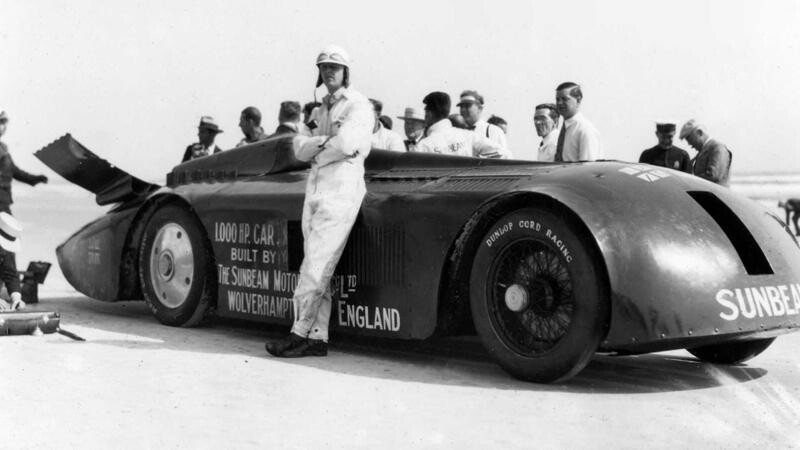
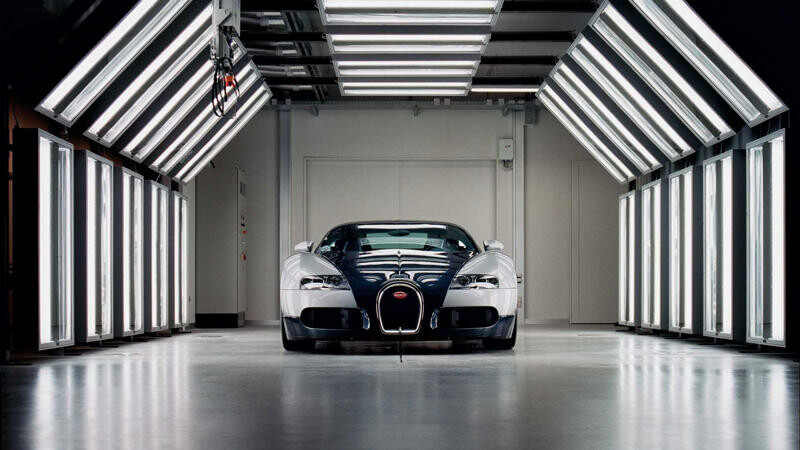
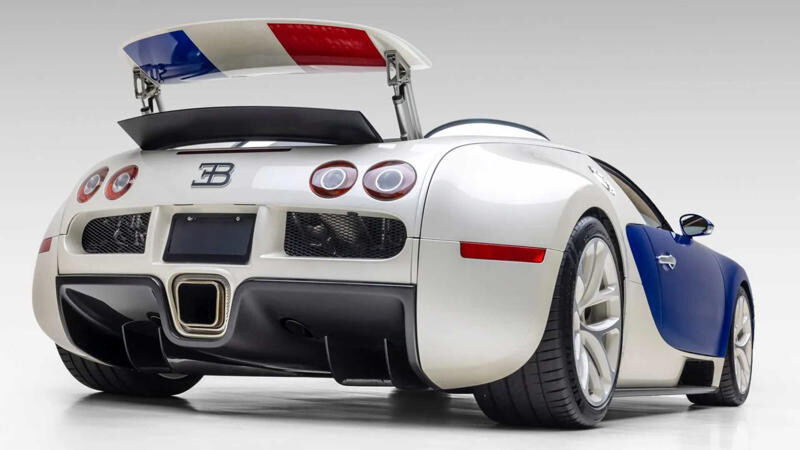
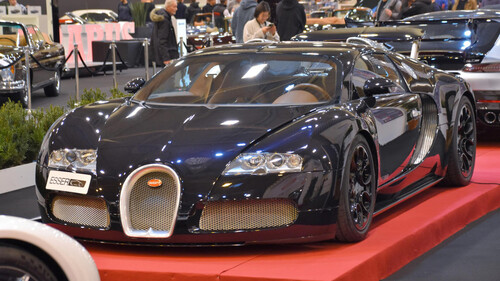
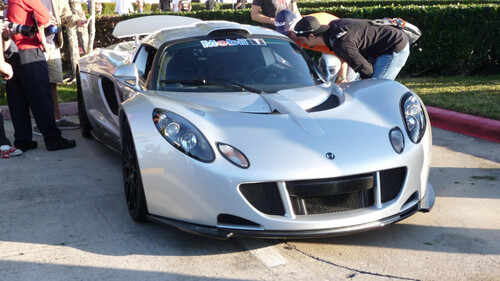
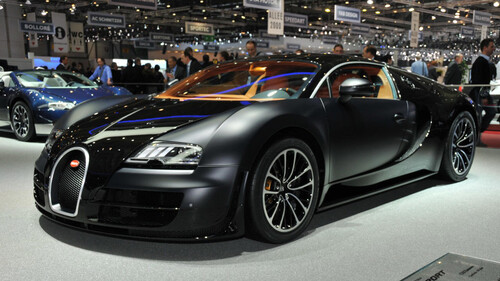
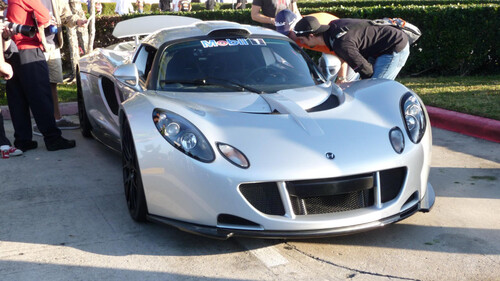
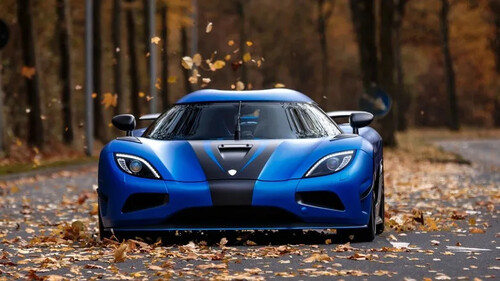
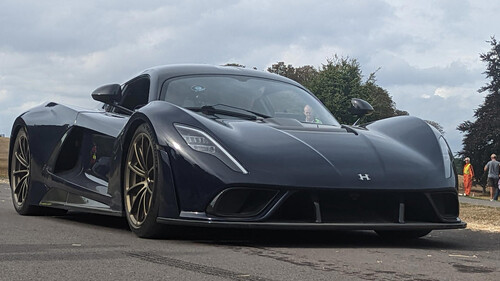
When a commercial jet disconnects from a jet bridge and begins to taxi out towards the runway, there’s always that quiet sense of anticipation and suspense that never really goes away, no matter how old you are. And when it finally lines up, waiting for clearance, the throttles are pushed forward, the engines surge, and suddenly it’s hurtling down the runway at around 180 mph, pushing you swiftly back into your seat. For a split second, it feels like this should be as fast as something so big should ever go. Then comes the callout, “rotate.” The nose lifts, the ground falls away, and suddenly, the speed makes sense.But what happens when there is no “rotate”? No escape into thin air, and the calmness which soon follows as you climb into the sky. What happens when something stays on the ground and just keeps going, like a demented Cheetah fueled by a Lucozade and pre-workout energy powder. Concorde was a machine built to outrun sound itself, and this similar mindset from Bugatti was repeated, this time working its way into the car. It refused to accept limits, and broke the 250mph speed barrier, a feat no production car had ever done before. Vive la vitesse! The Culture of Speed - Why Humans Keep Chasing It National Motor Museum This achievement didn’t happen in isolation. It was the result of decades spent chasing speed in all its forms. From land speed record attempts to machines like Concorde redefining commercial flight, there’s always been a very human fascination with pushing beyond limits that once felt impossible. But chasing that kind of speed on the ground is a far more unforgiving pursuit, with friction, heat, and physics working against you. For the engineers behind this particular hypercar, these challenges didn't cause them to back away from their ambitions. Rather, they leaned into them, chasing a number that, for years, felt out of reach for any car with a license plate. The Bugatti Vayron Was Chasing Record-Breaking Speed on the Ground Bugatti While a plane gives you the chance to mentally prepare yourself for the inevitable surge of acceleration that comes before take off, a Bugatti Veyron only needs a quiet stretch of road to unleash its power.The belly of this almighty beast is an 8.0-liter, quad-turbocharged W16 engine, which fuses two narrow-angle V8s together to create a then-unthinkable power output of 1,001 horsepower. Torque, meanwhile, stands at 922 lb-ft, and all of that’s sent through a robust Ricardo-built, seven-speed dual-clutch transmission, a figure far beyond what any production dual-clutch system had previously managed at the time.But what made this engine truly remarkable, however, wasn’t just its output, it was how Bugatti engineers packaged it. Using an innovative ‘WR’ configuration, the Veyron’s engine had four banks of cylinders which shared the same compact footprint, which allowed for a 16-cylinder engine to fit into a space not much larger than a conventional V12.Bring a Trailer Meanwhile, to avoid any rear-wheel drive theatrics that might later have you in a ditch, Bugatti married it to a four-wheel drive system, planting all that power down onto the tarmac for a 0–60 mph time in around 2.5 seconds. As a result, it didn’t take long for the Veyron to make headlines, achieving a verified 253 mph top speed.Of course, the Veyron wasn't just about raw power. Engineers needed to figure out how the Veyron was going to sustain and survive it all, too. This resulted in up to 10 radiators fitted to the car. Meanwhile, active aerodynamics were incorporated to balance drag and downforce, and a secret key slot lowered the chassis and unlocked its full potential.Bugatti At top speed, it consumes fuel at such a rate that its 100-liter tank can deplete in around 12 minutes flat, highlighting just how extreme the demands of all those cylinders are.When it arrived in 2005, the Veyron didn’t just raise the bar for performance, it obliterated it, becoming the first production car to break the 250 mph barrier, while redefining what was even possible on four wheels. But perhaps more importantly, was that it proved that Volkswagen Group’s then-radical vision, under Ferdinand Piëch, which envisaged the most extreme road car ever conceived, wasn’t just wishful thinking. It became a fully realized engineering marvel, and despite sending shock waves throughout the industry, was still praised by journalists for being as easy to drive as a VW Golf. Several Hypercars Came Close to 250 MPH, But None Beat the Veyron to It McLaren Before the Bugatti Veyron reset the rules, there were already machines painfully close to the 250 mph threshold. And yet, despite all their efforts, they still couldn't quite reach that elusive figure.Perhaps the most obvious and arguably most iconic one of them all, was the British McLaren F1, the world's most powerful car from the 90s. Developed under Gordon Murray, it wasn’t built with outright top speed as its primary goal, yet it still managed to reach a very respectable 240.1 mph, making it the fastest production car in the world for years. It was powered by a naturally aspirated V12 engine from BMW, and made 618 hp. While the Veyron deploys brute force, the F1’s main obsession was instead aerodynamic efficiency and lightweight construction. And of course, we can’t talk about the F1 without mentioning its rather unconventional central driving position.HennesseyA decade later, and the baton of extreme speed was passed on to other hypercars, like the Hennessey Venom GT. Built on a heavily modified Lotus Exige chassis, and powered by a twin-turbocharged 7.0-liter V8, the Venom GT produced over 1,200 hp and recorded a top speed of 270.49 mph. However, those celebratory bottles of Budweiser were short-lived. Questions around production numbers and official verification meant it never quite carried the same “production car” legitimacy that the Veyron established years earlier. It may have had the speed, but it didn’t have the fully rounded engineering package of the Bugatti Veyron. Performance Comparison: The Veyron vs Its Closest Rivals The car which would eventually have the record books rewritten once again, came from the Swedes. The Koenigsegg Agera RS. In 2017, it achieved a two-way average of 277.87 mph on a closed highway in Nevada, officially becoming the fastest production car in the world. But, this came more than a decade after the Veyron had already broken the 250 mph barrier, and benefited from advancements in tire technology, aerodynamics, and powertrain developments that Bugatti itself had helped pioneer. Innovative Engineering Made 250 MPH Possible Bring a Trailer Breaking 250 mph wasn’t simply a question of adding more power, it required solving problems no road car had ever encountered before. When a car is reaching such sky-high speeds, aerodynamic stability becomes a fight against lift, not drag. To address this, the Veyron deploys an active rear wing that doubles as an airbrake, altering its angle depending on speed and braking input.With the Veyron’s Speed Key inserted into that secret slot mentioned earlier, the car’s central hydraulics lower the suspension to just 65mm, reducing drag while maintaining enough downforce to stay planted. Then there’s managing all that immense thermal and mechanical stress generated at these speeds. To keep everything cool, from the engine and intercoolers to the transmission and differential, those 10 radiators all work together to sustain 1,000 hp at full tilt. The tires, meanwhile, were developed by Michelin, and featured a bespoke construction capable of surviving not just the speed, but the heat buildup that comes with it.With the Veyron then, it was engineering every component to survive the extremes, that separated it from every car that came close, and explains why it was able to do what others couldn’t at the time. The Bugatti Veyron Redefined Speed on the Ground BugattiItalian high-speed test driver Loris Bichocchi, who played a pivotal part in the Veyron’s development once said, “A Bugatti car is and should remain timeless.” For everything it achieved, this will always be the defining quality of the Veyron, and more than two decades on, continues to inspire the pursuit of record-breaking speed today.Like Concorde before it, it represents a point when engineering ambition briefly outpaced what the world thought was possible. And as Bugatti continues to push the boundaries of the hypercar, the Veyron remains a singular milestone in the marque's 115-year history. The moment the seemingly impossible, became real on the road.