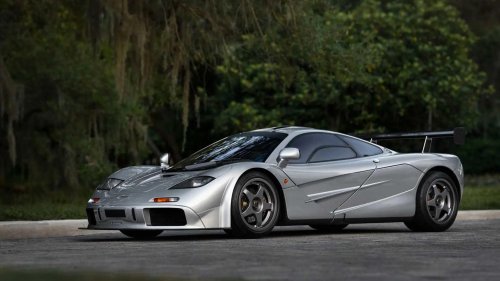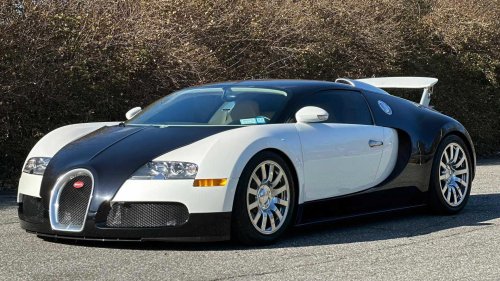
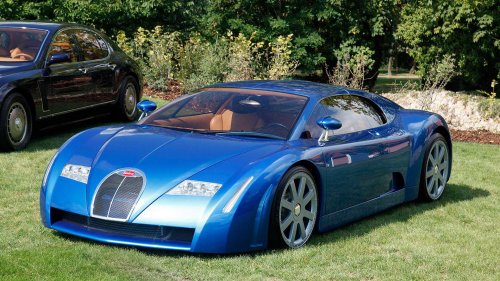
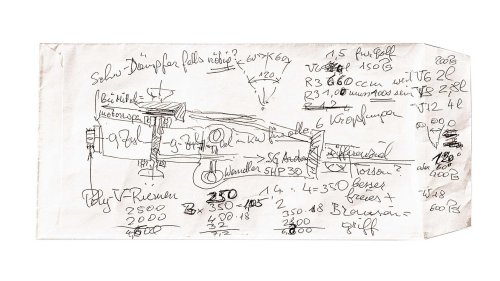
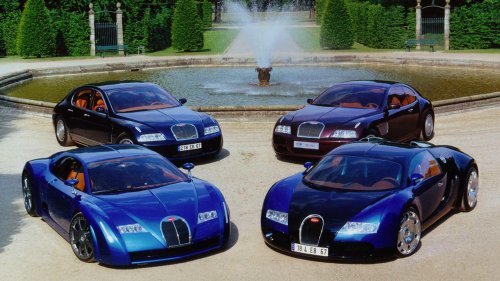
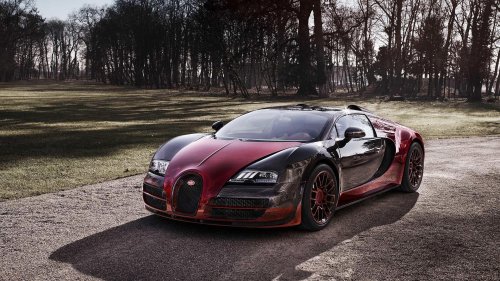
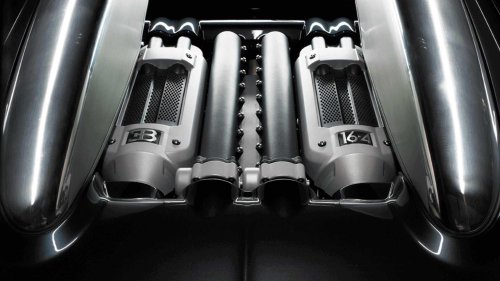
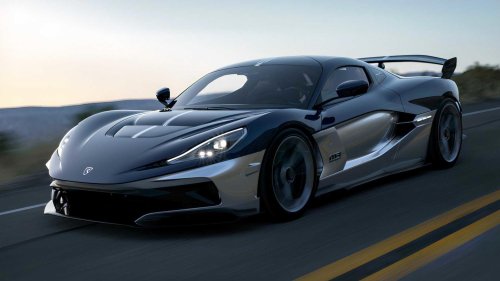

















For most of automotive history, horsepower numbers have increased in increments, thanks to a sharper camshaft here, or a bigger carburetor there. The supercar era of the 1980s and 1990s saw manufacturers push the limits of performance to new heights, with hypercar legends such as the Ferrari F40 or the McLaren F1 redefining the boundaries of what a performance car could achieve. Yet even with such machines rewriting the rulebook, one four-digit barrier remained just out of reach for the production car: 1,000 horsepower.This 1,000 horsepower barrier finally fell with the launch of theBugattiVeyron 16.4 in 2005. The Veyron entered production with a power output of 1,001 ps, and a top speed of 407 km/h (253 mph), making it the first series production car to exceed both 1,000 ps and 250 mph simultaneously. From the very first drafts on a sketchbook, the Veyron was engineered as an automotive prowess showcasing speed, luxury, and daily life usability, making it not just a simple record-breaking machine, but a multifaceted car with no precedent in the production car world. Coming Up With The Idea Of A 1,001 PS Production Car BugattiLooking back at the very origins of the Bugatti Veyron 16.4 is essential to understand the vision behind it. In 1997, Ferdinand Karl Piëch, the Chairman of the Volkswagen Group at the time, sketched on an envelope what would later become the Veyron, while riding the Shinkansen from Tokyo and Nagoya.In this very first sketch, Piëch conceptualized an 18-cylinder engine assembled from three VR6 cylinder banks offset at 60 degrees. And though there was no car around it yet, this first engine draft hinted at the unique nature of what a car powered by such an engine could be. Guided by Ettore Bugatti’s philosophy and motto of "if it's comparable, it's not a Bugatti," Piëch set ambitious performance targets for his new project, with 1,001 ps and a top speed above 250 mph. There were other non-negotiables as well, such as real-world usability and, more specifically, a car that would be comfortable and refined enough to drive to the race track and to the opera on the same day.While the 1,001 ps or metric figure corresponds to an equivalent of 987 hp or mechanical horsepower, the "first 1,000-horsepower production car" label assigned to the Bugatti Veyron has historically been accepted but technically refers to metric PS, not SAE horsepower. Bringing The Veyron From Concept To Production Stage Bugatti Veyron. Prototypes-4Between 1998 and 1999, Bugatti presented a total of four concept cars rapidly succeeding one another, each showcasing a version closer to what Piëch had conceptualized. The first concept, the EB 118, was a striking two-door luxury coupé designed by Giorgetto Giugiaro, which debuted at the 1998 Paris Motor Show. It was followed by a four-door saloon variant, the EB218, revealed at the 1999 Geneva Motor Show. A few months later, the EB 18/3 Chiron was unveiled at the Frankfurt Motor Show in September 1999. Last but not least came the EB 18/4 Veyron, a few weeks later at the 1999 Tokyo Motor Show. Designed by Jozef Kabaň, this fourth concept established the visual and conceptual DNA of what would eventually become the production car.As the design of the car evolved, so did the engine. The original W18 layout was set aside and replaced by a quad-turbocharged W16 engine. This new engine configuration offered a more compact setup that was also lighter and better suited to forced induction. A near-production-ready Veyron finally made an appearance at the Paris Motor Show in September 2000. From a carefully developed concept, Bugatti still had to face the task of building a car that could be homologated and sold to the public while living up to each and every performance numbers that had originally been promised. The Engineering Behind The Bugatti Veyron 16.4 hdcarwallpapers.comThe Veyron’s 8.0-liter W16 engine is composed of two narrow-angle V8 units joined at 90 degrees, and that are fed by four turbochargers. The W16 produces 1,001 PS and 1,250 Nm of torque (987 horsepower and 922 pound-feet of torque), but it wasn't achieved without challenges, as keeping the engine within its operating temperature required a total of ten radiators. Challenges extended well beyond the engine itself, due to the necessity of creating a complete ecosystem of engineering solutions that could handle the car’s performance. A 7-speed dual-clutch gearbox was specifically developed for the Veyron in order to handle extremely high torque and distribute that power to the four wheels. Aerodynamics were equally critical for the car to stay stable even at speeds of 250 mph, and the Veyron was engineered to alter its ride height and aerodynamic profile at high speeds. Under braking, the rear wing deploys as an air brake. Michelin also developed a special set of tires that could handle the Veyron’s top speed as no existing production tire was suitable for the job. The development program for the Veyron reflected the scale of the challenge, with a total of 11 prototype cars built to cover several hundred thousand kilometres under extreme conditions. How The Bugatti Veyron 16.4 Redefined The Horsepower Ceiling The production of the Veyron 16.4 began in 2005 and fulfilled all of its promises: the Veyron accelerated from 0 to 62 mph in 2.5 seconds and reached an average top speed of 407 km/h (253 mph) in official testing at Volkswagen's Ehra-Lessien proving grounds. Over the Veyron’s production run of 10 years, Bugatti built a total of 450 units, with 300 coupes and 150 roadsters. With a heavy cost linked to research and development, the production of the Veyron amounted to about $1.62 billion. According to a Bloomberg report, Bugatti had averaged a transaction price of around $2.6 million, but even despite the higher price tag for some of the special versions, Bugatti has lost money on every unit sold.Two decades later, the Veyron’s legacy matters more than ever. Four-digit power figure sports cars have since become more common with the help of electric power, and 1,000 hp cars such as the Tesla Model S Plaid or the latest Porsche Cayenne Turbo Electric are more accessible to a wider audience. Though the 1,000 hp figure doesn't carry as much weight as it once used to, the Veyron still remains the very first car to have raised the ceiling of what a performance car should be, by bridging extreme performance with ultimate comfort and everyday usability. Every hypercar that followed, including the Chiron, has followed the standard set by the Veyron.