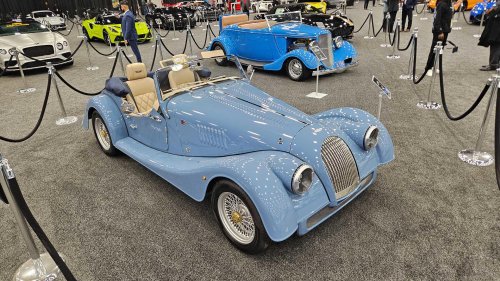
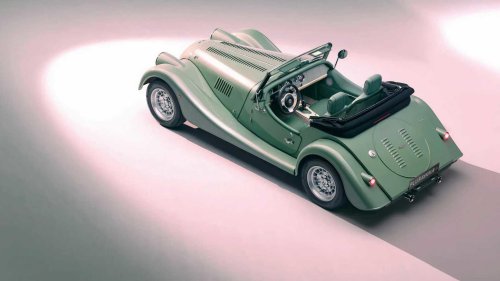

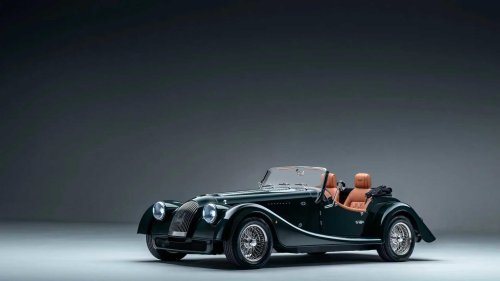
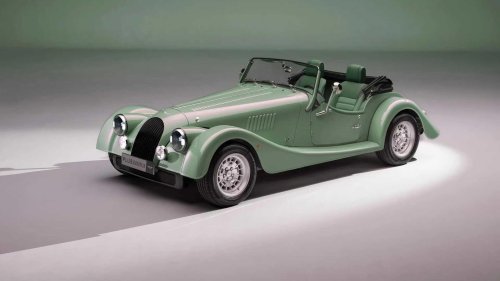
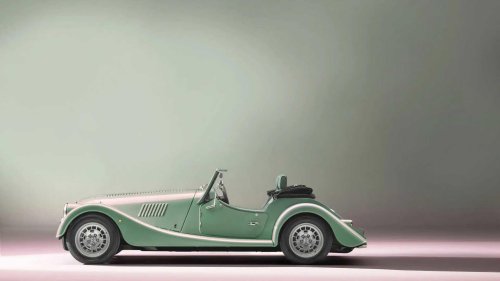
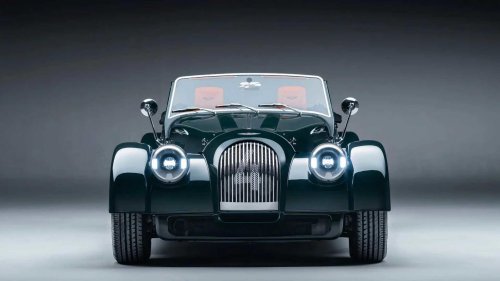
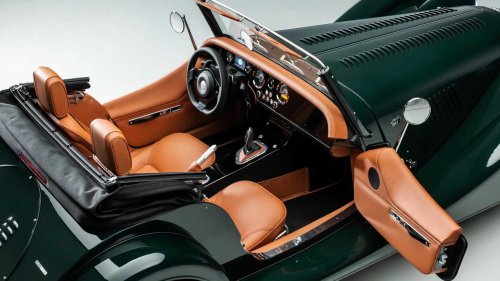
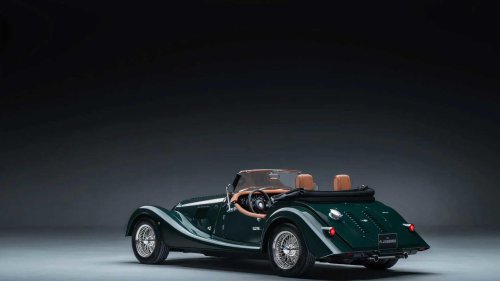
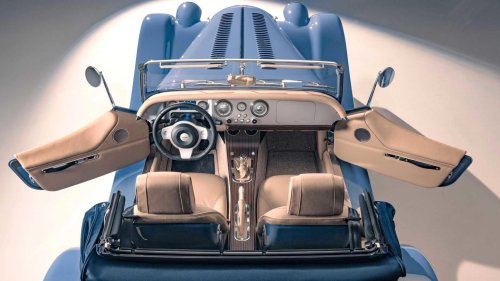
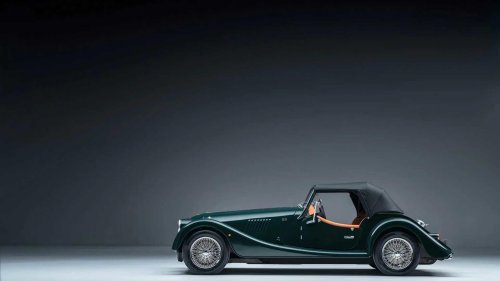

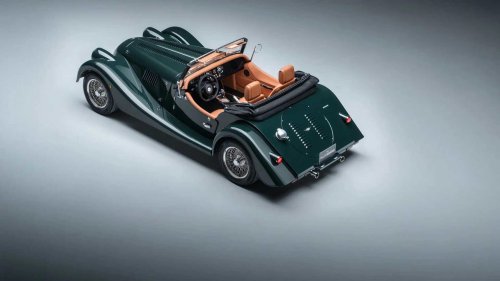



















Some cars chase the future, but some quietly ignore it. The Morgan Plus Four belongs firmly in the second group. It doesn’t shout about innovation or brag about screens. It doesn’t pretend to be anything other than what it is. And somehow, it has stayed alive for more than seven decades.First introduced in 1950, the Morgan Plus Four is one of the longest-running sports cars still in production today. While entire automotive eras have come and gone, the Plus Four has carried on with its upright stance, long bonnet, exposed fenders, and unmistakable silhouette. It looks like it escaped from a black-and-white photograph, yet it is still being built, still being sold, and still finding drivers who want something more tactile than modern motoring usually allows. To understand why the Plus Four still exists, you have to go back to a small English town and a company that never tried to blend in. A Small Company With Big Convictions The Origins of Morgan Motor Company Tom Murphy | TopSpeedMorgan Motor Company was founded in 1909 by Henry Frederick Stanley (HFS) Morgan in Malvern, England. Morgan always believed that light weight mattered more than big horsepower numbers. His earliest cars had three wheels, partly to navigate tax laws, but mostly because they were simple, fast, and fun to drive.Morgan Those early Morgans built a reputation for doing more with less. They were not luxurious, but they were lively. By the time Morgan introduced its first four-wheeled car in the late 1930s, the company already had a loyal following that valued their character over conformity. More Power, Same Philosophy Morgan The Morgan Plus Four arrived in 1950 as a step up from the earlier 4/4 model, which had been introduced in 1936. The name “4/4” referred to four wheels and four cylinders, a practical label for a practical sports car. The Plus Four took that idea and simply added more punch.Morgan Early Plus Four models used engines sourced from Standard Motor Company, including those found in cars like the Standard Vanguard. These engines were not exotic or glamorous, but they were strong, torquey, and dependable. Combined with the Morgan’s low weight, they gave the Plus Four performance that felt extremely exciting. The formula was clear early on: keep the car light, keep it simple, and let the driver do the rest. A Reputation Built On The Road And Track Punching Above Its Weight Morgan In the 1950s and 1960s, the Plus Four developed a quiet but serious reputation in motorsport. Morgans competed at Le Mans and in club racing across Britain and Europe. They were rarely the most powerful cars on the grid, but they were often among the most determined.Morgan The Plus Four earned respect by out-handling and outlasting cars that looked more impressive on paper. That racing spirit carried over to their road cars. Driving a Plus Four was not about comfort or isolation, but it was about connection. Steering feel and feedback mattered. The car demanded attention and rewarded commitment. Staying The Same While The World Changed Morgan As decades passed, the automotive world transformed. Cars became bigger, quieter, safer, and more complex. Morgan moved carefully, changing only what it absolutely had to. The Plus Four kept its classic shape and old-school proportions while slowly updating what lived underneath.Morgan Over the years, the car used engines from Triumph and later Rover, each chosen for compatibility rather than headline numbers. Safety and emissions rules forced many small manufacturers to shut down, but Morgan survived by adapting without erasing its identity. A Plus Four from the 1960s still looks closely related to one built today. That continuity became one of its strongest selling points, even if Morgan never talked about it in those terms. How A Plus Four Is Still Built Wood, Aluminum, And Human Hands Morgan One of the most unusual things about the Morgan Plus Four is how it is made. At the heart of the car is an ash wood frame, a construction method rooted in traditional coachbuilding. Ash is strong, flexible, and ideal for Morgan’s lightweight design. Skilled craftsmen shape and assemble the wooden frame by hand, just as they have for generations. Aluminum body panels are then hand-formed and attached over the frame. This is a slow process, and Morgan has never tried to make it fast.Morgan Each Plus Four passes through dozens of hands. The result is not robotic perfection, but something more personal. You can feel that the car was made by people who know exactly what it is supposed to be. Inside The Cabin Morgan Step inside a Morgan Plus Four and the cabin feels refreshingly straightforward. Leather seats, real wood trim, and simple analog gauges dominate the view. Nothing is there to impress for the sake of it. Everything exists because it serves a purpose. There is one small screen behind the steering wheel, but it doesn’t demand any attention. There are no layers of menus; just the essentials laid out clearly. It feels more like stepping into a well-kept classic than a modern sports car, and that is entirely the point. Driving The Plus Four Today A Modern Engine With Old-School Intentions Morgan Despite its vintage looks, the modern Morgan Plus Four is powered by a thoroughly contemporary engine sourced from BMW. Under that long, upright bonnet sits a 2.0-liter TwinPower Turbo four-cylinder, the same family of engine found in cars like the BMW Z4 and 3 Series. In Morgan tune, it produces around 255 horsepower and up to 295 pound-feet of torque when paired with the automatic gearbox. The six-speed manual version offers a lower 258 pound-feet of torque, but a more hands-on feel. Morgan Plus Four Specifications: Those numbers matter more than you might expect, because the Plus Four weighs just around 2,200 pounds. The result is strong, immediate performance. With the eight-speed automatic, the car can run from zero to 60 mph in under five seconds, while the manual version follows closely behind. Top speed sits at roughly 149 mph, though the Plus Four feels happiest well before that.As for the acceleration itself, there is some delay from the transmission in normal driving conditions, but the Plus Four leaps forward once the turbocharger spools up. This engine typically moves a lot more weight in modern BMWs, so it can absolutely fly in the Morgan.- Jared Rosenholtz, CarBuzz JournalistWhat really defines the experience is how that BMW engine behaves. Torque arrives early, making the car feel lively even at modest speeds. There’s no need to chase redlines or modes. You press the throttle, and the car responds cleanly. Combined with direct steering, minimal insulation, and a low driving position, the Plus Four may have a modern heart, but it still beats to a very traditional rhythm. Why It Still Matters Seventy-Six Years Later Morgan The Morgan Plus Four is not a museum piece or a novelty throwback. It is a living product, still built to be driven and enjoyed. You can order one today and use it the same way owners have for decades. Its continued existence says something important about progress. Not every improvement needs to be digital. Not every car needs to chase the same idea of perfection. The Plus Four survives because it offers an experience that many modern cars have forgotten how to deliver.Morgan After more than seven decades, the Morgan Plus Four continues on its own terms. It remains simple and tactile, and speaks of a depth to design that the world seems to have forgotten. While the automotive industry looks ahead, the Plus Four stands calmly in place, refusing to let go.Sources: Morgan, BMW