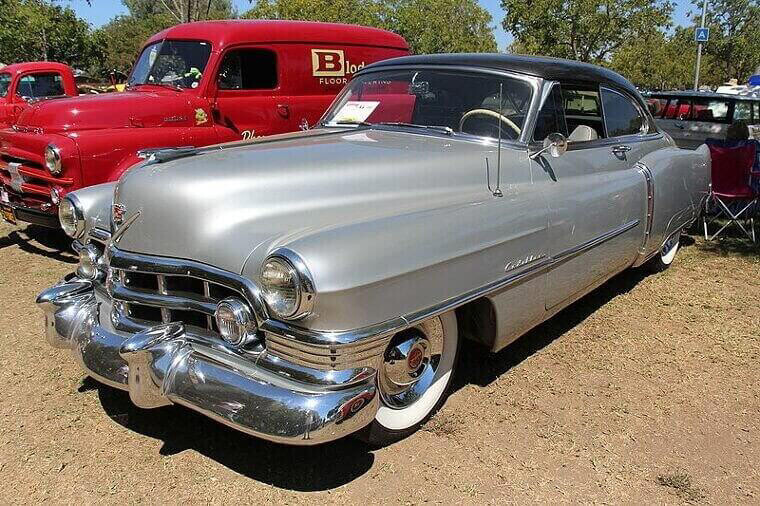
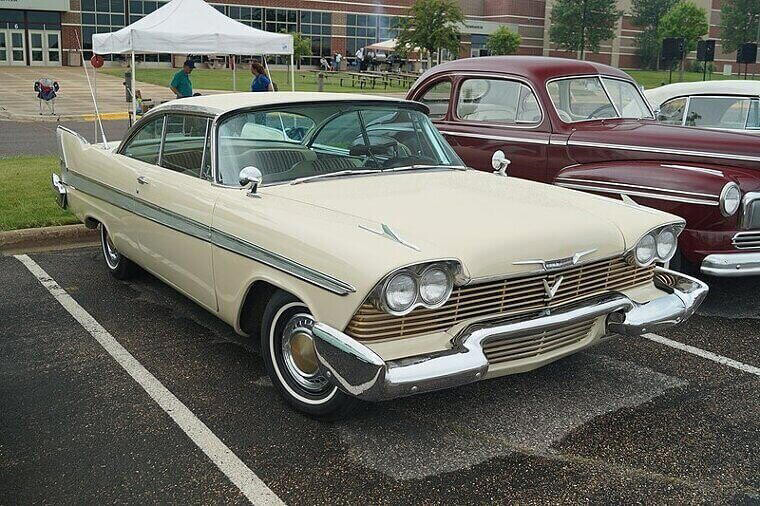
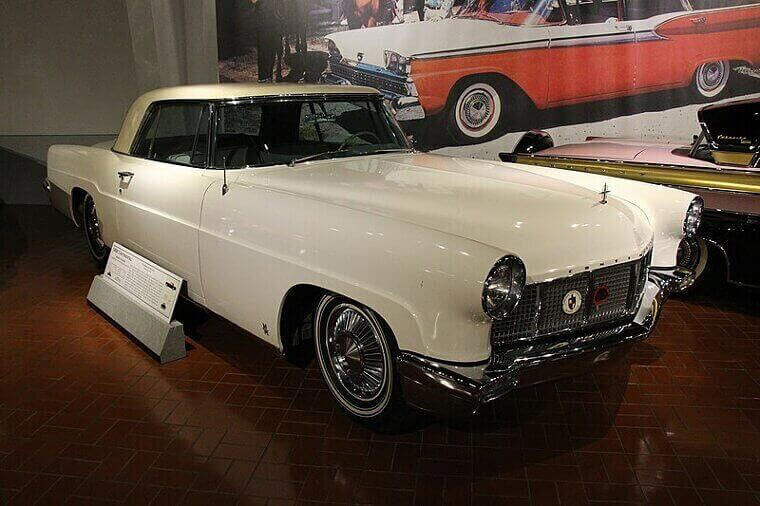
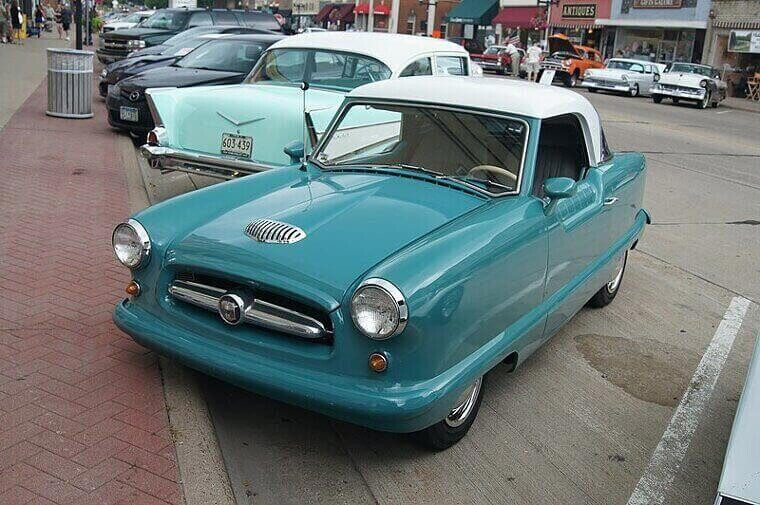
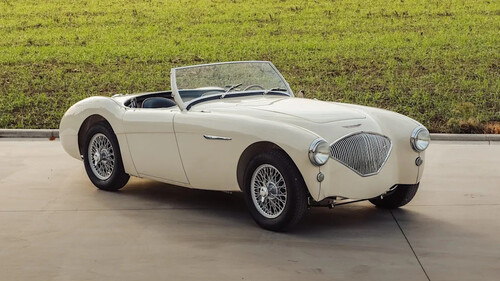
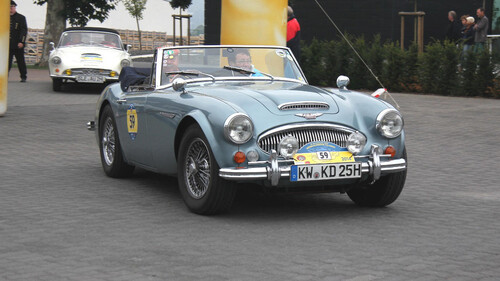
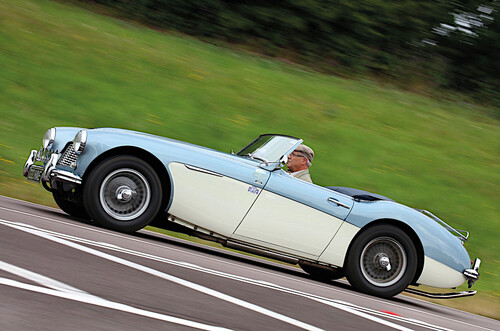
A Decade of Classic CarsThe 1950s gave America something it had never quite seen before — cars that felt like rolling sculptures. Fresh off the post-war boom, automakers had money, ambition, and a country full of optimistic buyers ready to cruise into the future. Detroit was firing on all cylinders, turning out machines with sweeping fins, gleaming chrome, and V8 engines that rumbled like distant thunder. Ford, Chevrolet, Chrysler, and others competed fiercely to outshine each other every single model year. These weren't just vehicles — they were statements about who you were and where America was headed. Over the next slides, you'll see the cars that defined that extraordinary decade, ranked by their lasting cultural impact, performance legacy, and sheer unforgettable style.1953 Chevrolet CorvettePicture the summer of 1953 — a brand-new sports car rolls out of a Flint, Michigan plant, and American automotive history changes forever. The Corvette was Chevrolet's answer to the European sports cars returning soldiers had fallen in love with overseas. Only 300 units were built that first year, each one white with a red interior and a two-speed Powerglide automatic transmission. Purists grumbled about the automatic, but nobody could deny that sleek fiberglass body was something special. The 150-horsepower inline-six wasn't exactly a powerhouse, but the Corvette's promise was bigger than its specs. It planted a flag — America could build a real sports car — and that idea grew into one of the longest-running performance nameplates in history.1959 Cadillac EldoradoFew cars said "you've made it" quite like the 1959 Cadillac Eldorado. Those towering tail fins — the tallest Cadillac ever produced — became the defining image of postwar American ambition. Cruising down the boulevard in one of these meant something. The Eldorado rode on a 130-inch wheelbase and packed a 390 cubic inch V8 under the hood, delivering power that matched its dramatic presence. Inside, you got wraparound windshields, deeply cushioned seats, and enough chrome to blind a man on a sunny afternoon. It wasn't just transportation — it was a statement about where America was headed. Confident, bold, and unapologetically big. Nearly seven decades later, spotting one at a car show still stops people in their tracks.1956 Porsche 356AThe 356A was the car that put Porsche on the American map. Introduced at a time when most sports cars were either brutish muscle or stiff and impractical, the 356A split the difference beautifully. Its air-cooled flat-four engine sat in the rear, producing a modest 60 to 70 horsepower depending on the trim — but the car weighed so little that it felt genuinely quick on a winding back road. Drivers who got behind the wheel in the late '50s often said nothing else felt quite like it. The steering was precise, the handling was nimble, and the whole experience rewarded a driver who paid attention. Porsche built fewer than 21,000 examples of the 356A during its production run, making every surviving one a treasure worth seeking out today.1957 Chevrolet NomadFew station wagons have ever earned a place on a "most iconic" list, but the 1957 Chevrolet Nomad is no ordinary wagon. Chevrolet took their sleek two-door hardtop styling and stretched it into something genuinely beautiful — a car that looked fast even sitting still in the driveway. The Nomad came loaded with the same chrome trim, tail fins, and bold lines you'd find on any top-shelf '57 Chevy, but with the practical cargo space families actually needed. It was stylish enough for Sunday drives and useful enough for hauling the kids and their baseball gear. Production numbers were relatively low, which makes surviving examples especially prized by collectors today. If you ever spot a clean Nomad at a car show, stop and take a good long look — they're genuinely rare.1958 Chevrolet ImpalaFew cars captured the spirit of late-'50s America quite like the 1958 Chevrolet Impala. This was Chevy's top-of-the-line model, and it showed — with its distinctive triple taillights and sweeping body lines that turned heads at every drive-in and Main Street cruise. Under the hood, you could order it with a 348 cubic inch V8, giving you the kind of power that made Saturday night feel like something worth remembering. The Impala wasn't just transportation; it was a statement. Whether you were heading to a sock hop or just showing off on a Sunday afternoon, this car made you feel like you'd arrived. It went on to become one of the best-selling nameplates in American automotive history, and it's easy to see why the '58 model started it all.1955 Mercedes-Benz 300SL GullwingThe doors swung upward instead of out, and the world had never seen anything quite like it. The 1955 Mercedes-Benz 300SL Gullwing stopped traffic everywhere it went, with those signature doors lifting like wings on a bird of prey. Under the hood sat a fuel-injected straight-six engine — one of the first production cars in history to use direct fuel injection — pushing out around 215 horsepower. That was serious performance for the mid-1950s. The 300SL could reach speeds near 160 mph, making it one of the fastest road cars of its era. Owning one today will cost you well into the millions, but back then it represented the absolute pinnacle of what a sports car could be.1959 Austin-Healey 3000The Austin-Healey 3000 arrived at the tail end of the decade and immediately made its presence known. Built in England but beloved on both sides of the Atlantic, this two-seat roadster combined a punchy six-cylinder engine with styling that turned heads on every Main Street in America. You could hear it coming from a block away — that throaty exhaust note was unlike anything Detroit was producing at the time. Drivers who got behind the wheel described it as raw, connected, and genuinely exciting. It competed in rally racing across Europe and won, which only added to its reputation. For American buyers who wanted something different from the chrome-heavy land yachts of the era, the 3000 offered a refreshing alternative — small, purposeful, and built to be driven hard.1954 Hudson HornetBefore NASCAR became the polished spectacle it is today, the Hudson Hornet was out there winning races with a secret weapon — its low-slung "step-down" body design that hugged the road like nothing else on the track. From 1951 through 1954, the Hornet dominated stock car racing in a way that made the big Detroit automakers genuinely nervous. Under the hood sat Hudson's legendary 308 cubic inch Twin H-Power inline-six, an engine that punched well above its class. The Hornet's racing success wasn't just a factory talking point — drivers like Herb Thomas and Marshall Teague proved it on dirt ovals across the country. If you ever caught a race back then, you already know the sound that Hornet made pulling ahead of the pack.1955 Chrysler C-300Before the muscle car era had a name, the 1955 Chrysler C-300 was already living it. Chrysler stuffed a 300-horsepower Hemi V8 into a full-size luxury body, making it the most powerful American production car of its day. Drivers called it the "Beautiful Brute," and that nickname stuck for good reason. It dominated NASCAR and AAA stock car racing that same year, proving it wasn't just show — it was serious speed wrapped in a tailored suit. The C-300 sat low and wide, with a presence on the road that turned heads at every stoplight. This was the car that showed America you didn't have to choose between comfort and raw power, a idea that would define Detroit for decades to come.1958 Packard HawkThe 1958 Packard Hawk was the last gasp of a once-great American nameplate, and it went out swinging. Packard had been building prestigious automobiles since 1899, but by the late '50s the company was struggling hard against the Big Three. The Hawk was essentially a rebadged Studebaker Hawk dressed up with a distinctive fiberglass tailfin and a padded leather dashboard that felt genuinely luxurious for its time. Under the hood sat a supercharged 289-cubic-inch V8 pushing around 275 horsepower — respectable numbers for that era. Only 588 units were ever produced, making surviving examples rare finds at auctions today. If you ever spot one at a car show, take a long look — you're seeing the final chapter of an automotive legend that once rivaled Cadillac for American prestige.1957 Oldsmobile Super 88The 1957 Oldsmobile Super 88 was the kind of car that made your neighbors stop mowing their lawns just to watch you pull into the driveway. Sitting between the base 88 and the top-tier 98 in Oldsmobile's lineup, the Super 88 hit a sweet spot that appealed to drivers who wanted serious performance without going full luxury. Under the hood sat a 371 cubic inch "Rocket" V8 engine, a powerplant that earned every bit of its name. The Super 88 also came loaded with chrome trim, a swooping roofline, and tail fins that captured everything exciting about late-50s American design. It won NASCAR races that year too, which only added to its street credibility. Owning one meant you had both style and speed — a combination that never goes out of fashion.1950 Alfa Romeo 1900The 1950 Alfa Romeo 1900 marked a turning point for the Italian automaker — it was the first Alfa Romeo built entirely on an assembly line, which helped bring the brand to a wider audience without sacrificing that signature European flair. Under the hood sat a twin-cam four-cylinder engine that delivered a driving experience far more spirited than most American cars of the same era. The 1900 also wore some of the cleanest bodywork of its time, with coachbuilders like Touring and Pininfarina offering stunning custom variations that made each car feel like a rolling piece of sculpture. For anyone who remembers when European imports started turning heads on American streets in the late 1950s, the 1900 was one of the cars that started that conversation.1957 Ford Fairlane 500 SkylinerThe 1957 Ford Fairlane 500 Skyliner did something no other production car had done before — it offered a fully retractable hardtop that disappeared into the trunk at the push of a button. That kind of engineering was genuinely jaw-dropping in 1957, and it turned heads everywhere it went. The Skyliner gave you the open-air freedom of a convertible without sacrificing the clean, elegant roofline of a hardtop. Ford priced it above the standard Fairlane, and buyers gladly paid the premium. The retractable mechanism used a complex system of motors, relays, and switches that mechanics of the era found both fascinating and frustrating. Owning one today means owning a piece of genuine automotive history — a car that proved American ingenuity had no limits when the 1950s were in full swing.1956 BMW 507The 1956 BMW 507 is one of those cars that stops you cold the moment you see it. Designed by Albrecht von Goertz, this roadster was built to compete with the Mercedes-Benz 300SL, and it delivered something genuinely special — a low-slung, aluminum-bodied two-seater with curves that looked hand-sculpted. Elvis Presley famously owned one, which tells you everything about the kind of crowd this car attracted. Under the hood sat a 3.2-liter V8 engine, and the whole package weighed barely over 2,800 pounds, making it quick and nimble for its era. BMW only produced around 252 examples between 1956 and 1959, which makes surviving models extraordinarily rare today. Auction prices regularly climb into the millions, a testament to just how timeless this design truly is.1951 Studebaker Champion Starlight CoupeThe 1951 Studebaker Champion Starlight Coupe turned heads for a reason that still holds up today — nobody could agree on whether it was coming or going. Designer Raymond Loewy gave it a wraparound rear window so wide and low that the back end looked almost as sleek as the front. That bold choice made the Starlight unlike anything else on American roads at the time. Powered by a modest six-cylinder engine, it wasn't built for raw speed, but it offered something rarer in that era: genuine style at an affordable price. Studebaker was a working man's car company, and the Starlight proved you didn't need a Cadillac budget to drive something that made your neighbors stop and stare.1959 Triumph TR3AThe TR3A was Britain's answer to American muscle — small, raw, and built for drivers who wanted to feel every inch of the road beneath them. Triumph stripped away the frills and gave you a tight cockpit, a responsive four-cylinder engine, and a windshield barely tall enough to deflect the wind from your face. Back in the late '50s, this little roadster was turning heads on both sides of the Atlantic, especially among American buyers who loved its honest, no-nonsense character. The side curtains instead of roll-up windows, the external door handles, and that distinctive wide grille all gave it a personality unlike anything Detroit was producing. If you ever got behind the wheel of a TR3A, you already know — driving it wasn't just transportation, it was an event.1952 Bentley R-Type ContinentalBefore American muscle cars ruled the road, European coachbuilders were crafting something altogether different — automobiles that felt more like rolling works of art. The 1952 Bentley R-Type Continental was the fastest production car in the world at the time, capable of reaching over 120 mph, a genuinely startling figure for the early fifties. Only 208 were ever built, each one hand-finished by the craftsmen at H.J. Mulliner in London. The fastback roofline gave it a swept, aerodynamic silhouette that looked decades ahead of its time. Owning one meant belonging to a very small, very exclusive club — royalty, industrialists, and old-money aristocrats. Even today, surviving examples command extraordinary prices at auction, a testament to just how right Bentley got it the first time.1954 Kaiser DarrinThe Kaiser Darrin was a bold gamble from a company fighting for survival. Kaiser-Frazer had been struggling against the Big Three for years, and this fiberglass-bodied sports car was their last-ditch attempt to generate excitement. Styled by Howard Darrin himself, it featured an unusual sliding door design that opened forward into the front fenders — something you had never seen on any American car before. Under the hood sat a Willys six-cylinder engine, which critics felt was underpowered for such a striking machine. Only 435 were ever built before Kaiser shut down American production entirely. Today, surviving examples are genuinely rare pieces of automotive history, representing a road not taken in American car design. The Kaiser Darrin proves that sometimes the most interesting stories belong to the cars that almost made it.1950 Mercury Eight CoupeThe 1950 Mercury Eight Coupe had a reputation that preceded it long before James Dean ever climbed behind the wheel. This car was the rebel's choice, with its low-slung roofline, wide body, and that unmistakable "lead sled" look that custom car builders absolutely loved. Ford's Mercury division pitched it as the sweet spot between an everyday Ford and a luxury Lincoln, and buyers responded. Under the hood sat a flathead V8 that pushed out around 110 horsepower — modest by today's standards, but enough to feel genuinely quick back then. Hot rodders stripped them, lowered them, and turned them into rolling works of art. If you grew up in the early 1950s, spotting a customized Mercury Eight on a Saturday night cruise was something you simply did not forget.1958 Edsel CorsairFew cars in American history carry as much baggage as the 1958 Edsel Corsair. Ford spent years and millions developing it, promising a revolutionary driving experience unlike anything on the road. What arrived instead became one of the most talked-about flops in automotive history — and yet, that story is exactly what makes it iconic. The Corsair featured a unique push-button transmission mounted in the center of the steering wheel, a design that baffled drivers and mechanics alike. The distinctive vertical grille, which critics famously compared to a toilet seat, made it unmistakable on any street. Today, surviving Corsairs are genuine collector pieces, proof that a car doesn't need to be a sales success to earn a permanent place in American car culture.1957 Dodge CoronetThe 1957 Dodge Coronet doesn't always get the spotlight that its flashier siblings do, but that's exactly what makes it special. While everyone was fawning over the Chevrolet Bel Air, Dodge was quietly building one of the most capable and stylish cars on the road. The Coronet came loaded with Virgil Exner's bold Forward Look design — those dramatic tail fins, the wide chrome grille, and a long, low stance that turned heads on every Main Street in America. Under the hood, you could opt for the legendary 392 Hemi V8, giving you serious muscle wrapped in everyday practicality. It was the kind of car a working man could drive to the job site on Monday and show off at the drive-in on Saturday night.1955 Packard CaribbeanBy 1955, Packard was fighting for its life against the Big Three, and the Caribbean convertible represented the brand's last great swing at true luxury. Priced well above a Cadillac Eldorado, this low-slung beauty came loaded with features most Americans had never seen in a production car — dual-tone leather, continental spare tire kit, and a 352-cubic-inch V8 pushing 275 horsepower. Packard built fewer than 500 of them that year, making each one a rare piece of American automotive history. The Caribbean had the bones of a genuine classic, but the company's merger troubles were already sealing its fate. For anyone who remembers seeing one parked outside a country club or hotel in the late fifties, that image never really leaves you.1953 Cadillac Series 62 Coupe De VilleCadillac practically invented the idea of luxury in postwar America, and the 1953 Series 62 Coupe De Ville was the crown jewel of that effort. This was the car that doctors, lawyers, and successful businessmen drove to signal they had truly made it. The wraparound windshield was a genuine novelty at the time, giving drivers a panoramic view that felt almost futuristic. Under the hood sat a 331 cubic inch V8 engine producing 210 horsepower — serious muscle dressed in serious elegance. The interior featured rich broadcloth upholstery and a level of refinement that domestic competitors simply could not match. Fewer than 15,000 were built that year, making it a rare sight even then. Owning one today means owning a piece of American ambition at its most unapologetic.1958 Plymouth FuryThe 1958 Plymouth Fury arrived at a time when American automakers were locked in a full-blown styling war, and Plymouth came ready to fight. With its dramatic tailfins, quad headlights, and aggressive chrome trim, the Fury looked like something dreamed up by a rocket scientist. Under the hood, the top-spec version packed a 318 cubic inch V8 that could push it past most anything on the road. Plymouth positioned the Fury as a performance car first, style statement second — a rare combination in an era when looks often outran capability. Today, the '58 Fury carries a certain mystique, partly thanks to its starring role in Stephen King's *Christine*. But long before Hollywood came calling, this car had already earned its reputation on American roads as one of the boldest machines Detroit ever produced.1956 Lincoln Continental Mark IIThe 1956 Lincoln Continental Mark II was never meant for everyone — and that was the whole point. Ford built this car as a statement piece, pricing it at around $10,000 at a time when a new house might cost the same. Every single car was hand-assembled, with workers spending hours fitting and finishing each body panel. The leather interior smelled like a fine saddle shop, and the ride was smoother than anything rolling off a standard assembly line. Celebrities and heads of state ordered them. If you saw one parked outside a hotel back then, you knew something important was happening inside. Only about 3,000 were ever made across its two-year production run, which makes spotting one today feel like finding a piece of living history.1954 Nash MetropolitanThe 1954 Nash Metropolitan was unlike anything else on American roads at the time. Built in partnership with Austin of England, this pint-sized two-seater measured just 149 inches long — making it look almost toy-like parked next to a full-size Buick or Chrysler. But buyers loved it. The Metropolitan offered real fuel economy at a time when gas was cheap but thrift still mattered, and its cheerful two-tone styling turned heads everywhere it went. You could get it as a hardtop or a convertible, and either way it felt like driving something genuinely different. It never quite fit the muscle-and-chrome mold of 1950s American car culture, and that was exactly the point. The Metropolitan carved out its own quirky corner of automotive history, and collectors today still seek it out with serious enthusiasm.1957 Pontiac BonnevillePontiac saved one of its boldest moves for last with the 1957 Bonneville. Built as a limited-edition flagship, it came standard with fuel injection — a genuinely rare feature in 1957 — and produced around 310 horsepower from its 347-cubic-inch V8. Only 630 were made that first year, which made owning one feel like belonging to an exclusive club. The Bonneville name would go on to carry Pontiac for decades, but this original version set the tone for everything that followed. Long, low, and loaded with chrome, it wore the late 1950s style with real confidence. If you grew up watching these roll through your neighborhood, you already know the kind of impression one made pulling into a driveway.1955 Sunbeam AlpineThe 1955 Sunbeam Alpine brought a touch of European sophistication to American roads at a time when most drivers were choosing homegrown iron. Built in England by the Rootes Group, this sleek two-seater roadster earned real credibility when Stirling Moss and John Fitch drove one to victory in the 1955 Alpine Rally — the very event the car was named after. It seated two snugly, rewarded drivers who liked to feel every curve of the road, and offered a driving experience that felt worlds apart from the big Detroit cruisers of the era. If you were the type who preferred a nimble, sporty ride over a long hood and a V8 rumble, the Alpine was calling your name.1951 Frazer Nash Le Mans ReplicaMost American gearheads in the early 1950s had never heard of Frazer Nash, and that was exactly the point. This small British manufacturer built cars in tiny numbers, hand-crafted for serious drivers who wanted something raw and uncompromising. The Le Mans Replica took its name from the actual racing successes the company earned at that famous French circuit, and every road car reflected that competition DNA. With a BMW-derived straight-six engine and a lightweight body stripped of unnecessary comfort, it delivered a driving experience closer to a race car than anything you could buy from Detroit. Fewer than 35 were ever built, making this one of the rarest machines on our entire list. If you ever spot one at a concours event, stop and take a long look.1959 Morgan Plus 4The 1959 Morgan Plus 4 was already an anachronism when it rolled out of the small Malvern, England factory — and that was entirely the point. While American automakers were busy loading their cars with chrome fins and pushbutton gadgets, Morgan kept building roadsters the old-fashioned way, with a wooden body frame, hand-formed aluminum panels, and a driving experience stripped down to pure mechanical honesty. You sat close to the road, felt every bump through the steering wheel, and heard the engine without any insulation softening the sound. The Plus 4 used a Triumph TR engine that gave it real performance to match its classic looks. For drivers who wanted something genuinely different from the mainstream, this little British roadster delivered a connection between driver and machine that Detroit simply wasn't offering in 1959.1957 Fiat 500The 1957 Fiat 500 proved that big things really do come in small packages. Launched in Italy as affordable transportation for everyday families rebuilding after the war, this tiny two-cylinder car became a cultural symbol almost overnight. At just under ten feet long, it could squeeze into parking spots that would make American drivers dizzy with envy. Don't let the modest size fool you — the 500 had genuine personality, with its rear-mounted engine, suicide doors, and rollback canvas roof giving it a charm that larger cars simply couldn't match. While Americans were cruising in Chevys and Fords, Europeans were falling in love with this little machine, and its influence on compact car design echoes through every small car built since.1953 Buick SkylarkThe 1953 Buick Skylark wasn't just a car — it was Buick's way of celebrating its 50th anniversary in style. Built as a limited-edition convertible, only 1,690 were produced, making it one of the rarest offerings from Detroit that year. It rode on a shortened chassis that gave it a lower, sleeker profile than the standard Buick line, and the chrome work was nothing short of spectacular. The Skylark came loaded with features that most buyers considered pure luxury at the time — power windows, power seat, and a custom interior that felt genuinely special. If you were lucky enough to see one cruising down Main Street in 1953, you didn't forget it.1955 Chevrolet Bel AirFew cars defined an era quite like the 1955 Chevrolet Bel Air. This was the year Chevy completely reinvented itself, ditching the old "stovebolt" six for a brand-new small-block V8 that would go on to become one of the most celebrated engines in automotive history. The Bel Air wore its new body with confidence — longer, lower, and sleeker than anything Chevy had offered before. Chrome trim caught the sunlight just right, and those two-tone paint combinations turned heads on every Main Street in America. Whether your family owned one or you admired a neighbor's, the '55 Bel Air felt like proof that American ingenuity was firing on all cylinders. It earned its place near the top of any list like this one.