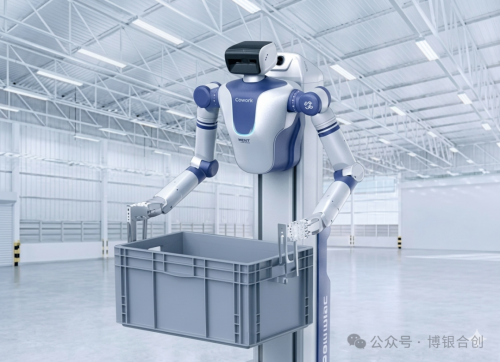
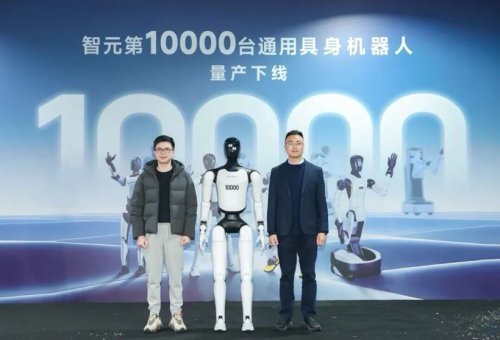
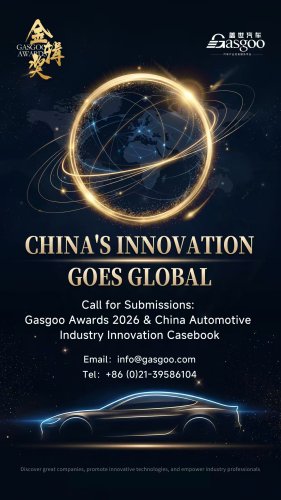
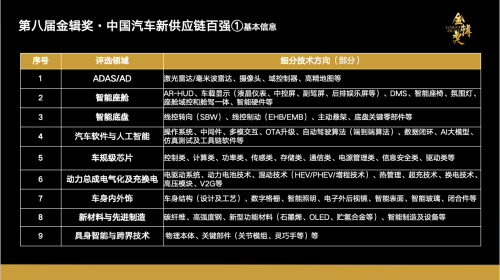
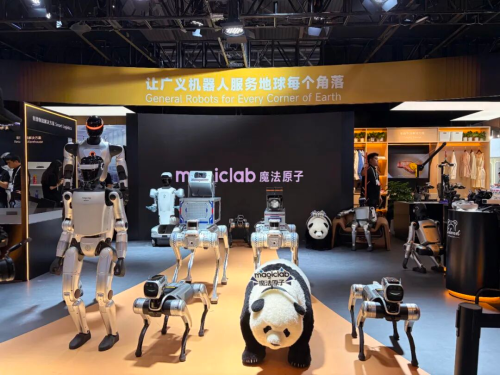
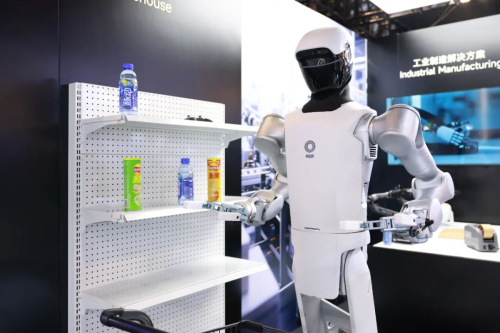
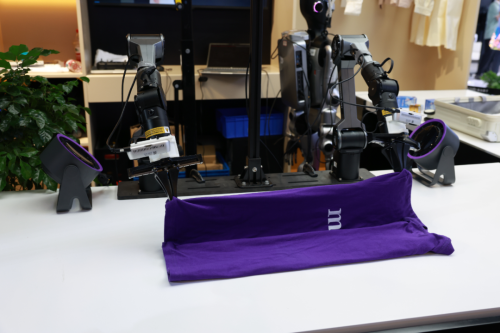
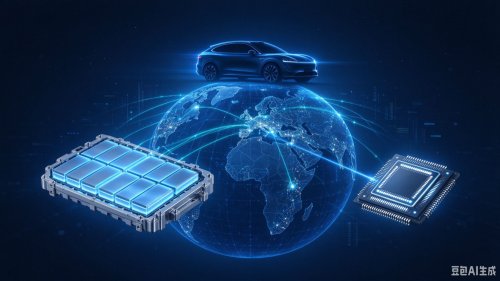
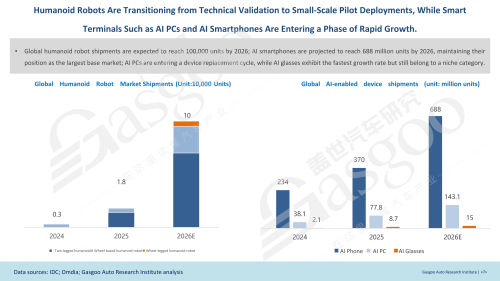
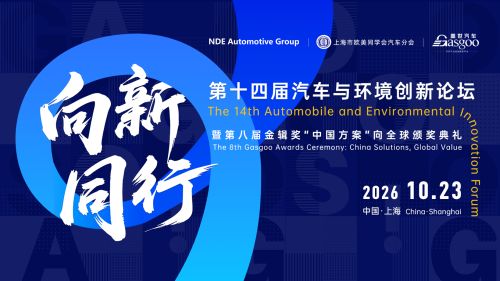
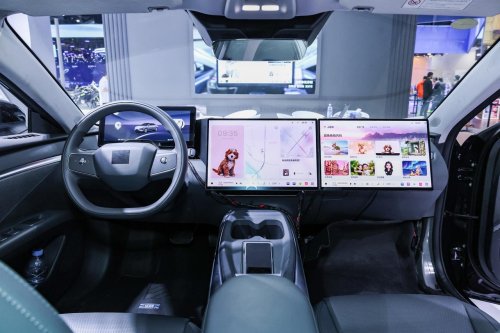
Gasgoo Munich- As artificial intelligence technology advances rapidly, the automotive industry is entering a new phase: evolving from "smart vehicles" into "intelligent mobile terminals."In recent years, automotive intelligence has centered on advanced driver-assistance systems and connectivity, with competition focused on sharpening in-car capabilities like perception, computing, and interaction. Now, as 2026 unfolds, the accelerated convergence of large models, embodied AI, smart hardware, and AI agents is pushing the industry's innovation boundaries further. Embodied AI and cross-sector technologies are emerging as the new frontiers of exploration.Embodied AI emphasizes artificial intelligence systems that interact with the environment through perception, decision-making, and execution to achieve understanding and autonomous action in complex scenarios. Unlike traditional software-based intelligence, embodied AI prioritizes the connection between the "AI brain" and the physical world. This technological pathway aligns naturally with the automotive industry's long-standing accumulation of sensors, actuators, intelligent control systems, and manufacturing infrastructure.In terms of industry trends, automakers and supply chain companies are actively exploring the application value of embodied AI across various scenarios, including smart manufacturing, logistics, intelligent mobility, and human-machine collaboration. At the same time, cross-disciplinary capabilities—ranging from robotics technology and AI models to sensors and intelligent control systems—are permeating the automotive supply chain, driving the vehicle's evolution from a mere means of transport to an intelligent platform.AI and Embodied AI Convergence Expand the Competitive Boundaries of the Automotive IndustryAccording to analysis by the Gasgoo Automotive Research Institute, the embodied AI and AI terminal industries are entering a phase of rapid development. As the capabilities of AI models continue to improve, intelligent terminals such as humanoid robots, AI phones, and AI PCs are accelerating their commercial rollout. AI technology is gradually extending from virtual interaction to the physical world, providing the technological foundation and ecosystem support for the automotive industry to explore embodied AI applications.Data indicates that the global humanoid robot market is expected to achieve shipments in the 100,000-unit range by 2026, marking rapid growth compared to 2024 and 2025. Meanwhile, AI phones remain the largest application carrier in the AI terminal market, with global shipments projected to reach 688 million units in 2026. Emerging terminals like AI PCs and AI glasses are also entering a growth phase.From a technological pathway perspective, artificial intelligence is evolving from pure software intelligence toward embodied AI characterized by "perception-decision-execution." As vehicles serve as critical carriers integrating sensors, computing platforms, actuation systems, and mobile scenarios, they are becoming a key exploration ground for the implementation of embodied AI technology.Currently, embodied AI remains in a stage of rapid development, with industrial competition shifting from single technological breakthroughs to software-hardware collaboration and engineering implementation. Companies must not only continuously enhance the intelligent system's ability to perceive, understand, and decide—mastering core technologies like multimodal perception, large model inference, real-time control, and task planning—but also overcome industrialization challenges such as reliability, cost control, mass production, and scenario adaptation.For the automotive industry, the rise of embodied AI is accelerating the reconstruction of the supply chain ecosystem. On one hand, traditional auto parts companies are leveraging their accumulated expertise in sensors, actuators, intelligent control, and manufacturing processes to expand into robotics core components, intelligent actuation systems, and AI algorithms. On the other hand, robotics, chip, software, and AI companies are accelerating their entry into the automotive supply chain, driving the continuous deepening of cross-sector technology integration.As industry boundaries continue to expand, the focus of corporate competition is gradually shifting from single-product capabilities to system-level intelligence.For robotics and intelligent terminal companies, capabilities such as perception fusion, motion control, environmental understanding, autonomous decision-making, and multi-machine collaboration have become the focal points of technological competition. For automotive supply chain companies, the new core competitiveness lies in how deeply they can integrate their advantages in reliability verification, engineering development, and mass manufacturing with AI technology to create intelligent solutions that are mass-producible and replicable.At the same time, the commercialization of embodied AI is still in an exploratory stage, with cost control, maturity of application scenarios, large-scale replication, and ecosystem collaboration remaining key challenges for industry development. Moving forward, companies that can drive technological innovation around real industrial needs and demonstrate product value through engineering verification and large-scale application will hold a greater competitive advantage.In the 2026 8th Gasgoo Awards selection, the field of embodied AI and cross-sector technology will focus on innovative technologies and application practices that drive the intelligent upgrading of the automotive industry and cross-sector development. This covers physical bodies, key components (such as joint modules and dexterous hands), and cross-industry integration innovations. This year's Gasgoo Awards will place greater emphasis on innovative achievements with industrial value and practical implementation capabilities. Rather than merely showcasing model capabilities or concept proofs, the judging panel will focus on whether companies can define clear application scenarios, solve actual industrial problems, and possess engineering verification and commercial promotion capabilities.For instance, in the embodied AI category, companies can highlight key metrics such as perception accuracy, motion control capabilities, task completion efficiency, and scenario adaptability. In the cross-sector technology category, presentations can center on technology integration methods, application value, cost optimization, and the ability for large-scale replication.Focus on the 2026 8th Gasgoo Awards and the "China Automotive Industry Innovation Case Database"Initiated by Gasgoo, the "Gasgoo Awards" upholds the mission of "discovering good companies, promoting good technologies, and empowering industry professionals." Focusing on the "Top 100 China Automotive New Supply Chain," it deeply covers core tracks including ADAS/AD, smart cockpits, smart chassis, automotive-grade chips, automotive software and AI, powertrain electrification and charging/thermal management, body and interior/exterior, new materials and advanced manufacturing, and embodied AI and cross-sector technologies. We are dedicated to discovering and selecting outstanding companies and frontier technologies, establishing industry benchmarks, and leading the high-quality development of China's automotive industry.Meanwhile, leveraging a supply chain database covering 320,000 companies and the industrial research findings and innovative case resources accumulated over years by the "Gasgoo Awards," Gasgoo has officially launched the construction of the "China Automotive Industry Innovation Casebook." The database aims to systematically record the innovation process of China's automotive industry, consolidate industrial practical experience, and create a vital window for showcasing China's automotive innovation capabilities to the global market. Looking ahead, the database will prioritize "China Solutions for the Global Market," systematically presenting the innovation practices of Chinese enterprises in fields such as intelligence and electrification. This will drive Chinese technology, experience, and supply chain capabilities toward the global stage, facilitating the joint development of the global automotive industry.Addressing the core concerns of overseas OEMs, Tier 1 suppliers, and investment institutions, this case database delves into core tracks such as intelligent driving, electric drive, cockpits, and thermal management to systematically identify leading companies in each field. Through detailed profiles of enterprise scale, organizational structure, and cost composition, we demonstrate to the outside world the strategic planning of domestic companies regarding R&D response mechanisms, dynamic adjustment strategies, and global layout. This not only answers the questions of "who is doing it best" and "where the standardized modules are," but also provides a data-based objective reference for supply chain companies expanding overseas, localizing technology, and avoiding cross-cultural conflicts, thereby accelerating the integration of Chinese technology into the global automotive industry system.For more information and registration methods, please scan the QR code below the image.



















 +39 others