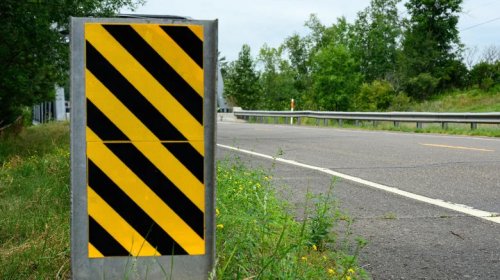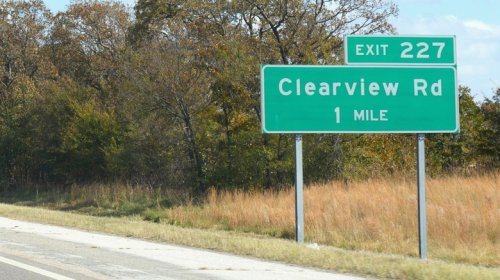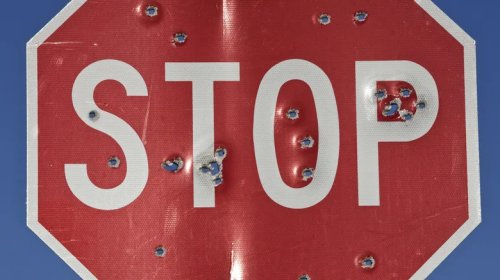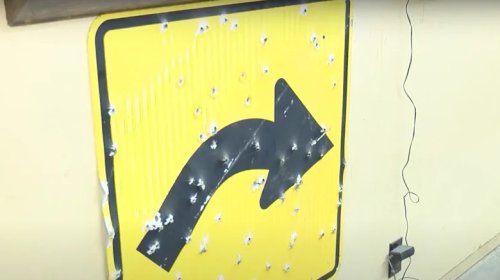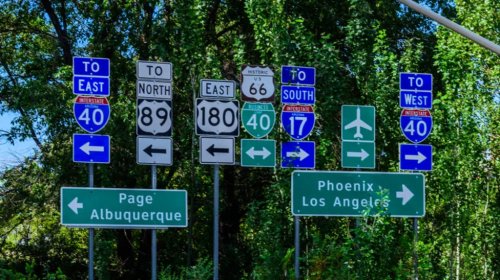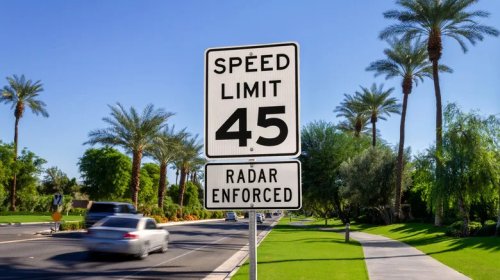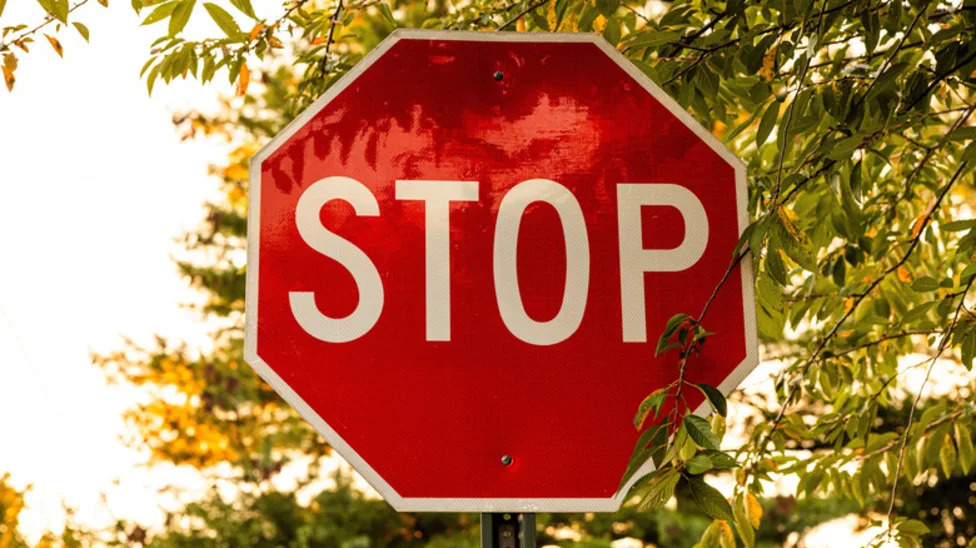
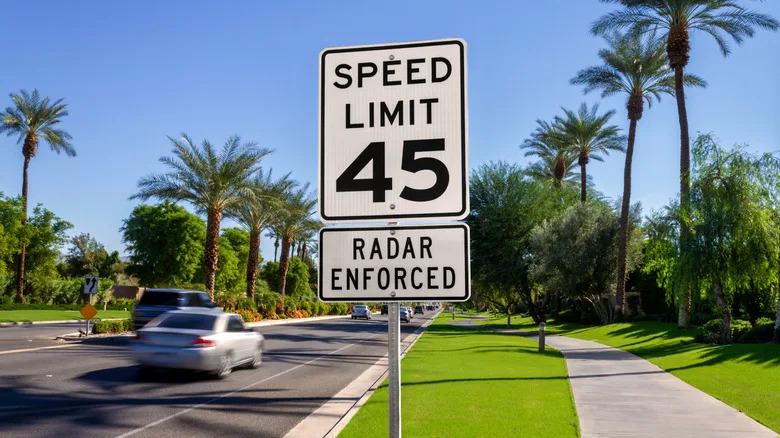

















ychornobryvets/ShutterstockIf you've ever been up close to an official stop sign, you may have been shocked by how big it actually is. We see that red octagon almost every time we get behind the wheel, but few of us ponder its size or the history behind this simple yet vital traffic sign.The very first stop signs were used in Michigan and were neither red nor octagon-shaped. Instead, yellow squares with black letters told drivers to stop. In 1953, the Manual on Uniform Traffic Control Devices (MUTCD) officially declared that all stop signs be the shape and color that we're familiar with today, and other road signs follow similar mandates. Today, signs have various shapes and sizes depending on the type of sign and the type of road where they are located, the number of lanes, the speed limit, and other factors.Road signs are different sizes because a one-size-fits-all approach simply doesn't work when it comes to driver safety. Standards are necessary for easy recognition and driver safety, but there are different standards for every type of sign so that drivers know what to expect and can easily read them. What's "standard" on the highway is not "standard" on a smaller road. Because stop signs are vital to driver safety, they must be easily visible. On rural roads, they are often 30 inches. On larger, faster roads, these signs are even bigger, measuring 36 inches. In parking lots or other areas where drivers move at slower speeds, stop signs are often smaller at 24 inches.AdvertisementAdvertisementRead more: 5 Wheel Bearing Myths You Shouldn't BelieveWhy aren't road signs bigger (or smaller)?Sanfel/Getty ImagesYou probably remember learning about the wide variety of road signs used in the U.S. when you were getting ready to take your learner's permit test. From common signs like speed limit and yield signs to signs that seem almost deliberately confusing, virtually every sign is controlled by exacting measures regarding size, color, and text. If you're driving in an unfamiliar area, street signs typically have letters that are at least six inches tall. There's no excuse for speeding — speed limit signs are 36 inches by 48 inches on the highway and 24 inches by 30 inches on city streets.The size of the road sign is also dictated by other factors, including how much information is necessary, viewing distance, how easily recognizable the sign is to drivers, and even the curvature of the road. Larger signs are easier to read from further away but aren't always necessary. Every aspect of a road sign, including size, shape, and color, is designed based on anticipated vehicle speed, reaction times, the importance of the information being provided, and even manufacturing limits.If you travel outside of the U.S., be prepared for unfamiliar signs. While stop signs are not entirely universal, you'll likely still see a large, red sign with white letters, but other signs may have a different size, shape, color, and font. If you plan to get behind the wheel in a foreign country, it may pay to do some research first to keep yourself and other drivers safe!AdvertisementAdvertisementWant the latest in tech and auto trends? Subscribe to our free newsletter for the latest headlines, expert guides, and how-to tips, one email at a time. You can also add us as a preferred search source on Google.Read the original article on SlashGear.