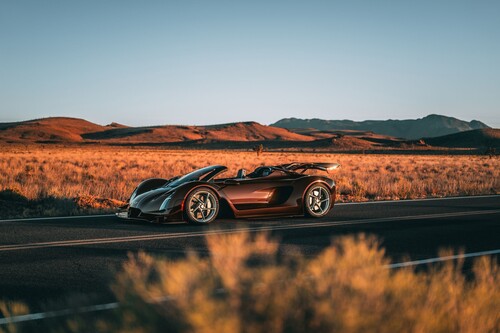
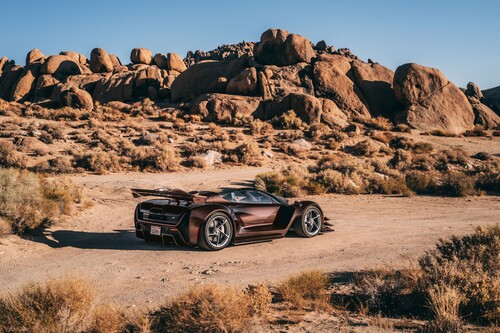
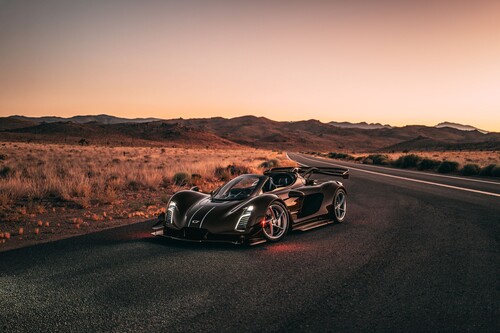
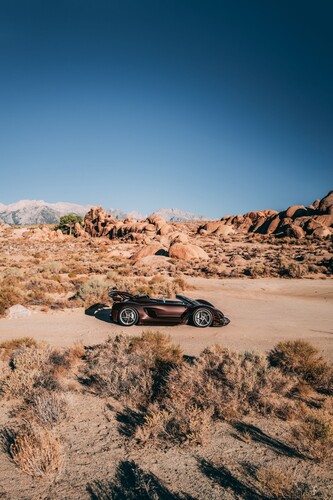
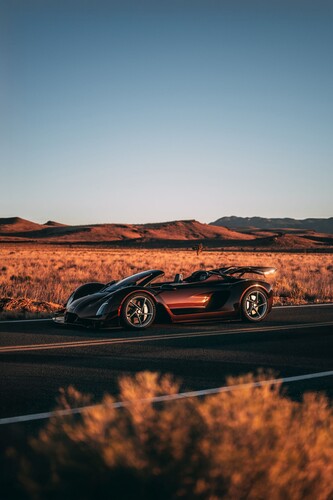
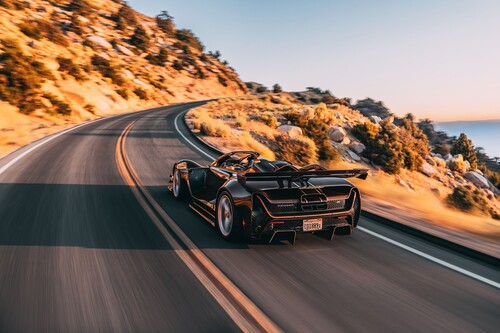
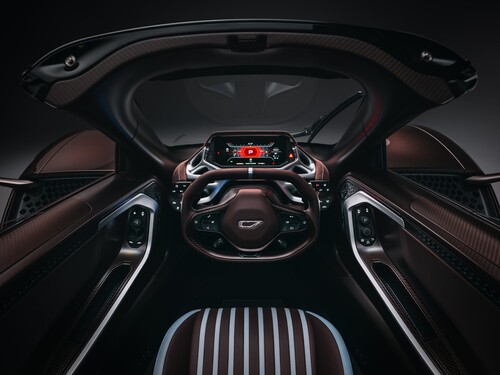
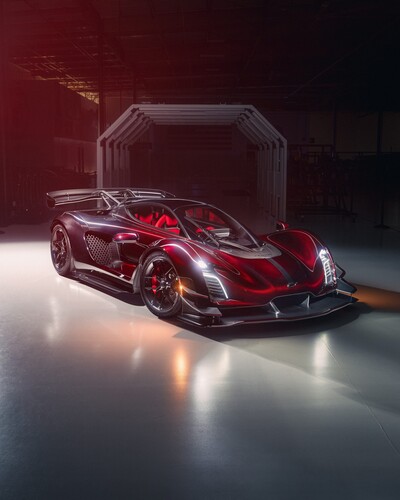
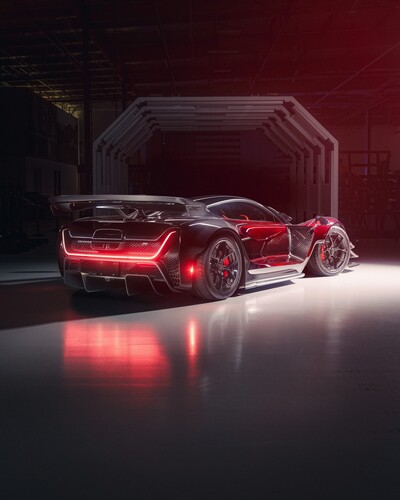
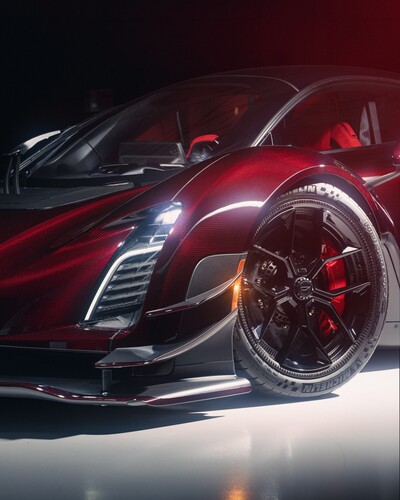
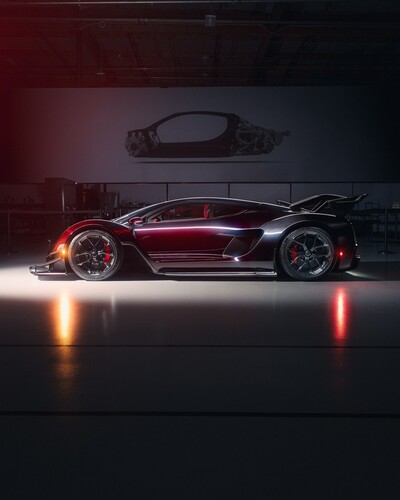
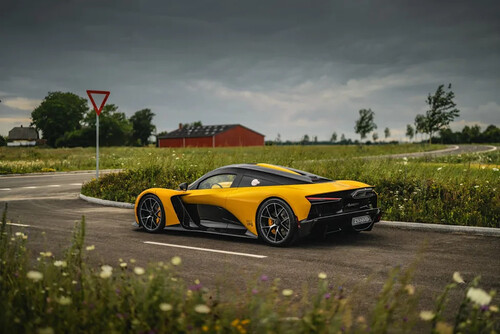
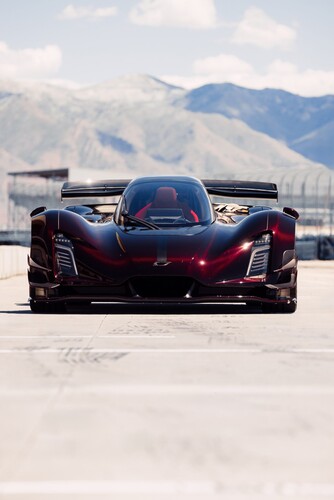
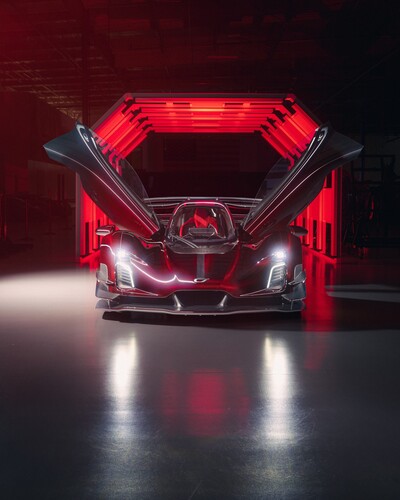
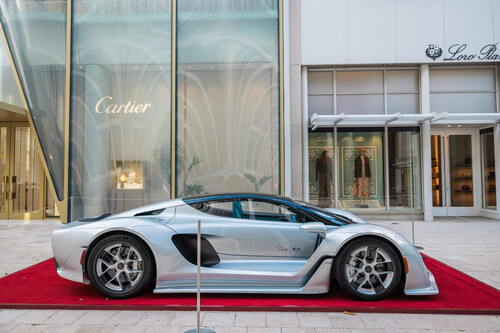
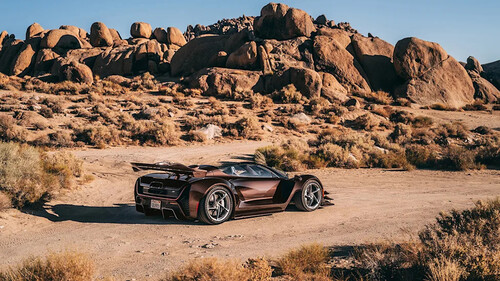
Scything through Malibu canyons in the ethereal Czinger 21C.CzingerNothing on the road today looks anything remotely like a Czinger. And the style goes far below skin-deep, from the aerodynamic 1+1 design to the alien-esque suspension components and groundbreaking powertrain performance. After being originally unveiled in 2020 as a proof of concept for Czinger's revolutionary technology that underpins the advanced design, development and production methods, the 21C since then started tackling track records across the United States.At the time, the very concepts of iterative algorithms, what's now dubbed "AI" and 3D-printing still seemed new in the public lexicon. The rest of the world is catching up now, a few years on. And yet it's still not a stretch to say the Czinger 21C may truly go down in history as one of the most significant automobiles ever, a major catalyst in jumpstarting an entire industry on the cusp of a major shift toward efficiency and performance simultaneously.Given the starting pricetag of $2.3 million, the 21C's driving experience needs to match the significance of the car's broader impact. To prove exactly how well the high-concept engineering lives up to real-world driving, Czinger invited me out for a morning in Malibu that included highway cruising, stop-and-go traffic and some spirited driving in the tight canyons I know so well.Born and bred in California, the 21C introduced novel design, development and construction methods to the broader automotive industry.Getting Situated in the 21CThat 1+1 seating position inevitably draws up comparisons to a fighter jet and may require a significant adjustment period for anyone unaccustomed to open-wheeled race cars or, at the very least, hardcore motorcycles. I spent more time after the climb inside figuring out the switchgear and buttonry before pulling away, though, and I never needed to worry about feeling cramped or lacking visibility—at least for the 270 degrees of forward viewing angle through the narrow glass canopy.AdvertisementAdvertisementA small "squircle" steering wheel also feels very racecar in hand, fronting a petite digital gauge cluster screen. The pedals at my feet split the gap between right-side bias and perfect spacing for two-foot driving, while every touchpoint seemed pleasantly weighted given the performance potential I expected. And yet, at tamer speeds on the Pacific Coast Highway, the suspension compliance surprised me most. Czinger clearly tuned the shock dampers to absorb bumps and cracks without sending any particularly jarring impacts into the passenger compartment.A diminutive twin-turbo V8 works in concert with three electric motors, while alienesque suspension components reveal radical weight savings and rigidity.Meanwhile, behind me (and the driver coach that Czinger sent along in the rear seat), the tiny little 2.88-liter V8 engine began coming to life. Originally described as motorcycle-derived, after further development, Czinger now claims the mill as a fully in-house unit. Dual turbos push up to 22 psi of boost, while a trio of electric motors then combine with the internal-combustion engine to pump out up to 1,250 horsepower and 691 lb-ft of torque.Low-slung battery packs on either side of the dihedral doors house 4.2 kilowatt-hours of cells, so the 21C can drive in near silence. In fact, the engine serves as more of a generator until fully warmed up, as a way to help bring the catalysts up to temp and reduce cold-start emissions. But I wanted to unleash every last ounce of grunt, so soon enough, I thumbed the righthand turn signal button on the steering wheel and headed up into the canyons.All the tech in the world can only go so far—with a seven-figure pricetag, the 21C needs to drive well, too.Czinger Clearly Prioritized Both Compliance and ConfidenceThese familiar roads transition from flowing sweepers to tight and technical twisties, so I firmed up the 21C's suspension by selecting Sport mode. Doing so also ensures the whole drivetrain prioritizes power delivery, and yet even still, I felt the some sense of responsibility to ease into driving anywhere near breakneck pace given the pricetag, rarity and high expectations.AdvertisementAdvertisementLuckily, the brakes inspire confidence early. Pedal firmness exceeds even early McLaren road cars, despite the 21C not yet employing the integrated wheel hub and brake caliper node that I first spotted years prior at Monterey Car week. That means the 21C could theoretically still shed some significant mass, from an overall curb weight of 3,668 pounds, and especially in the most important location of unsprung mass.The braking does truly require a bit of leg muscle once up into the car's happier pace, but once I deduced that the brakes can get the job done, I began dipping deeper into throttle, engine screaming and blistering shifts ripping through the seven-speed sequential gearbox. When the roads opened up, all-wheel-drive traction allowed for early acceleration before completely unwinding the steering wheel. Until, that is, I started to ask more of the 21C, which only prompted stability control to cut power and cause some lurching as the output eclipsed the grip of those enormous Michelin Pilot Sport Cup 2 tires.Czinger claims multiple track records across the United States, most notably at WeatherTech Raceway Laguna Seca in California and Circuit of the Americas in Texas.Precisely because of the prodigious power, the drivetrain requires almost pristine tarmac to actually hit full throttle for anything more than a second or two before the nannies kicked in. But I began adjusting, finally cranking well past the magical 7,000-rpm mark and up toward 9,000—then 10, and finally 11. Here, the mind-melting insanity can snap necks straight back into headrests, as all perception of time and space gives way to tunnel vision.And yet, almost more importantly than the all-out acceleration, the 21C's cornering required considerable attention. The taut steering provides almost excessive feedback, and I needed to work the chassis through corners as I struggled to find flow at first. More power assist for the steering might help, but I also discovered that relying on trail braking to prompt a longer hit of regen from the front e-motors—well into apex—also cued up more predictable, earlier rotation than trying to overtly force excessive steering angle into the equation.Whether potential buyers will appreciate the 1+1 seating arrangement remains a serious question for Czinger.So Much More than a Race Car for the StreetClearly and purposefully, the entire experience helps to explain how Czinger went around the country setting production car records. What, exactly, "production car" means given that rarity, pricing and exclusivity remains a serious question. Yet the fact that the 21C can hit 253 miles per hour in the Vmax configuration that I drove, can handle with the best of lightweight sports cars and still be driven calmly when asked to might just be Czinger's greatest achievement.AdvertisementAdvertisementEvery drive feels like an event, even when taking it easy. Despite so much inescapable tech, so much innovation and all the investment going into the bleeding edge of applied sciences, Czinger never forgot that a $2.7 million car (as specced) needs to be drivable and enjoyable as such.The 21C reframes the context by which every other supercar and hypercar can now be judged, really. And it's been quite obvious to watch the rest of the industry adopting similar methods in the hopes of reducing costs, shedding weight, improving efficiency, and dialing in driving dynamics. This Pareto-optimized form, meanwhile, scything through the air absolutely turned more heads than any single other car I've ever driven. And deservedly so, for something so utterly unique at the forefront of today's automotive landscape.This article was originally published on Forbes.com