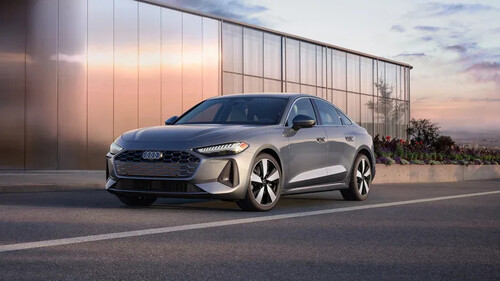
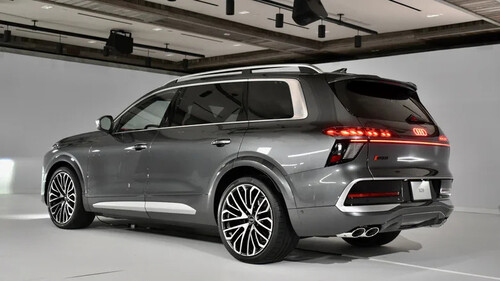
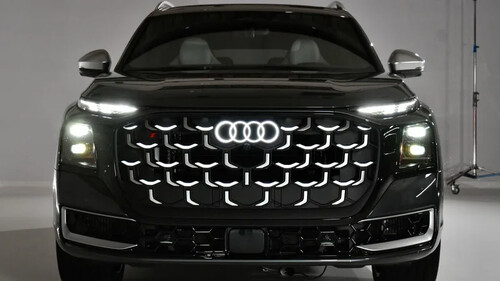
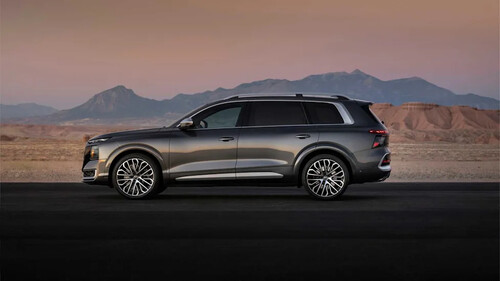
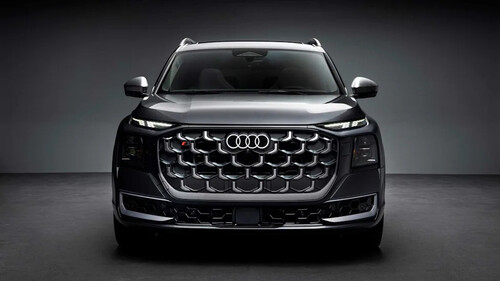
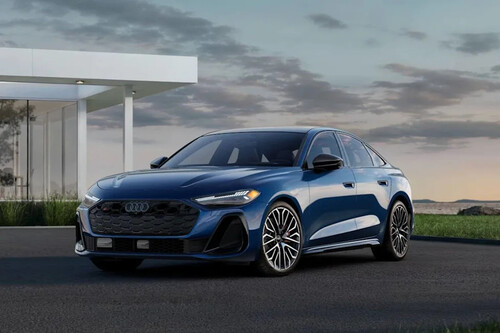
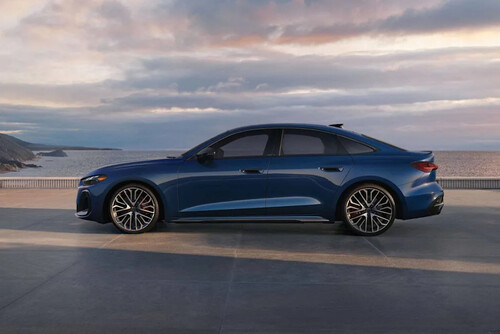
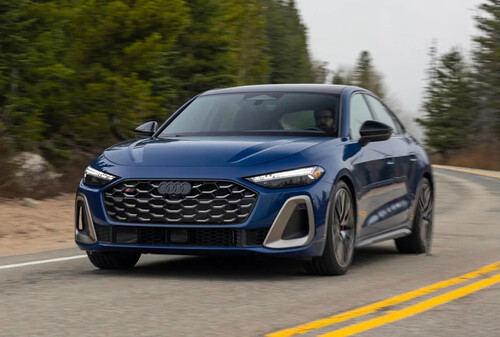
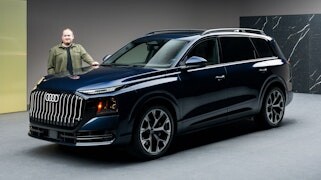
The 2027 Audi Q9 probably should have gone on sale over a decade ago, but better late than never for the extra-long, three-row Audi SUV. Engineered and designed with space-craving Americans in mind, the Q9 clings to a sporty attitude all while nearly filling out the same footprint as a Chevrolet Tahoe. It’s a bit of a balancing act, but made a touch easier by launching with two different versions: Q9 and SQ9. You can read about the latter here, and while its V-8 is always going to be a temptation, the regular Q9 is all the three-row most buyers in this part of the market will need and more.
Our expert editors test every vehicle we review. Read more about how we test and review cars here.
The Lowdown
The Q9 is no slouch in base form, which is only right considering the nearly-$90,000 starting price. There’s no pokey four-cylinder option; instead, it gets Audi’s potent 2.9-liter twin-turbo V-6 as the standard engine. This motor can be found all across the VW Group, but most notably in sportier offerings from Porsche and Audi. Here, it makes 429 hp and 442 lb-ft of torque. Audi channels this power through an eight-speed automatic transmission onward to all four wheels via the Quattro all-wheel-drive system. Audi claims a 0–60 time of only 4.9 seconds, and while that’s 1.1 seconds slower than the V-8-powered SQ9, any three-row SUV that gets to 60 in under five is worthy of celebrating.
- Vehicle tested: 2027 Audi Q9
- Base Price: $89,095
- Price as tested: $110,095
- Location: St. George, UT
How Does It Drive?
Audis tend to have a universal sense of solidity from behind the wheel, and the Q9 adopts this familiar demeanor. It feels substantial on the road, in large part because it is. Even by the high standards of luxury three-rows, the Q9 has a commendable sense of isolation. Its multilink front and rear, paired with the standard air suspension and adaptive dampers, sop up poor pavement with the best of them, even riding on 22-inch wheels.
Despite not needing to be particularly agile, the Q9 was still ready to boogie when I flipped it into its Dynamic mode. Surprisingly, the Q9 and SQ9 share the same suspension, which results in the Q9 being nearly as fun to throw around as the SQ9. In one way, it’s actually better than its V-8-powered sibling: weight. The Q9 weighs a few hundred pounds less than the SQ9, and much of that difference is lifted off the front end. So on a twisty section of road, the Q9 responded with greater eagerness than I expected in something so large, and it definitely had a pointier front end than the SQ9.
That said, the regular Q9 also has a more laid-back tune to its Quattro system, one that isn’t as rear-biased as the SQ9’s. I had to be pushing hard to discern much of a difference on paved roads, though. Audi’s senior Quattro engineer, Dieter Weidemann, told me he actually prefers the base Q9’s Quattro system on low-grip surfaces. Something for potential buyers who regularly drive on snow to consider.
The V-6 itself is largely inoffensive outside of some input lag. It is quiet and got this beast up and moving with no wheezing or stress. Thank the peak torque hitting at a low 2000 rpm for that effortless acceleration sensation around town. Fuel economy isn’t out yet, and while it will surely be better than the thirsty SQ9, the V-6 is still going to drink premium fuel at copious rates.
What’s It Like to Live With?
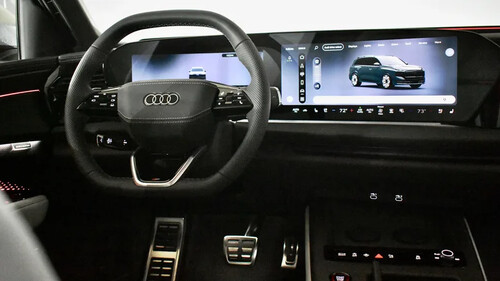
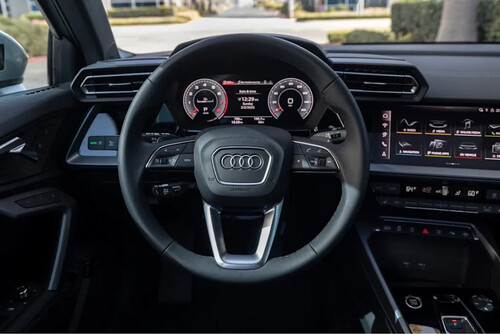
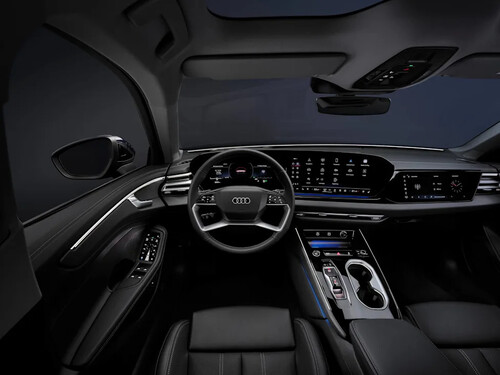
Liking big screens is a prerequisite for loving the Q9’s interior. The monolithic structure that houses both the digital instrument cluster and infotainment system is the first thing you notice upon opening the door. It’s impressive from a size and screen quality perspective, but there’s a ton of wasted space with large areas of shiny black trim all around the displays.
Audi did well to resist an all-touch-control steering-wheel design, maintaining the all-important volume scroll wheel and buttons you can physically press to skip songs. The real tactile high point is the new turn signals that click with such authority and solidity thanks to their chunky design and easily learned action.
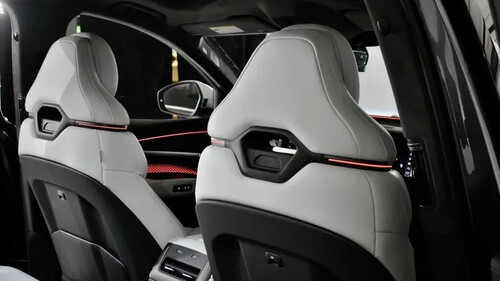
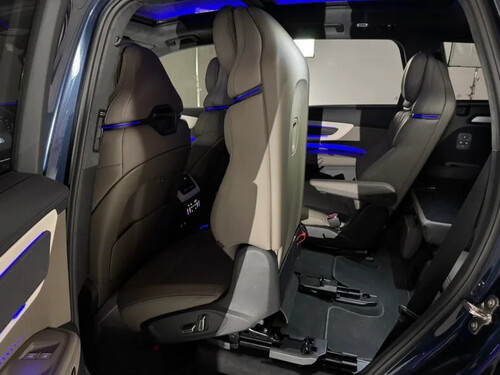
That turn signal is shared with other Audis, but high-class, flagship-esque moments can be found all throughout this interior. The Q9 is the first Audi to feature a new seat design that incorporates one of the most thorough massage functions in the game and 4D sound that lets you experience the music physically through speakers in the seats. Optional automatic doors (both front and rear) make opening and closing them a button-operated task, or you can nudge them to prompt the motors to activate. Considering the size and weight of the rear doors (that open a full 90 degrees), it’s a feature I suspect most owners will learn to like more over the course of ownership.
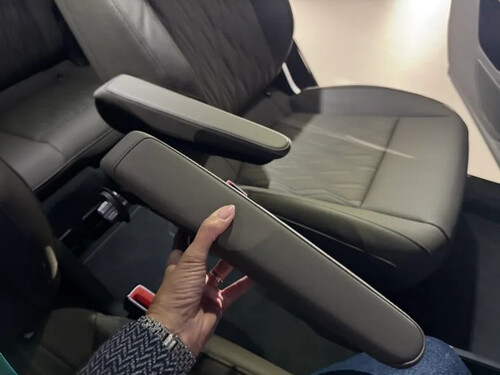
The second row can be made into a serious luxury abode by optioning the captain’s chairs instead of bench seating. These are powered bucket seats that hardly give up a lick of comfort compared to those in front, though I was disappointed to see they don’t feature the same massage/sound feature as the front buckets. When motored up and out of the way, they leave an adult human-size path into the third row, and there’s even room for that same adult to sit back there in relative comfort should you compromise the second-row legroom by a couple of inches. No, I wouldn’t choose a Q9 to haul six adults across the country, but it is well suited to shorter, fully-loaded drives. A four-zone climate-control system is standard, but there’s an available five-zone setup with an independently controlled zone for those in the wayback.
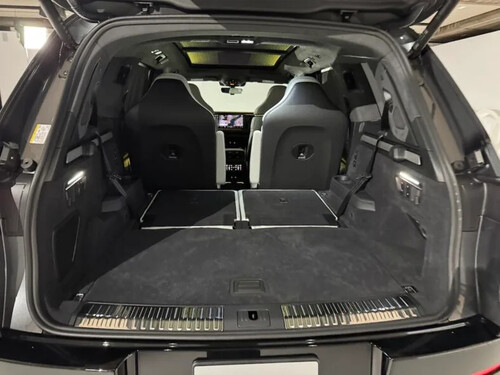
It’s this spacious third row and the cargo area behind it that finally bring Audi over the hump with its biggest SUV. The Q7 left space for kids, but no adult would ever want to spend time in the third row of that car. Now, you can get the Q9, fill it up with people, and still have a respectable amount of room behind that third row for necessary cargo. Just don’t expect Suburban levels of utility.
Should I Buy One?
Audi isn’t aiming to be the sportiest in this segment, which is an honor that still belongs to the BMW X7. But the Q9 is coming to the fight with an armory of tech and good old-fashioned easy luxury. This is the type of car Audi should have built years ago. Better late than never.
But the cabin architecture struggles to scream flagship with a screen setup that’s verging on tacky, from the gauge cluster to the oddly integrated passenger screen. Odd packaging decisions like including two wireless phone chargers as opposed to storage areas seem like a miss for the American market. And this Q9 truly was designed and engineered for America, a fact Audi is happy to tout repeatedly.
The price is right where it needs to be compared to the BMW X7 and Mercedes-Benz GLS. There’s dynamic fun to be found should you want to find it, but the Q9 doesn’t compromise its ability to be a luxury family car for outright performance. That is surely the smart move here, and I suspect it’ll be the answer for far more folks than the compromised Q7.
Highlights and Lowlights
We Love:
- Handles way better than you’d expect for a three-row Audi.
- Lots of tech and true flagship features.
- Usable third row and cargo area, much bigger than Q7.
We Don’t:
- V-6 does the job but doesn’t feel special.
- The monochromatic moonroof works, but a proper sunshade would be better.
- Touchscreen-controlled air vents remain a terrible idea.
Favorite Detail:
The turn signals that project light onto the pavement to the left or right of the car at night are an awesome feature. With distracted driving an unfortunate reality, the better you’re able to get other people’s attention, the safer a lane change can be. Also it’s just flat-out cool that we’re able to project legible messages on the ground to communicate with other drivers on the road now.