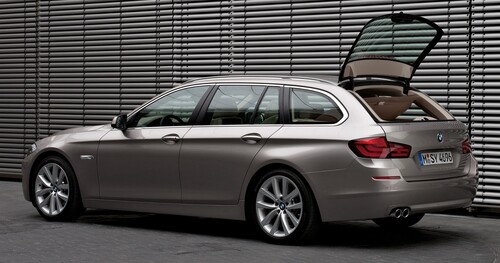
Us automotive journalists have a weird, maybe fetishistic, love for station wagons. Sporty wagons. It’s not universal among us car writers, but it’s close enough that it may as well be. The problem is that, over the years, there have never been enough buyers of sport wagons to sustain the species. Except, maybe, now.
Encountering Kia’s new K4 GT-Line Turbo Hatchback is what brought this to mind. The K4 isn’t as quick as it should be, can’t be had with a manual transmission, and has the sort of relentless styling that could have stopped several flourishes earlier. But the first time I saw it, I thought it was a wagon. And I loved it for that.
So, what if Kia calls it a hatch? The profile is more Volvo C30 from the aughts or P1800ES from the 1970s than it is a traditional hatch. Squint a bit, throw your eyes out of focus, and pant enough to induce respiratory acidosis, and there’s even a hint of 1955 Chevrolet Nomad. Hatch smatch, I say it’s a wagon.
There’s a perverse attraction in a wagon that’s also a decent sporty thing. Wagons are determinedly more utilitarian than coupes or sedans and often with more seats too. They’re designed to move people and tonnage, not nuke slaloms or blitz across a mountain road. Instead of minimal mass, they have extra metal to maximize utility. There’s something satisfying about a wagon that has been tweaked to perform; like a hippopotamus that’s also a prima ballerina. The contradiction is the attraction.
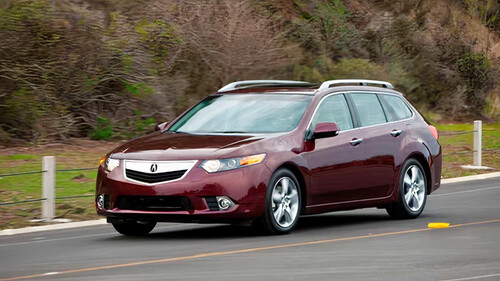
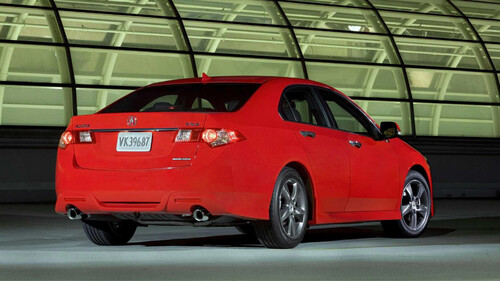
Consider the Road & Track staff. Editor-in-chief Dan Pund recently sold his Acura TSX wagon and describes it as “the best car I’ve ever owned. Even though it’s just a European Accord wagon.” New social media dude Oliver “Ollie” Lang has his 2004 Volvo V70R sitting at his uncle’s house while he figures out how to fit it into a New York City existence. Last year I wrote a long love letter to four performance wagons. “Culturally,” I wrote, “performance wagons are now the bleeding edge of the leading edge of the performance edge.”
Less than a year later, I’m now thinking I was wrong. Wagons could be, soon, the next big thing in family transportation. The mainstream solution, once again.
In the 1980s, minivans drove wagons away, and in this century, crossover SUVs have displaced minivans. Putting aside that crossovers are wagons with attitude problems, a full generation has now been raised in them. And nothing dooms a vehicular genre more surely than the contempt of a generation that grew up with it. Of course, the people now in their twenties and thirties want something other than an SUV… that’s what their parents drove.
There are so few station wagons currently on the market that I can’t point to swelling sales numbers or a riotous clamor for the return of wagons. I’m just sensing a vibe shift. And come on, if there’s anyone who can detect such a tremor in the youth culture, it’s me. Because I’m a 65-year-old writer who really wants it to be true. And my assumptions and delusions matter.
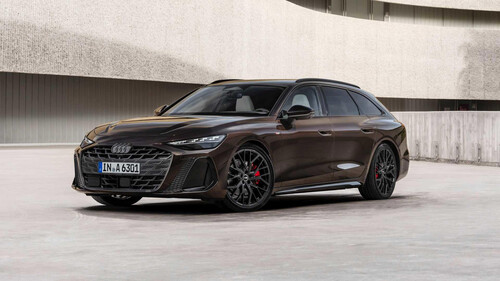
But the best evidence I have is three current wagons. First is the Audi RS 6 Avant with its swollen fenders and massive twin-turbocharged 4.0-liter V-8 rated at 621 hp. Every time I see one, my knees buckle, and my upper lip develops a quiver. It rips to 60 mph in 3.2 seconds, handles as if its Quattro all-wheel drive system is sutured to the tarmac, and yet can still haul a family from the house in Atherton to Santa Clara for the 49ers game. Sure, its 2026 base price is up around $133,295, but Audi dealers can’t keep them in stock. They’ve got plenty of SUVs, but it’s likely they’ll have to special order an RS6 Avant and then ask for some additional money atop the sticker.
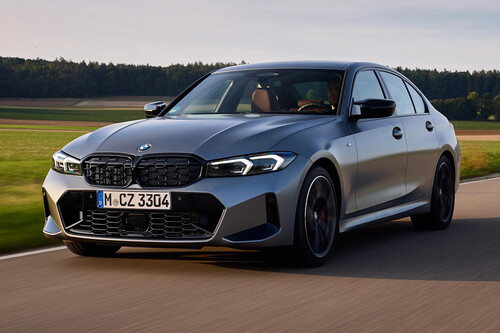
The second is the BMW M5 Touring. When the latest M5 sedan went on sale last year, I talked to a couple of dealers in Southern California, and both told me that many of their prospective customers were waiting for the Touring wagon. In May 2025, when the guys at BMW Blog asked the head honcho at M Frank van Meel whether the M5 sedan or M5 Touring was selling better, he said, “Well, actually in Europe, still more sedan than Touring. U.S. is the other way around. We currently have a higher demand in the U.S. for the Touring than for the sedan.” It works out, says van Meel, to about a 50/50 split in worldwide M5 demand.
Last year, R&T had an M5 Touring at the Performance Car of the Year fiesta of speed. While the 717-hp hybrid beast didn’t win, it did hilariously well considering that it weighed at 5481 pounds and spent much of the event hauling all the other competitors tires.
And it’s a scandal that BMW doesn’t ship the M5 Touring’s little brother, the M3 Touring, over here.
The third hopeful sign is the continuing availability of the Mercedes-AMG E-Class wagon. It’s now the E53 with a plug-in hybrid drivetrain that’s rated at a combined 604 hp. I haven’t driven it yet, but Mercedes has had E55 and E63 wagons of true ability for more than 20 years. If there wasn’t an audience for this car, they would have stopped.
All three of these German wagons are expensive and tailored to a particular niche. But they’re the vanguard of the renaissance I intuit is coming. Honda is rumored to be bringing out a wagon version of the next generation of Accord for America, for instance. And BMW’s upcoming Neue Klasse next-gen 3-Series has already been seen orbiting the Nürburgring in Touring wagon form.
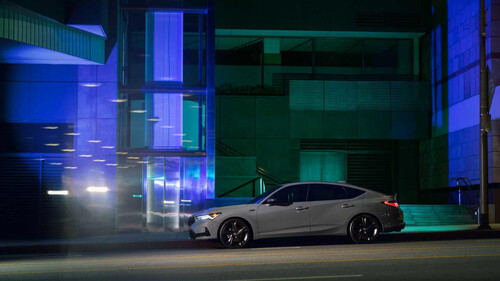
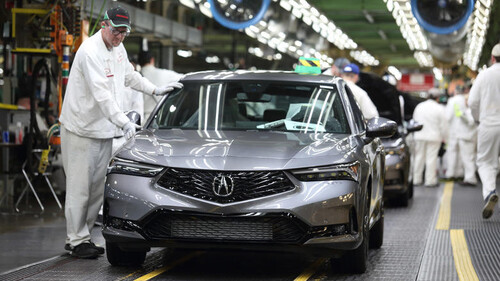
The car of my ever-changing dreams is, at this moment, a wagon version of the Acura Integra Type-S. My friend Murray Komant drew one up for me so that I could illustrate my desire. About the same size as Bossman Pund’s TSX wagon, but with the inspired 320-hp, turbocharged K-Series 2.0-liter four-cylinder and its slick six-speed manual transmission. I’m not going to get this fantasy, but maybe Acura will do the smart thing, anticipate the changing market, and offer the next Integra as a wagon. Maybe? Please.
John Pearley Huffman has been writing about cars since 1990 and is getting okay at it. Besides Road & Track, his work has appeared in Car and Driver, the New York Times, and more than 100 automotive publications and websites. A graduate of UC Santa Barbara, he still lives near that campus with his wife and two children. He owns a pair of Toyota Tundras and two dogs. He used to have a Nova and a Camaro.