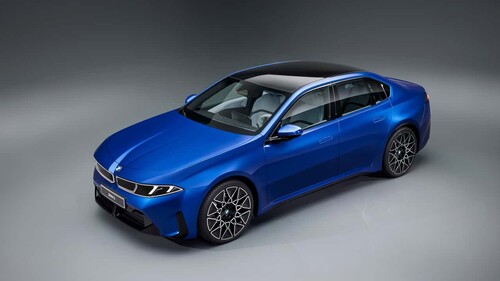
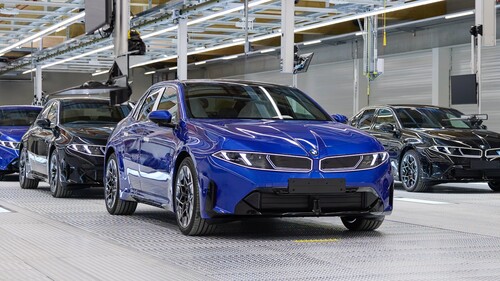
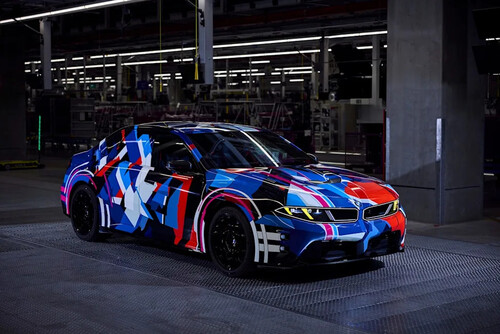
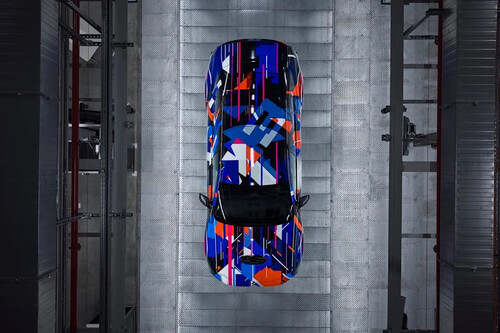
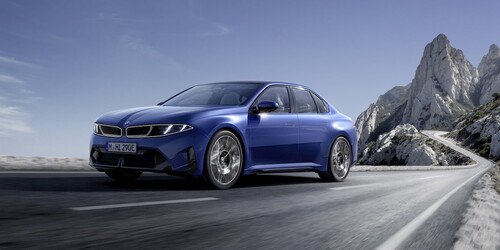
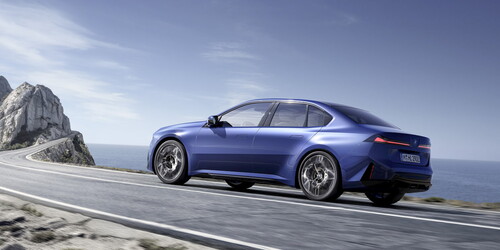
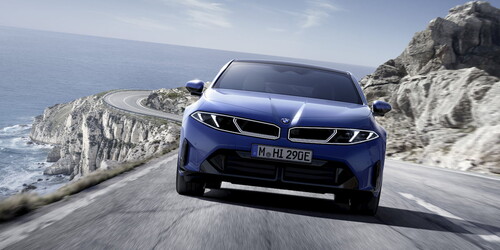
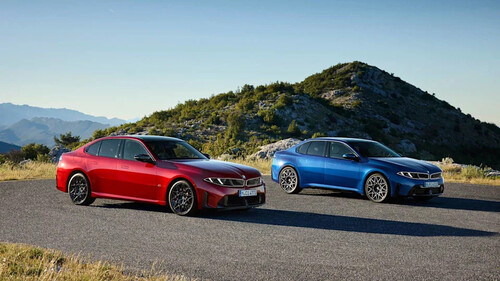
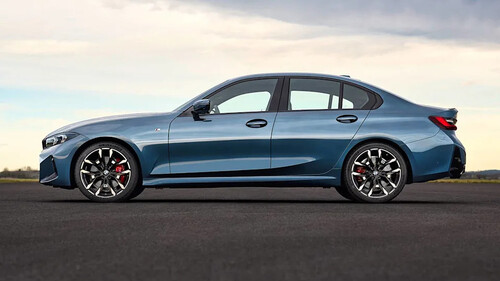
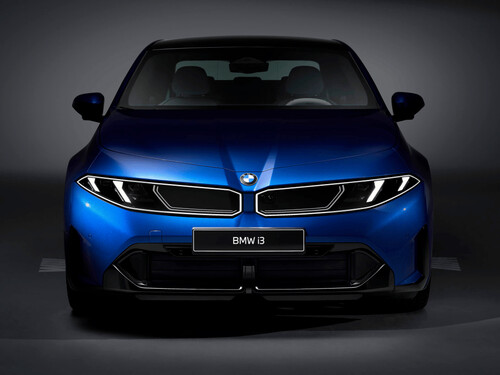
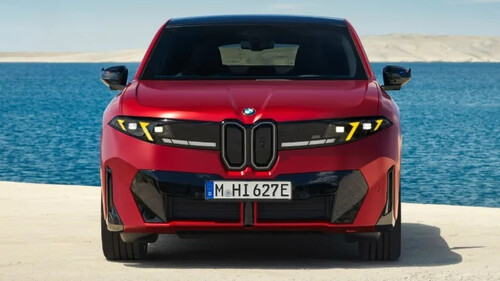
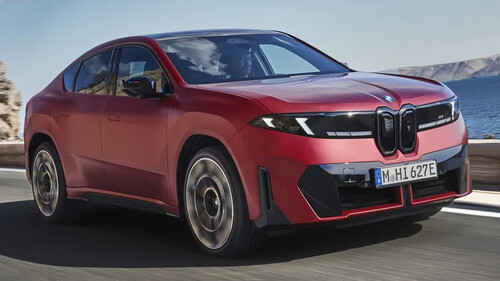
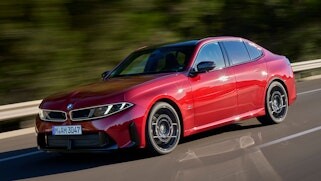
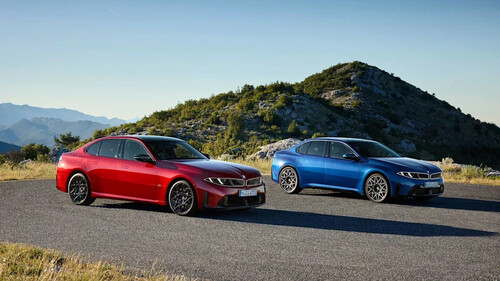
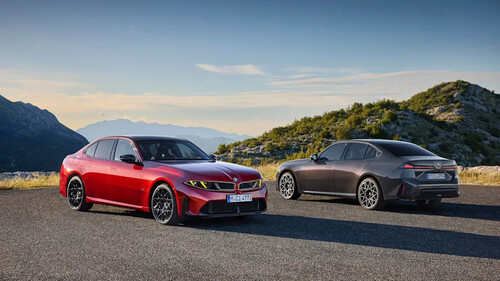
First came the EVs that looked very obviously like electric cars, with wacky designs showing off their futuristic powertrains. Then there was a generation that hid EV powertrains under bodywork shared with combustion-powered models. And now we are encountering a new strain, EVs that look almost identical to regular siblings but sit on radically different underpinnings. And the BMW i3 is the best example yet of this new genre. From the outside, it looks almost indistinguishable from the gasoline-powered G50 3-series, but every exterior panel is different, and it sits on a completely different architecture, BMW’s Neue Klasse EV platform. The distinction is great enough that it even gets its own BMW model code—this is the NA0.
The Lowdown
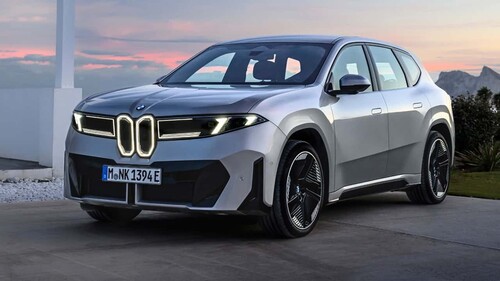
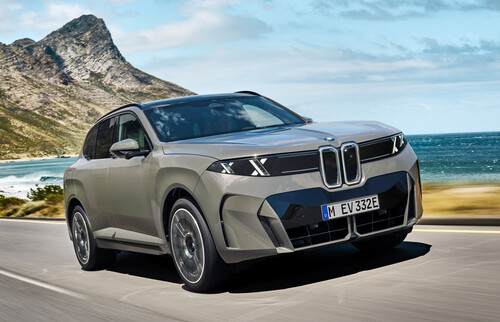
The Neue Klasse underpinnings mean the i3 shares its powertrain with the iX3 SUV that was launched ahead of it. The closeness of the relationship is shown by the 114.1-inch wheelbase shared by both models, primarily dictated by the use of the same battery pack.
The first version of the electric sedan to reach the U.S. will be the i3 50 xDrive, which uses a pair of electric motors, one powering each axle, to deliver a combined system output of 463 horsepower and 476 lb-ft of torque. The 800-volt battery stores 108.7 kWh of usable energy, and the i3’s lower profile and more slippery shape mean it will boast an EPA range of up to 468 miles. It also supports DC fast-charging at rates of up to 400 kW, making it theoretically possible to take the battery from a 10 percent to 80 percent state of charge in as little as 21 minutes. Providing you can hook it up to a sufficiently juicy plug, of course.
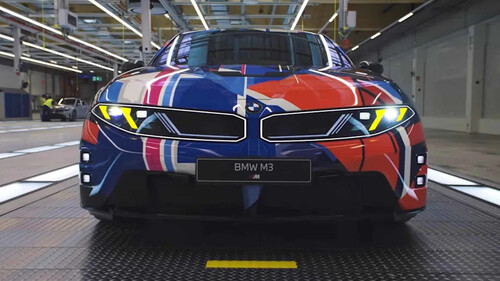
Other versions will follow, including an M60 version that will share the more potent powertrain of the iX3 M60 xDrive, making over 600 horsepower. Beyond that there is the fully electric M3 to look forward to, but for now we’ll concentrate on the meat-and-potatoes 50 xDrive.
Our expert editors test every vehicle we review. Read more about how we test and review cars here.
- Vehicle Tested: 2027 BMW i3 50 xDrive
- Base Price: $61,500
- Location: Aix-en-Provence, France
How Does It Drive?
Driving the i3 back-to-back with its 3-series doppelgänger, the new M350 xDrive, gave a fascinating insight into BMW’s priorities. Because it’s fair to say, when it comes to driving dynamics, that the EV has much more in common with the iX3 than it does with its combustion sibling. The M350 feels largely familiar, essentially a retuned and more powerful version of the previous-generation M340i xDrive. The i3 is breaking new ground for a BMW sedan. And yes, that comparison includes the old i4, which was—beneath its low-roofed bodywork—essentially an electric version of the last 3-series.
BMW has spent big on its Neue Klasse platform, and the i3 50 drove with a sense of oneness and harmony that proved the scale of the colossal engineering effort spent on integrating its different systems and making them play nice together. This was obvious in the smoothness of the powertrain, the poise of the chassis, and the exceptional refinement. This is clearly the new 3-branded model on which the big bucks have been spent.
Before I heap too much praise, I need to make an important proviso: The i3 50 is not, intrinsically, an exciting car. It is capable of delivering adrenaline spikes through quantities of longitudinal and lateral g-forces, but it completely lacks the rowdy character common to the BMWs that enthusiasts really love. Driving the i3 after experiencing the M350’s snarling engine and more aggressive suspension tune made the EV feel a little like a wallflower.
But that first impression was unfair. There’s a subtlety to the way the i3 50 does pretty much everything. No part of the experience really stands out, but that’s because everything is being done just so, and cruising refinement is almost spookily good. There is still a speaker-delivered soundtrack to try to introduce some excitement to proceedings, and it was too loud and intrusive in Sport mode. But this is switchable, and near silence suits the i3 much better.
By the increasingly deranged standards of the sharp end of the EV segment, performance is warm rather than outright hot: BMW claims a 4.5-second 0–60, which is actually 0.6 second slower than the M350. But it felt plenty keen behind the wheel, with the fractional difference in acceleration more than compensated for by not needing to change gears. Like the best EVs, the i3 has the ability to almost teleport itself into gaps and make passing moves at minimal notice. And while the rate of acceleration started to noticeably slacken over 85 mph, it still feels plenty rapid. Ultimately, BMW says, it will reach a 124-mph speed limiter.
Slowing impressed more than going, thanks to the completely seamless switching between regenerative and friction braking, the exceptionally finely tuned one-pedal mode, and also the Soft Stop feature—called “chauffeur stop” by other automakers—which brings the i3 to a genuinely imperceptible halt by easing braking progressively in the final few feet in its one-pedal mode. In addition to switchable regen levels, there is also an adaptive function that automatically increases this when the vehicle is approaching junctions or has other reasons to slow down, and it worked delicately enough to be hardly noticeable. The enhanced cruise control also worked well on different types of road, with the Highway Assistant function giving hands-off freeway functionality.
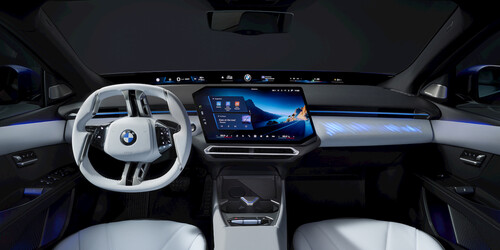
Most comments are exactly the same as those for the new 3-series. Despite their different underlying architectures, the 3-series and the i3 have what are almost identical cabins. The only obvious changes are that the EV doesn’t have gearchange paddles behind its steering wheel, a rev counter, or a start button; as long as the key is detected within the car, you just select a gear and go. Beyond that, the biggest difference I noticed was that the i3’s lowest seat position was higher than the M350’s, which was a mild frustration. Other comments regarding the sometimes fiddly inputs of the user interface are exactly the same for both cars.
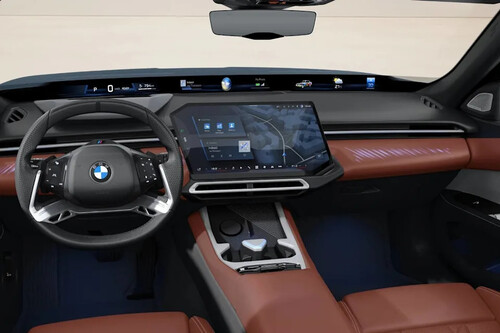
The Neue Klasse cabin architecture was clearly designed with EVs higher on the priority list than combustion models. The Panoramic Vision projected dash display is better suited for delivering the minimal messages required the i3, losing the frustration of the M350’s inadequate rev counter and vestigial fuel gauge. There is still too much display real estate for the information that needs to be delivered, but the reconfigurable slots mean buyers will be able to make their own choices about what to look at, including images of some of BMW’s Art Cars.
I didn’t get the chance to test either the peak charging speed or the veracity of the impressive range claim. That will happen when Road & Track gets more time with a car in the States.
Should I Buy One?
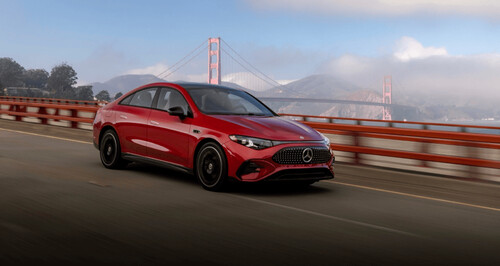
Potential buyers face two big questions. The first, if they are set on making the slightly eccentric choice of a compact EV sedan, is whether the i3 represents the best of the breed. Of the limited pool, the Mercedes C-class Electric, also set to reach the U.S. next year, is probably the closest alternative. But the Tesla Model 3 Performance is also a pretty close match in terms of power output, and it’s slightly less expensive, although it doesn’t get close to the BMW’s EPA range or dynamic polish.
But here’s a trickier question: Does this buyer really want an EV? For anyone determined to take the electric path, the i3 50 xDrive makes a great case for itself, one that will be strengthened as the model range fills out with other variants. But for those who prefer a more traditional take on the small BMW sedan or are sitting on the fence, the new 3-series provides what is still a compelling reason to say no. By empirical standards, the i3 is a better car, but it is not a more exciting one.
Highlights and Lowlights
We Love:
- The combination of performance, refinement and comfort.
- The EPA range, which is next level compared with most rivals.
- More accessible limits than the M350 xDrive.
We Don’t Love:
- Same usability grumbles as the 3-series.
- Contrived “Sport” performance noise.
- Seating position is a little too high.
Favorite Detail:
The chance to put pictures of some of BMW’s famous Art Cars onto the panoramic gauge cluster might feel like whimsy in a less serious car, but the i3 gets a pass given how relentlessly well it does pretty much everything else. As in other models with the new Panoramic Vision system, you can choose among five, including David Hockney’s superb BMW 850 CSi, seen here.