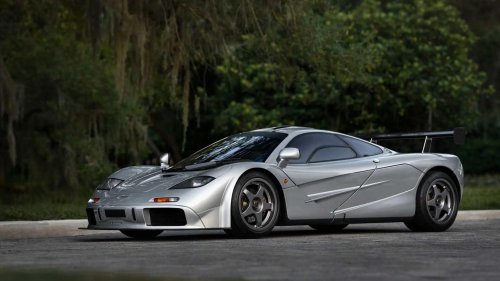
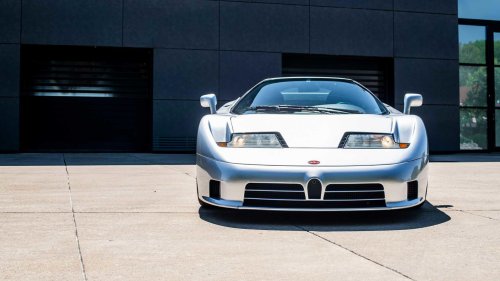
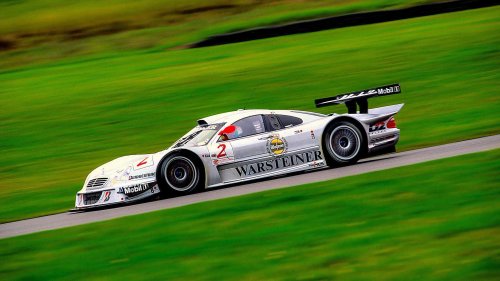
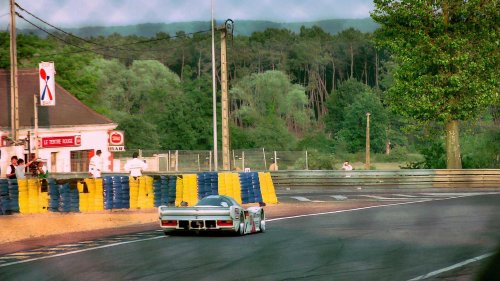
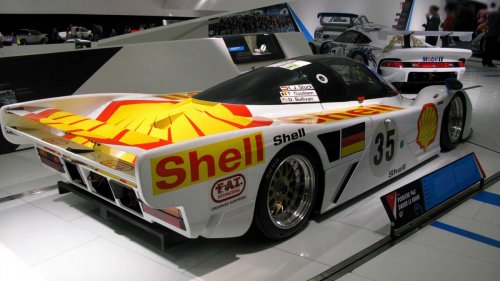
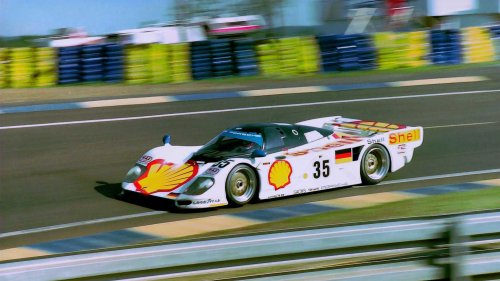
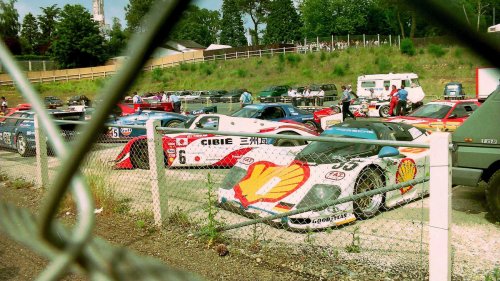
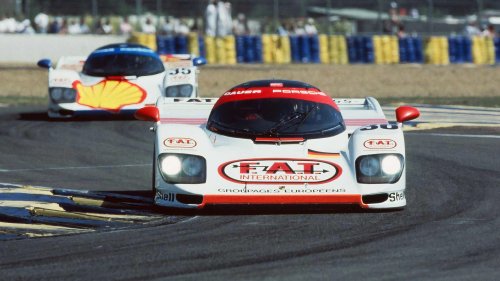
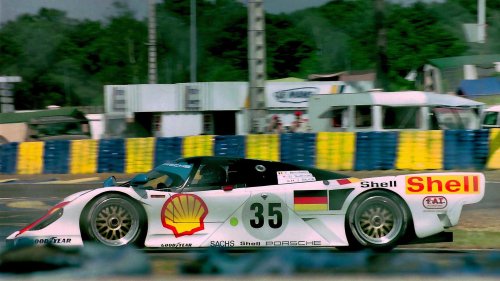
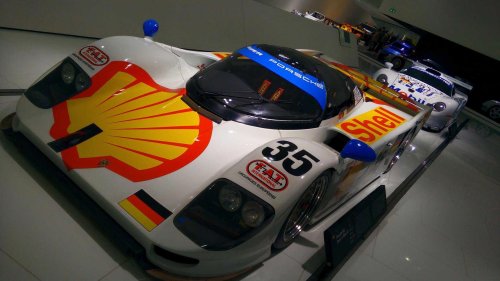
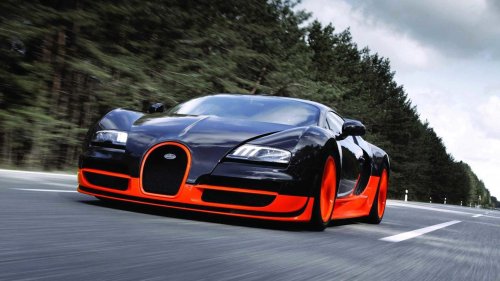
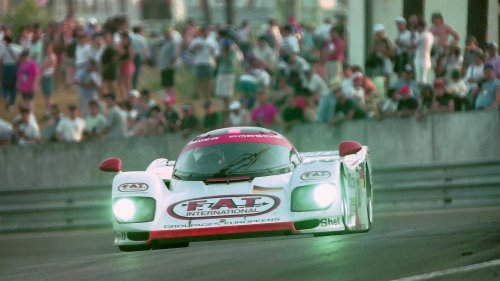



















In 1994, long before the Veyron, long before the hypercar arms race turned a thousand horsepower into a standard spec sheet item, something broke the 700 horsepower barrier. It was not Italian. It was not British. And almost nobody noticed it happening. While the world was busy worshiping the McLaren F1 and its 618-horsepower BMW V12, a small German racing team from Nuremberg quietly built a road-legal car that made 720 hp, hit 251.4 mph, and won the 24 Hours of Le Mans. Then it disappeared from public consciousness almost entirely.The McLaren F1 was the king. The Ferrari F40 made 478 hp. The Jaguar XJ220 squeezed out 542 hp. The Bugatti EB110 SS was pushing 603 hp and considered outrageous for it. Crossing 600 horsepower in a road car was headline news. Crossing 700 was supposed to be physically impossible. Someone did it anyway, held the production car top speed record for 13 years, and you have probably never heard their name. The 700 HP Barrier Was Supposed To Be Impossible For A Road Car 1 RM Sotheby's In the early 1990s, if you told anyone in the automotive world you were going to build a road car with 700 hp, they would have laughed you out of the room. The cars that were dominating the supercar conversation at the time, the McLaren F1, the Jaguar XJ220, the Bugatti EB110, most of them never even crossed 600 horsepower. The ones that did were treated like engineering miracles. Seven hundred was not a goal anyone was seriously discussing. It existed in the same category as perpetual motion and four-second family sedans. Impossible. Theoretical. Ridiculous. What The Supercar Landscape Looked Like In The Early 1990s Bugatti The McLaren F1 was the undisputed benchmark. Gordon Murray's masterpiece with its naturally aspirated BMW V12 and its 618 horsepower was what every other supercar was measured against. It was the most powerful road car of its era, the fastest, the most technically advanced. Everything else was chasing it. The Bugatti EB110 SS was the closest rival and was considered almost obscene for its output. Most manufacturers at the time were operating in the 450-550 hp range and considering themselves properly fast. Nobody was seriously aiming for 700, because nobody thought the technology existed to make it work reliably in a car you could register and insure. Then someone found a loophole, and everything changed. The Loophole That Let A Race Car Wear Number Plates Mercedes-Benz This is the part of the story where it gets interesting. In the early 1990s, the FIA and the ACO introduced a GT1 class for the 24 Hours of Le Mans, designed for production-based grand tourers. The rules for this new class stated that a racing car could be entered and classified as a production vehicle if the manufacturer could prove that just one, not fifty, not a hundred, just one street-legal version existed somewhere in the world. One car. On a public road. That was the entire threshold for calling something a production car at Le Mans.A German privateer racing team owner read those regulations and had an idea so twisted it was practically beautiful. What if he took the most dominant endurance race car of the past decade and put leather seats in it? He was not the only one who spotted the opportunity. Mercedes exploited similar rules with the CLK GTR, and McLaren with the F1 GTR. But the first to actually pull it off, successfully, at Le Mans, was a small German operation that barely anyone outside motorsport had ever heard of. The Dauer 962 Le Mans Was A Porsche Race Car You Could Drive To The Shops Via Wiki Commons Photo By Martin Lee The man behind the idea was Jochen Dauer, a privateer racing team owner based in Nuremberg. He bought five retired Porsche 962 race chassis directly from the factory. Porsche had been running a full customer parts program during the Group C era, selling every single component off the shelf, and had built nearly 150 examples of the 956/962 during that period. This made Dauer's project logistically straightforward, even if everything else about it was borderline insane. How Jochen Dauer Turned A Le Mans Legend Into A Road Car Via Wiki Commons Photo By Herranderssvensson Dauer stripped each car completely and rebuilt it from the ground up with new carbon fiber and Kevlar body panels, a flat undertray for high-speed stability, and then did something that sounds absurd for a car with a racing pedigree. He installed a second seat with proper leather upholstery and added a small luggage compartment up front, complete with a bespoke carbon fiber suitcase custom-made to fit the available space. If you are going to build a road-legal race car, you might as well make a matching suitcase for it.The modifications kept coming. A rear view camera compensated for the essentially nonexistent rear visibility. Pneumatic doors and an engine cover were added. A hydraulic suspension system allowed the car to raise and lower its ride height, mandatory because the standard 962 was so low it failed German road vehicle regulations. This was not a replica of a race car. It was the actual racing machine, wearing number plates and carrying a custom-fitted suitcase. Six of the thirteen examples built ended up with the Sultan of Brunei, because, of course, they did. 720 HP From A Twin-Turbo Flat-Six That Dominated Group C Via Wiki Commons Photo By Martin Lee The Porsche 962 was one of the most dominant race cars ever built, racking up multiple Le Mans victories and nearly a decade of total Group C domination. Its engine was the Porsche Type 935, a water-cooled 2,994cc twin-turbocharged flat-six, fed by two Kühnle, Kopp & Kausch turbochargers. In race trim, the engine ran with an air restrictor that limited its output. Dauer removed it. Without the restrictor, the flat-six produced 720 hp at 7,600 rpm and 516 lb-ft of torque at 5,000 rpm, making it the most powerful road-legal production car on earth. The engine was paired with a five-speed sequential manual gearbox, with Tiptronic S-style shift buttons mounted on the steering wheel for anyone who fancied a slightly more civilized driving experience in their Le Mans-winning grocery-getter.The performance figures were appropriately absurd. Zero to 60 mph in 2.8 seconds. Zero to 124 mph in 7.3 seconds. A top speed of 251.4 mph, independently verified at the Ehra-Lessien test track. For context, the McLaren F1 weighed 2,500 pounds and made 618 hp. The Dauer weighed 2,400 pounds and made 720 hp. It was lighter and made 102 more horsepower. That gap does not shrink when you think about it longer. It only gets more impressive. It Won Le Mans As A Road Car And Then Vanished Via Wiki Commons Photo By Martin Lee Norbert Singer, the legendary Porsche engineer who designed the original 956/962, found out about the Dauer project and immediately recognized an opportunity. The man who designed the most dominant race car of the era figured out a way to use his own creation to get back into Le Mans racing. Absolute chef's kiss. The 1994 Le Mans Victory That Proved It Wasn't A Gimmick PorscheSinger approached Dauer and struck a deal. Porsche would support a full factory effort using the Dauer 962 Le Mans as the homologated production car, converting it back to race specification for the 1994 24 Hours. To keep it technically production-based, the converted race cars retained the road car's luggage compartment, ran a 120-liter fuel tank, and had the air restrictor reinstalled, limiting the engine to 650 horsepower. Three cars were prepared, two raced, one served as the spare.The two Dauers qualified fifth and seventh, well behind the Toyota 94C-V prototypes that everyone expected to win. Nobody took them seriously. The race had a completely different story. While the Toyotas burned through pit stops and eventually succumbed to mechanical failures, the Dauers ground their way through the chaos, moving up the order lap by lap. Car 36, driven by Yannick Dalmas, Hurley Haywood, and Mauro Baldi, took the overall win. Car 35 finished third, one lap down. Toyota salvaged second. The crowd was stunned. The governing body was furious and immediately moved to close the loophole. The Dauer 962 Le Mans would never race at Le Mans again. It had won on its only attempt.That Le Mans victory directly inspired Porsche to build the 911 GT1 and Mercedes to build the CLK GTR. The Dauer kicked off the entire homologation special era of the 1990s. Why Only A Handful Were Ever Built Via Wikimedia Commons Photo By Martin Lee The production numbers tell their own story. Thirteen road-legal cars total. Some sources say only twelve were fully completed. You could fit the entire production run in a decent-sized parking lot with room left over. The limiting factor was straightforward: there were only so many original Porsche 962 donor cars available, and Dauer ran out of financial backing after the first few builds. The Porsche partnership replenished the funds, but production stayed tiny. The last car was reportedly completed in 2002. The 700 HP Pioneer That History Completely Forgot Via Wiki Commons, Photo By By Nathanael BurtonThe Dauer 962 Le Mans did things in the 1990s that seemed like science fiction at the time. It was the first production car to break 700 hp. It held the outright production car top speed record for 13 years until the Bugatti Veyron finally took it in 2007. It won Le Mans on its racing debut as a nominally road-going car. And yet when the hypercar conversation comes up, the Dauer is almost never mentioned. How The McLaren F1 And Bugatti Veyron Stole The Spotlight Bugatti The McLaren F1 got the books, the documentaries, and the museum displays. The Bugatti Veyron became a cultural phenomenon. Porsche itself has never exactly trumpeted the Dauer story, understandably so, since it involves a privateer exploiting their own race car through a technical loophole to win their most famous race. It is a brilliant tale. It is just not the kind a manufacturer puts in a press release. Meanwhile, Porsche launched the 918 Spyder and marketed it as the brand's first road car to crack 700 hp, quietly ignoring the fact that a man named Jochen Dauer had already done exactly that with their own engine twenty years earlier. What A Dauer 962 Is Worth Today Via Wiki Commons Photo By Martin Lee With no meaningful auction history and an ownership pool small enough to fit in a single room, putting a firm value on a Dauer 962 Le Mans is nearly impossible. The few times examples have surfaced, the asking prices have been deep into the millions. The original list price was approximately $1.2 million in 1994, which is around $2.5 million in today's money. With only thirteen cars in existence and most of them sitting in private collections, good luck finding one for sale.The car that broke 700 hp, wonLe Mans as a road car, held the production car top speed record for over a decade, and rewrote the rulebook for an entire generation of homologation specials. Few people actually remembering the name is either a tragedy or the greatest secret left in automotive history.