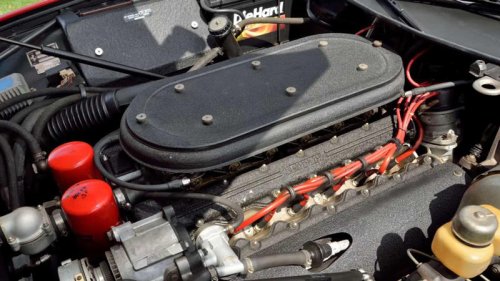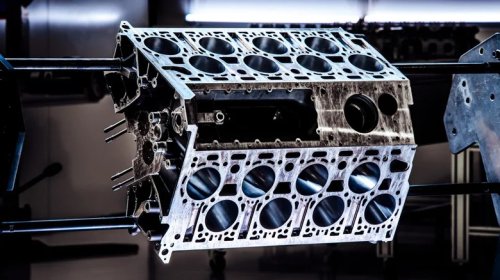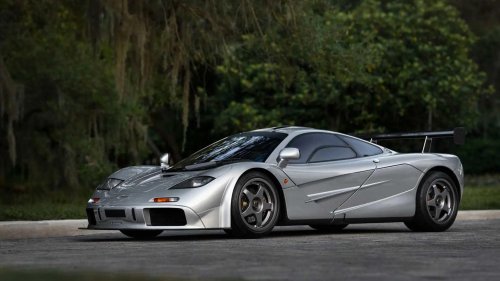
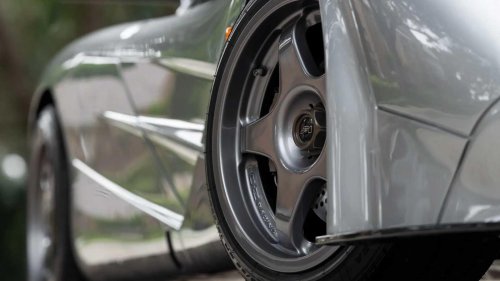
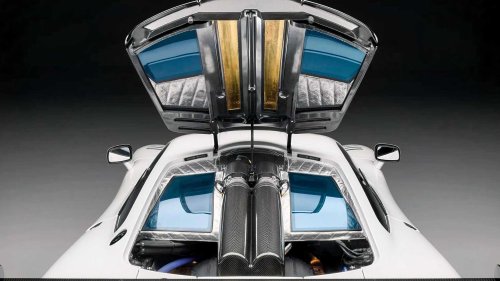
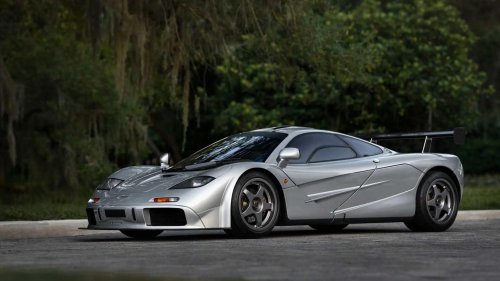
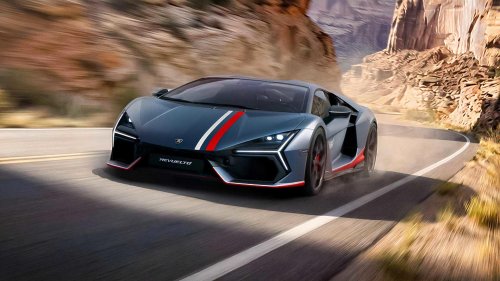



















It's safe to say that we all love a V12. There aren't many engines that sound better than a V12 when they're run up to full power. Once a mainstay of performance cars and luxury cars, the V12 sadly is on its last legs. But, that doesn't mean it's not worth celebrating. That's especially the case with one V12 in particular that helped to change the supercar landscape forever. Supercar Designers Started Going Crazy In The '80s And '90s In Their Quest To Chase Power RM Sotheby'sIf there's any time period that's synonymous with the craziest supercars, it's the 1980s and 1990s. These two decades were a time when supercar designers decided to go absolutely crazy, chasing the absolute limit of power and performance. This resulted in some of the most iconic supercars ever made. They were often built with different philosophies, but the end result was the same. They were loud, proud, unapologetic, and (compared to today's machines) incredibly difficult to handle. But, their brash characters are what made them special. None were more special, perhaps, than one that was built by a manufacturer that had previously only been known for world-beating race cars. McLaren Wanted To Join In, And Build The Ultimate Road Car Via: RM Sotheby'sWith the craziest supercar era well underway, it's not surprising that McLaren wanted a slice of the pie. It had actually tried to produce a road-legal car in the 1960s while Bruce McLaren was still in charge, but his death cut those plans short. The idea of creating a road-legal McLaren was resurrected by Gordon Murray while he was working there. He came up with the idea of an ultimate road car, with an idiosyncratic interior and an engine that was more powerful than basically anything else on the road. The McLaren F1's Engine Was The First Production V12 To Have More Than 600 Horsepower RM Sotheby'sThe car that Gordon Murray and Ron Dennis created as the first ever McLaren road car was the legendary McLaren F1. While there are a lot of engineering marvels that make this car incredible, perhaps the best of those is its V12 engine. This is a 6.1-liter, naturally aspirated lump of pure performance, built by BMW specifically for the McLaren F1. The engine in the original street-legal F1 produces 618 horsepower and 479 lb-ft of torque. That made it the first production V12 engine to break the 600 horsepower barrier, grabbing plenty of headlines in the process. If that wasn't enough, the F1 LM homologation special bumped that power up to 671 horsepower and 520 lb-ft of torque. The engines used in the F1 GTR racecar had to be limited by restrictors to make it legal to race, putting the power down to 592 horsepower.A supercar with 618 horsepower is nothing special today. There are fully-electric family cars that have that kind of power now. But, back in the early '90s when the McLaren F1 first went on sale, that kind of power really was impressive. That screaming V12 placed the F1 up at the top of the tree when it came to pure performance from a road-legal car. That only became a bigger deal when one of the prototypes hit 240 mph, breaking the record for the fastest production car ever and holding onto that record for years until the Bugatti Veyron arrived. The McLaren F1 still actually holds a production car speed record to this day, as it's the fastest naturally aspirated production car ever — every other production car that's gone faster than it since has used a forced induction engine, has had an electrified powertrain, or been a full-on electric hypercar. There Were Plenty Of Other Powerful V12s Before The McLaren F1 - Why Do They All Fall Short? Bring a TrailerOf course, the McLaren F1's V12 isn't the only incredibly impressive naturally aspirated V12 engine from the purer, all-analog era of supercars. Many people will mention the glorious Lamborghini V12 that powered the Miura and the Countach. While the V12 that powered both of those iconic supercars was brilliant and it perfectly matched the brash Lamborghini character, it does fall quite short of the McLaren F1's BMW-built engine. The Lamborghini Miura didn't produce any more than around 385 horsepower from its V12, while the Lamborghini Countach only ever made as much as 455 horsepower in the most powerful LP5000 Quattrovalvole and 25th Anniversary editions.There'll also be people who point out the Ferrari Testarossa. While the Testarossa does have a 12-cylinder engine, it fails on multiple counts. Not only is it nowhere near powerful enough to match the McLaren F1's power (the final F512 M version of the Ferrari Testarossa has 434 horsepower), but it's also not a V12. The Testarossa's engine is actually a flat-12. That means that the cylinders are arranged in a boxer configuration. While it may very much sound like a V12, it definitely doesn't look like one when you actually see it! Why Does The McLaren F1's V12's Incredible Achievement Matter Now? RM Sotheby'sIn today's era of ever more powerful supercars and hypercars, why is the McLaren F1's V12 being a 600+ horsepower unit still an incredible achievement? Well, there are two big reasons why. Both of those reasons have something to do with how the development of performance cars has changed. Automakers Have Given Up On Big, Naturally-Aspirated Engines Bring a TrailerThe first of those big changes is that, by and large, automakers have completely given up on big, naturally aspirated engines. This has happened for multiple reasons. First, engines have become much more efficient as time has gone on. That has meant that automakers can get more power out of smaller units. Second, more stringent emissions regulations have meant that automakers have been forced to boost smaller engines with turbocharging to create cars that are just as powerful but less polluting. They have also had to look into using hybrid technology to make up some of the power output, so a smaller and more efficient engine that can be switched off entirely at low speeds can be used.Unfortunately, this push towards smaller engines has led to the near-death of the V12. A twin-turbocharged V8 or a twin-turbocharged V6 with hybrid assistance can produce as much power as the McLaren F1's naturally aspirated V12, in a way that makes the emissions regulators happy. That is why we are seeing more of these (admittedly less characterful) powertrains in the equivalent of cars like the McLaren F1 today. Modern V12s Have Needed To Adapt To Match The McLaren F1's Power LamborghiniEven though the auto industry is moving towards smaller, more efficient engines, that doesn't mean that the V12 isn't going to be around for a while yet. The V12 has found ways to survive, and it has managed to get back up to top-tier performance figures by adapting to the changing times. Perhaps the best example of that is the Lamborghini Revuelto. Before the Revuelto was announced, there was a huge worry that Lamborghini might have to do away with the V12 entirely due to tighter and tighter emissions regulations. However, Lamborghini managed to find a way around that by hybridizing the Revuelto. The Revuelto's naturally aspirated 6.5-liter V12 produces 814 horsepower and 535 lb-ft of torque just on its own. Paired up with three electric motors (which produce 187 horsepower and 248 lb-ft of torque), it's got a combined output of 1,001 horsepower and 783 lb-ft of torque. That makes it a proper naturally aspirated V12 supercar with a power output that can match modern hypercars while also being able to meet modern emissions standards. The electric motors mean that the V12 does not have to work as hard, and it can operate on the motors alone at low speeds.The Lamborghini Revuelto isn't the only V12-powered car that's used hybridization to keep this engine type relevant, either. The Ferrari LaFerrari used hybrid technology before that, incorporating a Formula 1-style KERS unit to boost the overall power. The 6.3-liter naturally aspirated V12 of the LaFerrari produces 789 horsepower and 516 lb-ft of torque on its own, while the KERS unit produces 161 horsepower. All together, the Ferrari LaFerrari produces 950 horsepower and 664 lb-ft of torque.The super-powerful naturally aspirated V12 didn't quite die away in more modern times, though. The Lamborghini Murciélago LP670-4 SV, the final iteration of this legendary Lambo produced from 2009-2010, has a 6.5-liter naturally-aspirated V12 that produces 661 horsepower. That is not too far off the power figure of the McLaren F1 LM! That made this special edition Lamborghini supercar the more modern benchmark for what a naturally aspirated V12 can do. Perhaps a more purist upstart performance car brand can top the Murciélago LP670-4 SV's output some day. However, for the time being, the V12 will need to keep adapting to make sure it has a place in our current era.Sources: Ferrari, Lamborghini, McLaren