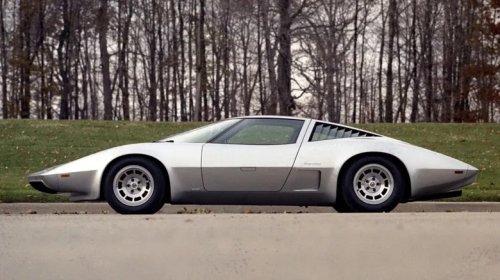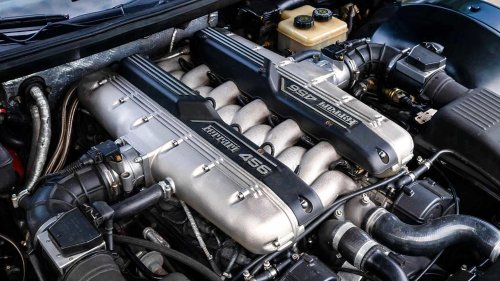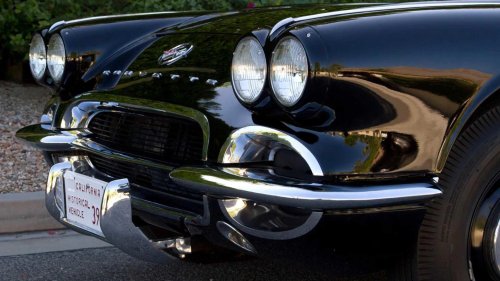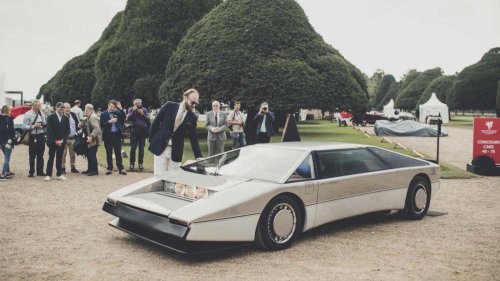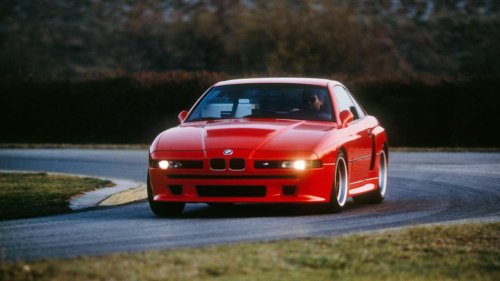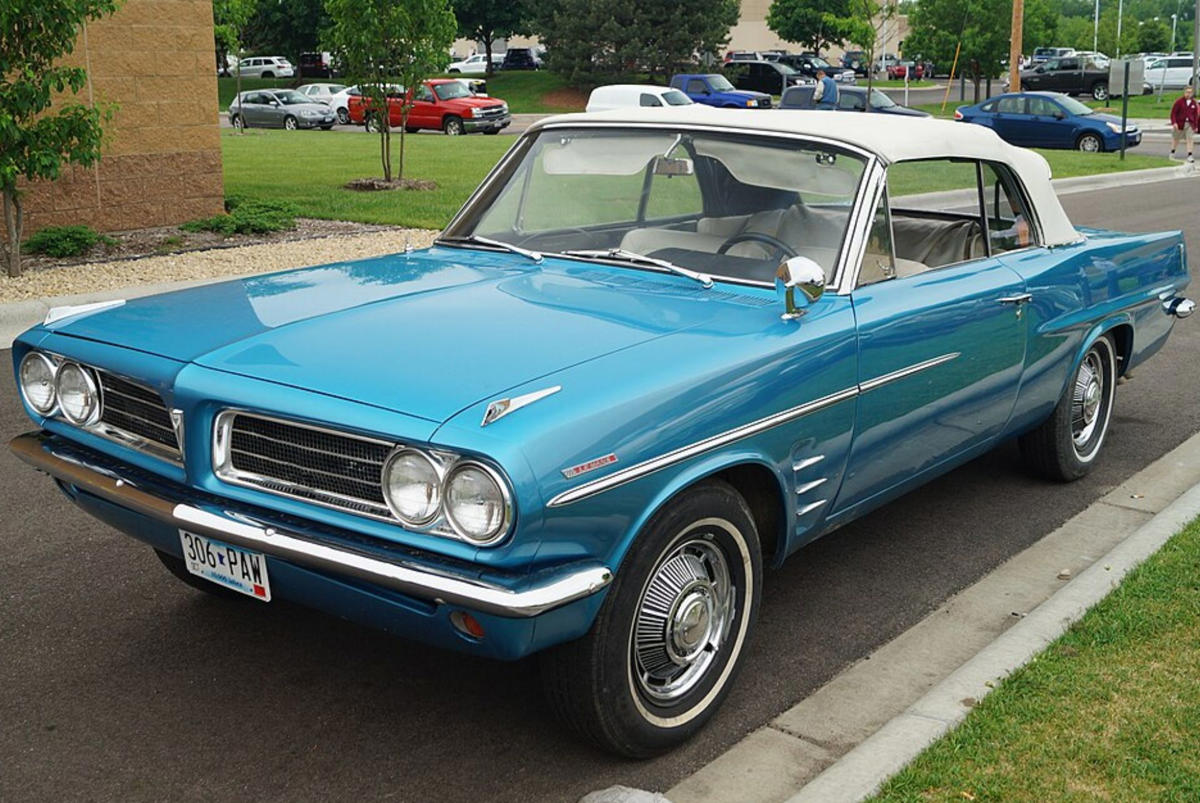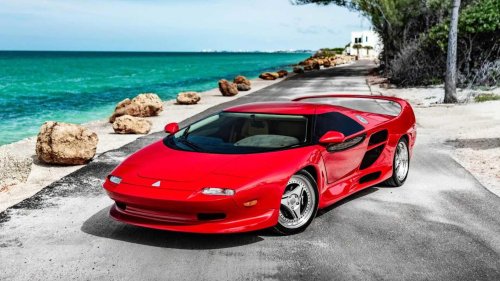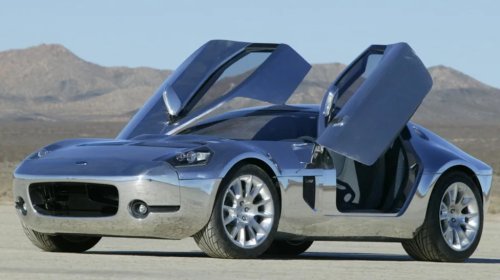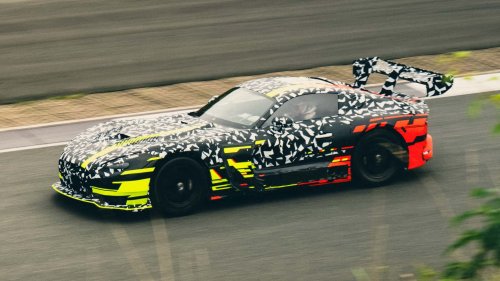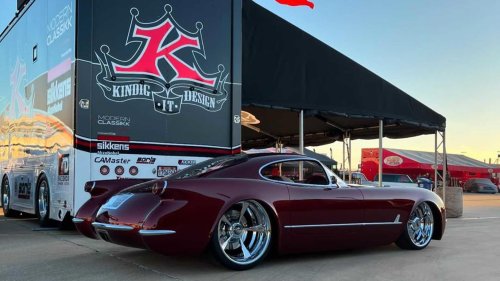
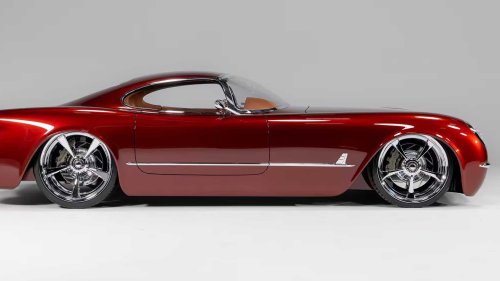
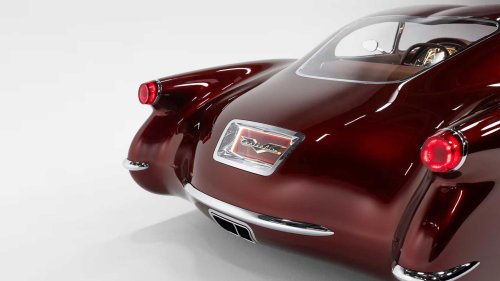
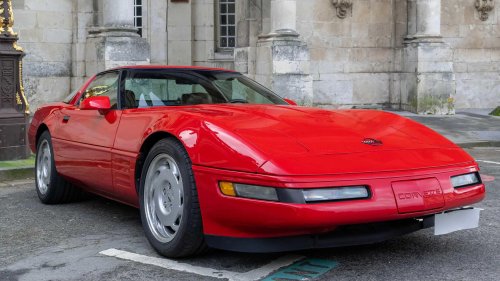
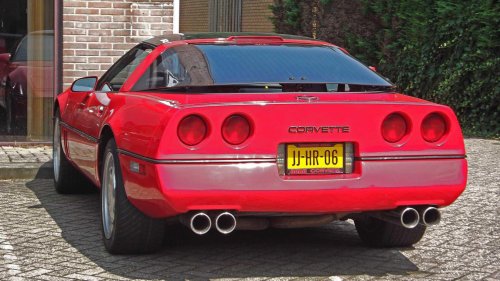
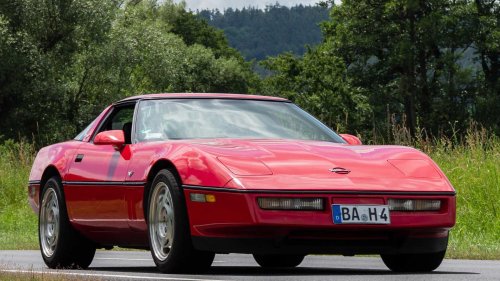
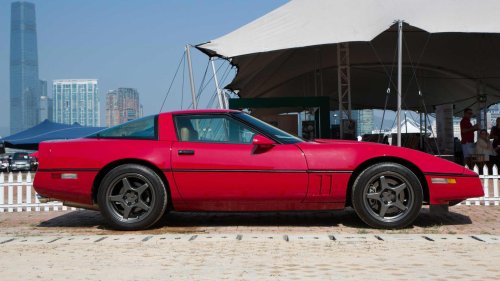
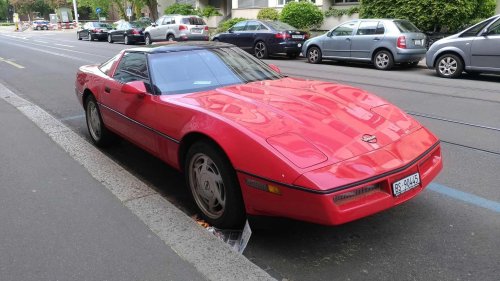



















Jump LinksWhat Is The TwelveAir?What Engine Powers The TwelveAir?Why Did The TwelveAir Never Go Into Production?Five unique aspects about the TwelveAir:First Things First: Why Was It Built?The V12’s Powertrain And The Accompanying NightmaresReason 1 For Failing: CostReason 2 For Failing: ReliabilityReason 3 For Failing: HandlingFor over 70 years, the Chevrolet Corvette’s heartbeat has been the sound of a pulsating V8 engine. A proudly American one. This recipe survived many challenges, including the fuel crisis in the 1970s, corporate bankruptcies, and even the transition from its front-engine layout to a mid-engine one.Yet, for all the car’s greatness, in the quiet corners of General Motors’ engineering department and the high-end shops of master builders, and even among enthusiasts, there has always been a "what if." Could the Corvette trade its pushrod rumble for the symphony of twelve cylinders to be an American equivalent of the refined screams of Ferrari and Lamborghini?Where research meets the right dealBrowse This ModelEven if a V12 'Vette seems like a far-fetched dream, this is a tale that actually has truth to it. The idea is a story of extremes, born of a desire to recapture the elegance of the 1950s and a cold-blooded need to crush the Dodge Viper. The two creations in this story represent the ceiling of Corvette performance and prestige. They are vehicles that push the boundaries of what's possible, and perhaps what the public would be willing to pay. While they never reached the assembly line, these V12 monsters are fascinating footnotes in the Corvette's storied history.The 1992 Corvette ZR-12 images are not of the actual car, given that the available images are not from authoritative sources. In this case, the standard Corvette C4 (1984-1996) images are used. The TwelveAir: A Mid-Century Masterpiece What Is The TwelveAir? Kindig-it Design / Instagram The TwelveAir is not a forgotten GM prototype from the archives. Instead, it’s a rather spectacular "what-if" brought to life by Dave Kindig and the team at Kindig-it Design. Unveiled at the 2024 SEMA Show, the TwelveAir was a coachbuilt creation that imagined a world where Chevrolet pulled the trigger and decided to build a true ultra-luxury grand tourer in the mid-1950s. Though it drew inspiration from the 1953 Corvette and the sleek lines of the GM Motorama concept cars, the TwelveAir was an entirely bespoke creation.The car featured a hand-formed aluminum body that took the classic Corvette proportions and made them more elegant. The vintage aesthetic sat on a custom Roadster Shop chassis with modern suspension geometry. The vehicle was more than just a restomod, though. The design completely reimagined the Corvette’s DNA. By taking the iconic cues of the C1, including the rounded fenders, the toothy grille, and the wrap-around windshield, and altering each cue, the TwelveAir was a fascinating creation. What Engine Powers The TwelveAir? Kindig-it Design / Instagram The heart of the TwelveAir was a custom-built, naturally aspirated V12 engine. Rather than sourcing a vintage Jaguar or BMW unit, the project utilized a V12 block designed by Race Cast Engineering. This engine is effectively a "double-LS" architecture. It had two banks of six cylinders, sharing the characteristics of GM's LS platform.Displacing 9.2 liters, the engine featured individual throttle bodies and a custom intake manifold that sat between the cylinder banks. As a nice touch, the powerplant was visible through the hood's transparent accents. The engine made over 700 horsepower and went to the rear wheels via a 4L80E automatic transmission. Unlike the raw, vibrating power of some Corvette V8s, the TwelveAir’s 12-cylinder engine’s power delivery was said to be sophisticated and linear. The exhaust note, too, sounded more like a vintage Spitfire fighter plane than a muscle car. Why Did The TwelveAir Never Go Into Production? Kindig-it Design / Instagram There’s a very simple reason the TwelveAir never went into production: it was never intended to be a mass-produced vehicle. It is a "one-of-one" coachbuilt piece of art. Even in the 1950s, the technology required to mass-produce an all-aluminum V12 with this level of complexity likely would have made the Corvette way more expensive than the cheapest Rolls-Royce of the time, effectively killing the ‘Vette’s "everyman's sports car" appeal.Also, General Motors has always been fiercely protective of its V8 heritage. Moving the Corvette to a V12 would have changed everything and required completely different manufacturing tooling. Five unique aspects about the TwelveAir: The "Double-LS" V12 Heart Hand-Formed Aluminum Construction Stretched Proportions The Roadster Shop Chassis Motorama-Inspired "What-If" Design 1992 Corvette ZR-12: The "Viper Killer" First Things First: Why Was It Built? Wiki Commons In the early 1990s, Chevrolet found itself in an unusual position. Its place as a top-choice American muscle car was under threat. The 'Vette was no longer the undisputed king of American performance because the Dodge Viper was challenging its crown. The Viper was an unapologetic, terrifying, and undeniably fast roadster powered by a massive 8.0L V10 engine. The car was a direct shot across the Corvette's bow. GM’s engineering team, led by the legendary Dave McLellan, had one action to execute: respond with overwhelming force.Internally, the Corvette ZR-12 project, based on the C4 Corvette, was nicknamed "Conan" for its sheer brutality. The machine was a testbed designed to see exactly how big an engine and how much power the C4 Corvette chassis could handle. The goal wasn't refinement or luxury. Instead, the project was a simple "mine is bigger" exercise in engineering dominance.Simple, sure, but it was about taking control of the playground. Chevrolet wanted to prove to the buying public that if the Viper could bring ten cylinders to the fight, the 'Vette could bring twelve. It was a skunkworks project meant to explore the possibility of a "super-Corvette" that would sit above the already formidable ZR-1. The V12’s Powertrain And The Accompanying Nightmares Wiki CommonsTo create the ZR-12, Chevy turned to Ryan Falconer Industries, a company famous for building high-performance marine and aviation engines. They selected a 9.8L (600 cubic inch) all-aluminum V12. This massive powerplant produced an incredible 686 hp and 680 lb-feet of torque. These figures were unheard of for a street-legal car in 1992.As great as it sounds, fitting this monstrous engine into the C4 was a nightmare. The team stretched the front of the Corvette’s chassis by eight inches to accommodate the extra four cylinders. This resulted in a distinctively long hood and a nose-heavy silhouette that gave the car a stretched-out look. Despite the extra length, the engine was surprisingly light because of the all-aluminum construction. Still, the sheer physical dimensions required a complete redesign of the cooling system and the front subframe to keep the car from twisting under the massive torque. Reason 1 For Failing: Cost Wiki Commons The Falconer V12 engine alone was a bespoke racing unit that cost approximately $45,000 in 1992. That was a pretty penny, even by today’s standards. When added to the cost of a base Corvette and the extensive chassis modifications required to fit it, the MSRP for a production ZR-12 would have easily exceeded $100,000, the equivalent to $231,185 today. To put it in perspective: a high-end ZR-1 was already struggling to find buyers at $60,000, so imagine that base price with the cost of the engine, excluding the body modifications costs to make the concept work for the buying public. A six-figure Corvette was a financial non-starter for GM. Reason 2 For Failing: Reliability Wiki CommonsWhile the Falconer V12 was a masterpiece of engineering, it was never designed to handle the tasks of daily commuting or long-term heat soak in an engine bay. During testing, the ZR-12 suffered from significant cooling issues. The V12 engine generated so much heat that it pushed the limits of the C4's radiator capacity. The complexity of the custom fuel and ignition systems made it a nightmare to maintain compared to the standard V8. Reason 3 For Failing: Handling Wiki CommonsAsk an automotive engineer, and they'd probably say that physics is one of the biggest challenges when creating a vehicle. The problem also affected "Conan." By stretching the wheelbase and placing a massive V12 over the front axle, the engineers severely compromised the Corvette’s balance. The car was a monster in a straight line, running the quarter-mile in under 12 seconds, but it was cumbersome in the corners. The extra length made the steering feel slow, and the weight distribution made the car prone to understeer. The project was ultimately canned, and GM stuck to its guns by fitting the Corvette with a V8 engine. Should These Cars Have Remained Dreams? The V12 Corvette remains a thunderous anomaly in a lineage defined by the all-round usability of the small-block V8. While the TwelveAir proved that twelve cylinders could elevate the Corvette to supreme elegance, the ZR-12 demonstrated that "no replacement for displacement" remains the ultimate approach. However, both concepts succumbed to the same reality: the V8 is the Corvette’s heartbeat. These experiments weren't failures, though; they were ambitious dreams that proved you should never stop reaching for the stars.