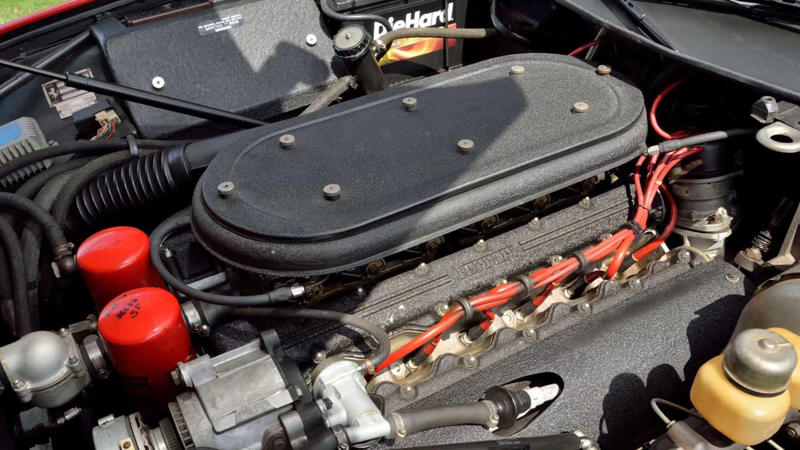
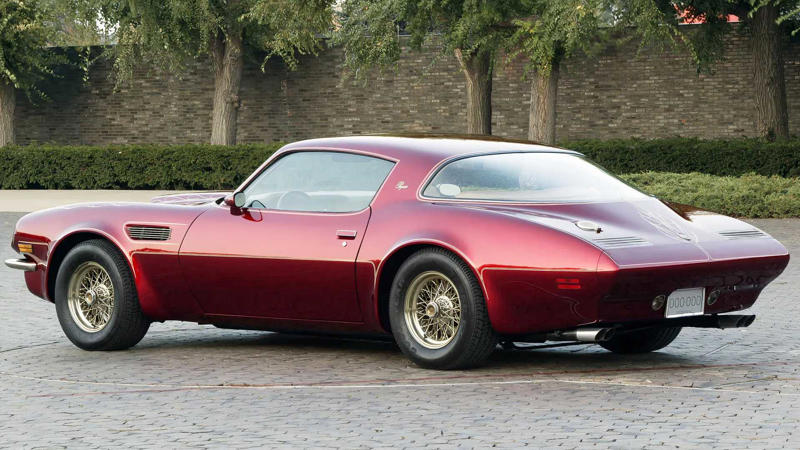
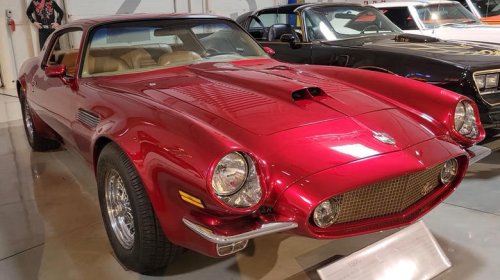
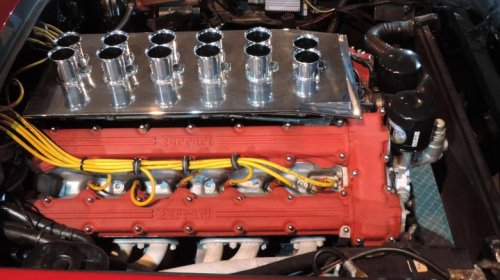
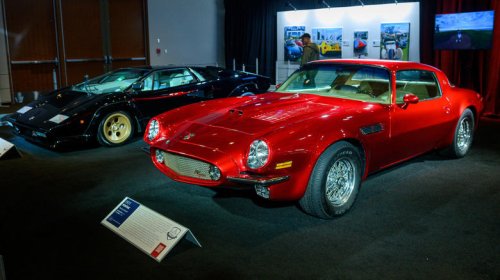
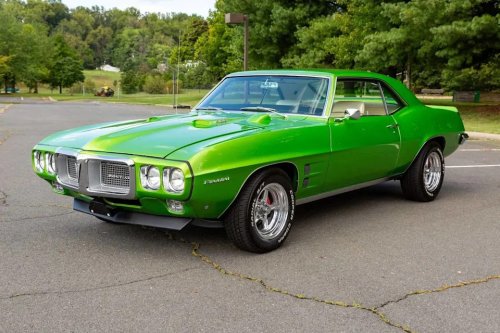
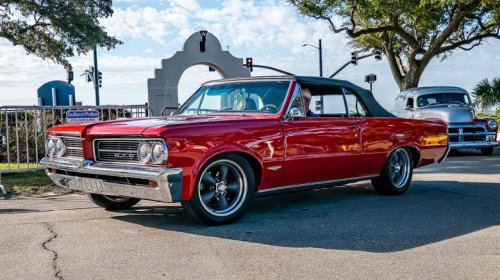
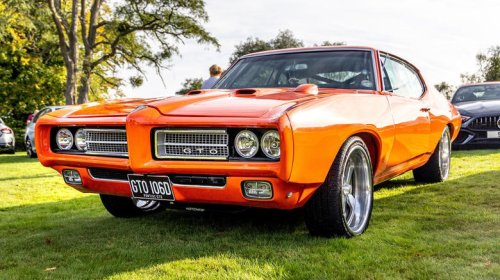
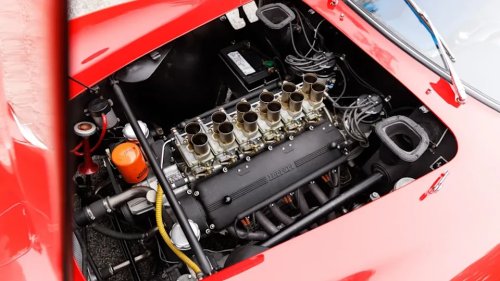
Pontiac is best known for its muscle-bound classics like the GTO, Firebird, and Trans Am. These iconic cars defined a generation of American performance with bold styling and, most importantly, V8 power. But buried deep in GM’s design archives sits a little-known experiment that challenged everything Pontiac stood for. This mystery Pontiac came totally out of left field, unlike anything else the carmaker had ever built, as it housed a under the hood.This concept vehicle was built in the early '70s as a one-off concept car, and it blended American muscle car proportions with European engineering precision. The project began under the direction of GM’s then chief designer, Bill Mitchell, and started life as a Firebird. However, the vehicle underwent extensive modifications and then the integration of a Ferrari V12. The Ferrari engine delivered a completely different driving experience than any V8 Pontiac ever produced and gave this American car true grand touring credentials. The 1971 Pontiac Pegasus V12 Concept Had A Ferrari V12From Firebird to Ferrari-Fused Concept The Pegasus started out as a 1970 Pontiac Firebird, but the finished product barely resembled its original. Designers reshaped the front to resemble Ferrari’s trademark grille layout, and they added fender vents and a completely reworked rear section. The tail featured custom lighting and a wraparound rear window similar to that of the Ferrari 365 GTC. But the hand-fabricated body panels gave the car a more refined, sculpted look.Borrani wire wheels completed the European-inspired stance, while interior touches like a Ferrari steering wheel and Veglia gauges reinforced the cross-continental design theme. Despite its Pontiac roots, the Pegasus looked and felt like something far more international in character. Pegasus V12 Project: Under The Aegis Of Bill Mitchell Bill Mitchell led GM’s design department during one of its most creative and competitive periods. As Vice President of Design from 1958 to 1977, he oversaw the development of iconic vehicles like the 1963 Corvette Stingray and the 1970 Chevrolet Camaro. But Mitchell also had a personal taste for exotic cars, especially when it came to European sports cars. That passion quietly influenced some of GM’s most unconventional design experiments—many of which never made it past internal reviews.Within GM’s conservative corporate structure, radical ideas often stayed hidden. Engineering budgets focused on mass-market needs, and projects seen as too experimental rarely received public attention. Mitchell, however, had both the authority and the confidence to pursue side projects under the radar. Using GM’s Special Projects division, he commissioned a one-off concept car that fused American muscle with Italian performance. That car became the 1971 Pontiac Pegasus V12 Concept, and the craziest thing about this car was the fact that it had a Columbo V12 borrowed from the Ferrari 365 GTB/4 Daytona. The Powerful Ferrari V12 Via: Mecum Auctions Engine Specs (Source: Ferrari)At the heart of the Pontiac Pegasus beats a Ferrari Colombo V12 engine from the Ferrari 365 GTB/4 Daytona. This 4.4-liter, 60-degree V12 produced 352 hp at 7,500 rpm and used six Weber carburetors to deliver sharp throttle response and a wide power band. GM chose this engine not just for its numbers but for its refinement, precision, and distinctly European driving characteristics.Bill Mitchell wanted the Pegasus to blend the emotional appeal of Italian engineering with American design. To him, no domestic powertrain could match the sound or sophistication of a Ferrari V12. The engine’s compact layout and high-revving nature made it an ideal contrast to Pontiac’s traditional large, thumping V8s. When the Pegasus was first built, GM paired the Ferrari V12 with a Turbo-Hydramatic 400 automatic transmission. Using the automatic gearbox would allow better compatibility and packaging with the Firebird's chassis as it was not designed for Ferrari’s transaxle layout. However, the automatic gearbox dulled the engine’s natural responsiveness. Drivers couldn’t fully explore the engine’s potential, which peaked at around 7,700 rpm.Before long, the engineering and development team decided to take the plunge and install the original Ferrari 5-speed manual gearbox. They reworked the transmission tunnel and reconfigured the drivetrain to pair the Ferrari transaxle with the GM posi-traction rear axle. This upgrade not only enhanced overall performance but also revived the engine’s authentic character.The change transformed the car into a far more engaging machine to drive, delivering the Ferrari-style dynamics that Mitchell had always admired. Ultimately, the engine-and-transmission pairing gave the Pegasus its distinct personality—something more refined than a muscle car, yet still undeniably powerful. The Pegasus V12 Was A Personal Design Statement Despite its uniqueness, Pontiac never intended to mass-produce the car. It served more as a design and engineering exercise, offering a glimpse into GM's engineering capabilities and the will to embrace cross-continental collaboration.The Pegasus was more than a concept car—it was Bill Mitchell’s personal design statement. He used the project to express his ideas about what future performance cars could be. As GM’s design chief, Mitchell often challenged his teams to push boundaries, and the Pegasus gave him a way to do that in metal and motion. His attachment to the car showed by how often he drove it. From Private Project To Museum Antiquity GM Unlike most concept cars that quietly disappear into storage, the Pegasus stayed by Mitchell’s side after his retirement in 1977. In a rare exception, GM allowed him to take the car with him—a privilege almost never granted to departing executives. Mitchell continued to drive it for years, and one well-known account even places him behind the wheel during a crash at Road America in Wisconsin. Following his death in 1988, the Pegasus was returned to GM, where it became part of the company’s Heritage Collection in Michigan.Today, the Pegasus remains carefully preserved within GM’s archive of historically significant vehicles. Though it seldom makes public appearances, it occasionally surfaces for special exhibitions, each one offering a glimpse into a fascinating experiment—a Pontiac muscle car powered by a Ferrari V12. The 1971 Pegasus represents a moment when GM’s visionary designer dared to look beyond Detroit, blending American muscle with European sophistication. It continues to stand as a bold testament to what happens when two automotive worlds collide.Sources: Ferrari, Mecum Auctions, National Corvette Museum.