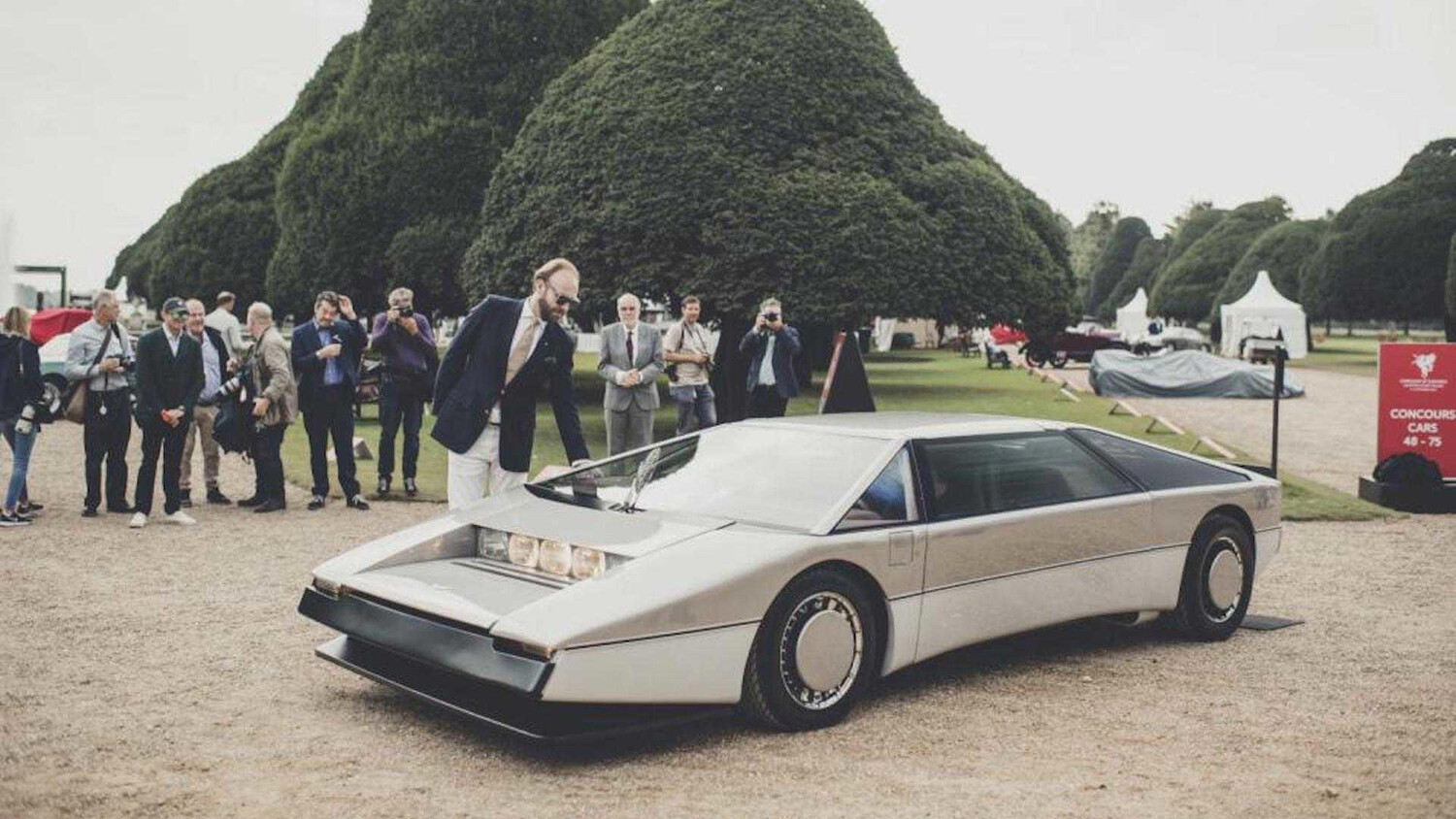
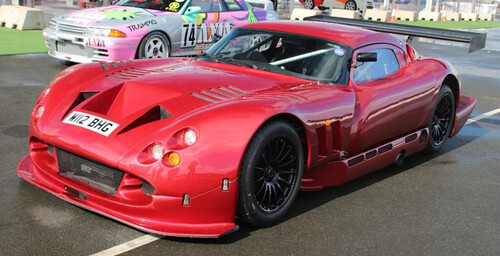
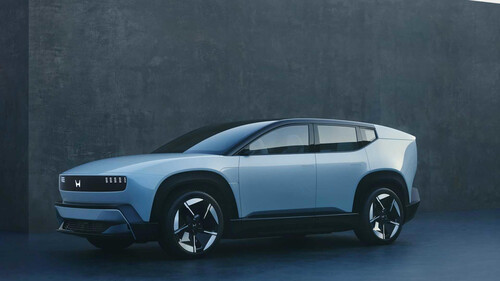
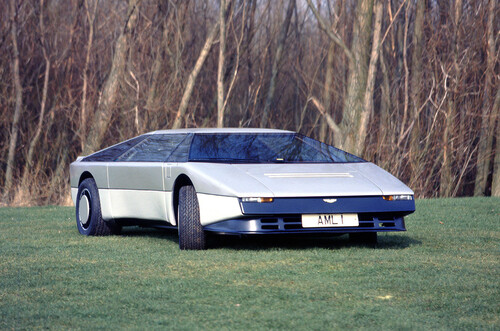
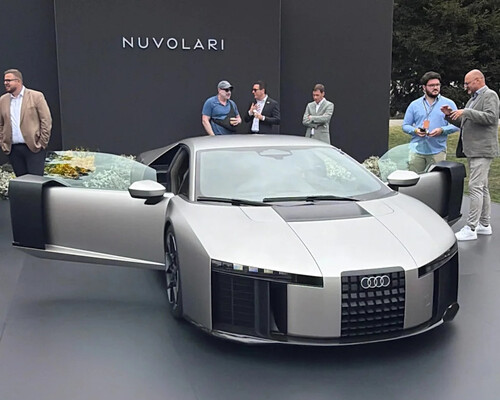
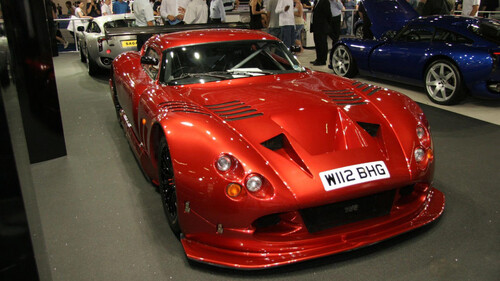
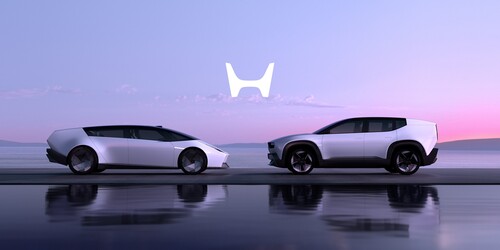
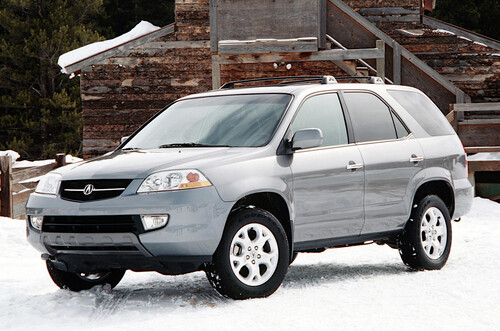
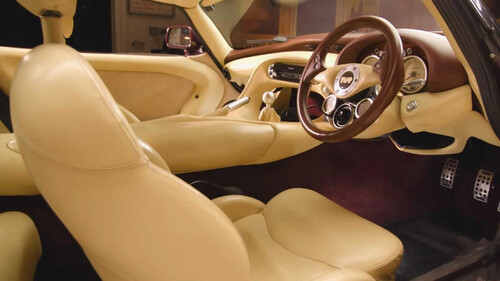
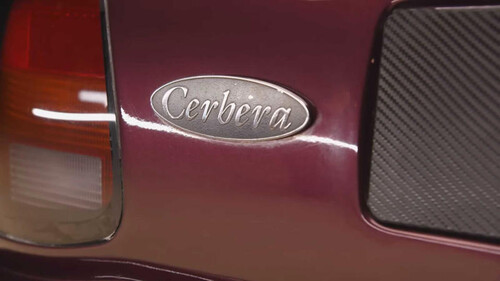
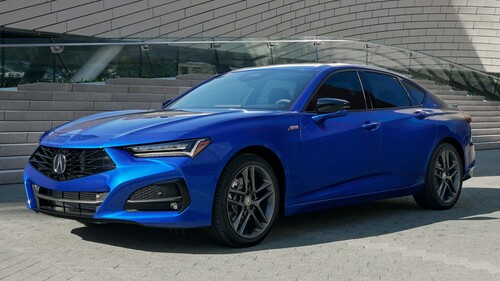
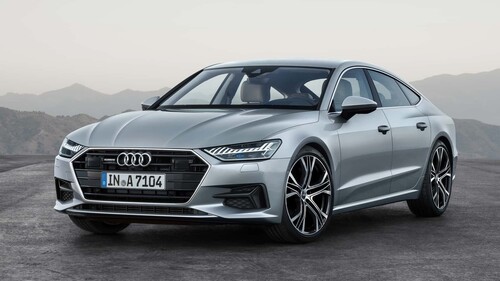
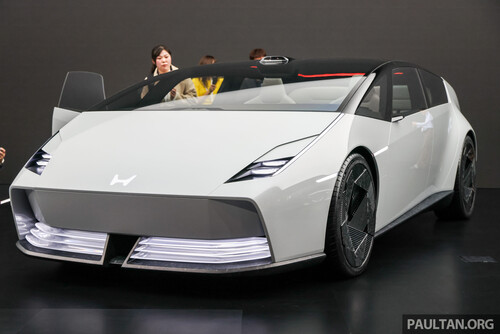
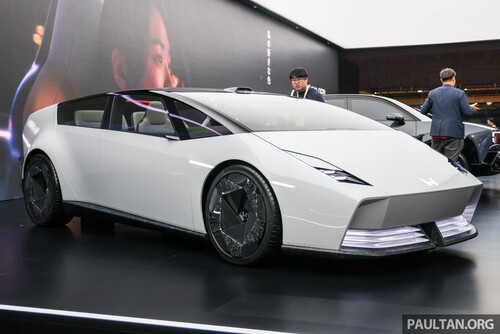
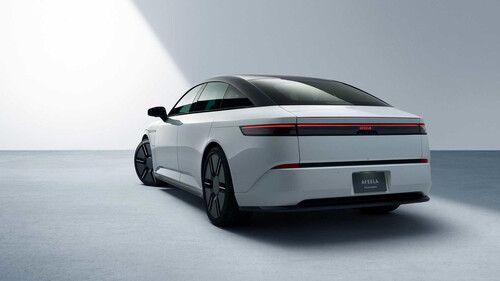
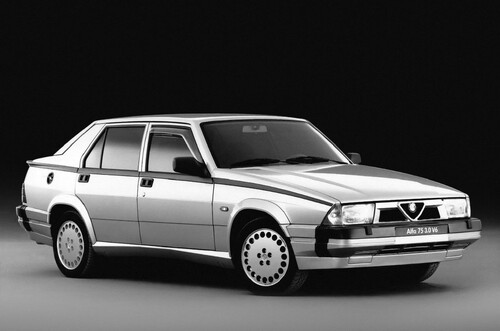
Did you know that Audi once created a concept car version of the R8 that was powered by a 6.0-liter twin-turbocharged diesel V12 engine? It had promise, and the idea of shoehorning a hulking diesel V12 into the sports car was an exciting prospect. Unfortunately, Audi would never green-light this concept for production.There are many concepts that should've been built but never were. There were also several cars that came close to being fully realized, but at the last minute, an automaker shelved the project, and the car never saw the light of day. Here are cars that were nearly built and were deep into development, but whose production plans were canceled. The entries are arranged alphabetically by manufacturer. Aston Martin Bulldog Reason Canceled: Production Costs And A Shift In The Company's Goals Bulldog-4-The Aston Martin Bulldog was built to be the world's fastest production car, but ultimately, it would be remembered as an exciting idea that met an untimely end. The company conceived the machine to showcase the ability of Aston Martin's then-new engineering facility in Newport Pagnell. One of the goals was to break the 200-mile-per-hour barrier, but it would be two decades after the debut that we'd eventually see the vehicle reach that speed.When it was unveiled, Aston Martin announced that it would create between 15 and 20 examples of the Aston Martin Bulldog. Ultimately, only a single example would be created before Victor Gauntlett, former Aston Martin chairman, canceled production plans. The reason for the cancellation was the cost of production, which was deemed too high. Soon after, the only example of the Aston Martin Bulldog was sold to a collector in the Middle East. BMW M8 E31 Reason Canceled: Economic Recession And Seemingly No Market For It the-story-of-the-elusive-e31-m8-prototype-a-620-hp-v12-powered-bmw-m-legend_13The first-generation BMW 8 Series was an icon of the early 1990s, defined by its wedge-shaped physique and powerful engines. The most potent BMW 8 Series coupe available at the time was the 850CSi, and while it was a memorable offering, it wasn't as cool as the BMW M8 we never got.BMW's original version of the 8 Series range-topper was the BMW M8, designed as a Ferrari contender and powered by a modified version of the S70 V12 engine that produced more power than any Prancing Horse did at that time. Only a single prototype was created before the project was shelved because of concerns that there wasn't a market for the M8, spurred by the global economic recession. The 850CSi that took its place featured a modified V12 engine but didn't produce nearly as much power or reach the same speeds. Ford GT90 Reason Canceled: Development Costs, Niche Market, And Too Complex 1995 Ford GT90 Concept White Front Angled ViewThe McLaren F1 rewrote performance standards in the 1990s and is still remembered today as the fastest naturally aspirated car ever built. The F1's dominance inspired many to create their own challenger, and Ford was among them. Dubbed the GT90, Ford's F1 rival was envisioned as an angular supercar powered by a quad-turbocharged V12 engine, essentially two Ford modular V8 engines paired together, and offered impressive performance.Even though a fully functional prototype was created, the Ford GT90 project was shelved for a variety of reasons, including the cost of further developing the GT90, potential production costs, and the sales price needed to recoup those costs, among other factors. Honda 0 Series Reason Canceled: Revision Of Honda's Electrification Plan Honda 0 Series SaloonHonda's 0 Series SUV and sedan were the latest products from Honda's factory, defined by their futuristic styling and role as yardsticks for the automaker's electric mobility strategy. However, two years after unveiling these models at CES 2024, Honda has rescinded its promise to produce them amid a dramatic shift in the company's electric vehicle strategy.The 0 Series and the Acura RSX (which share the same fate as the 0 Series models) were meant to be the brand's next-gen EVs. However, due to concerns about the value and offerings of these vehicles compared to those of established EV manufacturers, Honda has decided to cancel production of both the 0 Series SUV and sedan, as well as the RSX. Jaguar C-X75 Reason Canceled: Economic Recession Jaguar C-X75The C-X75 was the most advanced Jaguar ever created, or it would've been had the company gone through with production. Introduced in 2010, the C-X75 was envisioned as an all-wheel-drive, plug-in-hybrid supercar powered by a twin-charged inline-four-cylinder engine paired with the most power-dense electric motors available at the time to deliver impressive power.It was also one of the fastest models from Jaguar at the time, with the prototype capable of 199 mph during testing, while the top speed was closer to 217 mph. Jaguar seemed ready to produce the C-X75, promising 250 examples in collaboration with Williams Advanced Engineering. However, by 2012, Jaguar announced it would cancel production plans and ultimately built only a handful of prototypes. Lamborghini Estoque Reason Canceled: Global Financial Crisis And Focus On SUVs 2008 Lamborghini Estoque Concept Gray Front Angled ViewThe Lamborghini Estoque was an intriguing proposition from the Italian brand. Unveiled at the 2008 Paris Motor Show, the Estoque was a front-engine sedan powered by a more powerful V10 engine borrowed from the Lamborghini Gallardo. The concept was designed to be more comfortable than the existing models, as evidenced by the long wheelbase and wide track.After the unveiling, Lamborghini didn't confirm whether the Estoque would be produced. However, years after its debut, Stephan Winkelmann confirmed in an interview that the decision was made to shelve the Estoque in favor of the Lamborghini Urus SUV. Nissan MID4-II Reason Canceled: Production Cost And Concerns About The Market MID4-II 5The Nissan MID4 was a mid-engine supercar concept created and unveiled by Nissan in the early 1980s. The first incarnation of the mid-engine supercar debuted in 1985, drawing inspiration from established manufacturers like Ferrari. At the core of the first MID4 model was a 3.0-liter V6 engine, with power sent to all four corners via the ATTESA all-wheel-drive system. Although this model was planned to go into production by the late 1980s, it did not.In 1987, we saw the second and final iteration of the MID4, dubbed the Nissan MID4-II. This model featured several revisions compared to the first, including a new twin-turbocharged V6 and a new exterior design. Like the first, the MID4-II was also planned for production, but due to estimated production costs and concerns about the MID4-II market, its production plans were canceled, and the project was shelved. Porsche 989 Reason Canceled: Declining Company Finances And Development Costs 1989 Porsche 989 Concept front offside quarterIn the wake of the Porsche 928's sales success, Porsche was prompted to introduce another larger model to its lineup. The result was the 989 project. Unlike the 928, the 989 was a four-door envisioned with a naturally aspirated V8 engine at its core.This model was also based on an entirely new platform that allowed for a longer wheelbase. However, creating an entirely new product proved, unsurprisingly, expensive. It was the cost of development and unfortunate timing that would spell the end of Porsche's ambitions for the Porsche 989. Saleen S5S Raptor Reason Canceled: 2008 Financial Crisis Saleen-S5S-Raptor-Saleen's S7 was an undoubtedly potent car, but for that potency, Saleen demanded a hefty sum from its customers. Enter the S5S Raptor, Saleen's more affordable alternative, powered by an impressive 5.0-liter supercharged V8 and mated to a six-speed manual transmission. At the time, Saleen offered the S5S Raptor at $185,000, while the Saleen S7 cost nearly half a million dollars more.With the Saleen S5S Raptor, Saleen had its sights set on competing against the likes of Ferrari, Audi, and Lamborghini, but it would never get the chance. It was the 2008 financial crisis that prevented the Saleen S5S Raptor from reaching production, leaving Saleen reeling from its impact. TVE Cerbera Speed 12 Reason Canceled: It Was Deemed Too Much For The Public TVR Speed Similar to the Aston Martin Bulldog, the TVR Cerbera Speed 12 was intended to be the world's fastest car and the foundation for a race car for the FIA GT1 endurance class. It was an unbelievable machine, with a hulking 7.7-liter naturally aspirated V12 engine at its core, perfectly complementing an intimidating exterior design. Not only did it command more than 800 horsepower from that V12 engine, but the Speed 12 also weighed less than a first-generation Mazda Miata.So, why was it never produced? It wasn't because of financial issues or a lack of market for it. The TVR Cerbera Speed 12 was deemed too dangerous to sell to the public by TVR's then-owner, Peter Wheeler, after driving an example home. Wheeler's assessment was fair, considering that the Speed 12 didn't feature traction control or ABS to accommodate the 880 horsepower sent to the rear wheels. In the wake of that judgment by TVR's owner, the Speed 12's deposits were returned, and the extreme race-ready Speed 12 was shelved.