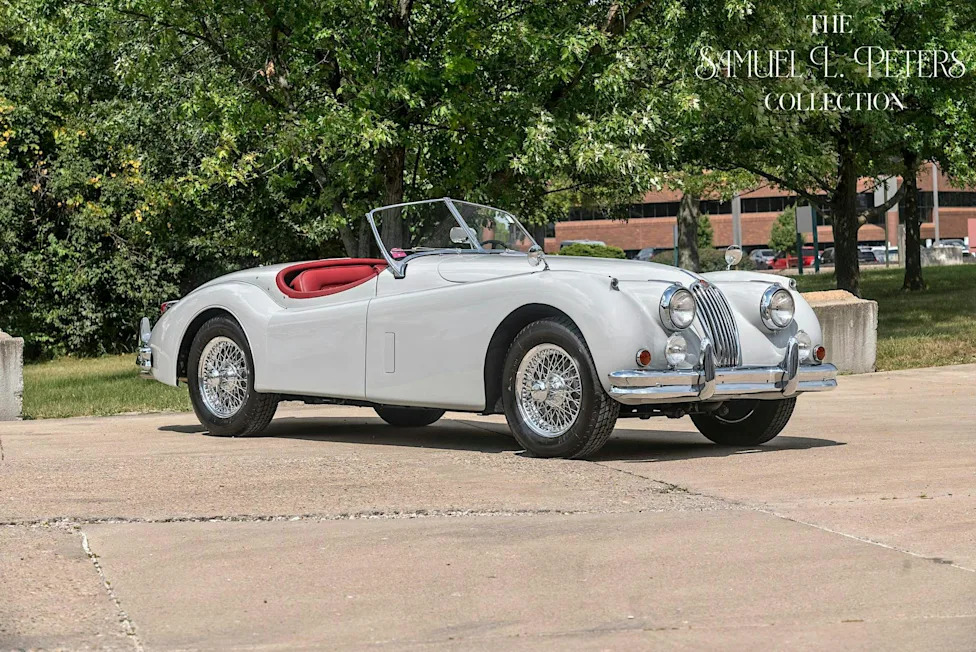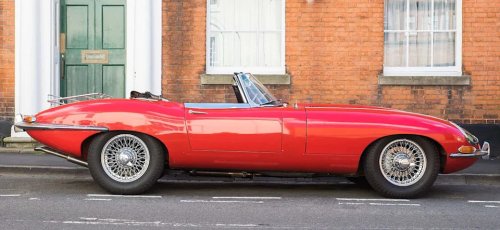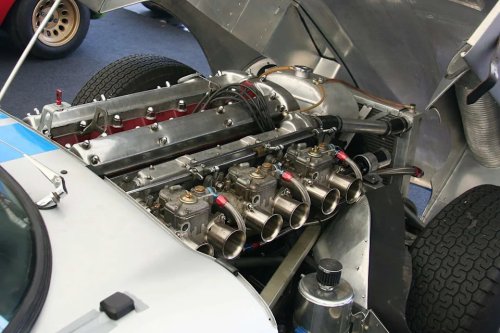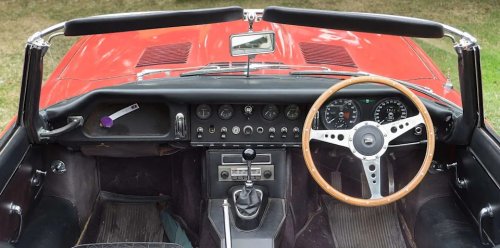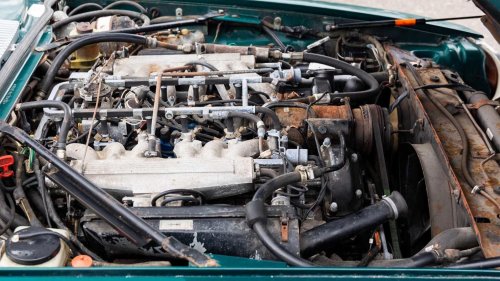
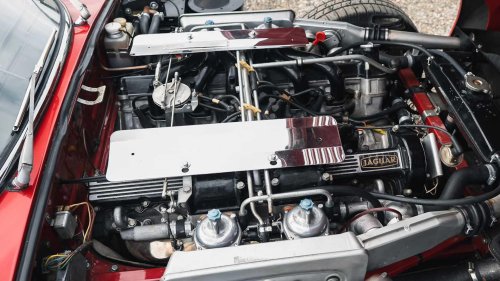
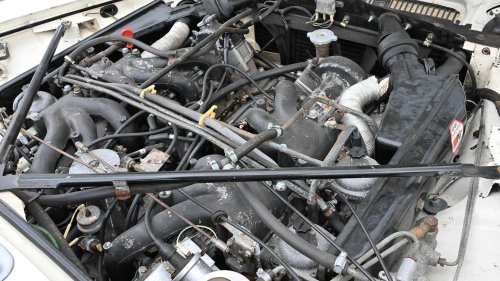
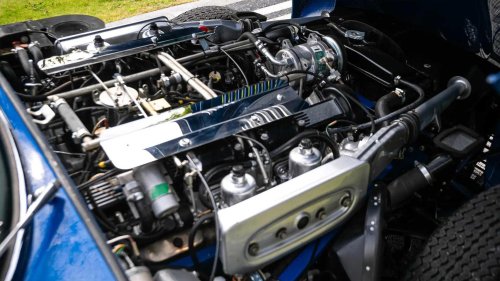
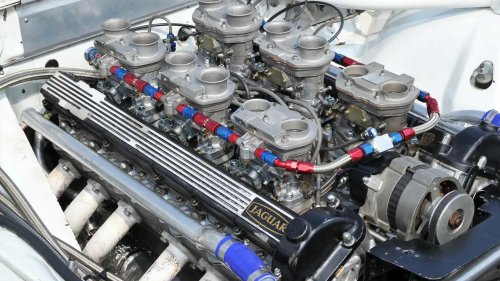
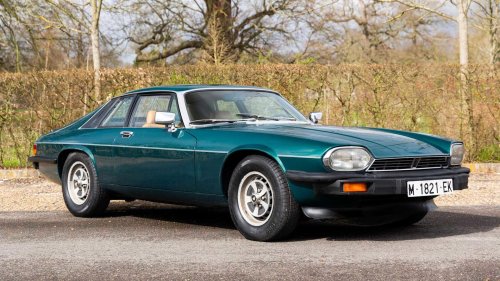
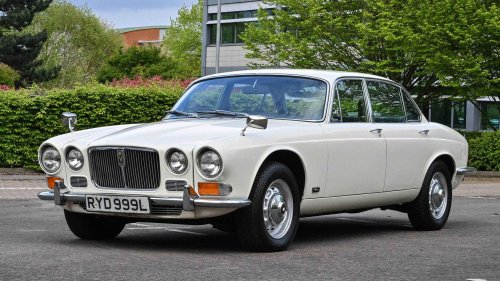
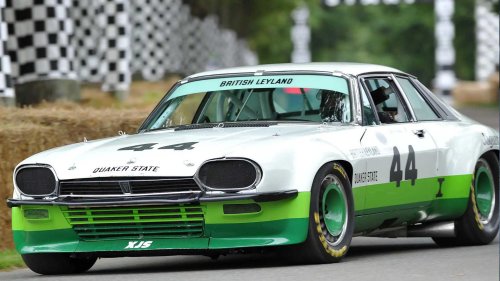
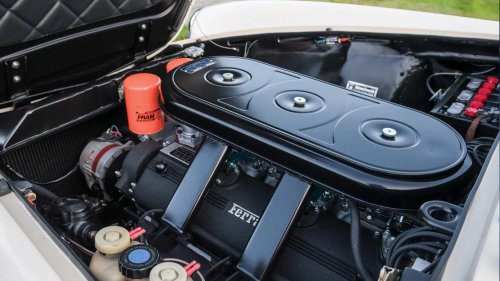
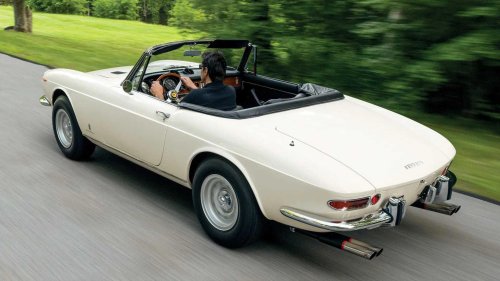



















Every gearhead knows the V12 as the ultimate bragging right. It’s smooth, powerful, and usually tucked under something wearing an Italian badge. But there’s one V12 that outlasted them all, setting a record production run that spanned more than two and a half decades, quietly powering sports cars, luxury cruisers, and even endurance racers.It wasn’t exotic or temperamental by design, yet it earned a reputation that made owners both proud and paranoid. Some called it genius, while others called it a nightmare. Either way, this long-serving twelve-cylinder became an engineering legend for all the right, and all the wrong, reasons. The Jaguar V12 Ruled For 26 Years, Leaving A Trail Of Smoke Behind Via: Collecting Cars When Jaguar dropped its new 12-cylinder into the E-Type in 1971, the world didn’t see it coming. This wasn’t an exotic limited-run engine meant for race cars or supercars. It was a full-production, 5.3-liter V12 that powered everything from the last E-Type Series 3 to the stately XJ12, the world's first V12 powered sedan. Later, it lived on under the long hood of the XJS grand tourer until 1997. That’s 26 years of continuous production, which is seemingly an eternity for any V12 engine family.The design came straight from racing bloodlines. Jaguar originally built the architecture for the XJ13 Le Mans prototype, then reworked it for the street. It was an all-aluminum, 60-degree V12 with a single overhead cam per bank and two valves per cylinder. From the driver’s seat, it was pure silk. No vibration, no drama, just turbine-smooth torque. Reviewers in the ’70s said it was the quietest V12 they’d ever tested.Via: Collecting Cars But this refined masterpiece came with a temper. The engine’s tight cooling passages trapped heat, especially in slow traffic. Mechanics quickly learned to keep spare coolant hoses on standby. When it wasn’t overheating, it leaked oil from half a dozen gaskets or dripped fuel from aging injection lines. Owners cursed Lucas electrics, blamed vapor lock, and learned that “routine maintenance” meant pulling half the engine apart. Why the World’s Longest-Produced V12 Was Also the Least Trustworthy Via: Bonhams The Jaguar V12’s biggest enemy was heat. Overheating warped heads, fried wiring, and cooked vacuum lines. Timing chain tensioners wore out early, and the rear cylinders suffered from poor airflow. Fuel lines on early Bosch and Lucas injection systems cracked with age, sometimes causing under-hood fires. None of these were fatal design flaws, it was simply a mix of complexity and neglect, but the damage was done. The world’s longest-produced V12 also became one of the most infamous to own. The Jaguar V12 That Refused To Evolve Via: Iconic Auctioneers Over its lifetime, the Jaguar V12 never reinvented itself. It simply adapted. The original 5.3-liter debuted in 1971, starting with four Zenith-Stromberg carburetors before moving to Bosch D-Jetronic fuel injection. Later came Lucas Digital-P systems that improved drivability but didn’t solve the heat and wiring gremlins. Despite the updates, the core engine stayed identical: same block casting, same bore spacing, same 60-degree bank angle.By 1993, Jaguar stretched it to 6.0 liters with a new crankshaft, higher compression, and improved cooling channels. Power climbed to 318 hp with 350 lb-ft of torque. The upgraded Marelli digital ignition gave it smoother throttle response and slightly better reliability. Yet if you tore one down, the geometry was the same as the 1971 block. The 6.0 wasn’t a redesign, just a trip to the machine shop.Via: RM Sotheby's Meanwhile, Tom Walkinshaw Racing (TWR) pushed the same base engine to the edge of endurance. Their 7.0-liter version powered the XJR-9 and XJR-12 to Le Mans victories in 1988 and 1990. Even then, the block was still derived from Jaguar’s production casting, a rare case of a showroom engine winning the world’s toughest race. Engineering Highlights: Unlike Ferrari’s Colombo or Lamborghini’s Bizzarrini-designed V12s that evolved with new castings and architecture, Jaguar’s stayed loyal to its roots. It never needed to scream past 8,000 rpm or chase supercar numbers. It was the same heart, just refined over a 26-year run powered by quiet persistence rather than total reinvention. Buying A Jaguar V12 Is Cheap, But Owning One Is A Gamble Via: Collecting Cars If you’ve ever wanted to park a V12 in your driveway without mortgaging your house, the Jaguar XJ12 is the cheapest ticket in town. When new in 1993, the XJ12 stickered at $72,330. Today, Kelley Blue Book suggets a fair price of just $2,700, and the lowest recorded sale on Classic.com shows a 1994 model going for $8,500 with under 70,000 miles. That’s less than what most people spend on a used Civic. 1993 Jaguar XJ12 Worth Today (Source: KBB, Classic.com)But there’s a reason these British luxury sedans are still that cheap. Keeping a Jaguar V12 on the road can easily cost more than buying it. The 6.0-liter HE engine made 318 hp and 350 lb-ft of torque, backed by a GM 4L80-E automatic. It’s buttery smooth and whisper-quiet when healthy, but when it isn’t, you’ll wish you’d majored in electrical engineering. Overheating, fuel leaks, and vacuum line failures are common, and every repair means navigating a maze of hoses and wiring crammed into a tight engine bay.Via: Bonhams Unmodified XJ12s ask for bargain prices as original examples are slowly becoming collector favorites. According to Hagerty, a Series 1 XJ12 in “good” condition averages around $13,300, while pristine Concours examples can touch $32,600. On Bring a Trailer, well-kept late-model XJS coupes still creep past $25,000 if the V12 runs clean and leak-free. 1973 Jaguar XJ12 Series 1 Market Value Source: HagertyVia: RM Sotheby's For context, the Mercedes M120 V12 from the same era is far smoother and tougher, but also far pricier to fix. The Jaguar’s engine is the opposite, being simpler, yet far less forgiving and that’s the gamble. You’re either buying the cheapest V12 luxury car ever built or an unpaid internship in British mechanics. Ferrari And Lamborghini V12 Engines Evolved Substantially Over Time Via: Rm Sotheby's Ferrari’s Colombo V12 started life in 1947 as a 1.5-liter screamer and grew into a 4.9-liter powerhouse by the early ’60s. Every new version changed its internals; including the bore, stroke, heads, oiling systems and even the block, until the only thing left in common was the badge. Lamborghini’s V12, born in 1963 from Giotto Bizzarrini’s design, lasted until 2010 but was re-engineered every decade. By the time it powered the Murciélago, nothing remained from the 350GT’s 3.5-liter original except the 60-degree layout. Both brands treated their V12s like evolving organisms, making each generation faster, cleaner, and stronger than the last.Via: RM Sotheby's Jaguar went the opposite way. From 1971 to 1997, its 12-cylinder barely changed inside or out. The block casting, bore spacing, and valvetrain were the same across every model. Updates came in small doses: better ignition, more efficient injection, slight tweaks in displacement. The engineers didn’t chase revs or exotic power figures; they just wanted it smoother, quieter, and more durable.Via: RM Sotheby's V12 Lineage Comparison Ferrari evolved. Lamborghini reinvented. Jaguar stayed loyal. That’s what makes its V12 both fascinating and flawed. It proved that refinement can last longer than innovation, but at a cost. While Ferrari’s and Lamborghini’s V12s became symbols of performance and progress, Jaguar’s became a time capsule: smooth, dignified, and outdated by the time it died. It might be the longest-running V12 ever built, but it also reminds us why evolution usually wins.Sources: Hagerty, Classic, Kelly Blue Book, Collecting Cars