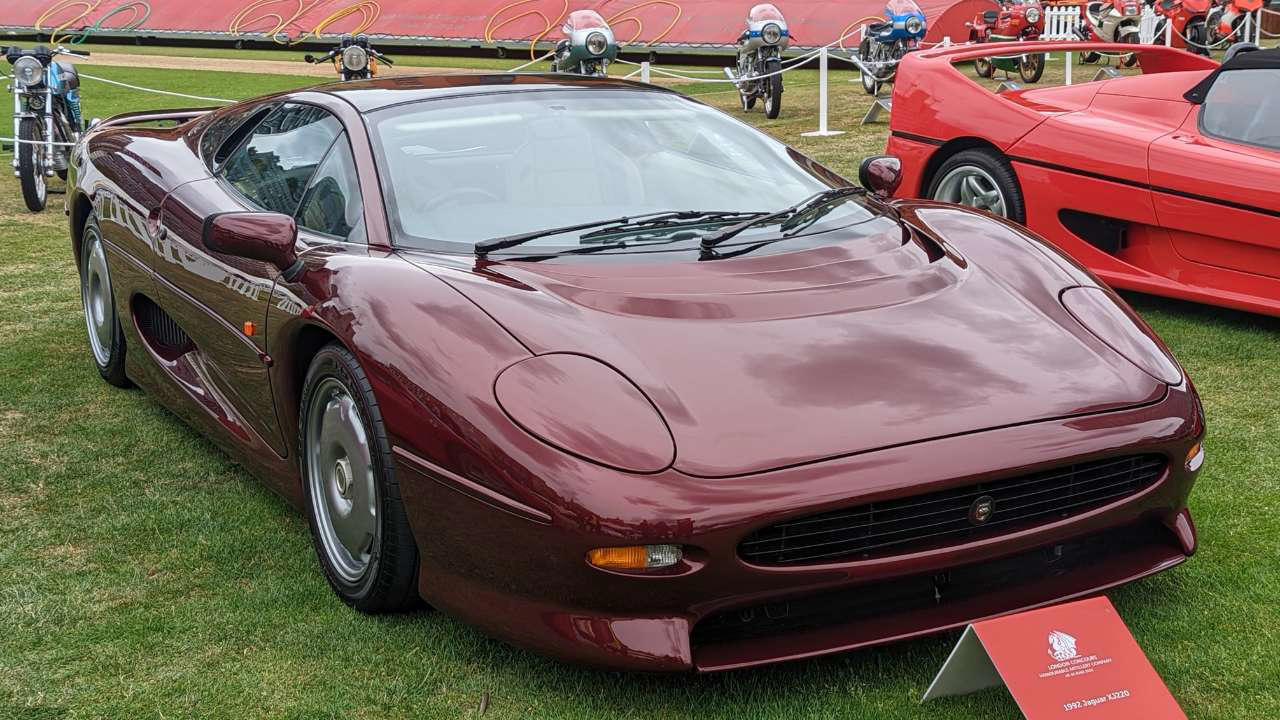
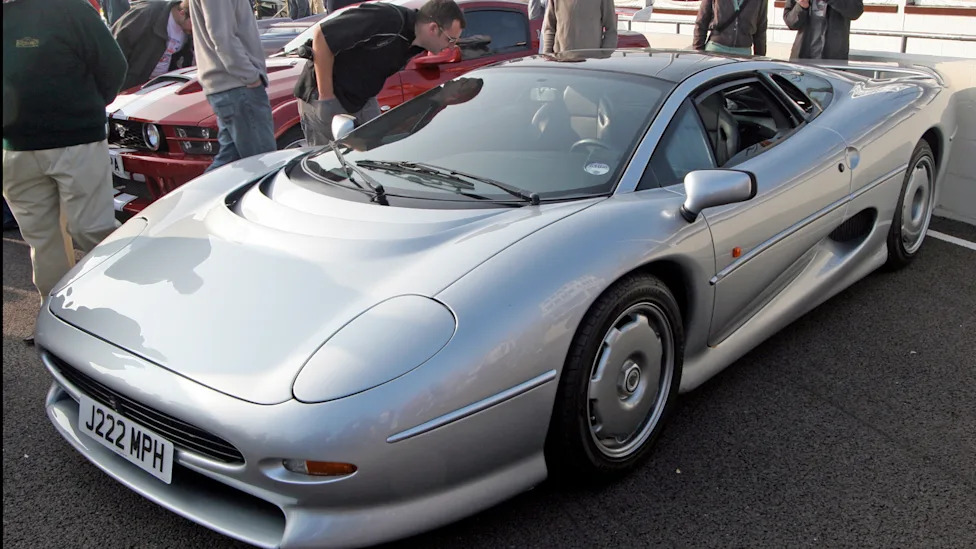
Despite its reputation, the 1992 Jaguar XJ220 delivered speed few cars could matchThe Jaguar XJ220 is often remembered for what it was not: a V12, all-wheel-drive supercar born in the white heat of 1980s excess. Yet the car Jaguar actually delivered in 1992 could outrun almost anything on the road, with a verified top speed beyond 210 mph and acceleration that put it in the company of racing prototypes. Stripped of rumor and disappointment, the XJ220 stands as one of the quickest and most technically ambitious road cars of its era. Three decades on, its reputation is slowly catching up to its performance. As collectors and enthusiasts reassess the 1990s, the XJ220 is shifting from misunderstood curiosity to cult hero, a machine that quietly delivered the speed its creators promised even if the story around it got messy. What happened The origins of the XJ220 lie in a late-1980s concept that fired imaginations across the performance-car world. Jaguar engineers sketched a huge, all-wheel-drive supercar with a naturally aspirated V12 and dramatic scissor doors, a kind of British answer to the Ferrari F40 and Porsche 959. The prototype that appeared at motor shows was closer to a racing car for the road than anything Jaguar had built since its Le Mans glory years. That concept generated hundreds of deposits from would-be buyers, each expecting a road-going version of the show car. By the time production began in 1992, the global economy had cooled and the Group B and Group C racing formulas that had inspired the project were either gone or changing fast. Jaguar and its development partner Tom Walkinshaw Racing had to finish the car in a more constrained environment, with tighter emissions rules and a less forgiving market. The result was a very different machine from the concept that had filled order books. The production XJ220 used a 3.5 liter twin-turbocharged V6 derived from Jaguar’s successful racing program instead of a naturally aspirated V12. Power went only to the rear wheels through a 5 speed manual gearbox, not all four as originally advertised. The scissor doors disappeared in favor of conventional doors, and some of the concept’s more extreme details were toned down for series production. On paper, however, the numbers were ferocious. The twin turbo V6 produced around 542 horsepower and 475 lb ft of torque, figures that placed the XJ220 well above most contemporary road cars. The body, built around an aluminum honeycomb and composite structure, remained remarkably low and long, with a drag coefficient that helped it slice through the air at extraordinary speeds. Period testing recorded a top speed in excess of 210 mph, and some sources place the verified figure at 217 mph, which made it one of the fastest production cars of the 1990s. Contemporary lists of the era’s quickest machines still place the XJ220 near the top. Roundups of fastest cars of typically rank it alongside the McLaren F1, Bugatti EB110 and Ferrari F50, not the more common sports cars that defined the decade for most drivers. The Jaguar’s official 0 to 60 mph time around 3.5 seconds and its ability to cover 0 to 100 mph in roughly 7 to 8 seconds placed it in a rarefied group that very few road cars could match. Yet the story that filtered into public memory was less about speed and more about disappointment. Buyers who had placed deposits for a V12, all-wheel-drive halo car felt misled when the production specification emerged. The early 1990s recession hurt demand for ultra expensive toys, and some customers tried to back out of contracts, leading to legal disputes. Production eventually stopped after roughly 280 cars, far fewer than the initial interest had suggested. The car’s size and layout also made it difficult to live with. The XJ220 was extremely wide, with a long wheelbase and a low roofline that demanded a certain physical commitment from its driver. The twin turbo V6 delivered huge power but also lag and heat, and the cabin packaging reflected its racing roots rather than luxury-sedan comfort. In an era when supercars were becoming slightly more usable, the Jaguar remained closer to a track tool with number plates. Over time, the mismatch between expectation and reality hardened into a reputation that the XJ220 had somehow failed. It was described as compromised, late to market and outshone by rivals. For many enthusiasts who never saw one in motion, the headline became that Jaguar had promised the world and delivered something lesser. Why it matters Revisiting the XJ220 today, the gap between its reputation and its actual performance is striking. Measured purely by speed, it was one of the defining supercars of its decade. Modern retrospectives that rank the greatest sports cars consistently highlight the McLaren F1, Ferrari F40 and Porsche 959, yet the Jaguar’s verified top speed and acceleration figures place it within touching distance of that group, particularly on a long straight. The car’s engineering also deserves more credit than it often receives. The twin turbo V6 was not a cost cutting compromise so much as a race bred solution to new constraints. It drew from the engine used in Jaguar’s Group C prototypes, which had proven durable and powerful at sustained high speeds. In a lighter, more compact package than a V12, it allowed engineers to keep the car’s nose low and the weight distribution favorable, which benefited high speed stability. From a design standpoint, the XJ220 captured a particular 1990s aesthetic that has aged better than many expected. Its long, flowing sides, integrated rear wing and low, glassy cabin give it a purity that stands apart from the more angular or heavily vented shapes that followed. Enthusiast lists of the coolest cars of often single it out as an icon of the era, a car that looked like a concept that somehow escaped onto public roads. The mismatch between its early promise and final specification also offers a case study in how expectations shape automotive legends. The XJ220 was not slower than its rivals. It was simply different from what early buyers had been told to expect, at a time when the market for extreme supercars was fragile. That narrative of broken promises stuck more firmly than the stopwatch data. This dynamic matters because it shows how easily a car’s legacy can be skewed by context rather than capability. The McLaren F1, for instance, arrived with no public concept to precondition buyers, so its three seat layout and naturally aspirated V12 were experienced as pure revelation. The XJ220, by contrast, had to live in the shadow of its own prototype, which had promised a kind of no compromise fantasy that was always going to collide with regulations and budgets. In performance terms, the Jaguar was closer to a road legal endurance racer than a grand tourer. Its long gearing, immense turbocharged torque and aerodynamic stability made it devastatingly fast on circuits and airfields, even if that character felt excessive on public roads. Owners who used the car as intended, on track days and high speed events, reported that its chassis came alive at speeds that would have been unthinkable for more conventional sports cars. As the collector market has matured, that reality has begun to filter through. For years, XJ220 values lagged behind those of the Ferrari F40 and Porsche 959, reflecting lingering doubts about its place in the pantheon. More recently, as enthusiasts have revisited the 1990s with fresh eyes, demand for well maintained examples has grown. The car’s rarity, combined with its performance and distinctive styling, has started to attract buyers who value its uniqueness rather than comparing it to what might have been. The XJ220 also marks a turning point for Jaguar itself. It represented the last time the company attempted a full scale, no compromise supercar project. Later performance models such as the XKR and F-Type focused on blending speed with comfort rather than chasing absolute top speed records. In that sense, the XJ220 stands as a monument to a brief period when Jaguar was willing to pursue a car that made little commercial sense but pushed the limits of what its engineers could achieve. For the wider industry, the car’s story highlights the difficulty of building ultra high performance machines in a shifting regulatory and economic environment. Emissions rules, noise limits and safety standards all tightened in the early 1990s, forcing compromises that were not always easy to explain to customers who had fallen in love with a concept. The XJ220 was far from the only project to be reshaped by these forces, but its high profile made it a visible example. Yet the performance numbers remain. Even compared with modern supercars, a verified top speed above 210 mph and a sub 4 second sprint to 60 mph keep the XJ220 in rare company. Many current performance cars rely on advanced traction control, dual clutch gearboxes and all wheel drive to deliver similar acceleration. The Jaguar did it with rear wheel drive, a manual gearbox and 1990s electronics, which makes its achievement all the more striking. What to watch next The reassessment of 1990s supercars is still gathering pace, and the XJ220 sits near the center of that shift. As more collectors and younger enthusiasts experience the car firsthand, either at events or through detailed video coverage, its reputation is likely to continue improving. The narrative is already moving away from disappointment toward appreciation of what the production car actually achieved. One key factor will be how many of the roughly 280 cars remain in good mechanical condition. The XJ220’s complex systems, from its twin turbocharged engine to its hydraulic components, require specialist knowledge and parts that are not always easy to source. As with other rare supercars, the availability of dedicated support will shape how often these cars are driven and how visible they remain in the enthusiast world. Another trend to watch is how the broader market values analog, high speed machines from this period. As modern performance cars become heavier and more digitally mediated, interest in lighter, more focused 1990s icons has grown. The XJ220, with its manual gearbox, relatively low curb weight for its size and unfiltered turbocharged power delivery, fits neatly into that renewed appetite for raw driving experiences. The car’s cultural presence may also expand as the 1990s continue to be mined for inspiration in design, fashion and media. The XJ220 already appears in retrospectives of influential sports cars and in lists of the coolest 1990s machines, and that visibility helps reframe it for audiences who did not live through its launch. For younger enthusiasts, the car is less a story of missed expectations and more a striking artifact of a bold engineering era. There is also a growing recognition that performance benchmarks from the 1990s were more impressive than they might appear when compared directly with modern figures. The XJ220 reached its top speed without the benefit of the advanced active aerodynamics, ultra sticky tires and sophisticated stability systems that now underpin many 200 mph cars. As more people contextualize those numbers, the Jaguar’s achievement looks less like a footnote and more like a milestone. More From Fast Lane Only: Unboxing the WWII Jeep in a Crate 15 rare Chevys collectors are quietly buying 10 underrated V8s still worth hunting down Police notice this before you even roll window down



















 +22 others


![Jaguar, Jaguar unveils controversial EV interior for the first time [Images]](https://cdn.topcarnews.net/thumb/id/aHR0cHM6Ly9pMC53cC5jb20vZWxlY3Ry-ZWsuY28vd3AtY29udGVudC91cGxvYWRz-L3NpdGVzLzMvMjAyNi8wOC9KYWd1YXIt-VHlwZS0wMS1kZWJ1dC5qcGVnP3c9MTUw-MCZhbXA7cXVhbGl0eT04MiZhbXA7c3Ry-aXA9YWxsJmFtcDtzc2w9MQ/c5a51b5e67408a82a20803e72c31a611.jpeg?t=20261006&post_id=53537)
![Jaguar, Jaguar unveils controversial EV interior for the first time [Images]](https://cdn.topcarnews.net/thumb/id/aHR0cHM6Ly9pMC53cC5jb20vZWxlY3Ry-ZWsuY28vd3AtY29udGVudC91cGxvYWRz-L3NpdGVzLzMvMjAyNi8wOC9KYWd1YXIt-VHlwZS0wMS1pbnRlcmlvci1sYXlvdXQu-anBlZz9zdHJpcD1pbmZvJmFtcDt3PTE0-MDAmYW1wO3NzbD0x/624adc995d0975d1402591b8c4d17270.jpeg?t=20261006&post_id=53537)
![Jaguar, Jaguar unveils controversial EV interior for the first time [Images]](https://cdn.topcarnews.net/thumb/id/aHR0cHM6Ly9pMC53cC5jb20vZWxlY3Ry-ZWsuY28vd3AtY29udGVudC91cGxvYWRz-L3NpdGVzLzMvMjAyNi8wOC9KYWd1YXIt-VHlwZS0wMS1pbnRlcmlvci5qcGVnP3N0-cmlwPWluZm8mYW1wO3c9MTQwMCZhbXA7-c3NsPTE/1476bccc999ebdb0ec3e1d1ffcbf90f2.jpeg?t=20261006&post_id=53537)
![Jaguar, Jaguar unveils controversial EV interior for the first time [Images]](https://cdn.topcarnews.net/thumb/id/aHR0cHM6Ly9pMC53cC5jb20vZWxlY3Ry-ZWsuY28vd3AtY29udGVudC91cGxvYWRz-L3NpdGVzLzMvMjAyNi8wOC9KYWd1YXIt-VHlwZS0wMS1pbnRlcmlvci1kZXRhaWxz-LmpwZz9zdHJpcD1pbmZvJmFtcDt3PTEw-MjQmYW1wO3NzbD0x/3913def96da8f629d30971197b5ebf97.jpg?t=20261006&post_id=53537)
![Jaguar, Jaguar unveils controversial EV interior for the first time [Images]](https://cdn.topcarnews.net/thumb/id/aHR0cHM6Ly9pMC53cC5jb20vZWxlY3Ry-ZWsuY28vd3AtY29udGVudC91cGxvYWRz-L3NpdGVzLzMvMjAyNi8wOC9KYWd1YXIt-VHlwZS0wMS1pbnRlcmlvci1vdmVyaGVh-ZC5qcGc_c3RyaXA9aW5mbyZhbXA7dz0x-MDI0JmFtcDtzc2w9MQ/a00fb27de528345e99c18844ea739561.jpg?t=20261006&post_id=53537)
![Jaguar, Jaguar unveils controversial EV interior for the first time [Images]](https://cdn.topcarnews.net/thumb/id/aHR0cHM6Ly9lbGVjdHJlay5jby93cC1j-b250ZW50L3VwbG9hZHMvc2l0ZXMvMy8y-MDI2LzA4L0phZ3Vhci1UeXBlLTAxLWlu-dGVyaW9yLWluZm90YWlubWVudC5qcGVn/e6dc50d42f65c619d14546a67dcf6aa7.jpeg?t=20261006&post_id=53537)