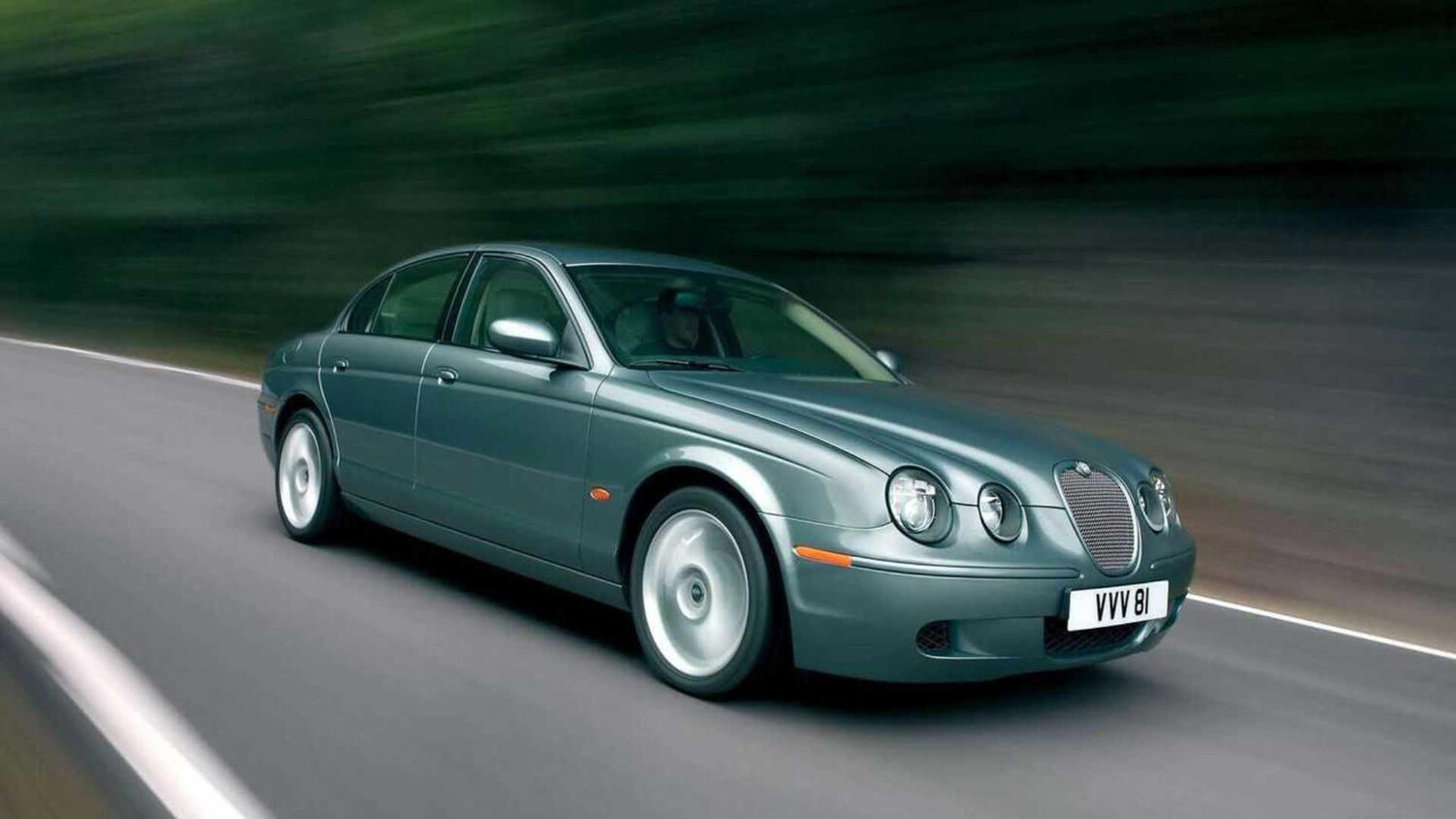
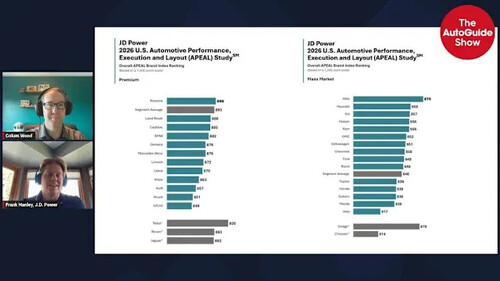
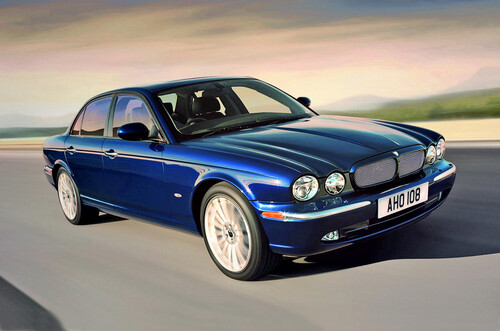
Jaguar purists were wringing their hands in 1989 when Ford snapped up their beloved company. These traditionalists hated the fact that such a proud British luxury marque could disappear under the weight of a giant mass-market American company and feared the worst on the road ahead.But no matter what those purists thought, there was no doubt that Jaguar was floundering — much as it is today, too. Before that takeover moment, it badly needed a modern product plan, some manufacturing discipline, plus a big bag of money — and Ford came along at the right time to supply all three. This momentous acquisition led to quite an interesting story and especially with the arrival of a halo vehicle that had corporate fingerprints all over it. But in the broader analysis, the Ford purchase did turn Jaguar into a more usable and credible premium carmaker, with the new X-Type firmly in the middle of that picture. Ford Made Jaguar More Usable JaguarWithout Ford, Jaguar was turning into a bit of a basket case. It certainly had plenty of style, prestige, and presence, and its vehicles delivered a good sense of occasion or presence, but those factors alone weren't enough. The company had a bad reputation for inconsistency, and especially when you stood those cars up against some German rivals. But while Ford was well aware of the challenge, it didn't set out to reinvent Jaguar's image. Instead, it systematically helped to improve how the company built its cars throughout its tenure, which ran from the early 1990s to the mid-2000s.Following Ford's takeover and subsequent analysis, Jaguar’s Browns Lane headquarters in England received an £8.5m (~$11.2m) assembly line that markedly improved quality control and efficiency. And it didn't take that long after the buy-in for Jaguar to reduce its assembly line defects by between 77% and 87%, depending on the model. So, without even looking at any new-era models, Ford's ownership had clearly made a difference. Jaguar could now carry on selling its wood, leather, and general bling but with better process control in the background.When it comes to the actual vehicles themselves, the first new car to benefit from Ford's presence was the X300 XJ, which Jaguar launched in 1994. The company trumpeted some significantly improved build technology as part of its model launch material, and this would certainly have impressed potential buyers. Those customers could now get one of these stylish Jaguars without buying into all of its faults and, in real-world ownership terms, that was a genuine improvement. The X-Type Was The Most Visible Ford-Era Jaguar Jaguar If you narrow any analysis down to one vehicle, then the X-Type was probably the symbol of the Ford and Jaguar era. The company built it at its Halewood plant and launched it in 2001 in an attempt to broaden the company's general reach and compete at a lower price point. Ford invested around $400 million in new presses and paint facilities to help the Halewood plant get ready for the X-Type, and the company was clearly trying to attract a new and different type of customer.Because of Ford's positioning, the X-Type turned out to be quite controversial as it was far more openly corporate than earlier Jaguars. Yes, it was a serious premium compact sedan designed for the executive car market, but it really was an entirely different type of Jaguar. Ford was clearly showing its hand by aiming at a smaller and much more competitive part of the market than Jaguar would have before. In doing so, it clearly intended to win over buyers who might otherwise shop a BMW 3 Series or Mercedes-Benz C-Class.Nevertheless, the technical package was quite strong, and the most powerful 3.0-liter version of the X-Type made 231 hp while boasting a 146-mph top speed. Both the 2.5- and 3.0-liter models had the Traction-4 full-time all-wheel drive system, with a diesel variant coming along later.Whether purists liked the repositioning exercise or not, there is no doubt that this X-Type allowed Jaguar to finally pursue more volume and to reach buyers who may never have considered the company before. It was representative of a far more practical and everyday-friendly vehicle and nicely underlined what a Ford-funded Jaguar expansion plan could be. The Best Ford-Era Jaguars Went Beyond The X-Type Jaguar The X-Type gets the headlines because it clearly advertised Ford's corporate strategy, but nevertheless, the Blue Oval's influence went much deeper. Ford's heft meant that Jaguar was now able to produce stronger and more convincing versions of the cars that evoked its image. And as an example, the X300 XJ now had improved build technology, even though it retained the more familiar Jaguar proportions and atmosphere.Then there was the XK8, which launched in 1996 to replace the long-running XJS and became the first Jaguar to harness the AJ-V8 engine. This engine would power everything from elegant grand tourers to some serious performance sedans. And its inclusion in the XK8 showed that Jaguar was now able to refresh some major products with generally important new hardware.When the Jaguar S-Type R arrived, the company suggested that it was the fastest and most powerful saloon that it had ever made. It had an uprated 4.2-liter, 400-hp supercharged AJ-V8 from its launch and showed that Ford's fingerprints could also help Jaguar to expand its performance credibility.But perhaps the strongest example of Ford's influence came in the form of the X350-generation XJ. This arrived in 2003 with an aluminum bonded and riveted structure that was 40% lighter than its predecessor. That aluminum monocoque body shell was certainly not the result of conservative or low-risk engineering. On the contrary, this was a bold and expensive step and Jaguar would have been very unlikely to have taken such a step without deep corporate backing from Ford. Quality Improved Under Ford Ownership Jaguar Before Ford came along, quality was not Jaguar's strongest point, but after the takeover, the changes were quite stark. The 1992 archives suggest an 80% reduction in assembly line defects, two years after Ford introduced its quality control and there was clearly room for a lot of progress based on information from some historical archives. One resource suggests that Jaguar ranked 28th out of 29 manufacturers in a JD Power quality poll of owners before the takeover, and that's a brutal place to be for any luxury marque.Slowly but surely, Ford helped to make progress and, by the end of its ownership stint, Jaguar was able to claim the coveted number one spot in the JD Power Customer Service Index in 2007 and 2008. This makes it clear that Jaguar was a much better business overall under the Ford mantle, with more dependable customer-facing results across the board. These Jaguars Make Sense Today Bring a Trailer The Ford-era Jaguars are interesting propositions in today's used market. You can still get everything that made a Jaguar a Jaguar in terms of the cabin atmosphere, styling, budget, and sophistication, but they're far stronger vehicles overall than some of the earlier cars. The X-Type is the cheapest way into this experience, with values ranging between $1,757 and $3,400. That's not much money for something which had an original MSRP of $36,305, and it'll give you a generally distinctive all-wheel-drive luxury sedan.A 2006 Jaguar S-Type Four-Door Sedan 4.2 may have some divisive styling, but it's a bit more of a traditional Jaguar than the X-Type, which had its focus firmly on market expansion. The S-Type went on sale for $51,830, and you may be able to pick one up for between $2,575 and $4,925.Perhaps the smartest buy of all is the X350 XJ. For example, a 2006 XJ8 Vanden Plas Four-Door Sedan is hovering between $3,050 and $6,075 against its original MSRP of $74,330. That's clearly remarkable value for a full-size aluminum luxury sedan that's got both solid engineering substance and unmistakable Jaguar presence.Purists may never forgive Jaguar bosses for selling out to Ford back in the day, but there's no doubt that the acquisition made Jaguar more usable and consistent. It also transformed the British company into something with far stronger technical ambition, and it's hard to say where the company would have been without that American lifeline.While the X-Type was the most obvious Ford-era Jaguar, several other models benefited from the marriage. And some of them only became much better because Ford was in the background paying for the factories, the engineering, and the quality systems behind the scenes. All of this means that used Ford-era Jaguars today are quite an interesting proposition. They don't have any price premium linked to those Ford corporate benefits, but they should definitely be better vehicles overall when compared to pre-takeover cars.