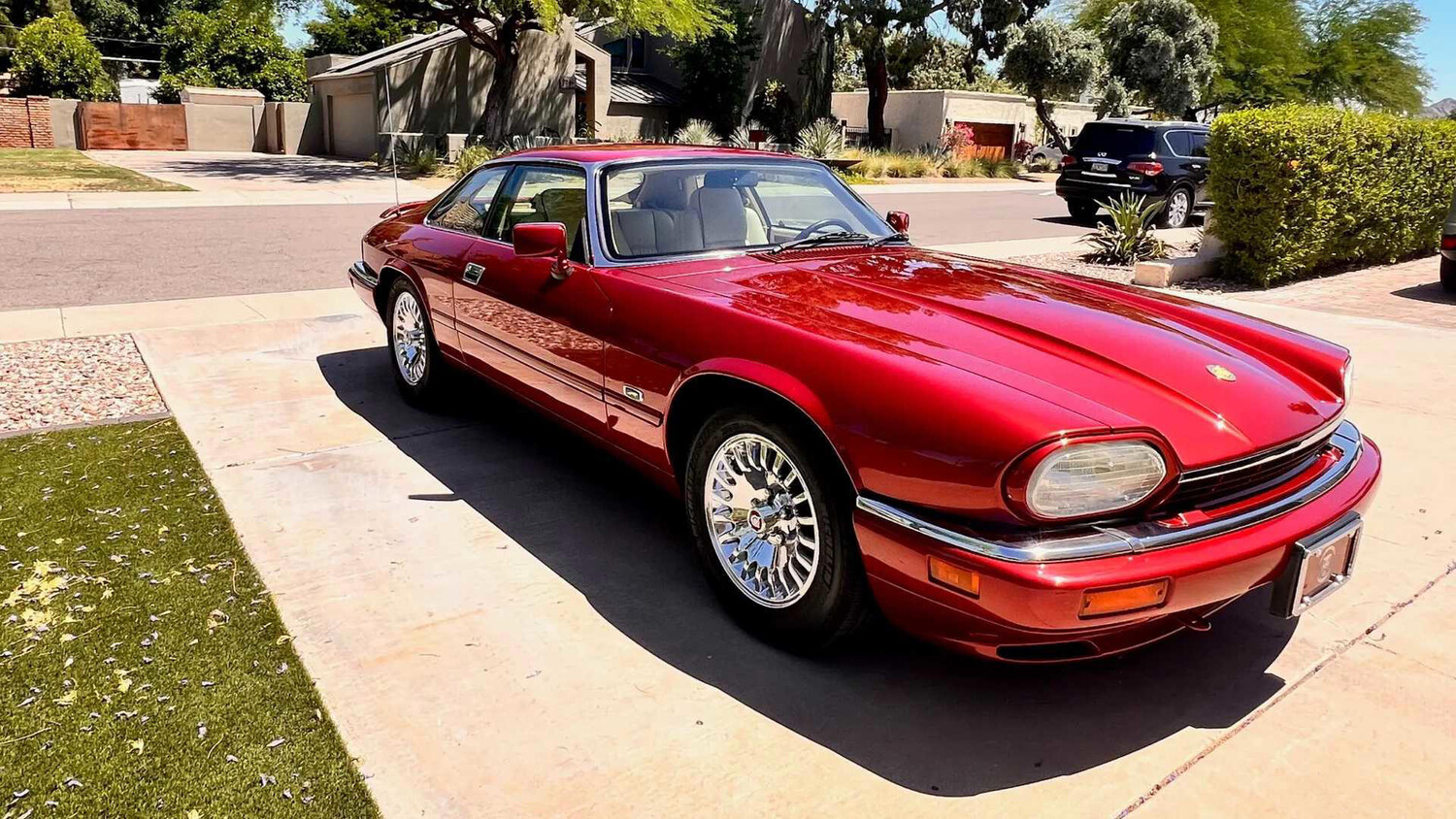
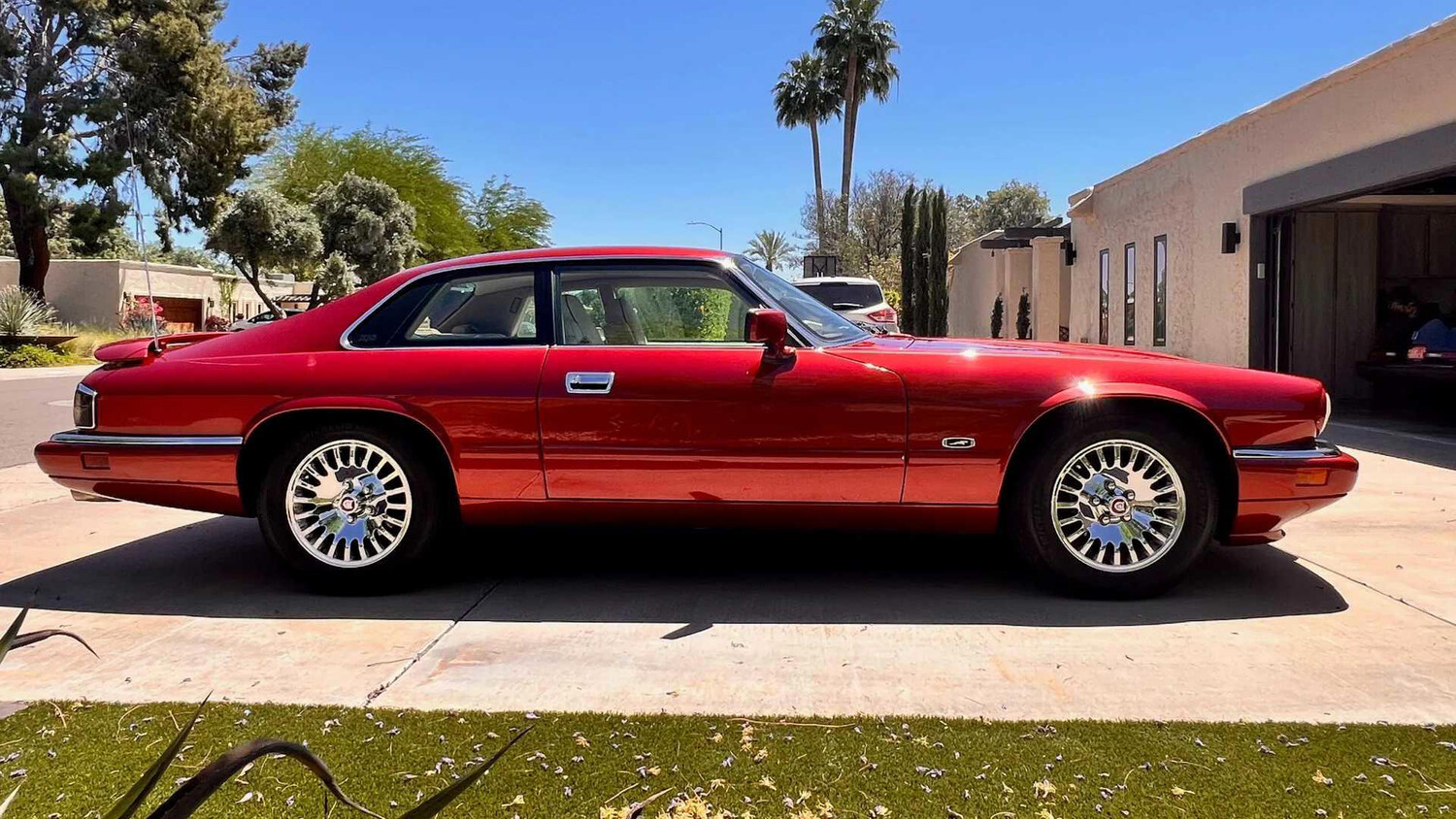
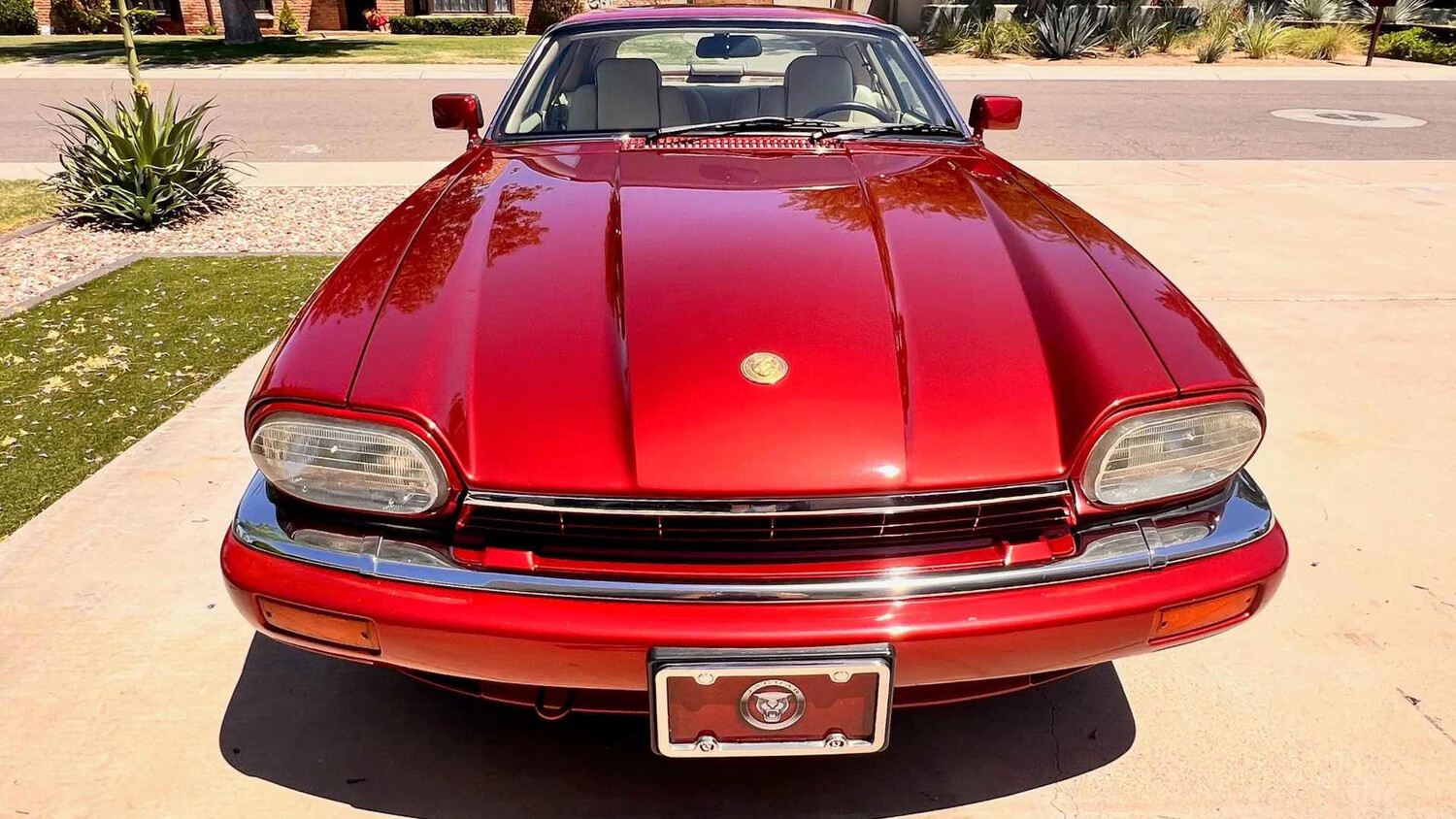
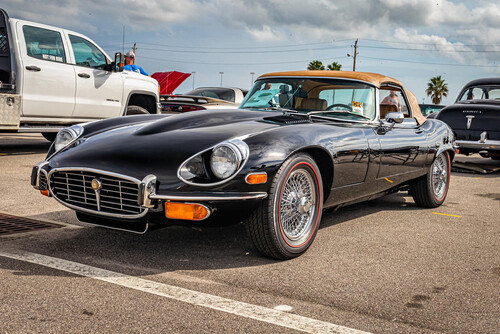
By 1993, the Jaguar XJS had been around for nearly two decades. Journalists had driven it, praised it, grown tired of it, and mostly moved on. When Jaguar quietly slotted a displacement-bumped V12 under that long hood, the announcement landed with a shrug. The car press had already written the obituary, and a power upgrade wasn't going to rewrite it.That was a mistake. The 6.0-liter HE — producing 308 bhp and 355 lb-ft of torque in XJS trim on the European market — wasn't just a larger number on a spec sheet. It arrived paired with a new GM 4L80-E four-speed electronic automatic, outboard rear disc brakes that finally replaced the notoriously fiddly inboard setup, and a Nippondenso distributorless ignition system that dragged the engine management into the modern era. The car that came out of those changes was meaningfully better than the one the press had been tepidly reviewing for years.The 6.0 HE ran from 1993 through the final Celebration cars of 1995 and 1996, and fewer than 800 V12 coupes were built across the entire run. Most of them are still flying under the radar on the collector market, priced the way an overlooked machine gets priced when the world hasn't caught up yet. The XJS At The End Of The Line Bring A TrailerThe XJS launched in 1975 as the E-Type's replacement, a brief that no car could survive without comparison. It was wider, heavier, and built for autobahn cruising rather than weekend heroics, and enthusiasts never entirely forgave it for that. By the early 1990s, the car had 115,413 total units behind it across all variants and two decades of accumulated baggage. The automotive press had made up its mind. The XJS was a graceful relic, more relevant to a celebrity's driveway than a gearhead's garage.What that framing missed was straightforward: Jaguar had spent those years actually improving the thing. The 1991 facelift brought body-color bumpers, a cleaner aerodynamic profile, and a revised instrument pack. The drivetrain and chassis were sharpened incrementally. The 6.0-liter announcement in 1993 wasn't a desperate last act. It was the payoff on twenty years of refinement. The press just wasn't watching anymore. Enter The 6.0 HE: The Numbers That Matter Bring A Trailer The specs belong on the table, so here they are. Jaguar stroked the V12 to 78.5 mm for a displacement of 5,993 cc. In XJS application that engine produced 308 bhp and 355 lb-ft of torque. Top speed was 161 mph. Zero to 60 took 6.6 seconds. That is not a footnote; that is a genuine GT-class performance figure by any 1993 standard.Compare that to what the earlier 5.3-liter HE was delivering toward the end of its XJS run: 280 bhp, 147 mph, and a 0-60 in 7.8 seconds. The 6.0 wasn't a minor shuffle of numbers. It restored 28 horsepower, added 14 mph to the top end, and cut more than a second from the sprint. For a car the press was treating as a museum piece, that's a real performance restoration.The supporting upgrades were just as significant. The GM 4L80-E four-speed electronic automatic brought a fourth-gear overdrive ratio that meaningfully improved fuel economy, addressing one of the loudest objections to running a V12 on a daily basis. The older three-speed unit had drawn complaints for years. The Nippondenso distributorless crank-fired ignition replaced the previous Marelli system, improving cold-start behavior and overall engine reliability. And from May 1993, outboard rear disc brakes replaced the inboard arrangement that had made rear brake service the kind of job that cleared a shop floor fast. Taken together, these weren't cosmetic changes. They were genuine mechanical fixes. What The Magazines Got Wrong Bring A Trailer The press fumbled this one, and the record is clear enough to say so. The Los Angeles Times, covering the XJS that year, spent most of its column inches on the new four-liter inline-six variant and dismissed the outgoing V12 as "aristocratic but excessive" — framing the cheaper six-cylinder car as the rational buy at $10,000 less. The 6.0 HE was being treated as a legacy option for people who couldn't be talked out of twelve cylinders, rather than as the best-specified XJS ever built.The handling comparisons made it worse. Period road tests that did evaluate the 6.0L typically put it on a twisty road against something from Munich and declared it outclassed. A 1994 six-liter XJS, framed around its limits on a twisty road against a more agile European car, was always going to come off second. That's like timing a Pullman car through chicanes. The XJS was a long-distance, high-speed GT. Framing it as a sports car substitute wasn't a neutral comparison; it was engineering a loss.The correct contemporaries were the BMW 850i and the Mercedes 600SL, cars the 6.0L coupe priced directly against at roughly $53,000 to $57,000 for the 1993 and 1994 model years. Nobody wrote that comparison seriously. They were too busy explaining that a body first seen in 1975 couldn't run with a 1990s driver's car, which is not the question a GT buyer was ever asking. The Real Car Underneath The Reputation Bring A Trailer What the 6.0 HE actually delivered was a GT in the grand touring tradition: not a sports car, not an attempt to be one. The switch to outboard rear brakes cleaned up the rear suspension geometry and made the car more predictable and more manageable to maintain. The result was a machine that could hold 161 mph on an unrestricted stretch, carry two people and their luggage across a continent without drama, and arrive looking like it belonged wherever it parked.Bring A Trailer The V12 itself is the reason gearheads should be paying attention. Jaguar's SOHC V12 is one of the smoothest large-displacement engines built in the twentieth century, not because of raw output but because of character. Twelve cylinders firing at those intervals produce a mechanical refinement that a V8, however powerful, doesn't replicate. The 6.0L version was the best-breathing, best-mapped, and most reliable iteration the XJS ever received. The Nippondenso ignition and the additional displacement both contributed; the engine breathes easier, responds more cleanly, and pulls harder across the rev range than the 5.3 it replaced.The 1995 and 1996 Celebration cars closed the run with factory-specification details worth noting: diamond-turned alloy wheels, Jaguar-embossed leather seats, and a wooden steering wheel. The last Jaguar V12 engine came off the production line on April 17, 1997. Every 6.0 HE carries a piece of that lineage. The Collector's Buy-It-Now Case Bring A Trailer Here is the production context that changes the whole conversation. Jaguar built approximately 772 6.0-liter V12 coupes between 1993 and 1996. The convertible run came to around 73 units, with 76 additional Celebration convertibles in the final two model years. Break the coupe numbers down by year, and the story gets sharper: 139 built in 1993, 109 in 1994, and just 51 in 1995 before the run ended. The final-year cars are genuinely rare, and the market has not priced them accordingly.Current average sale prices for XJS models across all years sit around $14,179 in the U.S. market. In the UK, V12 convertibles average approximately £12,300 in standard condition, compared to roughly £7,741 for unspecified or six-cylinder examples. Late 6.0 coupes remain attainable at the lower end of those ranges, priced closer to used Jaguar saloon territory than to a low-production V12 GT with a documented mechanical improvement over every car that came before it.Bring A Trailer That gap between production rarity and market pricing is exactly the window that V12 hunters live for. The 6.0 HE coupe competes against the E-Type and the early XJ12 for a place in British V12 history, but it trades at a fraction of either. Fewer than 800 examples exist. The car is faster, more refined, and better engineered than anything the XJS name had produced before it, and the collector market has yet to fully process that. That doesn't last forever.Find a clean 1993 to 1996 6.0 HE coupe, verify the VIN against the production records, and drive it the way it was built to be driven: fast, far, and without apology for the twelve cylinders under the hood. The press missed it in 1993. You don't have to miss it now.Sources: Honest John Classics, Clarkes Restorations, JCNA Forums, Jaguar Forums, Classic.com, The Classic Valuer