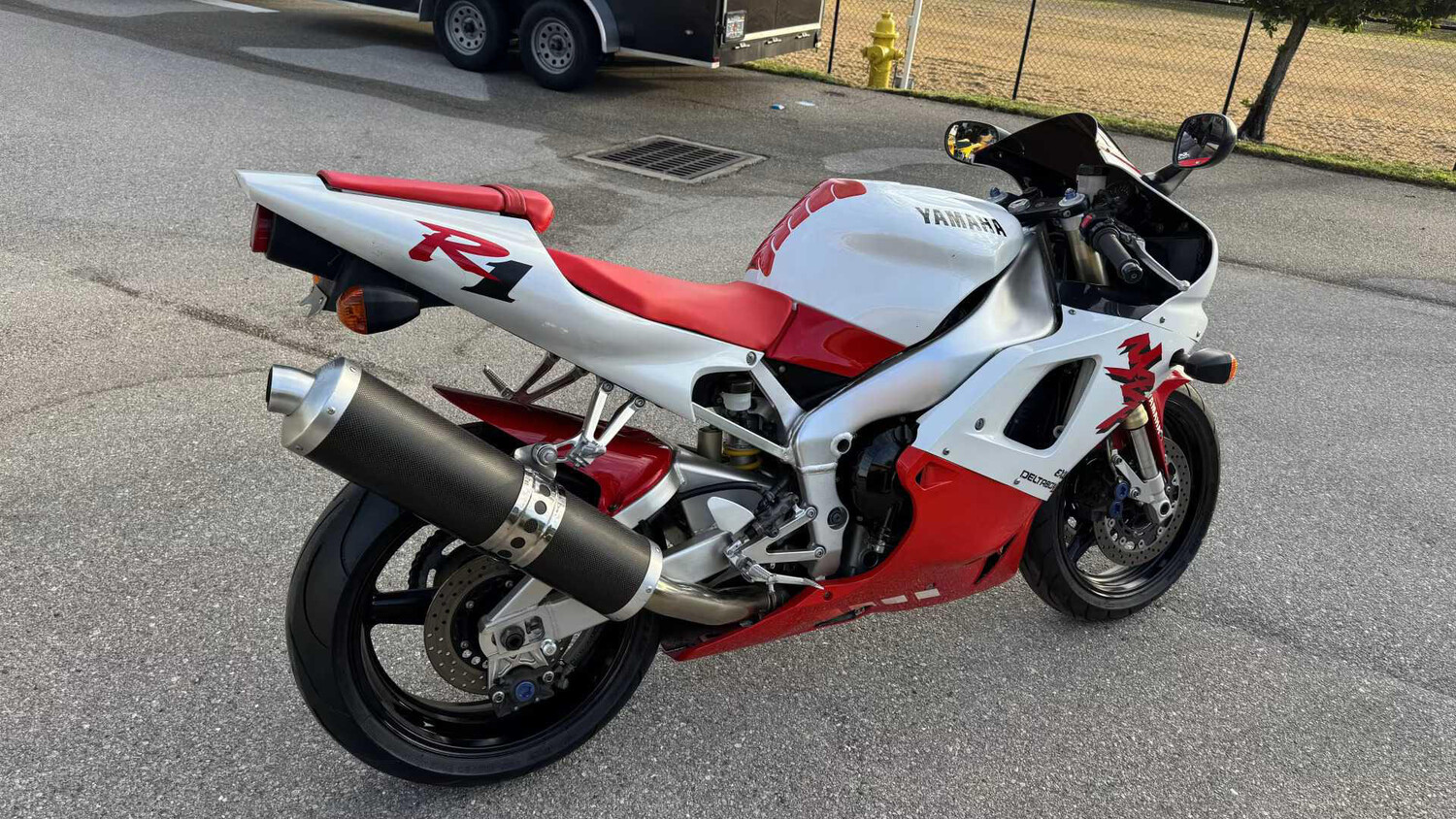
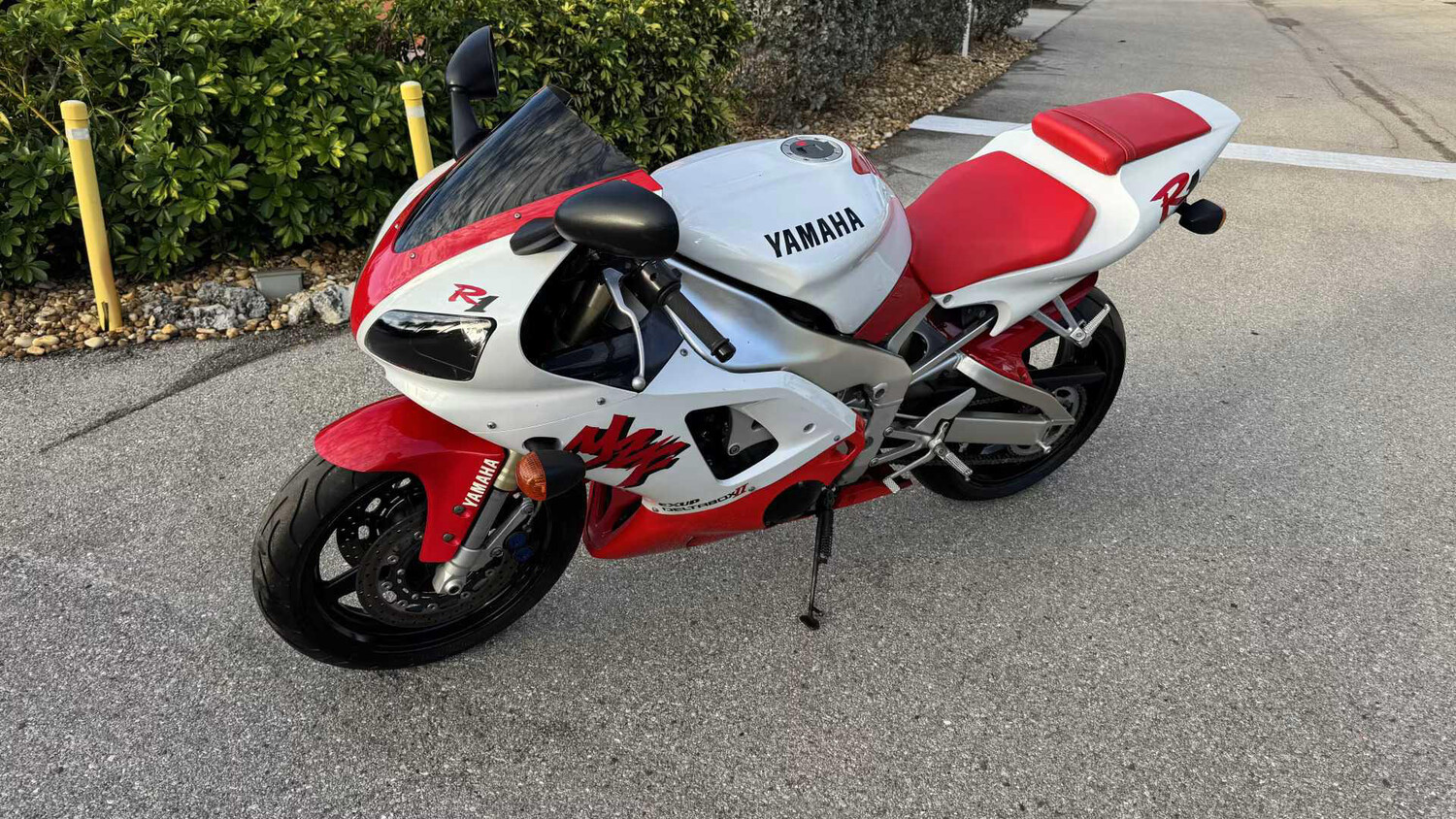
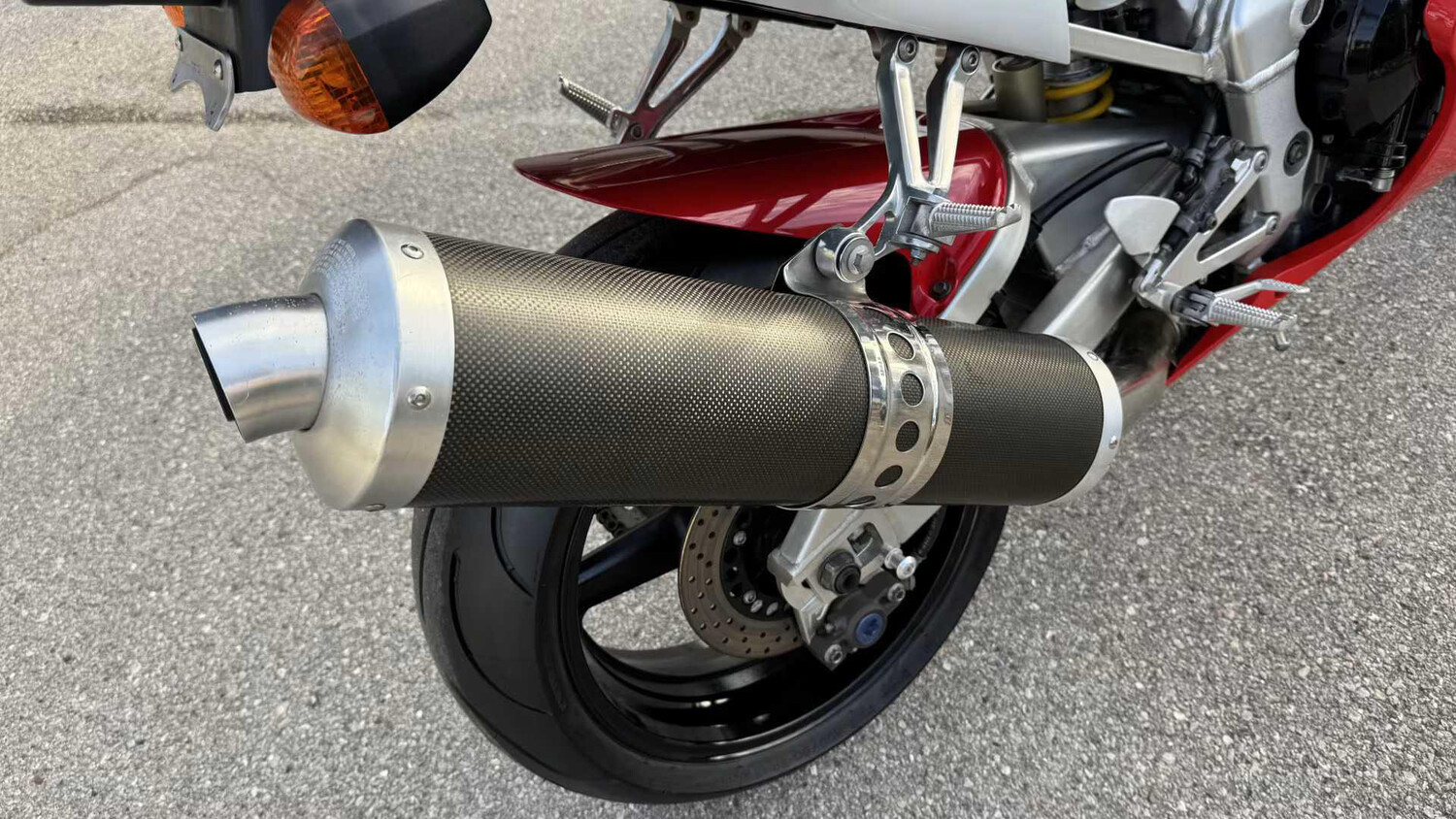
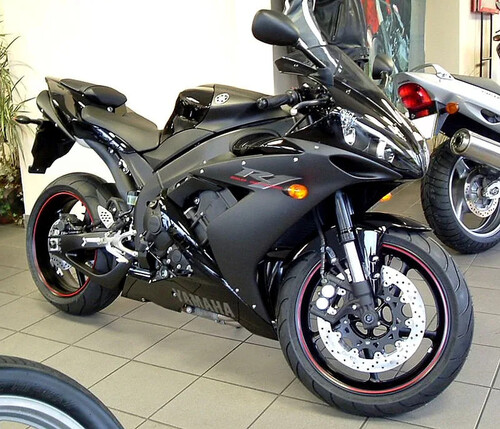
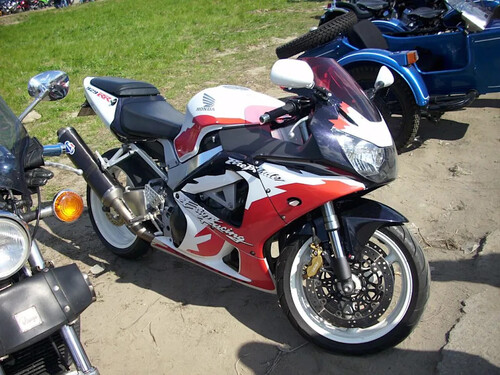
By the mid-1990s, the superbike world had quietly agreed on something. Honda had proven with the original CBR900RR FireBlade that a lighter motorcycle was a faster motorcycle, and every serious manufacturer had followed suit. Power figures plateaued. Engineers chased grams instead of horsepower. For half a decade, the 900 and 1000cc segment looked more like a weight-loss competition than an arms race. Yamaha watched all of this, went back to its racing department, and built something that made the competition irrelevant overnight. The bike it unveiled in late 1997 did not just win the segment. It ended the debate and started a new one. Why 1990s Superbikes Stopped Chasing Horsepower Honda When Honda launched the original CBR900RR in 1992, it did something radical: it fitted a 900cc engine into a chassis that weighed less than competing 750cc sports bikes. The result handled more sharply, accelerated harder, and redefined what a production superbike could be. The industry took note. Kawasaki redesigned the ZX-9R in 1998 specifically to cut weight, dropping 77 lbs from the previous model. The 1998 CBR900RR was the lightest FireBlade Honda had ever built, trimmed to 180 kg dry. Every serious manufacturer in the segment was playing the same game: reduce mass, tighten the chassis, and trust that the power difference between 125 horsepower and 130 horsepower was less important than getting the bike to rotate more quickly.The 1998 Honda CBR900RR produced 128 horsepower. The 1998 Kawasaki ZX-9R produced 143 horsepower. Neither was considered underpowered. Both were genuinely fast motorcycles by any measure. But both were operating inside a set of assumptions about what a liter-class superbike should be that were about to be demolished by a bike from a manufacturer that had been rethinking the formula entirely. Yamaha Went Back To The Drawing Board Mecum The key problem Yamaha's engineers identified was the engine. A conventional inline-four superbike engine occupies a significant amount of space front to back in the frame. The gearbox input shaft sits behind the engine, and the output shaft sits behind that. The result is a long engine package that pushes the front wheel forward and forces a compromise between wheelbase and weight distribution. Yamaha's solution was to place the gearbox input shaft directly above the output shaft, stacking them vertically instead of horizontally. This made the engine shorter by a significant margin, which allowed the swingarm to be made longer without extending the overall wheelbase. A longer swingarm improves stability and traction under acceleration. The center of gravity could be optimized in a way that was simply not possible in a conventional layout.The engine itself was redesigned with a 20-valve cylinder head, five valves per cylinder in place of the four used by most competitors, to maximize airflow at the high rpm the power target demanded. The resulting package was physically smaller than many contemporary 600cc supersport bikes. The stated goal was to match the chassis compactness of a 600 with the power output of a liter-class engine, and to do it in a dry weight that challenged the lightest bikes in the segment. When the bike was unveiled at the Milan show in November 1997, the superbike world understood immediately that the rules had changed. Meet The 1998 Yamaha YZF-R1 MecumYamaha claimed 150 PS for the R1, which converts to 148 imperial horsepower. The distinction matters: this article uses imperial horsepower throughout, and the 150 figure widely cited in period coverage refers to the metric PS rating. Either way, the number was unlike anything a production superbike had produced before. The dry weight was 177 kg, 3 kg lighter than the 1998 CBR900RR and 6 kg lighter than the redesigned ZX-9R. The result was a power-to-weight ratio that made both rivals look significantly slower on paper, and proved just as significant in reality.Period test data from major publications recorded a0-60 time of 2.8 seconds and a quarter mile of 10.32 seconds at 138 mph, with a top speed of 172 mph. These were not lap-time numbers. These were production bike numbers. The R1 was not just the most powerful superbike of its era. It was the fastest through the quarter mile, the quickest to 60 mph, and competitive for top speed against a class that had been chasing the same ceiling for years without reaching it. The Stacked Gearbox That Changed Everything Mecum The vertically stacked gearbox in the YZF-R1 was a world-first in production motorcycle design. By placing the gearbox input shaft directly above the output shaft, Yamaha shortened the engine package by a meaningful amount compared to a conventional layout.That shorter engine allowed the swingarm to be 20mm longer than a standard configuration would permit at the same wheelbase. A longer swingarm puts more weight over the rear tire, improves stability under hard acceleration, and reduces the tendency for the front wheel to lift under power. Combined with the optimized center of gravity made possible by the compact engine package, the result was a bike that handled more like a 600 than its output suggested it had any right to. The design was subsequently adopted by other manufacturers as the benchmark for liter-class superbike engine packaging. Every modern 1000cc inline-four superbike built since 1998 carries the influence of that decision. What The 1998 R1 Did To The Superbike Segment Mecum The arms race the R1 triggered was immediate and total. Honda, Suzuki, and Kawasaki all began development of new liter-class machines the moment the R1's specifications became public. Suzuki responded with the GSX-R1000 in 2001, which produced 160 horsepower and took the outright performance benchmark back from Yamaha. Honda launched the CBR929RR in 2000 and the CBR954RR in 2002. The entire segment shifted from a weight-reduction exercise to a power and weight exercise simultaneously, with 150 horsepower treated as a floor rather than a ceiling. The change to World Superbike rules in 2003, which increased the displacement limit for four-cylinder machines from 750cc to 1000cc, was widely attributed to the commercial success and competitive performance of the R1 and the generation of liter-class superbikes it inspired. Without the R1, the World Superbike grid as it exists today almost certainly does not exist in its current form. What A First-Generation R1 Is Worth Today Appreciating ClassicsThe 1998 and 1999 R1 has acquired genuine collector status in the years since production ended, but pricing it with confidence in the US market is genuinely difficult. The supply of first-generation examples on American classifieds is extremely thin at any given time, which means published averages are few and far between. What the market does show clearly is that seller expectations for clean, unmodified, documented 1998 and 1999 examples are significantly higher than for later first-generation bikes, reflecting their historical importance as the original R1 rather than any mechanical advantage they offer. Rough or modified examples trade at whatever a motivated seller will accept. The table above reflects current market expectations based on available private sale data andinternational market comparisons, and should be treated as a guide rather than a published valuation. Why The R1 Still Matters In 2026 Mecum Every 1000cc inline-four superbike sold anywhere in the world in 2026 is a direct descendant of what Yamaha built in 1998. The stacked gearbox, the emphasis on power-to-weight ratio, the expectation that a liter-class superbike should handle like a smaller machine while producing more power than a larger one: all of it traces back to the R1 and the decisions Yamaha made when it chose to challenge the assumptions that had defined the segment for six years. The 150 PS barrier was not just a number. It was the moment the industry stopped treating power as a secondary consideration and started treating it as a primary one again. Every manufacturer that responded, and every rule change that followed, begins with the 1998 R1 sitting in a Milan show stand in November 1997 with specifications that nobody in the industry had seen before.Sources: Cycle World, Bennetts, Mecum, Appreciating Classics.