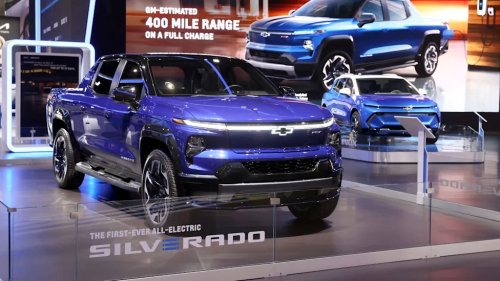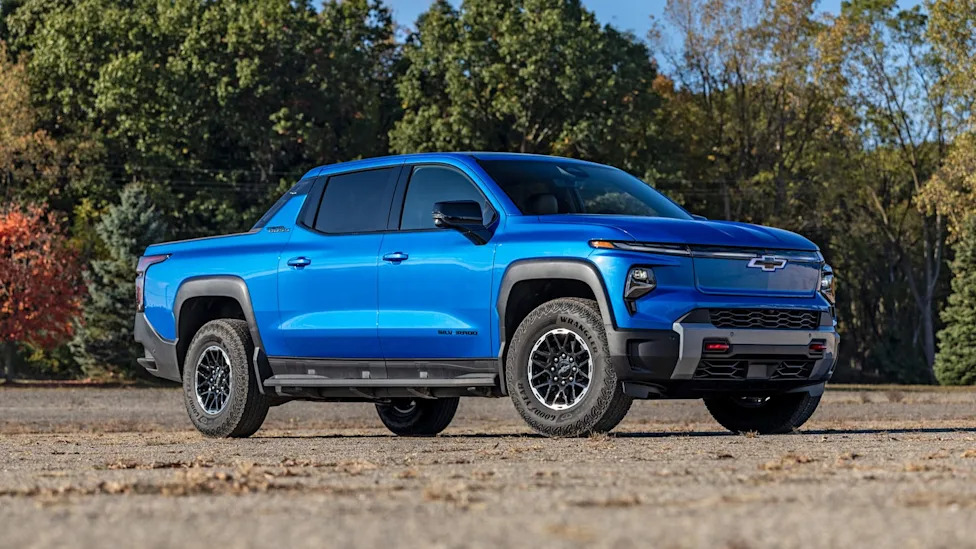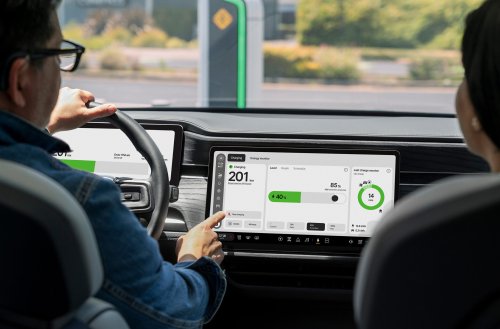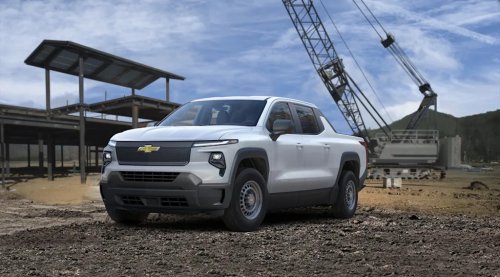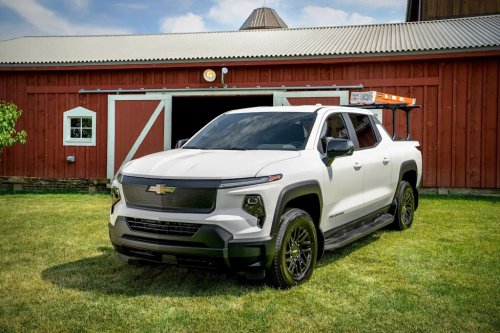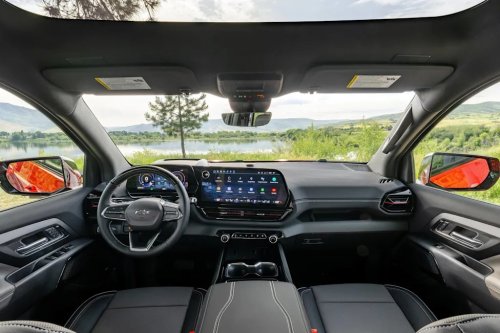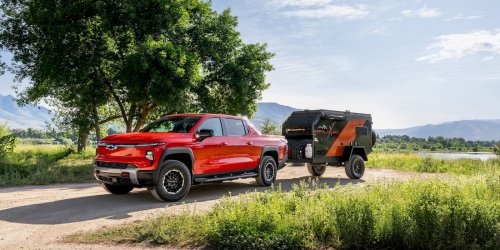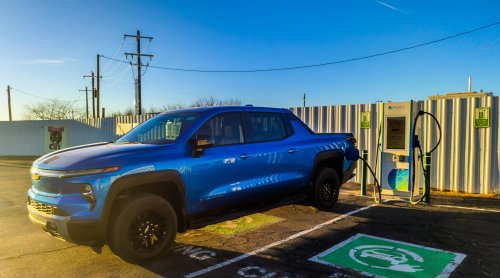
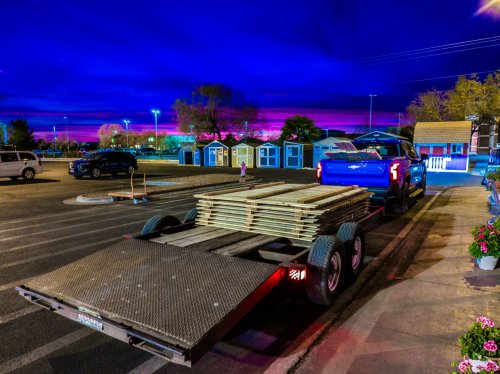
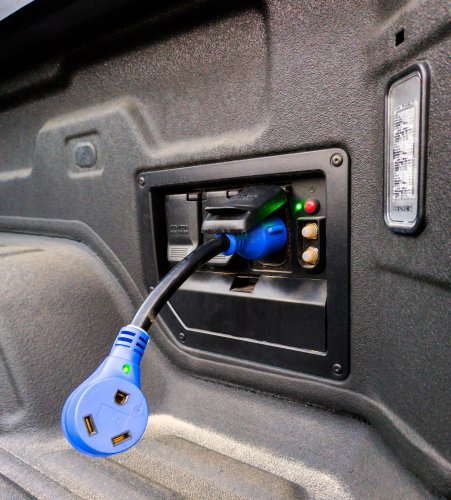






















At the end of January, I bought a Silverado EV. I didn’t get the top-of-the-line RST truck with the 200+ kWh battery pack, instead opting for the more affordable LT trim with the ~170 kWh pack. I recently did some towing testing, which I wrote about in my last article, and found that even in 40 degree weather (F), it would still pull my 24′ travel trailer at least 150 miles, meaning that it should to 170–180 miles in better weather. My Route 66 centennial trip is still a few weeks away (follow that story on Bluesky here or on my personal website here), so I moved back to mostly focusing on how it drives unloaded. In this article, I’m mostly going to focus on how it does for the kind of driving most people would do. Range Anxiety and Charging Away From Home? Never Heard Of Her. With my LEAF and my Bolt EUV, I had enough range for nearly all of my local driving, but if I drove more than 50–100 miles from home, I was almost always looking for a DC fast charger somewhere to stay topped up for the return trip. With the Bolt, I generally didn’t ever feel like I was going to get stranded, but PlugShare was still something I’d open up before venturing out too far. The Silverado EV (unloaded) is an entirely different beast. For the first 1,000 miles of driving it around, I never even had to think about charging away from home. Having over 400 miles of range means that even regional driving going out over 100 miles from home never left me even close to wondering whether I would get back to the home charger. To actually test the truck’s DCFC capability, I had to intentionally run it down and leave it unplugged to run it down low. More on how charging went in a bit. Yes, It Can Do Truck Stuff™ The truck loaded up with some lumber, a bunch of potting soil, and a trailer with fence panels. Not an impressive load by any stretch, but there are still people who don’t know that EVs can do this stuff. Most people who buy a pickup truck either never or almost never tow with it. Aside from wanting a big, roomy vehicle, the main draws for buying a truck are things like picking up landscaping supplies or lumber for home projects at Home Depot. Some people tow a little trailer around town and maybe take a boat to the lake on the weekends. I shouldn’t have to say this, but I’m going to say it: the Silverado EV can do all of these things. It has a bed. You can put stuff from Home Depot or Lowe’s in it. It drives. You unload it. Aside from the fact that you don’t have to put expensive gasoline or diesel in it, there’s really no difference. But, there’s one thing the truck can do that most gas-powered trucks simply can’t. The 120 and 240-volt plugs in the bed make it possible to power tools, lighting, and the air conditioning in my camper (TT-30 adapter shown above). Even letting it run for a whole day only depleted about 5% of the battery! The Family Loves It After years of putting kids in the back of vehicles like a Nissan LEAF and a Bolt EUV, the family was getting pretty sick of it. The kids aren’t getting any smaller, so more and more often, they were begging to load up in the Suburban or my wife’s Acura MDX. They wanted more room. The Silverado EV delivers enough in that area that nobody’s begging to ride in something bigger. The back seat is an absolute cavern unit. The teenagers all get a full-sized adult seat, room under it for backpacks, and more legroom than they need. Two of them get seat heaters, too. There’s never any complaining about the adults having seats too far back. Trying to capture a sunset during road testing. It’s subtle, but once you see this, you’ll never un-see it: GM achieved the extra room in the cab by shortening the hood. It doesn’t look weird at all, just slightly different assuming you even notice it. If anything, it’s a slight positive, as front visibility is just a little better than most trucks. Finally, A Charging Test With two weeks to go before the big trip, I realized that I needed to make sure the DCFC didn’t have any problems. But, as I pointed out above, there’s almost no reason to ever do that with local driving. So, after two months of ownership, I skipped charging for a couple days, took a long day trip, and then skipped charging for one more night just to get it below 30%. Then, I drove fast to a charger 40 miles away to run it down close to 10%. Sadly, I didn’t get to see 300 kW charging speeds. It was a hot day, and for some reason the station only put out 256 kW. Still, that’s faster than any EV I’ve owned (again, I’m coming from a Bolt EUV), and in about the time it took to get a couple of pictures and look at the charging screen, it was back up to almost 50%. I wanted to go inside and see the travel center’s “DesertBot” display, but I had to unplug before I even had a chance to do that. Then, we did another day trip, drove around a little more at 80 MPH to burn the battery down a bit more, and tested my charging adapter for Tesla stations. This time, I forgot to precondition and only pulled about 130 kW (people with GM trucks typically get around 180 because Superchargers don’t do 800-volt charging). But the important thing was that the charging on this new truck works, so I can count on it for my upcoming Route 66 and coast to coast towing trip. We had a very nice sunset when we did the charging testing.