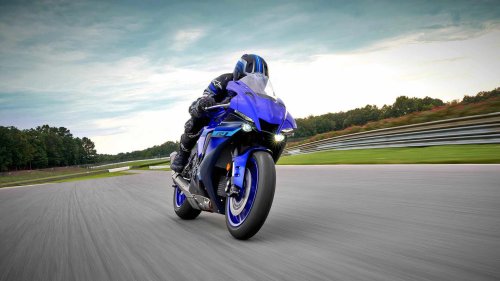
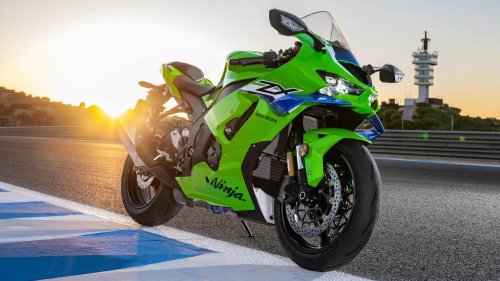
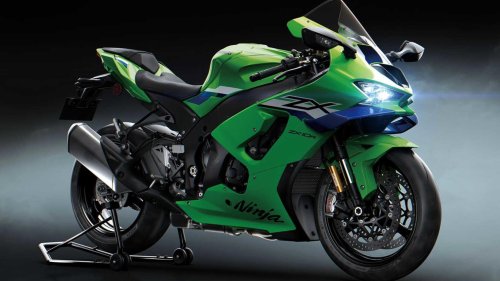
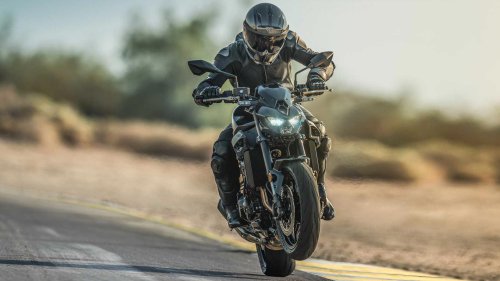
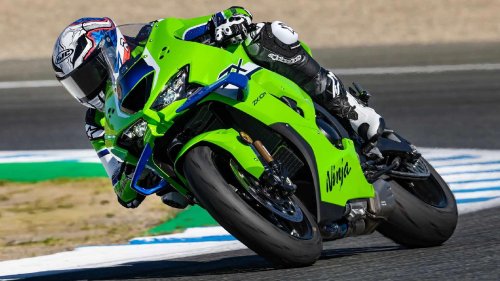
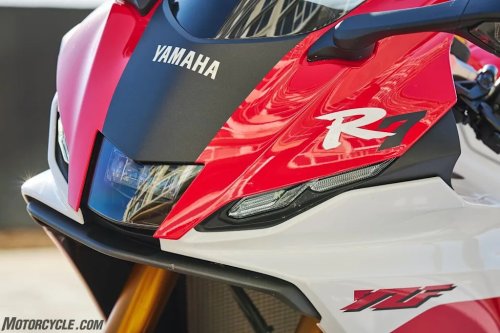
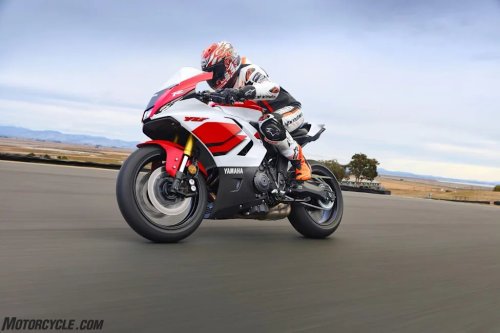
Sports bikes have always been about chasing performance, but there was a time when Japanese manufacturers didn’t just compete, they defined the entire segment. Honda, Yamaha, Suzuki, and Kawasaki built machines that were fast, reliable, and relatively attainable, setting the blueprint that the rest of the world followed. Even today, with European brands pushing boundaries on price and exclusivity, Japanese liter bikes still represent the core of what a superbike should be. Two machines sit right at the heart of that conversation: the benchmark-setting Yamaha YZF-R1 and its long-time rival, the Kawasaki Ninja ZX-10R. Japanese Liter Bikes Still Set The Benchmark Honda There’s a reason liter bikes from Japan continue to dominate track days, race grids, and enthusiast wish lists. They strike a balance that’s hard to replicate, combining cutting-edge performance with real-world usability and long-term reliability. These bikes aren’t just built for spec sheet bragging rights; they’re engineered to be ridden hard, serviced easily, and trusted over time. Even as electronics get more advanced and emissions regulations tighten, Japanese manufacturers have managed to keep their flagship sports bikes brutally fast without losing that everyday usability.What’s even more impressive is how close the competition has become. On paper, most modern liter bikes are separated by razor-thin margins. We’re talking engines that rev beyond 13,000 rpm, outputs hovering around 200 horsepower, and electronics packages that rival full-on race bikes. That makes choosing between them less about raw numbers and more about character, feel, and increasingly, price. And that’s where this rivalry gets interesting. Why The Yamaha YZF-R1 Became The Gold Standard Yamaha The Yamaha R1 didn’t just evolve with the times; it helped define them. Yamaha’s decision to bring MotoGP-inspired engineering into a production superbike reshaped expectations for what a liter bike could feel like. The current US-spec R1 runs a 998cc inline-four with a crossplane crankshaft, producing around 197 horsepower and roughly 83 pound-feet of torque. It’s paired with a six-speed transmission, a slip and assist clutch, and a quickshifter, all wrapped in a package that weighs about 448 pounds wet. MotoGP DNA And Crossplane Character Yamaha What really sets the R1 apart is how it delivers that performance. The crossplane crank breaks away from the traditional even firing order of inline-fours, giving the engine a more uneven, V4-like pulse. The result is a power delivery that feels more connected and predictable at the limit, especially when you’re getting on the throttle mid-corner. It’s not just about peak output; it’s about how that power reaches the rear wheel.That character is backed up by serious hardware. The aluminum Deltabox frame is paired with fully adjustable KYB suspension, including a 43 mm inverted fork up front and a linked rear shock. Braking comes from dual 320 mm discs with radial-mounted calipers, supported by a full suite of electronics like a six-axis IMU, lean-sensitive traction control, slide control, launch control, engine brake management, and multiple ride modes. The R1 feels like a race bike with lights, and that’s exactly why it’s become the benchmark. The Kawasaki Ninja ZX-10R Is A Worthy Rival To The Yamaha YZF-R1 Kawasaki If the R1 is the emotional, MotoGP-inspired choice, the Ninja ZX-10R is the calculated, race-proven alternative. Kawasaki has taken a different approach over the years, focusing less on reinventing the formula and more on refining it to perfection. The result is a bike that’s just as capable, but arguably more approachable, especially when you factor in its $16,999 MSRP. You should know this MSRP has dropped compared to 2025, while the 2026 R1 has become more pricier than last year. WSBK Pedigree And Proven Platform Kawasaki The ZX-10R’s credibility comes straight from World Superbike. Kawasaki has dominated the series for years, and much of that knowledge has filtered down into the production bike. Its 998cc inline-four produces about 203 horsepower (with RAM air) and 84.6 pound-feet of torque, with a redline north of 14,000 rpm. Like the R1, it’s paired with a six-speed gearbox, quickshifter, and assist and slipper clutch, but the way it delivers power is more traditional, more linear, and arguably easier to manage.Underneath, the ZX-10R uses an aluminum twin-spar frame with Showa Balance Free Forks and a horizontal back-link rear suspension. Braking is handled by dual 330 mm discs with Brembo calipers, offering serious stopping power. The electronics package is just as comprehensive, with a Bosch IMU managing traction control, cornering ABS, launch control, wheelie control, and multiple riding modes. It’s every bit as advanced as the R1, just delivered in a more understated way. Why The ZX-10R Arguably Offers Better Value Kawasaki This is where the conversation shifts from performance to practicality. With an MSRP of $16,999, the ZX-10R undercuts the R1’s $19,199 price tag by $2,200. That’s not a small difference, especially in a segment where both bikes already deliver more performance than most riders will ever fully use. Similar Performance, Lower Cost Kawasaki For many riders, that extra $2,200 could go toward better gear, track days, tires, or even performance upgrades. And when the real-world performance difference between these two bikes is so small, the Kawasaki starts to look like the smarter buy. It may not have the same emotional pull as the R1’s crossplane engine, but it delivers where it counts, offering superbike performance at a price that still feels somewhat attainable. The Kawasaki And Yamaha Are Neck And Neck On Paper When you start comparing numbers, it becomes clear just how close these two bikes really are. Both engines displace 998cc, both push out around 200 horsepower, and both are equipped with six-speed transmissions and advanced electronics. The ZX-10R edges ahead slightly in peak power, while the R1 counters with its unique power delivery and slightly lighter feel. Engine, Power, And Electronics Kawasaki The ZX-10R’s 203 horsepower and 84.6 pound-feet of torque give it a slight advantage on paper, but in real-world riding, the difference is almost negligible. Both bikes feature ride-by-wire throttles, multiple riding modes, and fully adjustable traction and wheelie control systems. Quickshifters on both models allow clutchless upshifts and downshifts, making them equally capable on track.Where they differ is in how they present that performance. The Kawasaki feels smooth, predictable, and brutally fast in a straight line, while the Yamaha feels more alive, more aggressive, and more engaging when you start pushing harder. It’s less about which is faster and more about which feels better to you. Chassis, Suspension, And Braking Kawasaki Both bikes are built around aluminum frames designed for rigidity and feedback, with fully adjustable suspension systems that can be fine-tuned for street or track use. The ZX-10R’s Showa setup emphasizes stability and control, while the R1’s KYB components offer a slightly sharper, more communicative feel.Braking performance is equally impressive on both sides. The Kawasaki has larger 330 mm front discs, while the Yamaha has smaller discs with more fancy Brembo calipers. Combined with lean-sensitive ABS and advanced electronics, both bikes inspire confidence even when you’re riding at the limit. The Real Difference: Crossplane Vs. 180-Degree Crankshaft Kawasaki At the heart of this rivalry is one key mechanical difference that shapes the entire riding experience. While both bikes use inline-four engines, the way their crankshafts are configured changes how they feel on the road and track. The ZX-10R sticks with a traditional 180-degree crank. It delivers power in a smooth, linear fashion, building speed in a way that feels relentless and predictable. It’s incredibly effective, especially for riders who want a bike that’s easy to understand and push harder over time.Yamaha The R1’s crossplane crank, on the other hand, introduces uneven firing intervals that give the engine a more distinctive pulse. Because of the sudden rush of torque down low in the rev range, it can feel like it has better drive, especially when exiting corners at speed, even if the actual performance difference is minimal. Some riders swear by it, saying it makes the bike easier to ride at the limit, while others prefer the simplicity and familiarity of the Kawasaki’s setup.