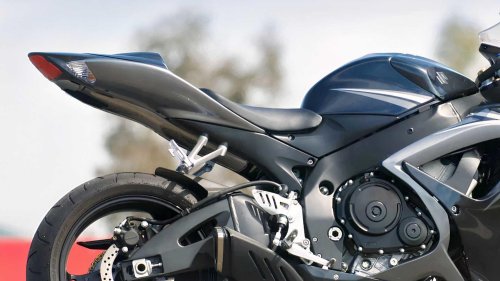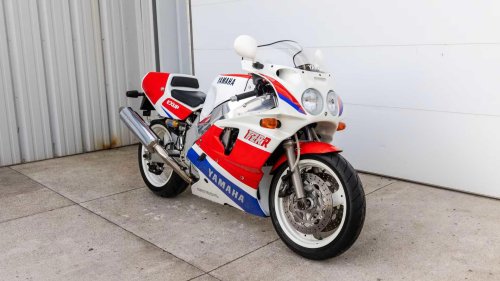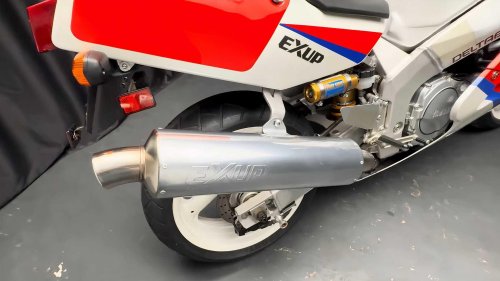
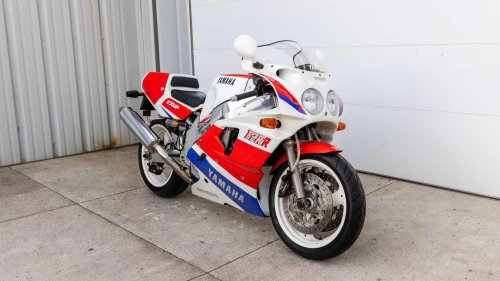
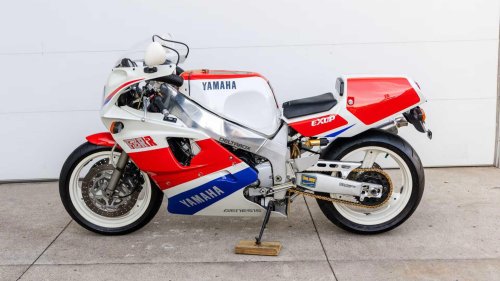
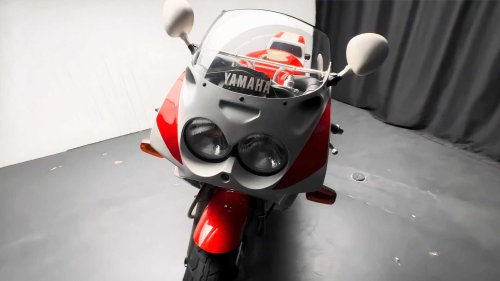
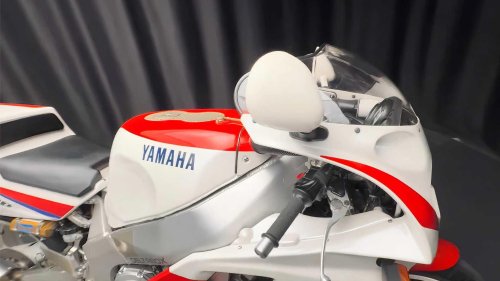














In the late 1980s, the newly established World Superbike Championship created a problem every major motorcycle manufacturer had to solve. The series required race bikes to be based on machines the public could actually buy, which meant that if a company wanted to compete at the highest level, it had to sell a road-legal version of its race hardware. Yamaha, a Japanese manufacturer with deep Grand Prix racing roots, needed an answer to a rival's iconic V4 that was dominating the early championship. The response was not a modified production bike with a few trick parts bolted on. It was a factory racer with a license plate, built in a quantity of just 500, and it carried technology that would reshape how the company designed sportbikes for the next decade. The Race Series That Forced Manufacturers To Sell Their Secrets Via Iconic Motorbikes YouTube Channel The World Superbike Championship launched in 1988 with a simple but radical premise: race bikes had to be derived from machines available to the public. This was a deliberate counterpoint to the Grand Prix series, where prototype machinery bore no relationship to anything a customer could ride. The homologation requirement created a new class of motorcycle, the limited-edition race replica, purpose-built for competition but street-legal enough to satisfy the rulebook. The early championship was dominated by one machine in particular, a V4-powered homologation special that combined exotic engineering with relentless development. Every other manufacturer in the paddock had to respond or accept permanent second-class status.The homologation era produced some of the most focused motorcycles ever sold to the public. Manufacturers poured race-department technology into machines that were nominally road bikes but functionally track weapons, sold at steep prices in tiny quantities to satisfy the minimum production requirements. The tension between making a bike competitive on Sunday and rideable on Monday defined the engineering challenge, and the manufacturers that embraced the contradiction most fully produced the most memorable machines. The Yamaha FZR750R OW-01 Was A Factory Racer With A License Plate MecumThe Yamaha FZR750R, known universally by its internal codename OW-01, arrived in 1989 as the Japanese manufacturer's answer to the dominant force in World Superbike. At its core was a 749cc inline-four with five valves per cylinder, a configuration that Yamaha had pioneered and refined through its racing programs. Titanium connecting rods reduced reciprocating mass, allowing the engine to spin to a 14,000 rpm redline. Two-ring pistons minimized friction. Four Mikuni flat-slide downdraft carburetors fed the intake, while Yamaha's EXUP exhaust valve system ensured that even with a race-oriented tune, the engine retained enough tractability for road use. The claimed output was 121 hp at 12,000 rpm, a significant figure for a 750cc machine in 1989. Period testing recorded an 11.2-second quarter-mile at 130.81 mph and a top speed of approximately 160 mph.The chassis was built from high-grade aluminum alloy in Yamaha's Deltabox twin-spar design, a concept that would become the template for every Yamaha sportbike that followed. Ohlins supplied the fully adjustable rear shock, while 43mm telescopic forks handled the front. The dry weight sat at approximately 412 lb. An aluminum fuel tank replaced the standard steel unit to save additional weight. The close-ratio six-speed gearbox was designed to keep the engine in its narrow powerband at all times, making the OW-01 feel more like a two-stroke race bike than a conventional four-stroke roadster. Yamaha built 500 examples and priced them at $16,000, more than twice the cost of a standard FZR1000 and one of the most expensive motorcycles money could buy in 1989. The Five-Valve Head And The Deltabox Frame That Shaped A Generation Mecum The OW-01's engineering legacy extends far beyond its limited production run. The five-valve-per-cylinder head design, with three intake valves and two exhaust valves, allowed for a larger total intake area than a conventional four-valve layout while maintaining compact combustion chamber geometry. Yamaha carried this configuration forward into its mainstream sportbike range for nearly a decade, and the lessons learned from developing the OW-01's high-rpm valvetrain directly informed the YZF-R1 that arrived in 1998 and redefined the open-class sportbike category.The Deltabox frame, refined through the OW-01 program, became Yamaha's signature chassis architecture and is still used in evolved form today. The factory race kit, available for several thousand dollars over the base price, included upgraded pistons, revised camshafts, a race-only ECU, and a full exhaust system. With the kit installed, the OW-01 was ready for international-level competition with no further modification. How The OW-01 Competed In World Superbike Via Iconic Motorbikes YouTube Channel The OW-01 won races in its debut World Superbike season, with Fabrizio Pirovano and Britain's Terry Rymer taking victories that proved the inline-four could challenge the dominant V4 architecture on the world stage. Rob McElnea won the British Superbike Championship on an OW-01 in 1991, and Eddie Lawson, one of the most decorated riders in Grand Prix history, rode the platform to victory at the Daytona 200 in 1993.The OW-01 never captured the overall World Superbike Championship title, a distinction that belonged to its rival throughout this period. But the results it achieved with a fundamentally different engine layout forced the championship's pace higher and demonstrated that there was more than one way to build a competitive superbike. The inline-four architecture that the OW-01 campaigned would eventually become the dominant engine configuration in World Superbike, and every manufacturer that followed Yamaha's lead owed a debt to the 500 machines that started the argument. What The Yamaha OW-01 Costs Today Via Iconic Motorbikes YouTube ChannelThe OW-01 remains one of the most compelling values in the homologation superbike market. Specialist auction data shows good-condition examples trading in the $30,000 to $45,000 range, with exceptional low-mileage bikes pushing toward $65,000. For comparison, the rival V4 homologation special that dominated the era typically commands $60,000 to $120,000 in equivalent condition. The price gap exists because the rival won the championships and captured the public imagination more completely, but from a rarity standpoint, the OW-01 is the scarcer machine. Only 500 were built, compared to the approximately 3,000 examples of its competitor that reached global markets.The OW-01 was never officially street-sold in the United States, which has kept its profile lower than it deserves among American collectors. When AMA regulations changed to require as few as 15 examples for homologation, Yamaha USA sold a small batch directly to licensed racers and teams. Those US-delivered bikes, along with grey-market imports, represent the entirety of the American supply. With 500 total production and a significant number having been raced, crashed, or modified beyond recognition, truly original examples are becoming increasingly difficult to source. The forgotten superbike is finally being remembered by the collectors who understand what it represented.Sources: Iconic Motorbike Auctions, Bonhams, Yamaha, Mecum, Iconic Motorbikes YouTube Channel.