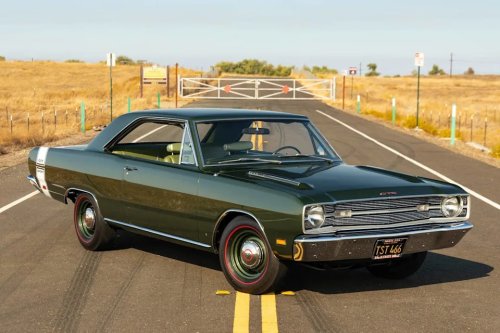
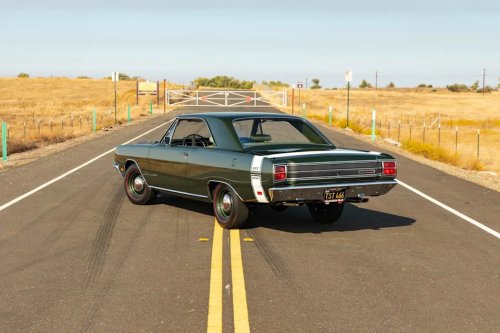
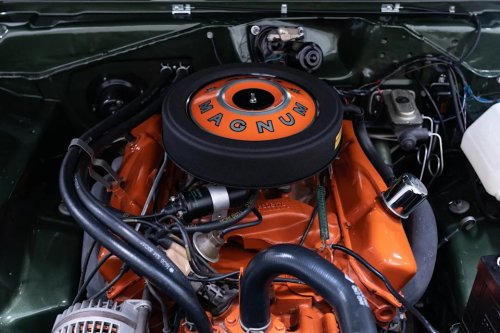
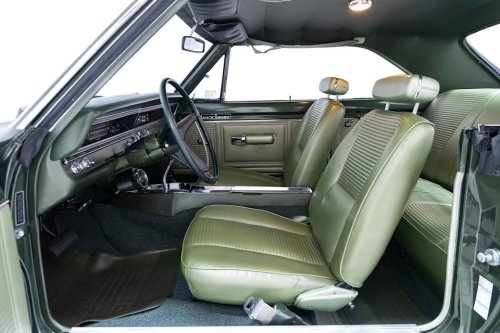
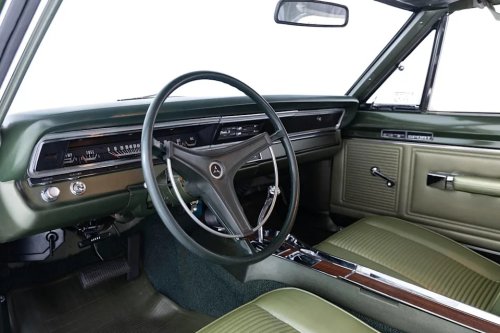
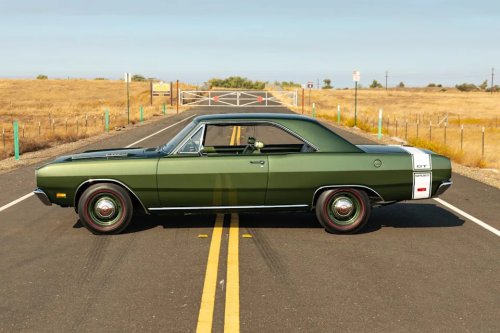
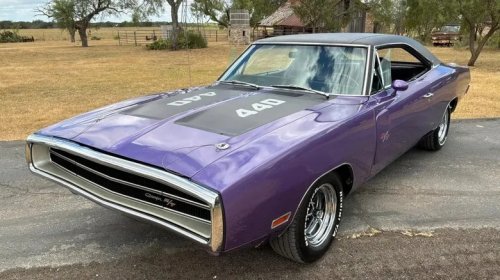
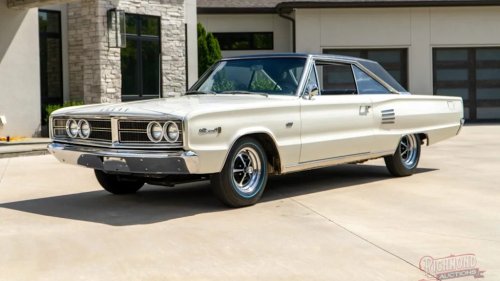
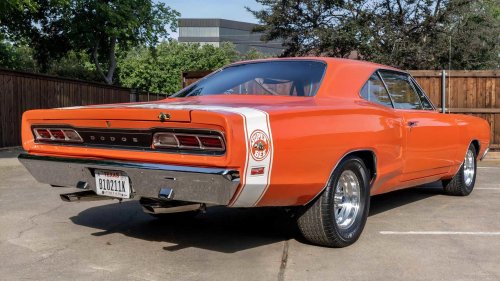
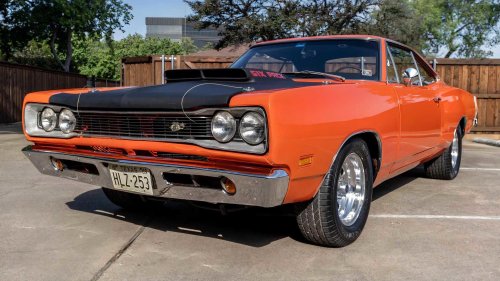
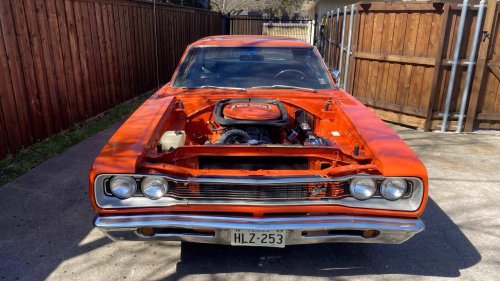
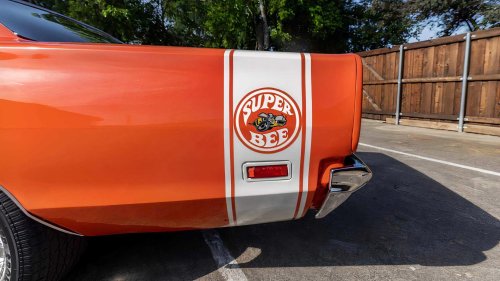
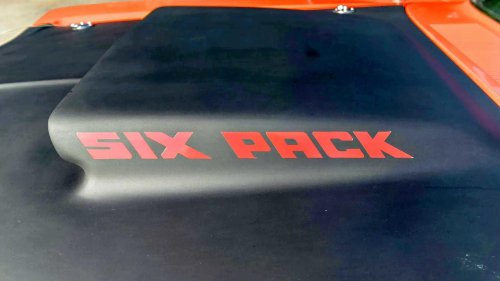
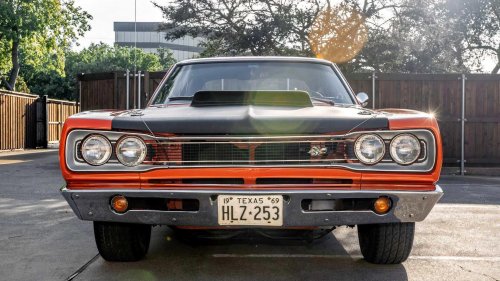
Some Muscle Cars were famous the moment they rolled off the showroom floor. Others delivered the same punch for less money and spent decades overlooked by collectors. Today, one of those under-the-radar Mopars has quietly climbed into stupid money territory.That rise says a lot about how the market has changed, but it also reveals plenty about the car itself. Back in the day, this thing was the blue-collar answer to flashier hardware, the kind of machine bought by people who cared more about quarter-mile attitude than woodgrain, extra trim, or impressing the neighbors. Now the same car that once sold on value looks like a bargain only if your idea of a bargain includes a five-figure check and a long stare at your bank account. Dodge’s Working-Class Muscle Car That Nobody Talked About Bring A TrailerBy the late '60s, Detroit had figured out that there was real money in selling speed to people who didn’t want to pay for a near-luxury badge. Chrysler got there with a particularly sharp read on the market. Plymouth had already struck gold with the Road Runner, and Dodge followed with its own stripped-down middleweight bruiser, built from the Coronet and aimed squarely at buyers who wanted the hardware without the fluff.That formula was beautifully simple. Start with a midsize body, keep the trim level honest, add a stout big-block and heavy-duty suspension, include a manual gearbox as part of the personality, then let the pricier cars worry about niceties. It was the kind of car that treated brightwork as optional and tire smoke as standard operating procedure. In an era full of swagger, it wore work boots.The '69 model sharpened the pitch. Dodge gave it a pillarless hardtop body style, updated Coronet styling, and available Ramcharger fresh-air induction on the standard steel hood (important because it made the car look a little sleeker without softening its mission). It still came across like a machine designed by people who thought bench racing should count as cardio.And that rough-edged image stuck. Cars like this were rarely mothballed by cautious first owners and lovingly preserved for future concours lawns. They were driven hard, street-raced, modified in home garages, and generally treated the way cheap fast cars always get treated. Which is to say, they lived a full life and often a short one. That’s a big reason surviving, properly maintained examples matter so much now. The '69 Coronet Super Bee Is Worth A Small Fortune Today Bring A TrailerHere’s the part that would’ve sounded ridiculous when gas was cheap and hair was longer. A 1969 Dodge Coronet Super Bee with the standard 383-cubic-inch V8 now carries a value of about $101,000 in concours condition. Excellent examples sit around $67,000. Even a good-condition example lands at roughly $41,400. That’s no longer “project car money.” That’s “maybe I should sit down before checking auction results” money.Those numbers get especially interesting because the Super Bee was never sold as an aristocrat’s toy. It was the budget-minded performance play in Dodge showrooms, the car for buyers who wanted straight-line punch but didn’t need the richer image or bigger sticker of a Charger R/T or Coronet R/T. In other words, it was born as a value proposition. Time, as it turns out, has a wicked sense of humor. Future Classic Bring A TrailerPart of the market heat comes from rarity inside the model line. Hot versions always pull harder in the collector world, and the '69 Super Bee has a couple of those. The one everyone talks about is the A12 car, introduced during the 1969 model year. Just 1,907 Super Bees got that 440 Six Pack package, which immediately puts those cars into the kind of territory where people start using words like “investment-grade” and speaking in hushed auction-day tones.Then there are the Hemi cars, which push the story even further. Only 166 Hemi-powered Super Bees were built for 1969. That’s the sort of production number that turns a muscle car into folklore. This also explains why the market has become less forgiving. A regular driver still matters, but the truly correct, well-documented, rare-engine cars are the ones that make seasoned Mopar people suddenly act like they’ve spotted a UFO in a swap meet parking lot. The Budget Brawler That Delivered Serious Mopar Performance Bring A TrailerThe beauty of the Super Bee was that it never overcomplicated the pitch. Standard power came from Chrysler’s 383-cubic-inch V8, rated at 335 horsepower, and that was already enough to make the car feel properly rowdy. It wasn’t a compromise engine, and it wasn’t there to fill brochure space. It was the heart of the whole idea. Big displacement, real shove, and enough attitude to keep the rear tires on speaking terms with the local tire shop owner.The rest of the package backed that engine up the way it needed to. The Super Bee came with heavy-duty suspension pieces, dual exhaust, and a power-bulge hood, while the cabin stayed basic enough to remind you where Dodge had chosen to spend the money. The interior has been described as closer to a taxicab than a near-luxury machine, which honestly feels about right. You weren’t here for walnut trim. You were here because the accelerator pedal had a direct line to your inner teenager. The Smart Buy Bring A TrailerBuyers could also climb the ladder. The 440 Magnum was available, and by 1969, Dodge sweetened the pot with that Ramcharger Air Induction setup, which pulled cooler outside air into the engine. On Hemi cars, that system came standard. On lesser machinery, a hood scoop could be mere decoration, but here, it was closer to a public threat.That’s what made the Super Bee such a smart muscle car in its own moment. It tried to be quick, affordable, and mechanically serious enough to hold up under hard use. And because it landed in that sweet spot, it became one of those cars that felt more important from behind the wheel than it looked on a window sticker. Detroit built plenty of fast cars in 1969, but this one knew exactly what lane it belonged in. The Engine Options That Turned It Into A Street Legend Bring A TrailerIf the standard 383 gave the Super Bee its backbone, the A12 package gave it the story people still tell with a grin. Mid-year 1969 brought the 440 Six Pack setup, pairing a 440-cubic-inch V8 with three Holley two-barrel carburetors on an aluminum intake. That alone would’ve been enough to grab headlines, but Dodge didn’t stop there. The package also brought a matte-black, pin-on fiberglass hood with giant SIX PACK lettering, just in case subtlety had somehow survived the late 1960s.The numbers were serious. That Six Pack engine was rated at 390 horsepower and 490 lb-ft of torque, which made the Super Bee a genuine street-and-strip machine. Contemporary performance figures put the breed in the 0-60 mph range of roughly 5.6 to 6.3 seconds depending on engine and setup, with top speed reaching as high as 129 mph. For a budget-oriented midsize coupe with a bench-seat vibe and blue-collar credentials, those were properly disrespectful numbers. The Street Legend Bring A TrailerThe hardware around the engine was important too. A12 cars came with a 4.10-geared Dana 60 rear axle, and buyers could choose either the A-833 four-speed manual or a heavy-duty 727 TorqueFlite automatic. Fifteen-inch black steel wheels completed the look, and the whole package cost just $462.80 on the order sheet, about half the upcharge of a Hemi. Essentially, Dodge built a monster and priced it like it wanted to start trouble.Even today, owners describe the driving experience with a mix of affection and caution. One restored example featured in period enthusiast coverage was described as a handful, a car that wandered on skinny tires and came alive in a straight line once the power hit. That sounds exactly right. Cars like this weren’t engineered to flatter sloppy inputs or rescue dumb decisions. They were engineered to go hard, make noise, and leave the driver grinning like an idiot. Which, to be fair, is still a pretty great mission statement.By the time you get to the Hemi-powered cars, the Super Bee’s street legend becomes collector mythology. Those 166 Hemi examples sit at the point where production rarity, period performance, and Mopar mystique all collide. But even without a Hemi, the '69 Super Bee nailed the thing collectors chase hardest. It had a clear purpose, the right engine choices, real working-class credibility, and just enough visual menace to make the whole package feel a little dangerous. No wonder, then, that the market finally caught up to what the car had been saying all along.Sources: HotRod, Classic, Hagerty, TopSpeed.



















 +75 others