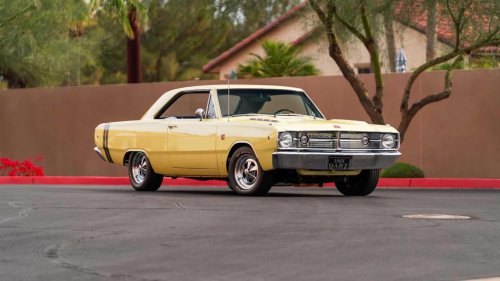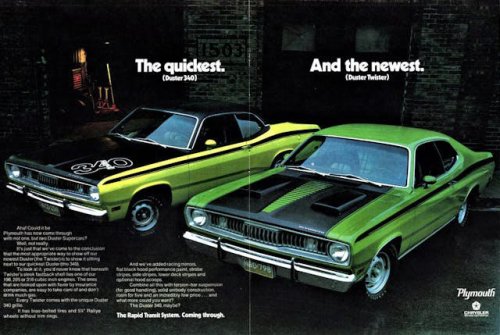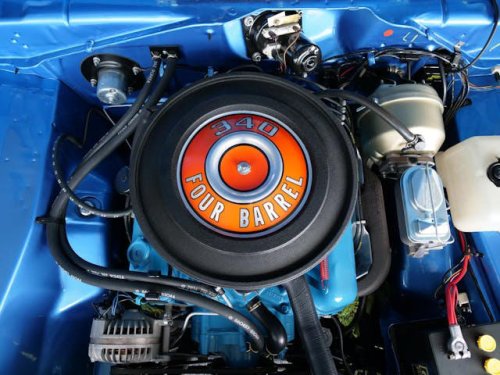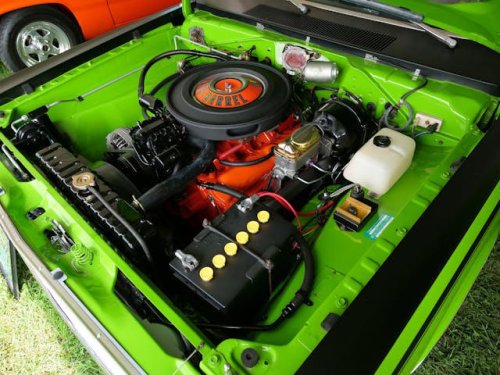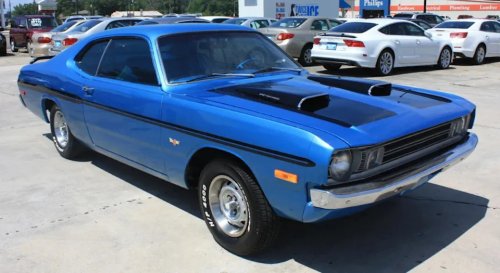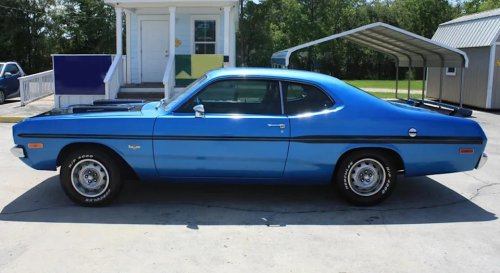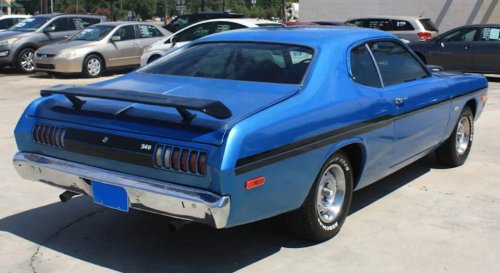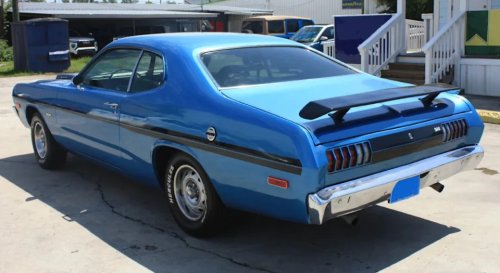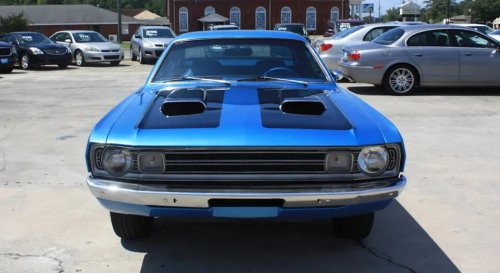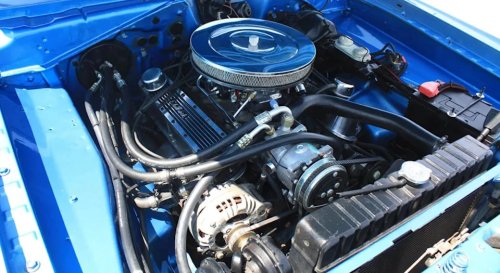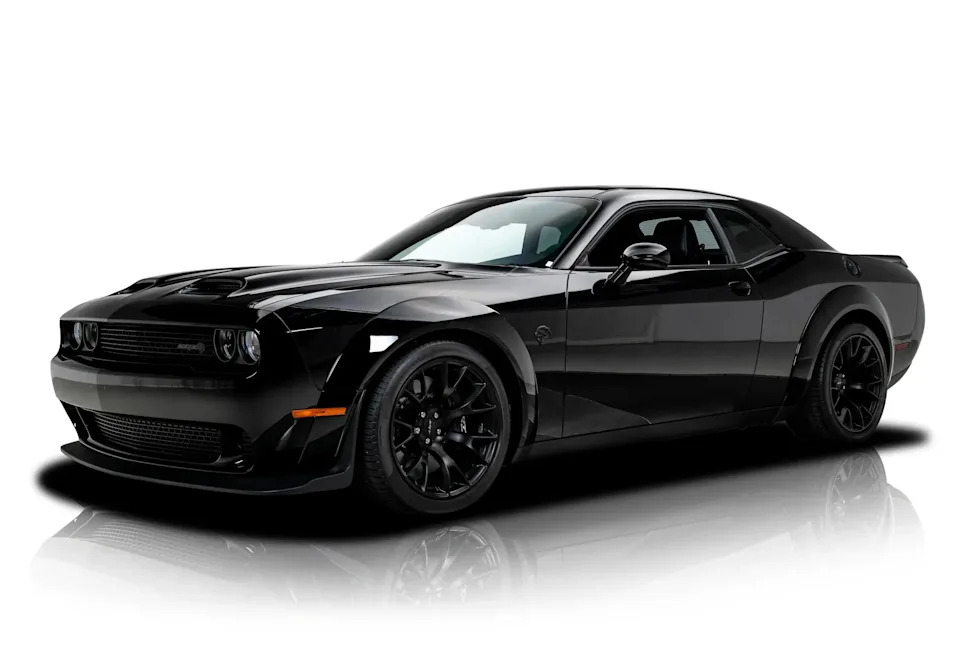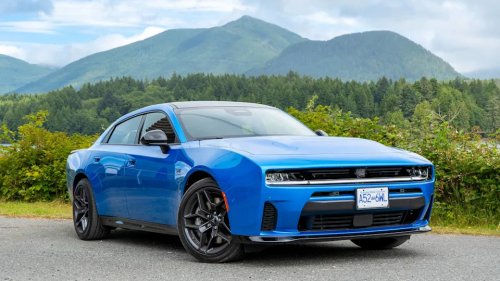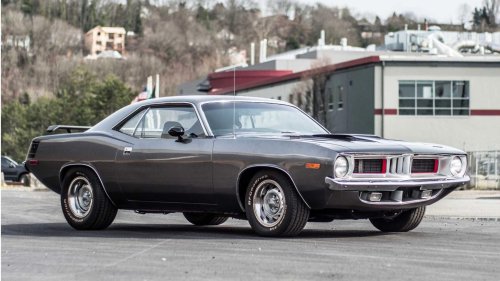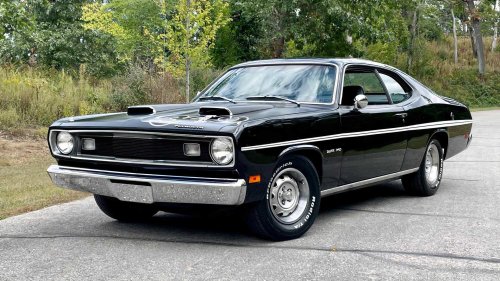
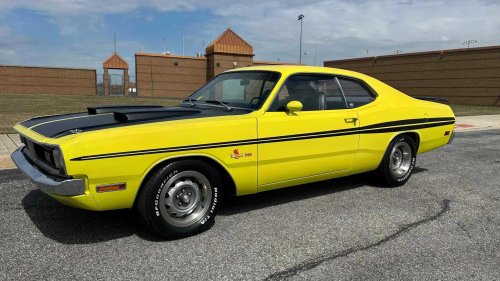
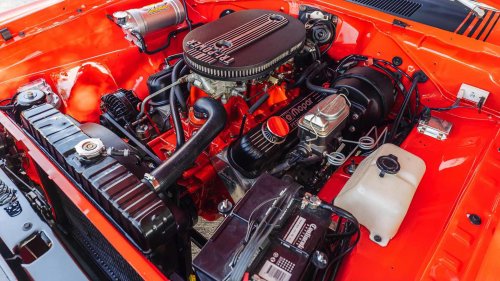
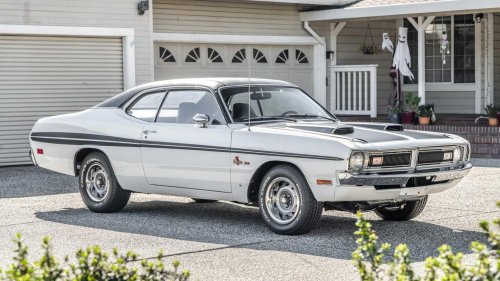



















Say what you will about Dodge, but they’ve come up with some of the most badass names ever given to an automobile. Nowadays, we associate its most aggressive nomenclature with the drag package applied to Charger and Challenger Hellcats. You know, the ones that made sub ten-second quarter mile times seem routine. But these semi-modern Dodges aren’t the first of the breed. To find the source, you need to travel back to the golden age of the muscle car wars, the early 1970s. The A Platform: Mopar’s Foundation for the Ultimate Compact Muscle Car Mecum Compared to the rest of the world, the American compact segment of the 1960s would have been positively massive. But in the US, where huge interstates stretch across more land than the locals know what to do with, they were still considerably smaller than what was considered a mid-size platform. Chrysler’s A platform reflected this, constituting Mopar’s foray into the entry level market of the period.Hitting the scene in 1960 and exclusive to Dodge and Plymouth, development began as far back as 1957. Back then, Mopar aspired for something markedly un-Mopar-sounding, a rear-engine compact platform they could use to compete with Volkswagen. This ambition faltered after Ford heard ofGM’s mighty struggles with the Corvair over the notorious Detroit grape vine.Ultimately, the A-platform wound up being more conventional, turning into the perfect platform for one of Dodge’s under-the-radar greatest hits of the first muscle car era, the Dart. It’d take a bit of time for the Dart and the A platform to get acquainted. The model started as a full-size car in 1960 before switching to the mid-size B platform in 1962, and only landed on the A long-term in 1963. From there, the Dart and the A would be joined at the hip for nearly the next two decades. The Dart: America’s Compact Sport Coupe in the Making MecumWhen the Dart and the A body finally met, it was because Dodge decided that “Lancer”, the name given to their prior line of compacts, wasn’t suitable for the longer wheelbase of the new one. It was certainly more aggressive-sounding, almost like a weapon in a time before that was an acceptable way for an OEM to name a car. Of course, Dodge had a habit of pushing boundaries with nomenclature. Charger, Challenger, Super Bee, the Dude pickup truck, they were all named precisely because rebellious youth saw themselves in the names.Well, the name might’ve been wicked, but it’d take a little time before the performance side of things arrived as well. The largest engine you could buy in a third-generation Dart was a 273-cubic-inch V8. There were no 318s, no 383s, and definitely no HEMIs. But when the time came for Dodge to design the fourth-generation Dart, the company decided to pivot from a strict family-hauling compact to something bolder, and oftentimes, much, much faster.The Gen-IV Dart maintained its compact A platform architecture, with a great deal of commonality between itself and other Mopars, most notably, the Plymouth Barracuda. Its 111-inch wheelbase was paltry for the time, and that gave the Dart an advantage that almost no other American car could match. It was nimble, it was agile, and above all, it was rear-wheel drive, typically with three or four on the floor. Everything needed was there to make a world-class sports coupe by any standard, but an even better muscle car. Dodge Demon: Evocatively Named, Sinfully Fast via Bring A TrailerBy the early 1970s, Dodge was ready to take its already controversial naming scheme to another level of blasphemy. In the end, that was probably more of a hindrance than an assistant. But the results of what Mopar came up with can’t be denied. Using a 108-inch wheelbase A platform variant shared with the Dart Sport, the car was originally slated to be called the Beaver. That was, until Mopar learned that word was CB radio slang for, well, something else entirely.Suddenly, the Demon name didn’t sound quite so controversial. Far from just a name swap, the Demon had different body lines that were aggressive and cut low where the trunk and rooflines meet. In trueCoke bottle fashion, the lines were smooth, curved, and swooping in the best way possible. Add fender flares, blacked-out hood stripes, twin hood scoops for ‘71, a rear “Go-Wing” spoiler, and a pinched waist behind the doors, and the Demon oozed machismo.Late in the 1971 model year, the spoiler was altered into the more contoured “Gull-Wing” configuration. How much this changed aerodynamics is anyone’s guess. But by 1972, the spoiler option became exclusive to the dealer-side catalog. The front hood scoop was changed to a single snorkel style unit as well. Iconic colors like Plum Crazy Metallic, Top Banana, Green Go, Hemi Orange, and B5 Blue made the ‘71 Demon instantly recognizable. For 1972, new colors like Dark Gold Poly and Black Diamond would eventually become sought-after collectibles. The 340 V8: An Absolute Giant Killer via Bring A TrailerContrary to the case today, the Demon name didn’t automatically deduce the most powerful Dart variant in the 1970s. Instead, you could option the Coke-bottle body style with everything from a 198 or a 225-cubic-inch slant-six, and a 318-cubic-inch V8 with a two-barrel carburetor. In a vacuum, these were fine engines. But they weren’t sporty cars relative to the aggressive nameplate. That all changed with one engine in particular, the 340-cubic-inch LA V8.At face value, the bare block was the same you’d find in the Dodge Challenger and Dart Swinger, or Plymouth Duster. With a single four-barrel Carter Thermo-Quad carburetor and a dual-plane cast-iron intake, the 340 was rated at 275 horsepower in 1971. A year later, the United States transitioned from measuring gross engine power, rigged up to a dyno stand with open headers, to net power, measured inside the car, wired up as normal. That made power dip to 240 horses.Still, the change was mostly semantics, as the biggest advantage a Demon 340 sported was its nearly unparalleled power-to-weight ratio. Its curb weight, in the ballpark of 3,200 lbs, and 275 horses in 1971 made for a figure of 174 horsepower per ton. That’s more than a Dodge Challenger 383—a car the Dart was supposed to compliment, not compete with. Even compared toexotics like a Porsche 911 S Targa, or a Series III E-Type Jaguar, the Dart was downright quick. Considering the Demon 340 MSRP’d for $2,700, or just over $22,200 in modern money, it was well south of half the price of a European sports coupe. A Performance Package to be Proud Of Bring a TrailerOutside of the engine, an available four-on-the-floor stick-shift gave all the driving feedback you could ask for. For those seeking a more laid-back experience, a TorqueFlite 727 automatic gearbox was also available. Either way, the car came with heavy-duty front torsion bars, beefier rear leaf springs, front-wheel disc brakes, and a Sure-Grip limited-slip differential. It helped these Demons handle far better than they’re given credit for, but its prowess was best reserved for drag racing.In the modern day, these 340 LA motors are popular with hot rodders and tuners who add items like a stroker kit. Folks commonly swap out the heavy cast iron intake for modern aluminum replacements. But in stock form, a Demon 340 sprinted to 60 in between six and 6.5 seconds, and can cross the quarter mile in roughly 14.4 seconds at 98 mph.In total, 18,798 Dodge Demon 340s were built in 1971 and 1972. After that, pressure from public interest groups, often with deep religious affiliations, advocated for Chrysler Corporation to drop the name, citing what they accused of being openly blasphemous. Evidently, marketing slogans like "Dodge's new Demon brings out the Devil in you," were still just a bit too edgy for early '70s America. Among those produced, as few as 10% of them survive. That means when a well-preserved low-mileage example comes down the auction block, it’s bound to sell for at least six figures.Source: Bring a Trailer, Classic.com