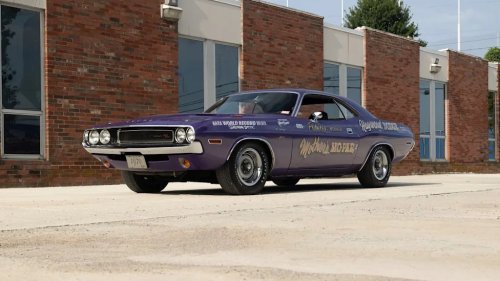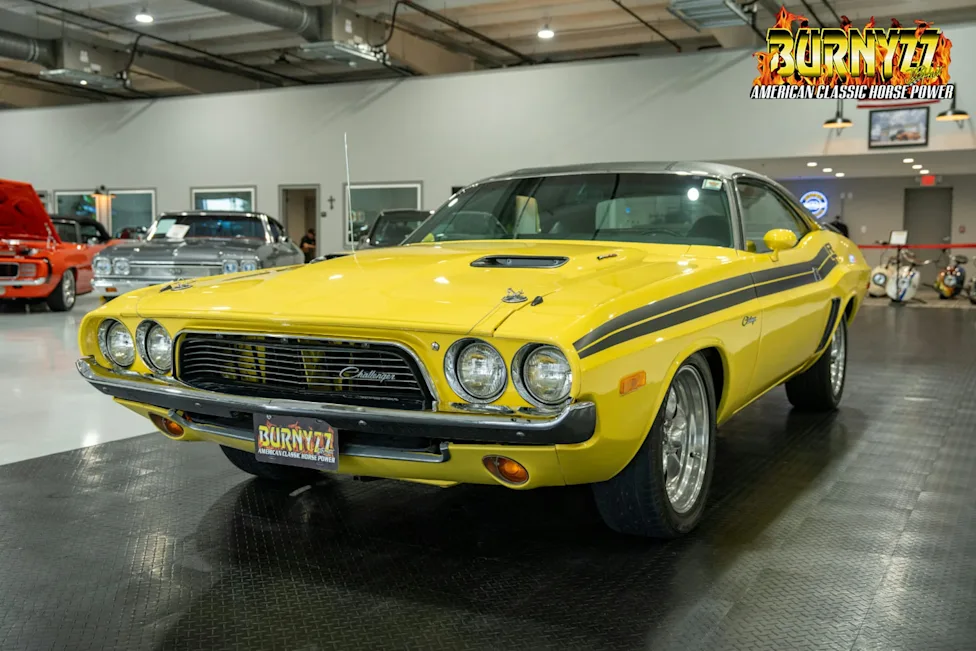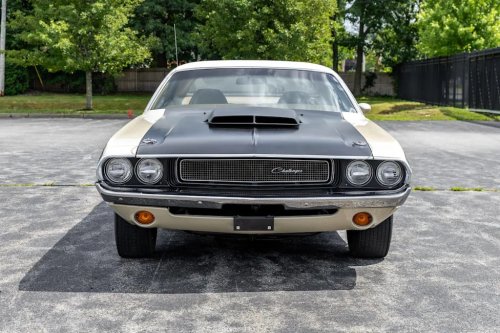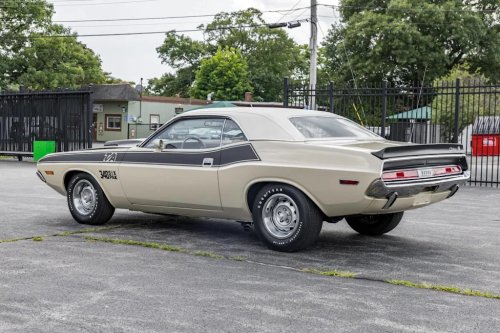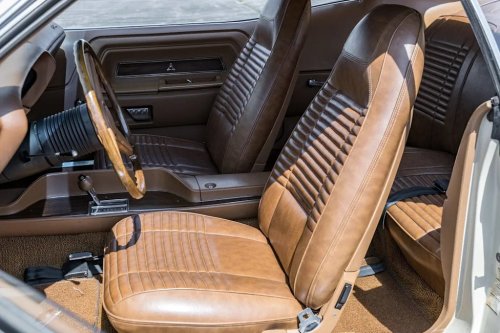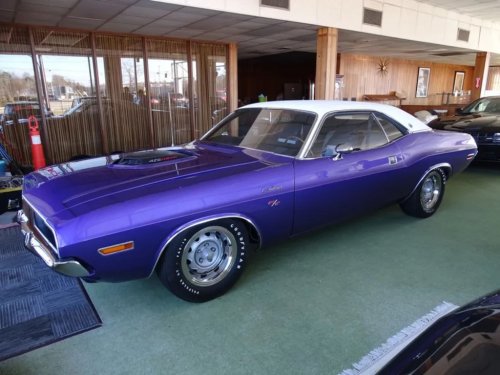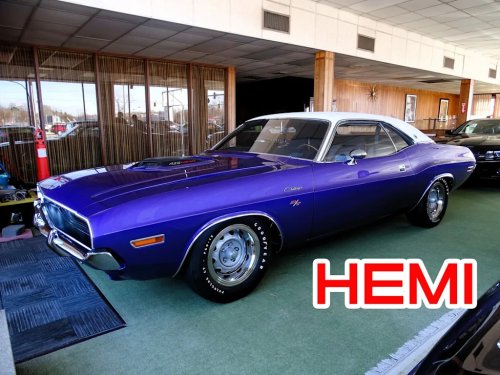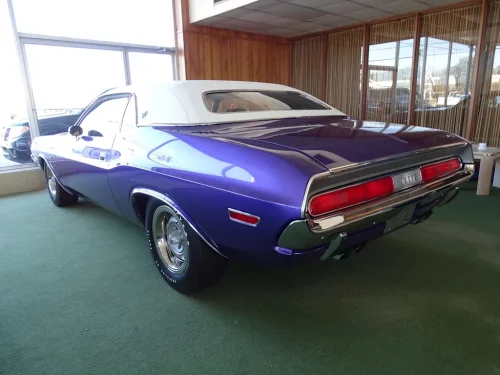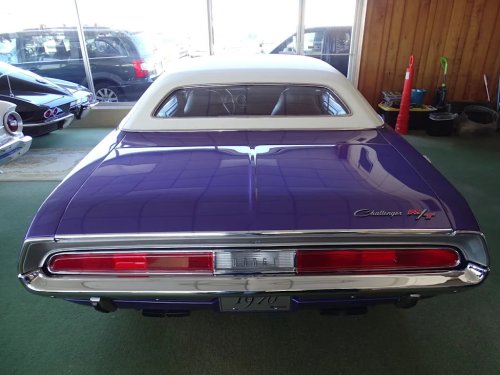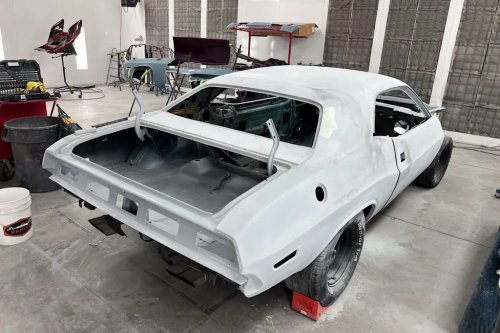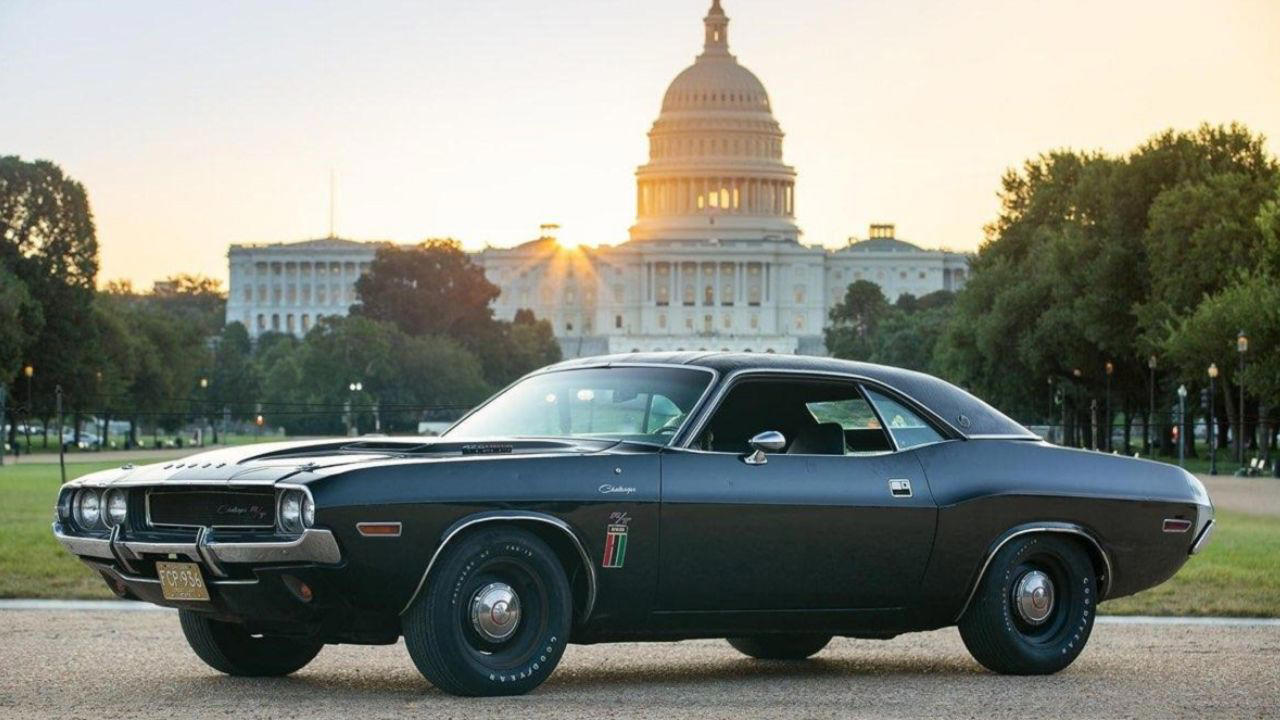













The legend of the Black GhostAny good drag racing story is filled with bombastic details and crazy police chases, but the Black Ghost's story is unique in the air of mystery that surrounded it for decades. As the legends go, the black Challenger would roll up on popular Detroit street racing locations like Woodward Avenue or Telegraph Road, taking down a number of challengers in illegal drag races before speeding off. Other racers would often gather at local burger joints to discuss cars and the night's races, but the driver of the Black Ghost remained an enigma, choosing to go his own way.The mysterious status of the driver was heightened because the Black Ghost showed up to race so infrequently. According to the legend, the Challenger would disappear for weeks or months at a time, only to dominate a night of racing before vanishing into the darkness once again. It also never seemed to be there when police showed up to bust the groups of racers, adding to the mystique of the uncatchable, unbeatable Black Ghost.Just as suddenly as it appeared on the Detroit racing scene in 1970, the Black Ghost disappeared after 1975. There was no fanfare, no retirement. The car that couldn't lose simply stopped showing up. After months had passed, it was clear that the run of the Black Ghost had come to an end.Godfrey Qualls: The Man Behind the Wheel of the Black GhostIt turns out there was a pretty good reason the driver of the "Black Ghost" had to remain incognito. Godfrey Qualls, known to his friends as GQ, was recognized in his neighborhood as many things, but street racing legend wasn't one of them. He was a veteran who served in the Army's 82nd Airborne Division, where he completed 300 jumps as a paratrooper and returned to the United States with a Purple Heart. He was also a part of the Detroit police force, where he was a motorcycle cop and, outside of his job, a motorcycle enthusiast who maintained a small collection of bikes.Obviously, his position with the Detroit Police Department made anonymity a priority during Qualls's time spent street racing –- although it does provide an explanation as to why he was never caught by the cops while he was participating in the action. It also says a lot about the man that he chose to retire from his passion when his family began to grow.Qualls's younger brother, Cleolous "Cle" Qualls, also served in the Army. When he got out, Cle went to the same Raynal Brothers Dodge that his brother would. There, he bought a 1968 Charger R/T, black with a bumble bee stripe and a 440 V-8. Their father was also a Mopar guy, the owner of a black and pink 1955 Dodge Custom Royal with a 270 Super Red Ram V8.Growing up with the Black GhostIn 2014, an aging GQ Qualls invited his son, Gregory, to his garage in Detroit. By this time, GQ had survived a 2008 battle with cancer. That was when he revealed the Challenger, which was buried in the garage under some boxes and blankets. Gregory remembered the car from his childhood and recounted eating dinner one evening when his dad started the car -– which had the mufflers removed –- and it shook the whole house. Another time, GQ put Gregory in the passenger seat of the car with a hundred-dollar bill taped on the dash. GQ told Gregory he could have the hundred if he could grab it and proceeded to hit the gas whenever the kid reached for the bill, throwing him back in his seat.When cancer attacked GQ again, Qualls asked his son to get the title for his Challenger and signed it over. He either never wanted his son to know about his street racing life, or he never got the chance to tell him the stories. Godfrey Qualls passed away on Christmas Eve in 2015. Gregory Qualls knew the car was special to his dad, but it was never treated like a collector's item –- Gregory recounted several dents he'd made on the Challenger's door with his bike handles, and without any context, he just knew it as his dad's loud car.This all changed once Gregory got the Black Ghost up and running.A resurgence in popularityThe story of the Black Ghost was never forgotten, especially around Detroit, but the tale was brought to national attention in 2017 when Gregory Qualls showed the car in Rosemont, Illinois, at that year's Muscle Car and Corvette Nationals event. Gregory had shown the car at some smaller shows before that, in the process learning from Detroit locals who knew the car and the legends surrounding it. That's how Gregory learned about his old man's adventures building the street racing legend of that unique Challenger –- not from Godfrey himself, but from other racers who witnessed the Black Ghost in action.Gregory went on to show the car several times at shows all over the country, gaining notoriety for the vehicle and, in the process, getting Godfrey "GQ" Qualls the recognition his son felt his dad deserved. Gregory even got to present the Black Ghost as part of the Woodward Dream Cruise, the nation's largest one-day automotive event –- which happens to take place on the same street on which GQ raced over sixty years ago.An appearance at Detroit's Autorama show in 2018 led to more stories about GQ, as well as an invite to the Carlisle Chrysler Nationals later that year. A chance meeting at that event would lead to the Black Ghost becoming an official part of American automotive history.Controversy surrounding the Qualls ChallengerSeveral naysayers have come forward since the Black Ghost achieved mainstream attention following its 2017 Muscle Car and Corvette Nationals showing, growing even louder when it was announced that the car was going to be auctioned off. Some say the car couldn't possibly have contended with other street racers of the time, while others are angry that Gregory Qualls would have considered selling his dad's car at all.Claims that this particular Challenger couldn't have terrorized the streets of Detroit over a half-century ago abound, with negative comments on nearly every article or video featuring the Black Ghost. Many point out that a stock 1970 Challenger, even one with the most powerful Hemi engine that was available for it at the time, wouldn't have stood a chance against some of the other well-known cars in Detroit's legendary street racing scene.However, some new information may be forthcoming in that area. The new owner of the Black Ghost sent the car to Virginia, where it will be restored using only original parts to maintain its survivor car status. When he began working on it, shop owner Frank Badalson mentioned that there were indications that the 426 Hemi had been modified at some point with headers, fuel system upgrades, an aftermarket camshaft, aftermarket valve springs and lifters, and an aftermarket ignition system.An observation like that, provided by a professional with hundreds of Mopar rebuilds under his belt, might be enough to make someone believe in ghosts.