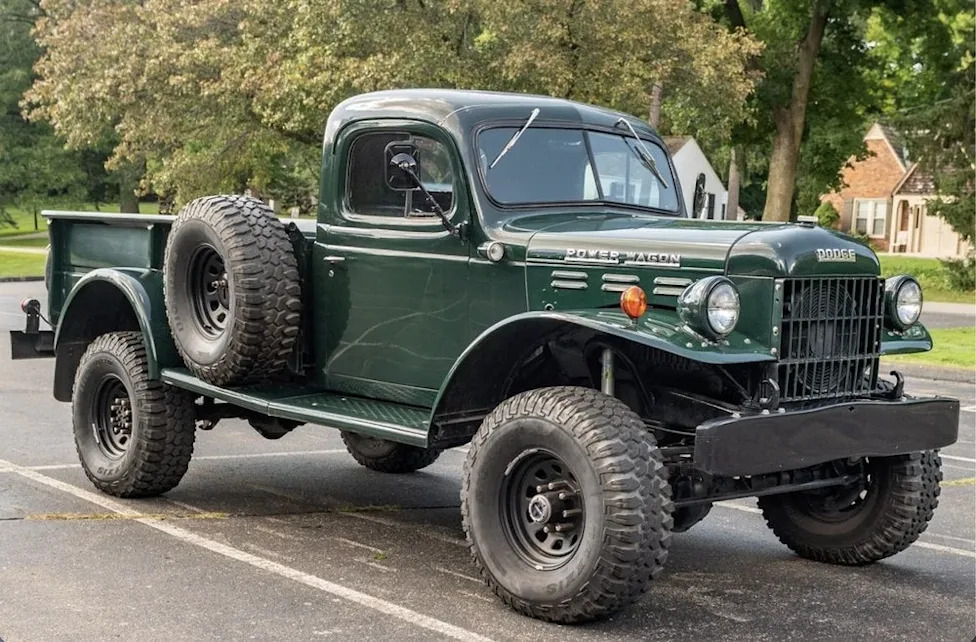
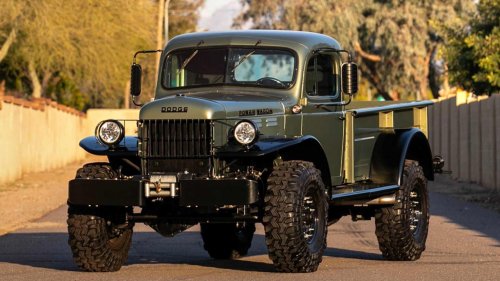
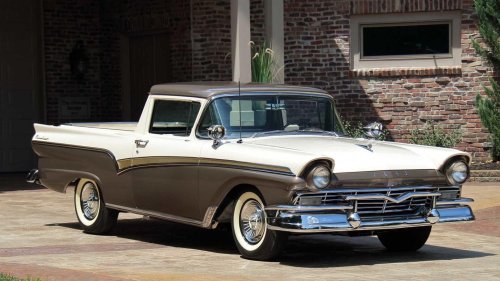
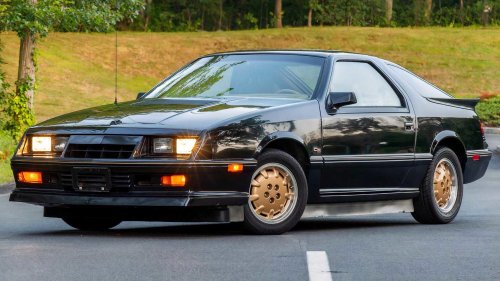
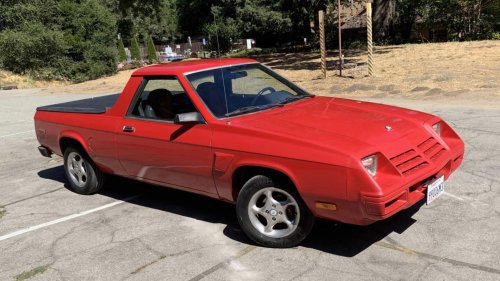
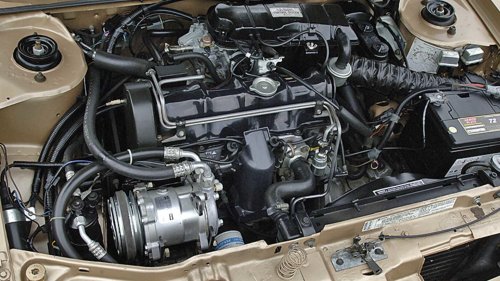
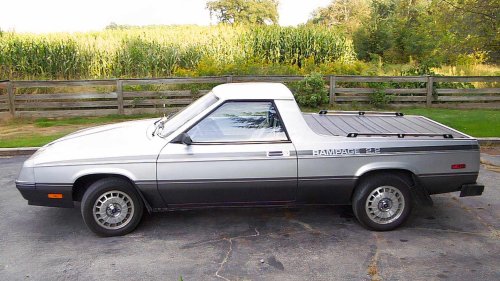
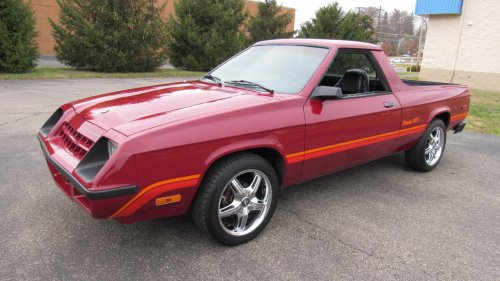
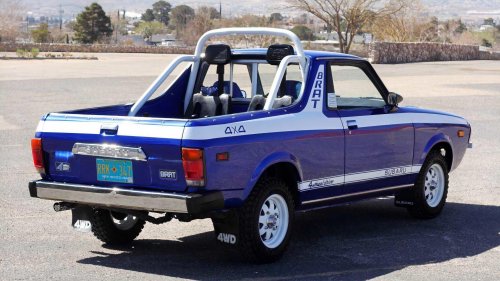
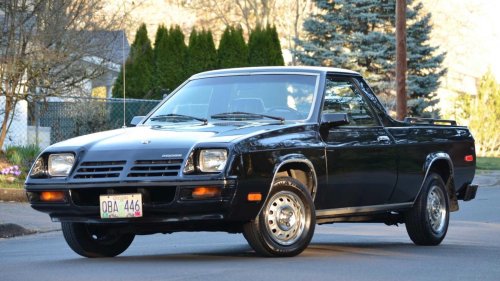
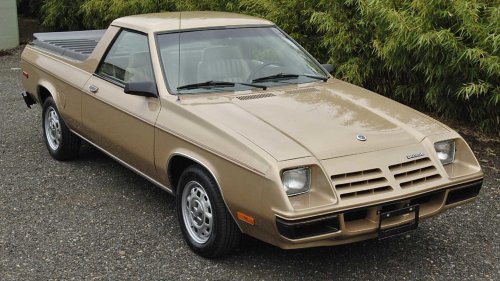
Dodge pickups have always been at the forefront of innovation as the first to be equipped with four-wheel-drive as well as the first with a diesel engine, which are the two most important components of the segment. They have also been the fastest, from the 1964 Custom Sports Special muscle truck with a 426 cubic-inch Wedge V-8 to the wicked exhaust stacks of the 1978 Li'l Red Express, which could smoke a Chevy Corvette that year. For generations, Dodge has built some of the best and most memorable trucks, which is why they have a rabid fanbase.More recently, the gorgeous design of the Ram trucks has proven that pickups can be artistic masterpieces and the 777 horsepower of the 2027 1500 SRT TRX shows that they can be factory drag vehicles as well. It's been 16 years since the Ram became its own brand, but hardcore fans still call them Dodges because that's what they are at heart. Mopar diehards can tell you how many D100 Dudes were made (about 2,000) or that the Dakota was the only compact truck with a V-8, but there's one Dodge pickup from the 1980s that is forgotten by nearly all. Dodge Pickups Helped Build This Country And Win WWII Mecum U.S. troops' selfless sacrifice and effort during WWII was made a little easier based on the strength and reliability of Dodge trucks. 4x4 as well as 6x6 Dodge workhorses delivered weapons and supplies, while getting combatants into positions not possible with any other military vehicles. The WC-series trucks were so amazing that after the war Dodge repurposed them for civilian use as the legendary Power Wagon. Introduced in 1946, the Power Wagon was a four-wheel-drive monster with a 230 cubic-inch Flathead I6 and four-speed featuring an ultra-low granny first gear, two-speed transfer case, and low axle ratios that could crawl over any terrain. With a 3,000-pound payload and 10,000-pound towing capacity, the Power Wagon was the truck for doing serious work, and really helped build this country up in the post-war era. The Long Forgotten Coupé Utility Mecum In the early 1930s an Australian farmer sent a letter to Ford asking for, "a vehicle to go to church in on a Sunday and which can carry our pigs to market on Mondays," which the automaker responded with, what was essentially a '32 Ford with a small truck bed. Known as a coupé utility, or car/truck if you will, this weird segment caught on Down Under, but despite the short-lived 1937-1939 Studebaker Coupe Express, wasn't very popular in the States. Then, in 1957, Ford revisited the idea and created the Ranchero, which was a Fairlane wagon gutted to form a bed. Finally, the coupé utility resonated with American buyers and Chevy soon followed suit with the 1959 El Camino. Despite big sales numbers and production that stretched into the 1980s, both of these car/trucks are nearly forgotten, as well as the coupé utility segment as a whole. Chrysler K Cars Get L Platformed Bring a Trailer Gen-Xers mostly remember the Chrysler K-Cars from the TV ads starring Ricardo Montalbán, who was Mr. Roarke from Fantasy Island, touting the "rich Corinthian leather" of the Cordoba. Despite single-handedly saving the Chrysler Corporation, the K platform rides were super boring and the automaker wanted to bring back some performance and excitement, so the L platform was developed. The L-Platform was for compact, front-wheel-drive vehicles, which included the underrated Dodge Omni and fifth-gen Charger, both of which had screaming street machine versions. This compact FWD platform seems the least likely to ever serve as the foundation for a pickup, but Dodge actually made it happen, and it was cooler than most people could have imagined. Dodge Goes On A Rampage In 1982 Bring a Trailer Compact pickups, like the iconic Toyota Hilux, which was just known as the Toyota Truck in the U.S., were all the rage in the 1980s, and Dodge looked to grab a piece of that with the 1982 Rampage. Arguably the coolest vehicle name ever, it was kind of misleading because the small front-wheel-drive coupé utility didn't look like it was capable of getting Medieval on anyone's backside. From the front bumper to just behind the front seats, it was an Omni 042/Charger, but after that it was nothing but 59.5 inches of truck bed. While not as intimidating as its name would suggest, it had that awesome '80s sports car style in the front and utility function in the back, so it was kind of like a reverse automotive mullet. Dodge Rampage Engine Specs Initially equipped with a three-speed automatic, for 1983 it got a four-speed manual transmission that radically improved both the performance and overall drivability of the Rampage. Those trannies were mated to a 2.2-liter carbureted inline four-cylinder that made anywhere from 84 to 99 horsepower, none of which was rampaging. Carroll Shelby got the 1986 Charger GLHS up to 175 ponies with a turbocharged version of the I4, and it would have been cool for him to get his hands on the Rampage, but it never happened. Ultimately, the Rampage wasn't supposed to be a performance ride, but rather a utilitarian vehicle that could work like a pickup, but drive like a car, and it did just that. Rampage Power, Performance, and Capabilities Bring a TrailerAs we mentioned, the Rampage had a 2.2-liter I4 that produced between 84 and 99 horsepower, as well as 119 pound-feet of torque no matter what the pony-count was. None of these variants were particularly mind-blowing, but the Rampage was relatively light with a curb weight of around 2,500, so it had a decent power-to-weight ratio. Still, its 11-ish second 0-60 acceleration wasn't anything to write home about, and its quarter-mile ETs in the high 17s weren't anything to brag about. Again, this wasn't supposed to be a street racer, and its 1,145-pound payload capacity qualified it as a half-ton pickup, which was close to the capabilities of the much larger El Caminos and Rancheros. Rampage’s Direct Connection To Carroll Shelby E is for Ian/Wikimedia Commons There were rumors that Carroll Shelby, who made the Mustang great and killed Ferrari in the 24 Hours of Le Mans, was going to work his magic on the Rampage, like he did with the Dodge Omni, Charger, and Dakota pickup, but sadly that never actually happened. There is, however, still a connection between Shelby and the Rampage and that's the 1984 "Direct Connection" Rampage that used many Shelby body and suspension components from the Shelby Dodge builds. This was a California exclusive, limited to just 250 units and, sorry, we couldn't actually find a usable picture of one, because it is so rare, so we settled in with a side view of an '84. Unfortunately, the Direct Connection Rampages, which many mistakenly call Shelby Rampages, didn't get a performance upgrade, but it is still a very rare and cool Mopar. The Less Rampaging Plymouth Scamp Bring a TrailerHow things generally worked at Chrysler was that Dodge would develop a vehicle and then Plymouth would eventually get their own version of it. The rare example of it working the other way was the bare-bones Plymouth Road Runner, which was a literal runaway success that Dodge wanted to emulate with the Super Bee. For the Rampage, Plymouth got the hand-me-down Scamp in 1983 that was identical in every way but maybe had slightly cooler stripes and wheels. The Scamp was discontinued after one model year, and with only 3,564 units sold, it was more like a one-hit blunder, than wonder. Plymouth, which had a sporadic history with trucks, would get out of the pickup business for good with the Scamp fiasco. Chasing the Subaru BRAT Bring a Trailer Rather than challenging the Toyota Hilux compact truck, Dodge was going after the Subaru BRAT coupé utility, with the Rampage. The problem was, they didn't tap into what made the BRAT successful. The BRAT, which hilariously stood for Bi-Drive Recreational All-Terrain Transporter, was all-wheel drive and had decent ground clearance. It made for a great ranch vehicle, as well as a weekend toy for off-roading adventure. The Rampage was way too street-centric, limiting its appeal and function. Sure, it was a good light-work pickup for contractors who wanted better gas mileage, but anything off the paved surface was out of the question. Also, it didn't have the cool plastic jump seats of the Subaru, which made the BRAT a Japanese import legend. Short Story Arc of the Rampage Mecum The Dodge Rampage lasted just three model years, from its debut in 1982 to its discontinuation in 1984. In its first year, only 17,636 buyers took the bait and that dropped off to 8,033 units, so the writing was on the wall that this thing wasn't going to happen. With a three-year total of 37,401, that wouldn't have been a good one-year production number, so Dodge wisely pulled the plug on it. The thing is, the Rampage had so much potential, it just never got realized. If they had a turbo 4WD version, it would have sold like hotcakes and, for the record, we have no idea what that expression really means. The point is, with a little more effort and capabilities, the Dodge Rampage could have been a contender, and we know for a fact that the last one is a reference to Terry Malloy, played by Marlon Brando in the 1954 film On The Waterfront. Dodge Rampage Values And Prices Bring a Trailer Because the Dodge Rampage was produced in such small numbers and is so obscure, it's kind of hard to get a bead on how much it's actually worth. Bring a Trailer has sold exactly three with prices ranging from $3,000 to $6,500 for the 40k-mile perfection condition gold '83 pictured above in 2018. These are even scarcer at Mecum auction, with only one listing for an '83 that was touted as a "rare example" but no explanation as to why that sold for $4,125 in 2019.J.D. Power actually thinks much less of the Rampage with an average retail price of $2,300 for an '82 and $2,375 for an '84. At these prices, the Rampage represents a great base for a custom project like maybe a lifted 4x4 with a Hemi that would absolutely blow away Mopar diehards and pretty much everyone else. The only issue may be finding one.Sources: Bring a Trailer, J.D. Power, Mecum















 +69 others