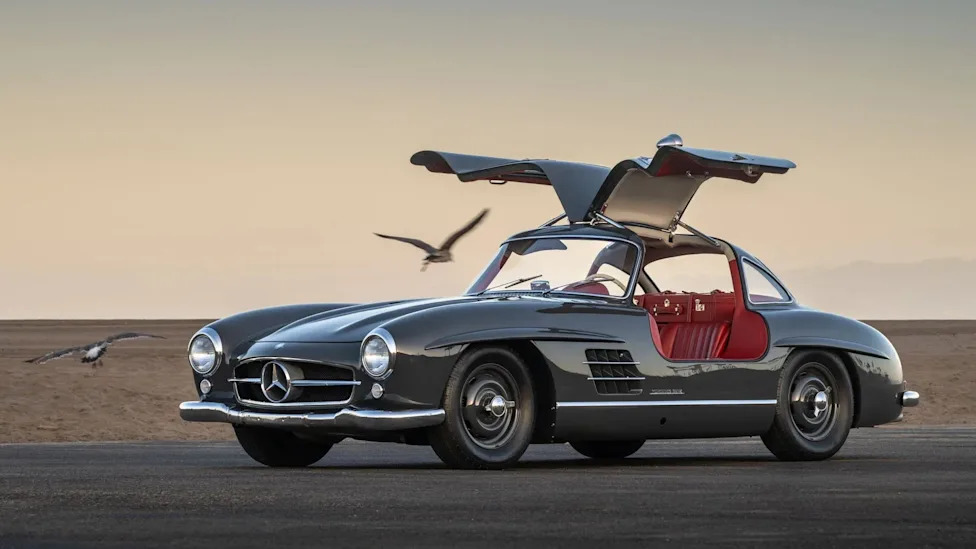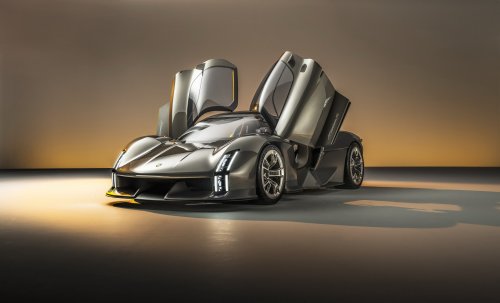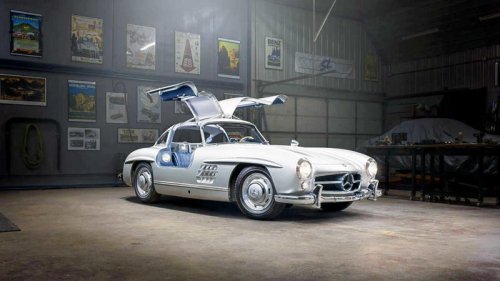
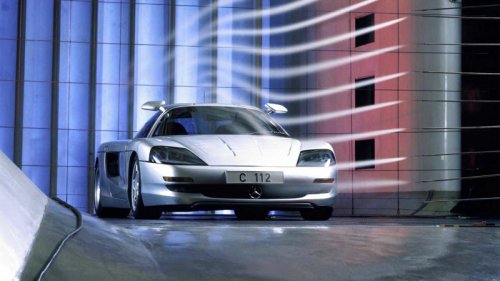
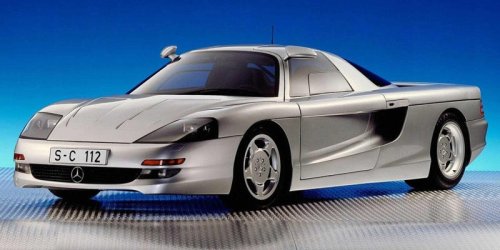
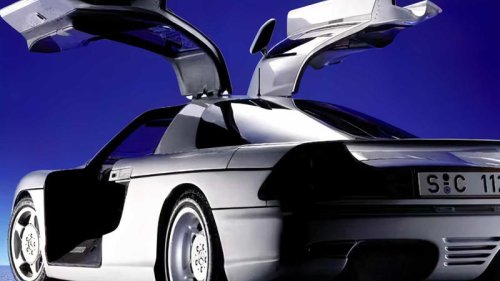
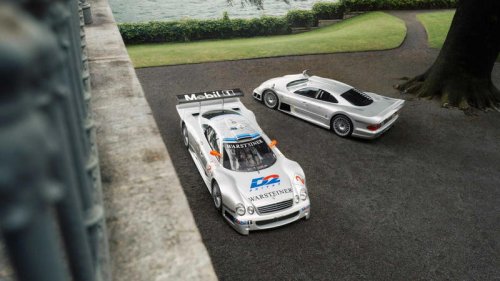
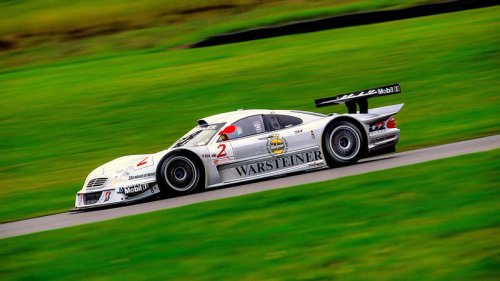


















Mercedes-Benz has a long history of pushing engineering limits and reshaping the market in the process. But not everything the company built made it to the production line. Looking back at the brand's history, the pattern is clear: a safe game built on luxury sedans, grand tourers, and the occasional monster from the AMG division. But during the early 1990s, fresh off back-to-back World Sportscar Championship wins with Sauber, Mercedes engineers built something completely out of character in the form of a mid-engined, V12-powered supercar with gullwing doors and technology that was a full decade ahead of anything else on the market.It is considered one of the greatest what-ifs in automotive history. The car was fully engineered, completely functional, and in high enough demand that it would have sold immediately as a limited edition. It packed more horsepower than a Ferrari 348, more technology than a Porsche 959, and a chassis inspired directly by Le Mans-winning race cars. Its innovations went on to shape Mercedes' flagship models for the next three decades, and its engine ended up powering some of the most celebrated supercars ever built. Mercedes Built A Supercar In 1991 And Almost Nobody Remembers It Via Bring a Trailer The car was a mid-engined, V12-powered experimental supercar unveiled at the 1991 Frankfurt Motor Show, named the Mercedes-Benz C112. It was the first three-pointed star to feature gullwing doors since the legendary 300 SL of the 1950s, and the first time the company had attempted anything resembling a supercar since pulling the 300 SL from the production line in 1963. The C112 was born directly from Mercedes' Group C racing program, the back-to-back championship-winning partnership with Sauber that produced the C9 and C11 Le Mans prototypes. Designed by the legendary Bruno Sacco and built by Italian coach builder Carrozzeria Coggiola on a chassis supplied by Mercedes, the C112 was a fully functional prototype that the brand seriously considered putting into production. For a moment in 1991, Mercedes was on the verge of becoming a supercar maker, and then it walked away. A Group C Race Car For The Road Mercedes Benz The C112's chassis was built like a miniature Le Mans prototype, not a road car with racing pretensions. At its core was a riveted and bonded aluminum monocoque on a 2,700mm wheelbase, weighing just 130 lbs on its own. It was reinforced with aluminum sub-frames for the doors and roof, plus a removable steel rear sub-frame that carried the suspension and doubled as a built-in roll cage, a direct carryover from the Group C design philosophy. Multi-link suspension followed a double-wishbone pattern at all four corners, and ventilated steel discs with four-piston Brembo calipers provided the stopping power. The brakes were even larger than those fitted to the heavyweight W140 S-Class. This was not a luxury car dressed up as a sports car. It was a race-bred chassis wrapped in road-going bodywork. A 408 HP V12 And Gullwing Doors At the heart of the C112 was the brand-new Mercedes M120 V12, the first twelve-cylinder engine Mercedes had built since World War II. It produced 408 horsepower at 5,200 rpm and 427 lb-ft of torque at 3,800 rpm. Because nothing suitable existed off the shelf, Mercedes developed an entirely new six-speed manual gearbox specifically for the C112. The result was a claimed 0-62 mph time of 4.9 seconds and a top speed of 192 mph. For context, a Ferrari 348 made 300 horsepower in 1991, and a Porsche 911 Turbo made 320 horsepower. The C112 outgunned both.Visually, the C112 announced itself with the return of Mercedes' most iconic design feature: gullwing doors. Bruno Sacco's design rejected the era's ubiquitous pop-up headlights in favor of covered units to preserve aerodynamic stability. Wing mirrors were mounted high on the A-pillars to reduce drag. The overall shape echoed the Group C prototypes, with enormous flank-mounted air scoops, Kevlar venturi tunnels integrated into the rear, and a silhouette that looked more like a Le Mans car than anything wearing a three-pointed star. Back in 1991, it looked like it had arrived from the future. The C112 Was A Rolling Laboratory Of Future Tech Via Mercedes-Benz What truly set the C112 apart from every other supercar of its era was not raw speed. It was the sheer density of technology packed under its skin. Mercedes did not just build a fast car. They built a test bed for systems that were nearly a decade ahead of anything available on the market. The C112 featured active suspension, active aerodynamics, rear-wheel steering, traction control, tire pressure monitoring, and a distance-sensing radar, technology that would take years to trickle into Mercedes production models and even longer for the rest of the industry to adopt. The C112 was not trying to compete with the Ferrari F40 or the Porsche 959 at straight-line speed alone. It was trying to redefine what a supercar could be. The First Car Ever With Active Body Control Suspension The C112's most significant innovation was Active Body Control, a hydraulic active suspension system that had never been fitted to any production or concept car before. Each wheel was equipped with a spring paired with a hydraulic servo cylinder. Sensors detected all vehicle motions, including vertical displacement, roll, and pitch, and the system compensated in real time. The result was a car with virtually zero body roll regardless of speed or cornering force. Active Body Control later entered production on the 1999 CL-Class, became standard across the S-Class and SL-Class, evolved into Magic Body Control with road-scanning cameras on the W222 S-Class in 2013, and became E-Active Body Control on the GLE in 2019. Every active suspension system in a modern Mercedes traces its lineage directly back to this concept car. Active Aero, Rear-Wheel Steering, And A 0.30 Drag Coefficient The aerodynamics of the C112 were equally advanced. Hydraulic front and rear spoilers activated simultaneously when the ECU detected the tires were losing grip, increasing down force on demand. In an emergency braking situation, the rear wing automatically snapped to 45 degrees, tripling the car's aerodynamic drag from 0.30 to 0.90 and acting as a massive air brake, a concept Bugatti would later make famous on the Veyron. At its top speed of 192 mph, the C112 generated 2,200 lbs of down force. The car also featured electronically controlled rear-wheel steering, traction control, and a distance-sensing radar that was an early ancestor of modern adaptive cruise control. Its drag coefficient of 0.30 was the lowest of any sports car at the time, achieved while simultaneously being the most technologically sophisticated car in its class. More Than 700 Orders Came In And Mercedes Still Said No Mercedes-BenzWhen Mercedes pulled the covers off the C112 at the 1991 Frankfurt Motor Show, the response was immediate. Over 700 buyers expressed firm interest in purchasing one. This was not entirely surprising. Mercedes had seen the same thing happen with the C111 concepts in 1969 and 1970, when customers lined up to buy those gullwing prototypes only to be turned away. The C112 was supposed to be different. It had been designed with production feasibility in mind, and Mercedes explored manufacturing options, including building it at Sauber's factory in Hinwil, Switzerland. But history repeated itself. The C112 would remain a one-off concept. Why Executives Killed A Car People Were Begging To Buy Mercedes concluded it did not need a halo car. Executives determined that the company's motorsports program was already generating all the brand prestige it required. The Sauber-Mercedes partnership was winning championships, and the upcoming return to Formula One, which materialized in 1994, was seen as a more efficient use of resources. Building a low-volume, high-cost supercar was considered an unnecessary risk when racing was already doing the job.The timing made the decision even easier. Most major economies were deep in recession when the C112 was unveiled, and Mercedes was simultaneously pouring enormous resources into the over-budget W140 S-Class program. Tightening emissions regulations made it harder to justify a 6.0-liter V12 in a niche car that would generate minimal revenue. The C112 was shelved not because it was not good enough, but because committing to it was too large a leap at the time. In hindsight, those 700 unfilled orders represented a market Mercedes would not address until the CLK GTR arrived six years later. The C112's Tech Legacy Lives On in Every Modern Mercedes Mercedes Benz The C112 never reached a single customer, but its technology ended up in millions of Mercedes-Benz cars and some of the most legendary supercars ever built. Active Body Control debuted in production on the 1999 CL-Class and is now standard across the brand's flagship models. The active aerodynamics concept appeared in the CLK GTR and has since influenced everything from the Bugatti Veyron to modern hypercars. The distance-sensing radar was an early ancestor of the adaptive cruise control systems now standard across the entire automotive industry. The C112 may have been canceled, but the ideas were never abandoned. They just found their way into production through different doors. From Concept to S-Class and CL-Class Production Via Bring a Trailer After shelving the C112, Mercedes continued refining Active Body Control through the 1995 Vario Research Car and the 1996 F200 concept before putting the production-ready version into the CL-Class in 1999. It became standard in every CL-Class, SL-Class, and top-tier S-Class model. In 2013, it evolved into Magic Body Control with road-scanning stereo cameras on the W222 S-Class, technology that could read the road surface ahead and preload the shocks accordingly. By 2019, it had become E-Active Body Control on the GLE, combining 48-volt electro-hydraulics with air suspension. A technology that debuted on a shelved concept car in 1991 is now one of Mercedes' most important engineering differentiators, more than three decades later. The Line from the C112 to the CLK GTR and SLR McLaren Mercedes-Benz The C112's M120 V12 went on to become one of the most celebrated engines in supercar history, just not always in a car wearing a three-pointed star. The engine entered production in the W140 S-Class before AMG developed a race-spec derivative to power the CLK GTR, which won back-to-back FIA GT Championships in 1997 and 1998. The 25 road-legal homologation cars used a 6.9-liter variant producing 612 horsepower. That same engine lineage was then supplied to Horacio Pagani, powering every Zonda from its 1999 debut onward, with later versions exceeding 750 horsepower. The SLR McLaren followed in 2003 as another Mercedes halo car, and the AMG ONE arrived years later as the ultimate expression of the road-going supercar philosophy the C112 first pioneered. Not a bad legacy for a car that was never sold.Sources: Supercar Nostalgia, Supercars.net, Mercedes-Benz, Mercedes-Benz Media Archives