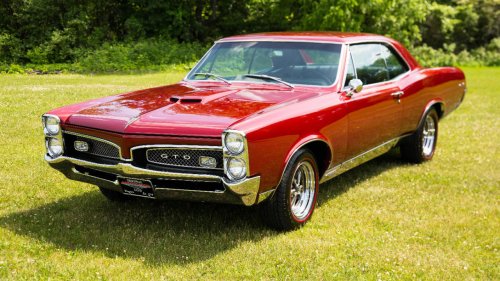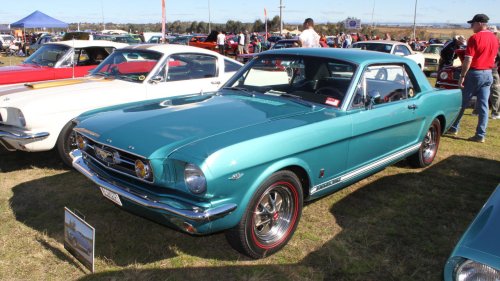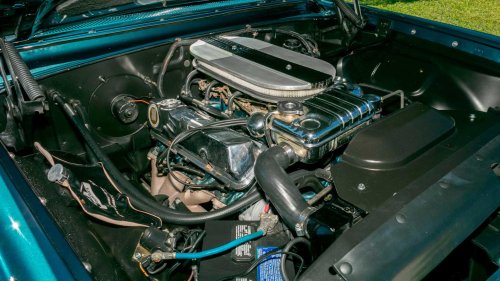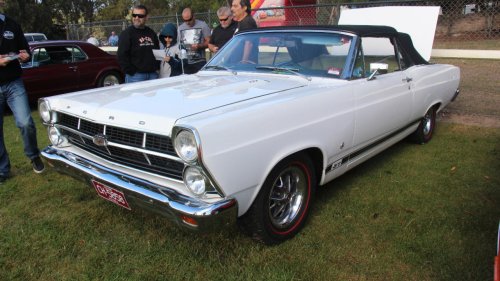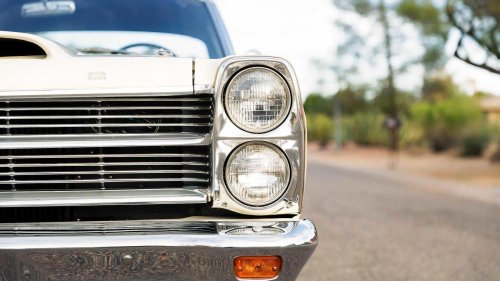
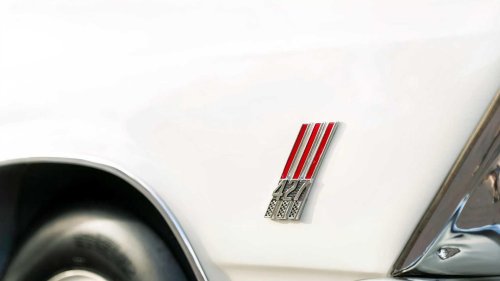
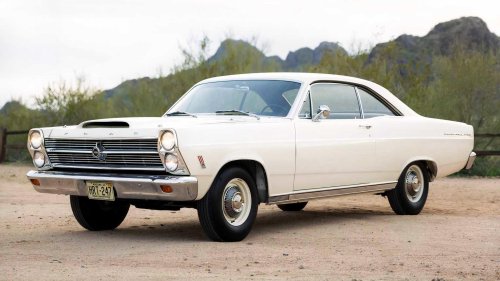
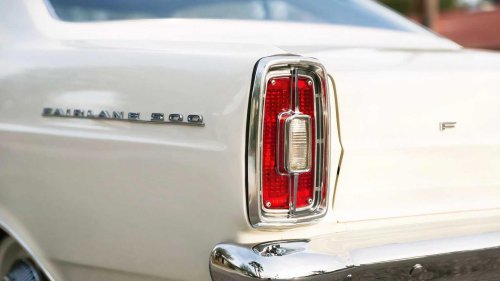
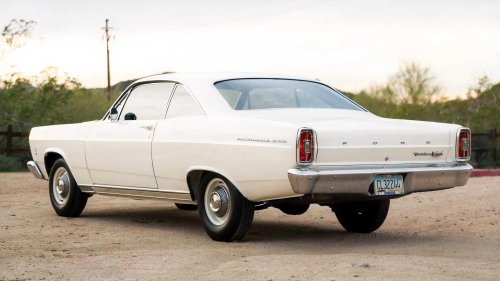
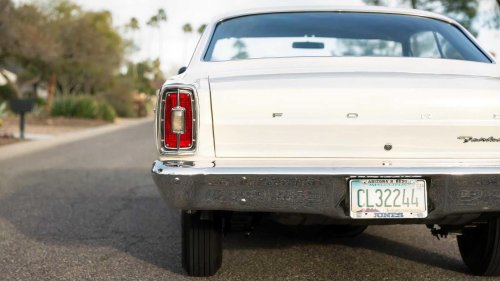
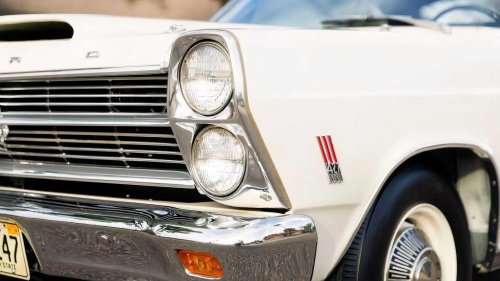
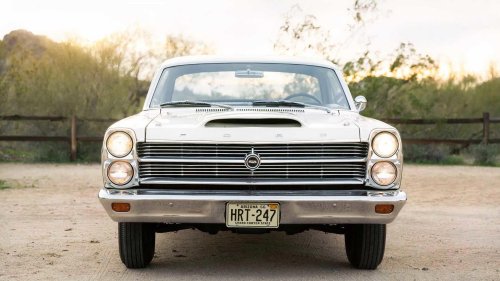
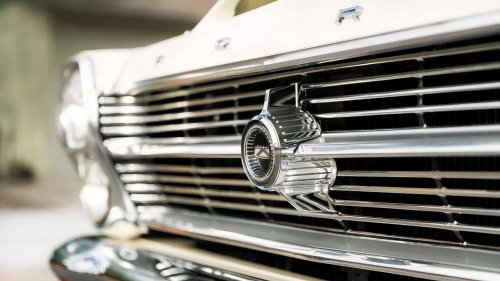



















Back in 1966, Ford had the ad campaign, the GT badge, and enough confidence to fill a showroom twice over. The company’s midsize contender looked right for the moment, too, with sharp new styling and the kind of presence that suggested it could finally stare down the GTO without blinking. But once the stoplight turned green or the tree dropped, looks and confidence only got you so far.Ford answered its problem the way Ford often did in the '60s, by quietly sliding something deeply unreasonable into a car that otherwise looked almost respectable. What it ended up with was a factory-built bruiser with drag-strip intent, a 427 underhood surprise, and production numbers so tiny it feels less like a model and more like a dare. Somehow, despite all that, it never became the legend its specs suggest it should’ve been. Ford’s Midsize Muscle Car Had A Problem Bring A TrailerFord’s redesigned Fairlane for 1966 finally gave the brand a proper midsize performance car to throw into the growing muscle-car knife fight. The Fairlane GT was meant to be the answer to the Pontiac GTO, and Ford marketed it like it had arrived with brass knuckles already on. It had the trim, the stance, and the image. In brochure land, that usually counts for a lot. At your local drag strip, however, not so much.The issue was simple. The GT’s 390ci V8 made 335 horsepower, which looked respectable until you stacked it up against what Pontiac already had on deck. A regular GTO was one thing, but the hotter Tri-Power setup gave Pontiac more punch, while Ford offered no optional engine to really change the conversation. One period road test quoted in the record got right to the point: the GTA’s problem was power. That’s blunt, but also fair. Sometimes the truth shows up wearing work boots. The Beginning Of A Lot More Sense Bring A TrailerFord clearly knew this couldn’t stand if it wanted to stay serious in organized drag racing. The company had already built its reputation around Total Performance, and that slogan meant more than glossy ads and Le Mans glory. It meant finding a way to put real fear into the other lane. So in the spring of '66, Ford introduced a Fairlane 500 hardtop with a 427 side-oiler, and suddenly the car made a whole lot more sense. The Ford Fairlane 500 R-Code Was Weirdly Easy To Forget Bring A TrailerThis is the part where the story should turn into an instant legend. Ford slipped a 427 side-oiler into the Fairlane 500 hardtop and built the car for organized drag racing, even though the finished product still looked surprisingly stock. It wasn’t a cartoonish special with wild stripes and enough scoops to shame a kitchen drawer. It was cleaner than that, almost understated, which might be part of why history hasn’t shouted its name nearly loud enough.The numbers alone should’ve made it impossible to ignore. Ford built only 57 of these cars for 1966, which places the Fairlane 500 R-Code among the rarest factory-built Ford muscle cars of the decade. The R-Code designation came from the engine code in the VIN, and the package centered on a dual-quad 427 rated at 425 horsepower. That was Ford showing up with intent. Wonderfully Old School Bring A TrailerWhat makes the R-Code so cool is how factory it all was. It was Ford doing exactly what muscle-car fans say they want manufacturers to do, which is build the mean version first and worry about explaining it later. In that sense, the Fairlane 500 R-Code feels like a wonderfully old-school act of corporate mischief.And yet, say “rare Ford muscle” in most rooms and people jump to Boss Mustangs, Thunderbolts, or Cobra Jet cars before this Fairlane even gets a nod. That’s kind of amazing when you remember what this thing actually was. A factory 427 Fairlane with two four-barrels and race-bred purpose should be dinner-table conversation for Blue Oval people. Instead, it’s more like a password. It Was Built Like A Street Car With Drag Strip Intentions Bring A TrailerPart of the car’s appeal is how focused Ford made it. According to the details that survive, all 57 built for 1966 were identical. Each one wore Wimbledon White paint over a black interior. Each one had a four-speed manual. Each one got the fiberglass scooped hood, dual-quad 427, 3.89 limited-slip rear, transistorized ignition, extra cooling package, and 7.75 x 14-inch blackwall tires. That's not the kind of option sheet you fill out with your heart, honestly.Ford also kept the broader presentation oddly plain, which only adds to the charm now. The car was a Fairlane 500 hardtop, not the flashier GT, and that made it look more like somebody’s clean midsize coupe than a low-volume factory weapon. It’s the automotive equivalent of a guy showing up to a pickup basketball game in orthopedic shoes and then dunking on everybody. There’s something deeply funny and pretty cool about that.One example took the game forward and showed how the formula carried into 1967. Along with the extra-cost 427, it featured a heavy-duty clutch and cooling system, a close-ratio four-speed, and a 3.89:1 differential. The suspension setup leaned on GT hardware, and while this particular car wore a vinyl top and a few optional touches, the mission stayed the same. Familiar body, serious engine, and a setup that clearly had the drag strip in mind.There’s also a wonderfully scrappy quality to the whole thing. One owner recalled adding headers, traction bars, and wider tires, then taking it out for street races because that’s exactly what these cars encouraged. He described it as the fastest car in town and admitted the local police knew it well. That’s about as honest a snapshot of a 427 Fairlane’s life as you’re going to get. Ford Kept The Recipe Alive, But The Legend Stayed Small Bring A TrailerFord didn’t drop the idea after 1966. For 1967, it expanded 427 Fairlane availability and added the W-Code, a single four-barrel 427 rated at 410 horsepower, alongside the R-Code. That broadened the formula and made the Fairlane 427 concept less of a one-year lightning strike. It also proved Ford knew it was onto something worth preserving.Even then, the legend never really grew the way you’d expect. The 1967 run was still small, with 230 built, and the Fairlane 427 still failed to make the kind of lasting mainstream impact you associate with a Chevelle SS, a GTO, or the various Hemi Mopars that tend to dominate these conversations. That’s partly a branding problem, partly a numbers problem, and maybe partly because Ford has never exactly suffered from having too many famous muscle cars. Straight-Faced Performer Bring A TrailerThere’s another reason it stayed small in the public memory. The Fairlane 427 never looked outrageous enough to force its way into pop mythology. It was fast, rare, and serious, but it wore its performance with a straighter face than some of its rivals. That conservative wrapper makes it cooler now, though. It feels like a car built for people who already knew, not people who needed to be convinced. That Silence Is Exactly Why We Can’t Ignore It Bring A TrailerSurviving R-Code cars now feel like artifacts from Ford’s hardest-charging years, and not just because so few were built. One documented 1966 example is described as having original driveline components and just over 5,100 miles, while a preserved 1967 example carried about 10,000 miles and remained predominantly unrestored. Cars like that tell you what Ford thought was necessary when winning mattered more than making the package pretty.They also tell you something about value. One report flat-out described the 1966 Fairlane 500 R-Code as one of the rarest and most valuable classic Fords from the 1960s. It noted that the extra-cost 427 pushed the car’s sticker to $4,502.12, roughly double the price of a standard Fairlane. That alone explains why Ford only moved 57 of them. The Joke That Wasn't One Bring A TrailerAnd today, the market's of the same opinion. One auction shows a '66 Ford Fairlane 500 Hardtop R-Code 4-Speed selling for $296,000 in 2022. Phew. That’s a very real number attached to a car a lot of people still don’t bring up quickly enough when the subject turns to forgotten muscle.On the whole, the joke, if there is one, is that a car this loud on paper managed to stay this quiet in the broader conversation. Maybe that’s exactly why it deserves more attention now.Sources: Classic Cars, Ford Authority, Hemmings, CarBuzz.