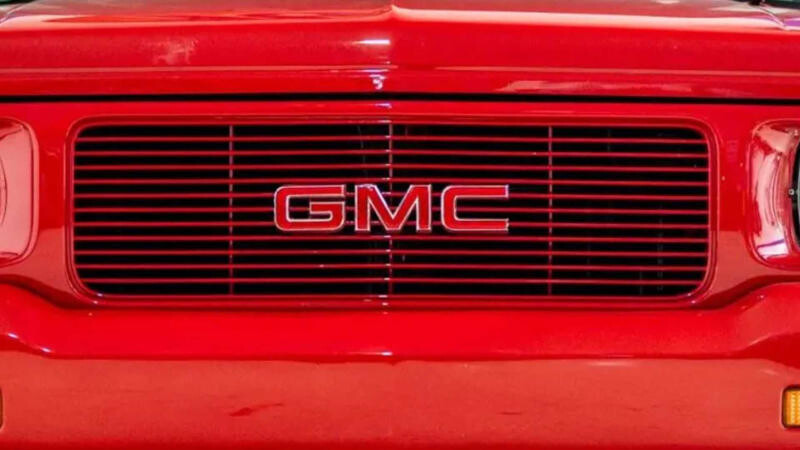
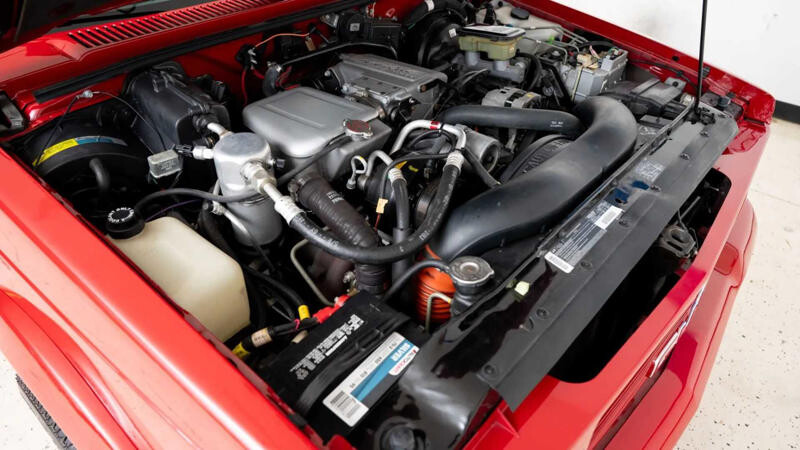
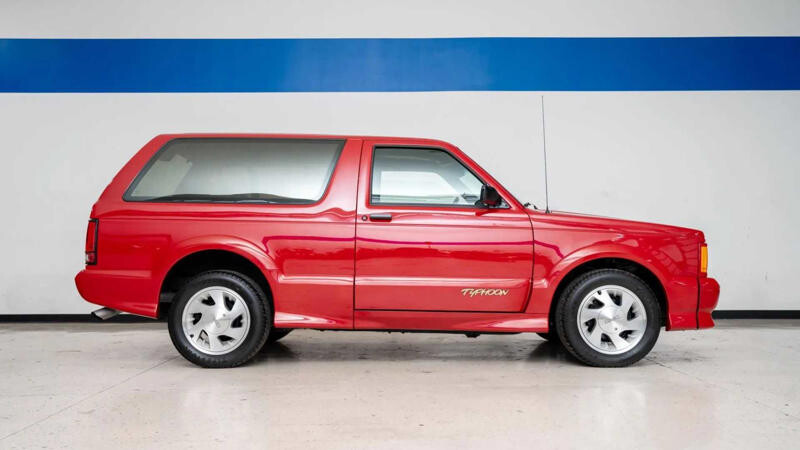
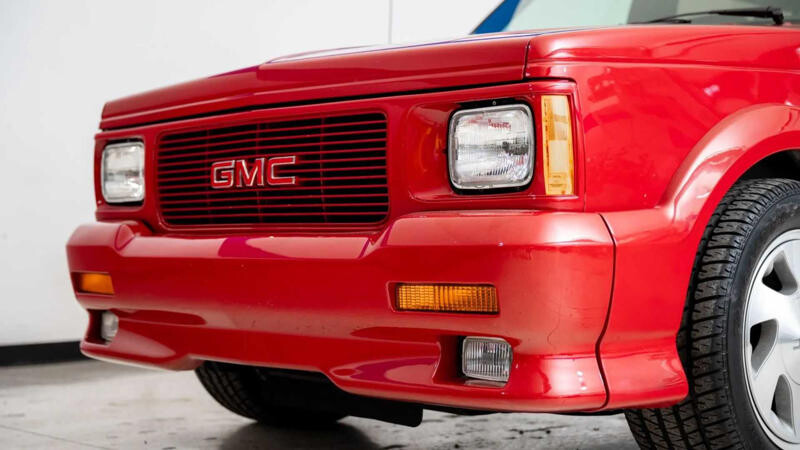
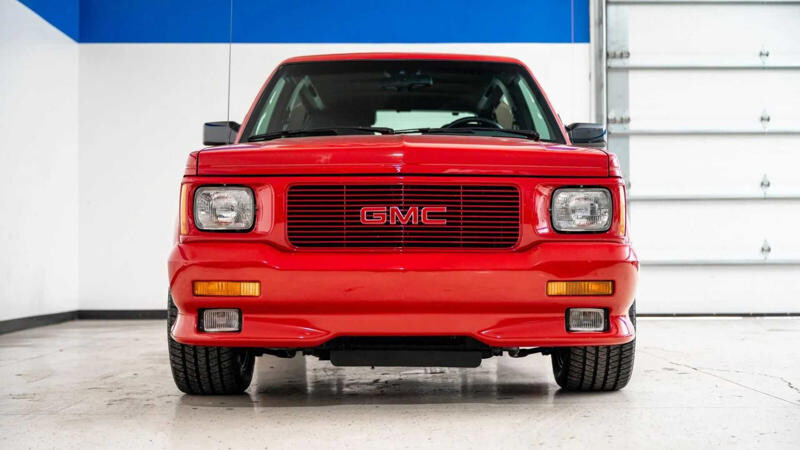
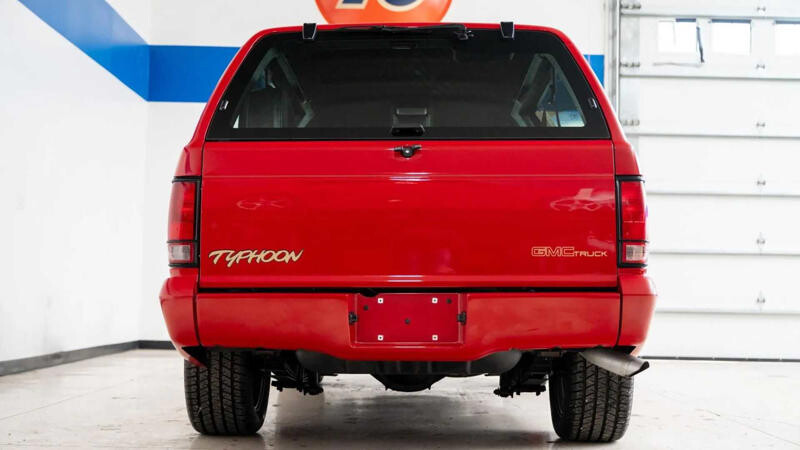
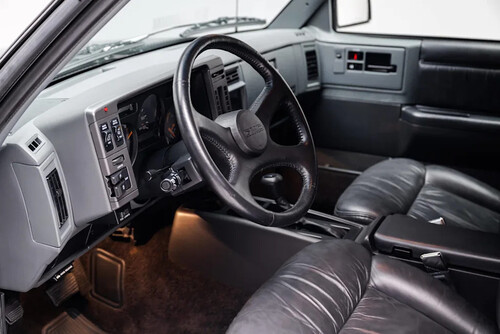
Before the '90s, GMC occupied a utilitarian niche within the General Motors family, focusing almost entirely on rugged workhorses for industries like construction and agriculture. However, things took a sharp turn in 1991, when GMC unleashed the Syclone and turned the industry on its head. While GMC had built performance-adjacent models before, such as the 454-powered 1971 Sprint, the Syclone was the division's first dedicated performance vehicle built purely for speed rather than utility, even though it had a pickup truck body.The Syclone's first-mover advantage and supercar-rivaling performance turned it into an instant icon, but GMC wasn't done yet. Shortly after the Syclone, GMC went back to the drawing board and created something just as wild. This time it was an SUV that rewrote the rules of performance and helped launch an entire segment, but for some reason, it barely gets a mention today. The Performance SUV Idea That Arrived Before the World Was Ready Via Bring A TrailerThe phrase 'performance SUV' used to sound like an oxymoron a few decades ago, but today, it represents one of the fastest-growing segments of the auto industry. We got SUVs like the Aston Martin DBX707 and Lamborghini Urus SE hitting top speeds of over 190 mph, and behemoths like the GMC Hummer EV SUV beating bona fide sports cars like the Porsche 911 Carrera to 60 mph. And the best part? They do it without being considered to be death traps.Things were quite different in the early '90s. The Toyota Land Cruiser, Ford Bronco, Jeep Cherokee, and other SUVs of the day were primarily built to offer more passenger capacity and off-road capability, not to terrorize sports cars on freeways. That all changed in 1992, when GM built an SUV so brutally fast that it could embarrass Ferraris and Corvettes in a straight line. All while carrying a bunch of kids. This GMC was not just quirky or quick. It was a genuine preview of the modern performance SUV formula. Meet the GMC Typhoon Via Bring A TrailerThe star of the show today is the GMC Typhoon, and we thought we'd give it the spotlight it deserved but never got. The Typhoon's story began in the early '90s, when GM saw an untapped market opportunity and decided to attack it head-on. As the rest of the industry scrambled to build affordable sports cars to compete with the Japanese options that had flooded the market, GM found the prospect of a fast SUV interesting. And since no one else was building such a vehicle at the time, the GM top brass felt like they had struck gold.GM allegedly pitched the idea to its performance-focused brands first, but ultimately developed the project under the GMC banner to help boost its performance image. The result was a boxy, no-nonsense SUV that was faster than any other vehicle of its kind then. GMC partnered with Production Automotive Services (PAS) to convert the GMC Jimmy into the Typhoon, giving it the modifications it needed to become a left-lane menace that gave bona fide sports cars a run for their money. The Hardware That Made It Special Via Bring A TrailerThe Typhoon started as a humble Jimmy built on the compact S-truck platform, but GMC and PAS gave it a mechanical and aesthetic overhaul that made it almost unrecognizable. From the outside, the Typhoon looked like it had something up its sleeve and featured a body kit, beefy air dam, fog lamp bulges, and a hunkered-down appearance that hinted at its performance intentions. Unlike the Syclone before it, the Typhoon had multiple color options, including rarely picked options such as Radar Blue and Garnet Red.Even more impressive were the changes made under the skin. While the engineers retained the Jimmy's original 4.3-liter LB4 V6, they gave it the Frankenstein treatment, turning it into an entirely different beast. The most significant change was the addition of a Mitsubishi TD06-17C turbocharger pushing 14 psi of boost, paired with a Garrett water-to-air intercooler. Other engine upgrades included revised pistons and strengthened bottom-end components, unique main caps, high-performance head gaskets, a 48 mm twin-bore throttle body, and an upgraded fuel system with multipoint fuel injection.The Typhoon made 280 horsepower and roughly 350–360 pound-feet of torque. That was about 80 horsepower and 100 pound-feet more than the top-tier 1992 Jimmy on which it was based. Still, enthusiasts have long argued that the official power rating was conservative.Via Bring A TrailerThe upgrades didn't end there. To ensure the Typhoon could handle the power, it was equipped with a 4L60 four-speed automatic transmission shared with the C4 Corvette, and the standard 4WD system was replaced by a performance-biased BorgWarner 4472 all-wheel-drive transfer case with 35 percent front and 65 percent rear torque split for better off-the-line grunt.GMC also improved handling and stopping power using stiffer springs, a four-wheel ABS system with upgraded rotors, recalibrated shocks, larger anti-roll bars, and lightweight cast-aluminum wheels with Goodyear Eagle performance tires. The Drawbacks Buyers Couldn't Ignore Via Bring A TrailerThanks to the upgrades, the GMC looked ready to dominate not just the streets but also early '90s SUV sales charts. Sadly, it just didn't. GMC only ended up selling about 4,697 units, and production only lasted for two model years. A major reason why the Typhoon failed commercially was that it was ahead of its time.The Super SUV market didn't really exist, and many performance-hungry buyers preferred something that looked fast even when parked. The Typhoon also had an identity crisis. It was putting up sports car performance numbers in an SUV body but offered less traditional SUV utility than many buyers expected. Despite being an SUV with all-wheel drive, it was not rated for towing and was explicitly forbidden from off-road use.The other issue was the price. The Typhoon originally cost just under $30,000, which made it almost twice as expensive as the Jimmy it was based on. That put it in the same bracket as some sports cars and European luxury sedans, even though the interior was largely unchanged from the base SUV. The program ended after 1993, as PAS did not continue building the model, and GM's S-truck line was moving to a new body style. Why It Deserved Better Than It Got Via Bring A TrailerAs the pioneer of the performance SUV space, the Typhoon had genuine performance credentials but arrived before the market was ready. It was rare, memorable, and mechanically distinctive, but GM treated it more like a niche experiment than the foundation for a lasting performance SUV model. As a result, its time in the spotlight was too short to become a commercial success, even though it later earned cult status among enthusiasts.Regardless, history ended up proving the Typhoon right. While it was viewed as an anomaly in the early '90s, today's market is full of exactly the kind of vehicle it predicted. It was a missed opportunity for GM and is one of the company's biggest what-might-have-beens. A Closer Look At The GMC Typhoon's Performance Via Bring A TrailerDon't get us wrong. The Typhoon was not the first SUV with performance in mind, but it was one of the earliest to make speed its whole identity. It wasn't fast for an SUV. It was just fast.The Typhoon not only obliterated every other SUV at the time, but it also got the drop on uninitiated sports car drivers. Period tests had it going from 0-60 mph in a brisk 5.3 seconds, beating the Ferrari 348TS. It also proved its mettle on the strip with passes in 14.1 seconds at 95 mph.However, we must mention that, while the Typhoon could run with many '90s sports cars in straight-line battles, it was no match for them in the twists and turns. It was still a heavy body-on-frame truck with a high center of gravity, which led to some rather dramatic and scary handling traits when pushed to the limits. The Blueprint That Everyone Eventually Copied Via Bring A TrailerThe Typhoon essentially stood alone in its class in the early '90s, but similar vehicles started popping up even before the end of the decade. BMW launched the X5 in 1999 and christened it as a "SAV" (Sports Activity Vehicle) to signal that it was meant for the road. Mercedes followed suit with the ML 55 AMG with its 347-hp hand-built 5.4-liter V8, and in no time, the same Typhoon formula that the market rejected was spreading across the industry faster than wildfire.Today, the industry is full of SUVs built purely for speed, and they're becoming so popular that even traditional sports car manufacturers like Ferrari, Lamborghini, and Porsche were left with no option but to join in. Modern performance SUVs are firmly in supercar performance territory. A great example is the Audi RS Q8 performance, which lapped the Nürburgring Nordschleife in an astonishing 7:36.698 minutes. The Typhoon was the blueprint. Everyone else is just playing catch-up. The Typhoon Had A More Insane Older Brother GMCWe already mentioned the Syclone, the Typhoon's older and even more unhinged pickup truck sibling, but we didn't cover just how insane it was. Like the Typhoon, the Syclone was based on the S-15 platform, but it was built on the GMC Sonoma's pickup truck body.The Syclone also used the same legendary 280-horsepower turbocharged powertrain. But since it weighed over 200 pounds less than the Typhoon, it delivered a whole new level of brutality. With a 0-60 mph time in the mid 4s to low 5s and quarter-mile passes in the mid 13s, the Syclone was one of the quickest vehicles on the planet in the early '90s and is still a legend today. The GMC Typhoon's Legacy Today Via Bring A TrailerWhile the Typhoon may fly under the radar of many gearheads today, those who know about it consider it to be the "grandfather" of the modern performance SUV and a vehicle that was decades ahead of its time. Its legacy is defined by its role in proving that a boxy utility vehicle could outperform world-class sports cars. Fortunately, even with its rarity and novelty, prices have remained relatively grounded.The average price of a Typhoon in good condition is around $22,800, which is quite affordable for a vehicle with such levels of performance, scarcity, and historical significance. Auction results show that prices can vary greatly depending on mileage and originality, and when low mileage, originality, and proper documentation overlap, some examples can surpass the six-figure mark. A 688-mile 1993 Typhoon finished in Apple Red sold for an eye-watering $226,000 in March 2025, showing how far collectors are willing to go for this underrated gem.Via Bring A TrailerThe Typhoon didn't just foreshadow performance SUVs. It created the blueprint that everyone eventually copied and helped legitimize the entire category. It's overlooked today not because it was a failed concept, but because it was a victim of timing, arriving before the industry was ready.