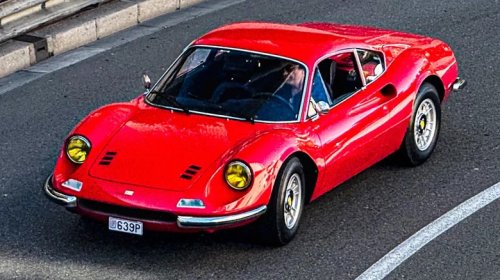
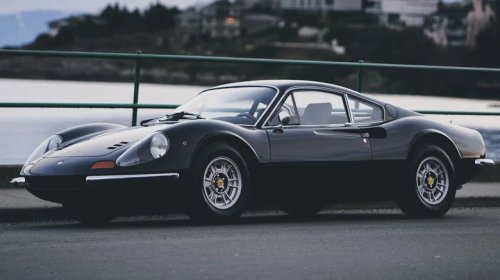
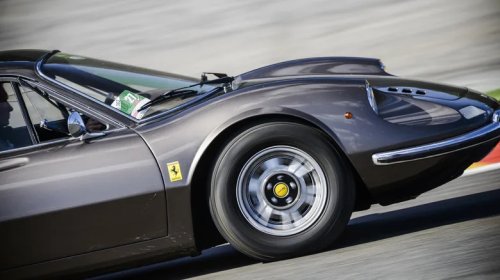
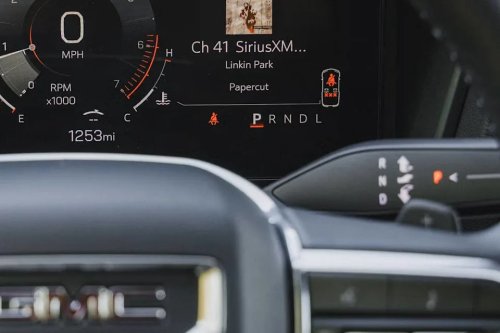
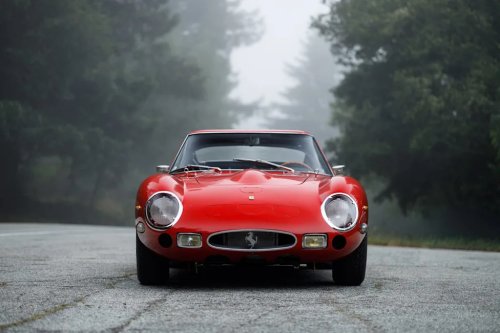
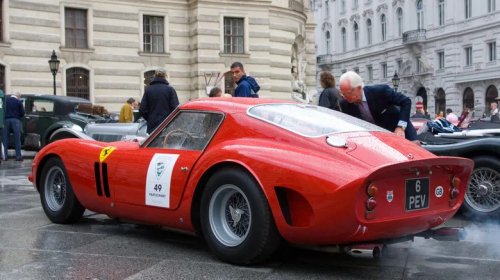
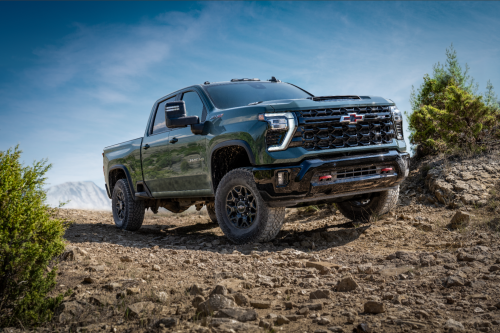
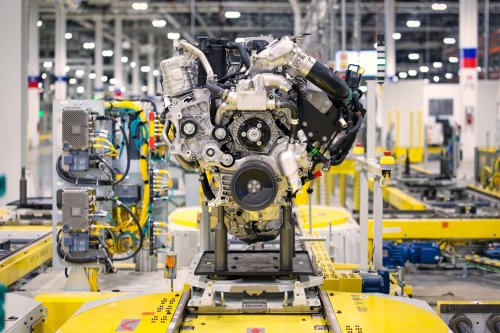
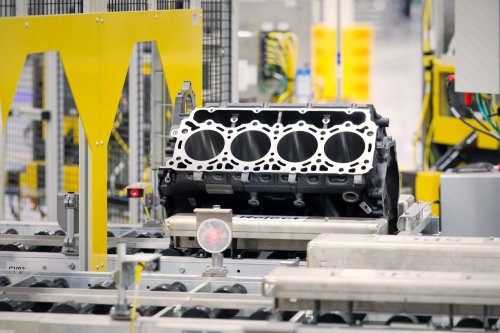
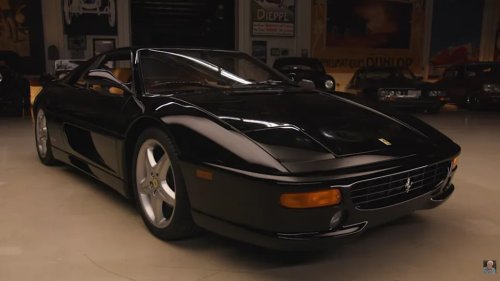
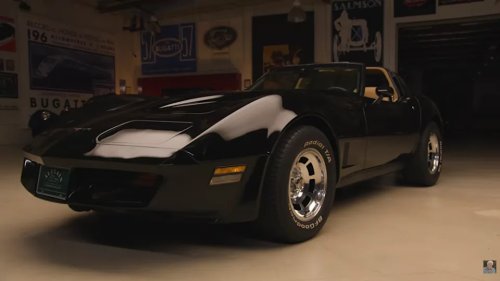
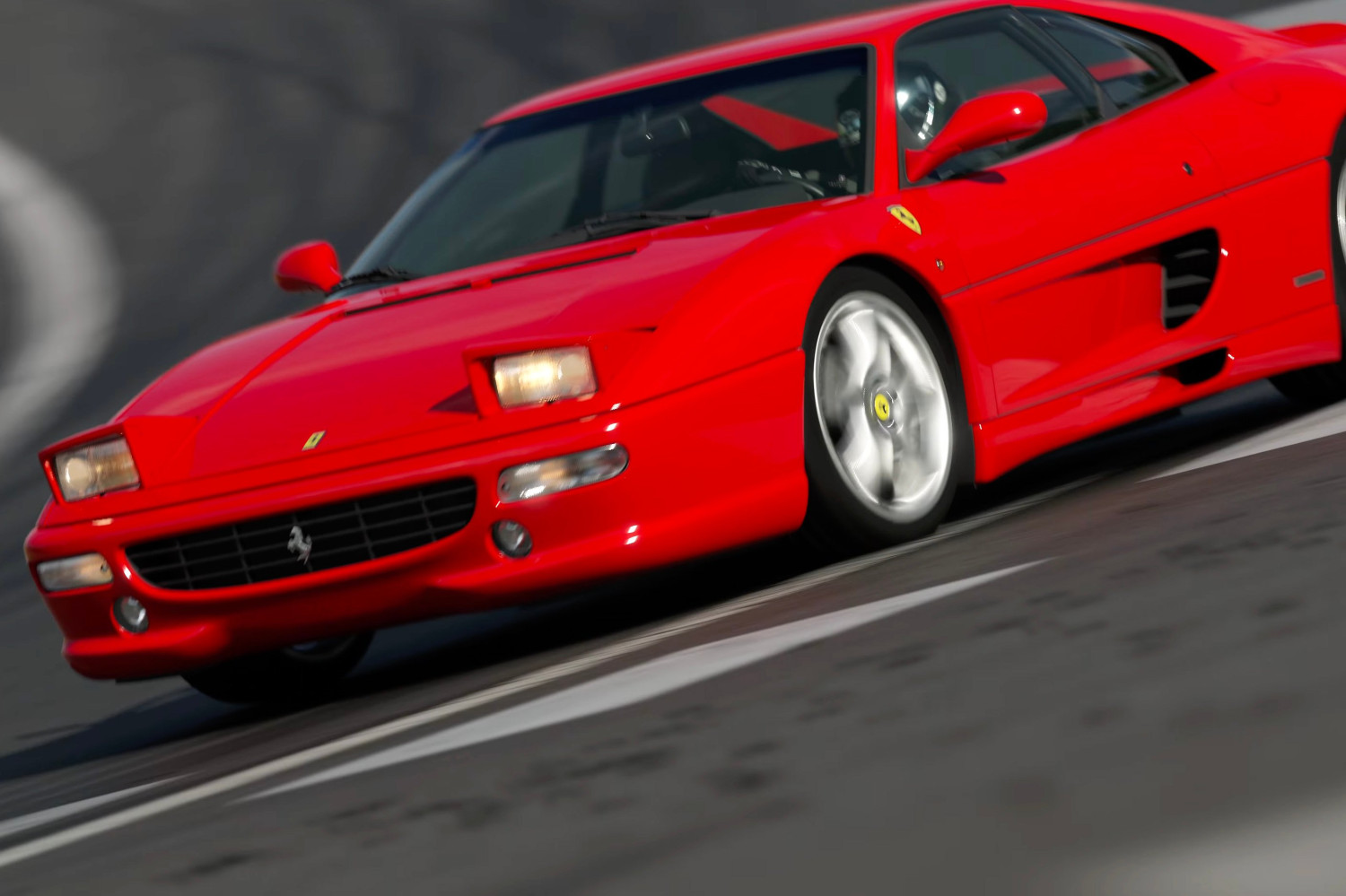
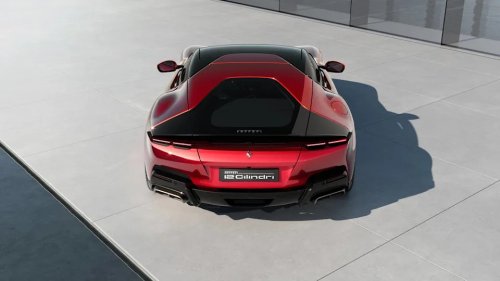
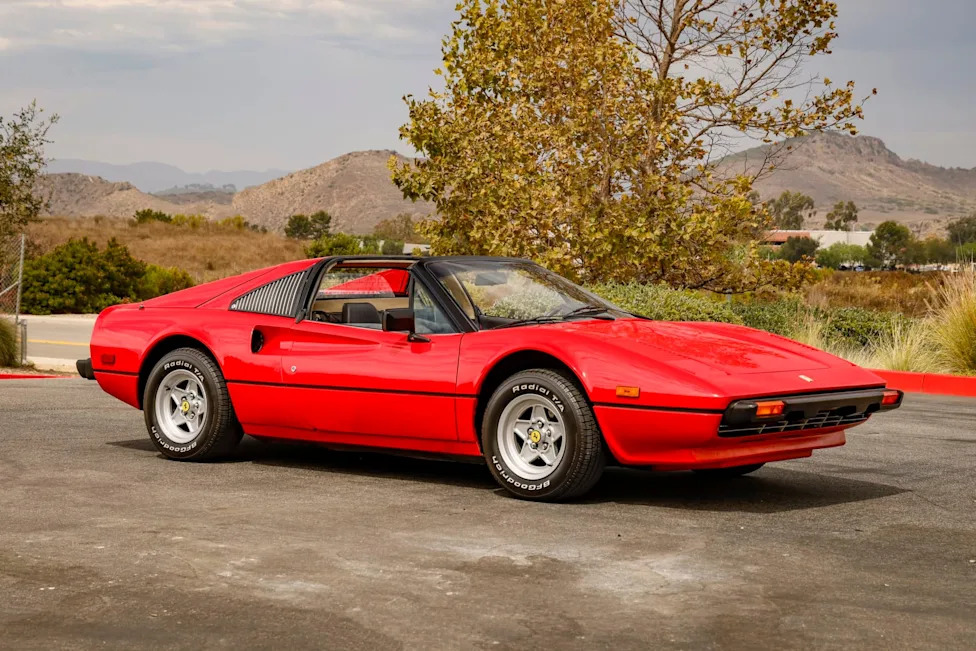
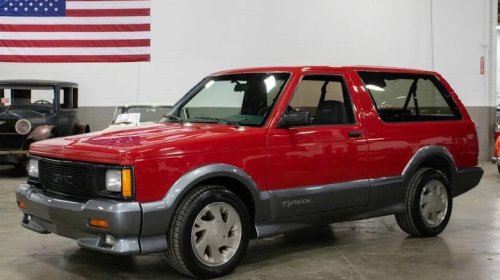
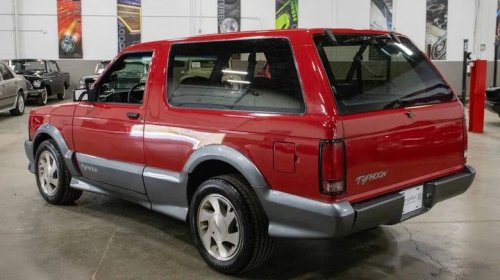
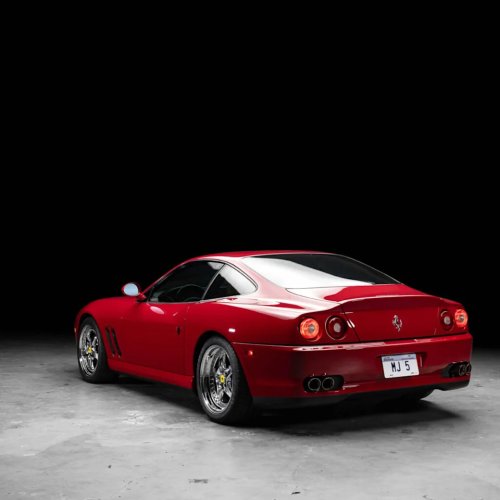
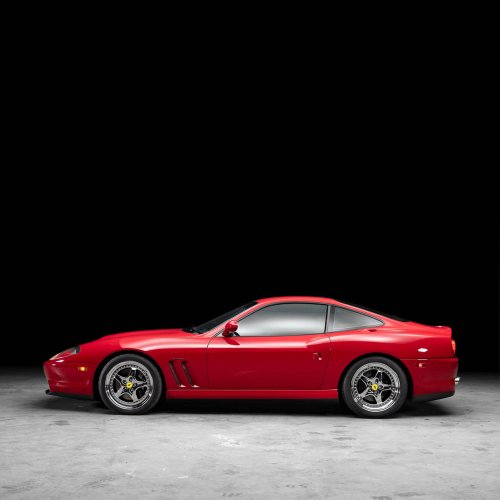
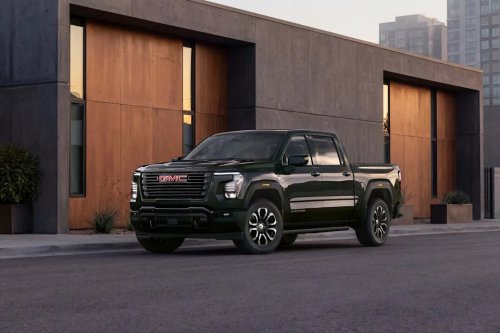
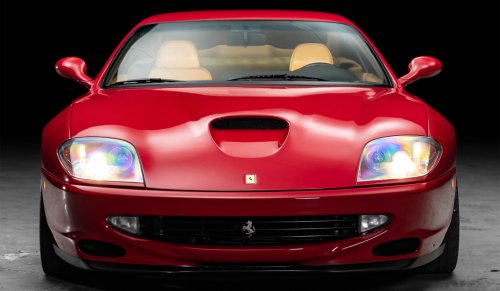
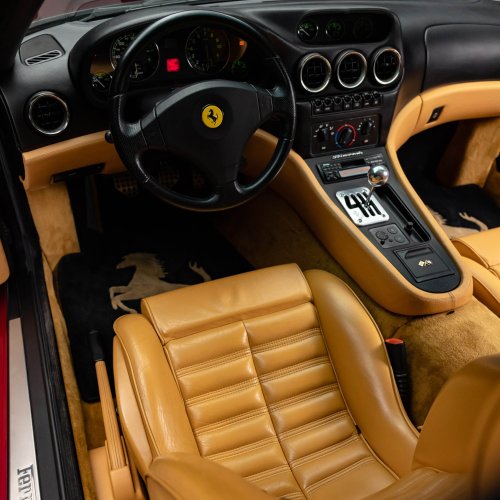
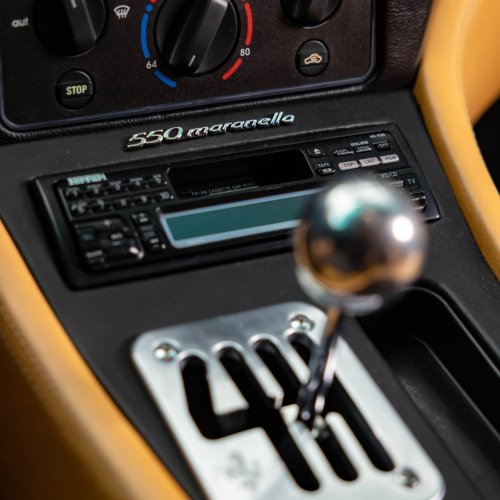
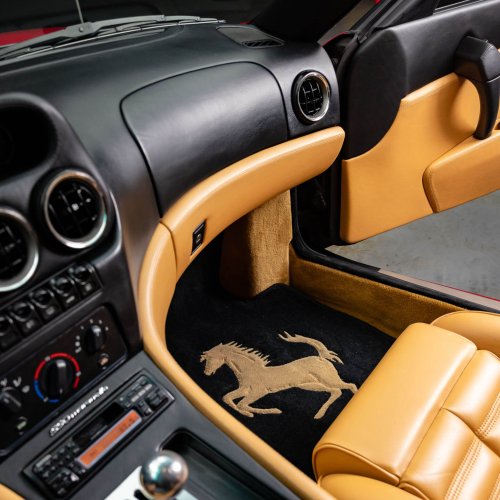
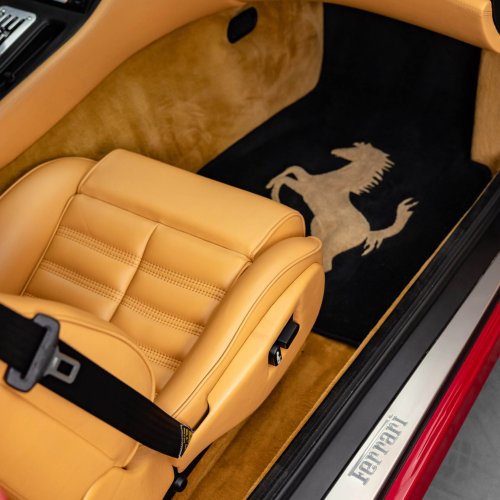
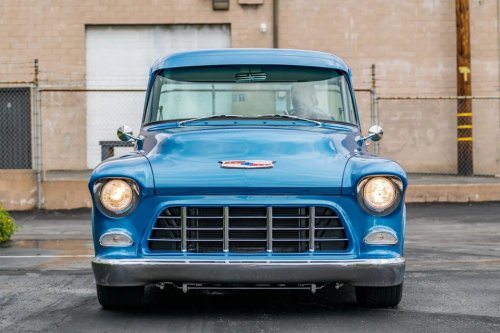
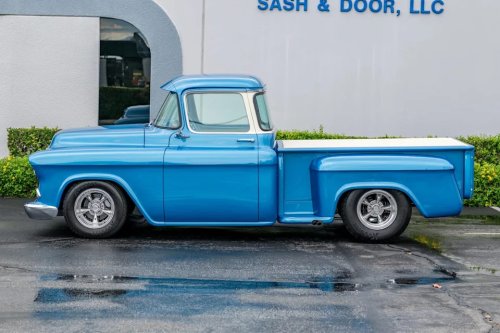
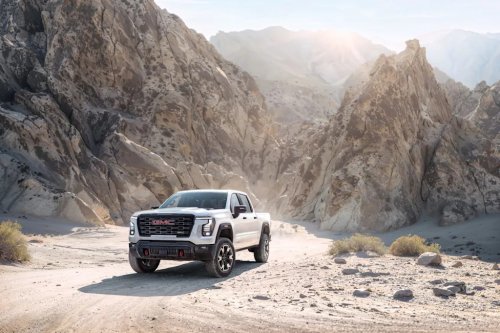
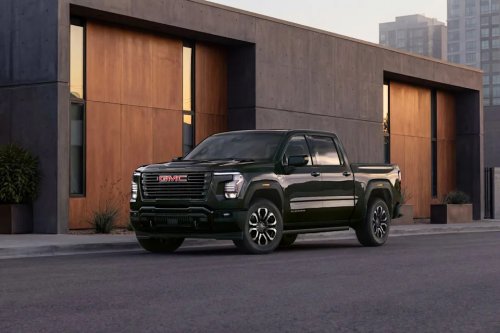
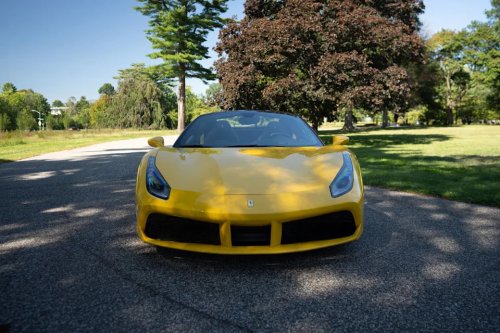
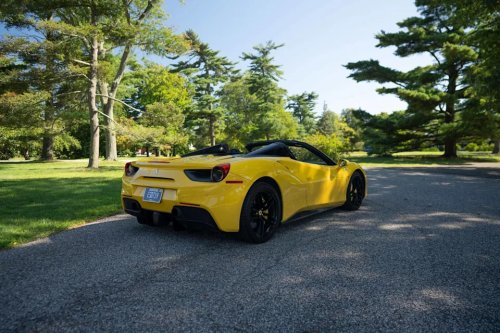
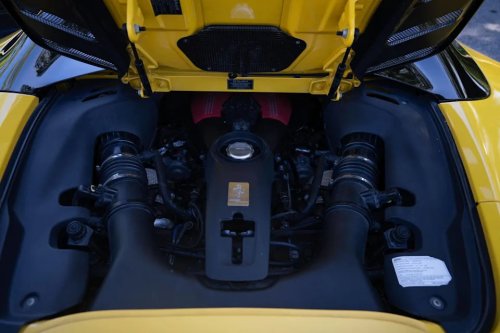
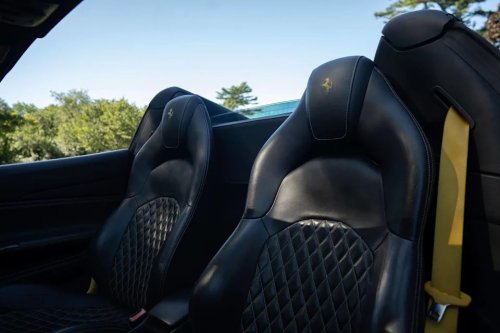
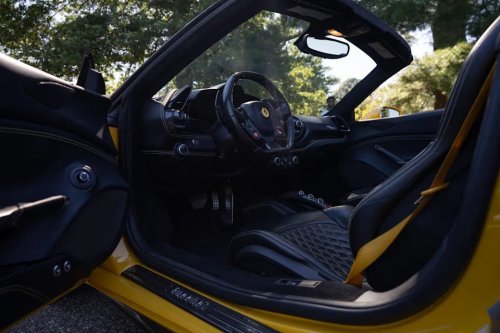
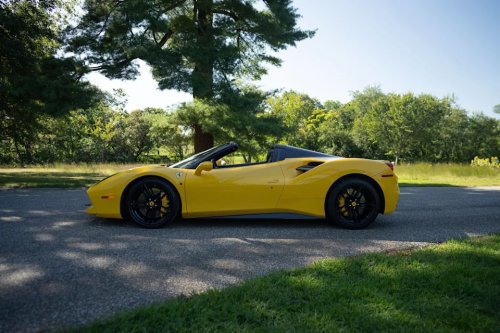
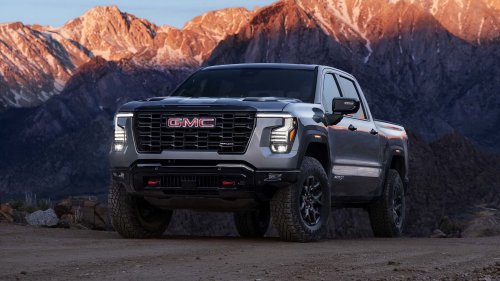
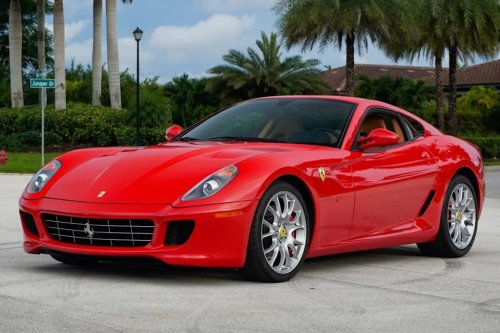
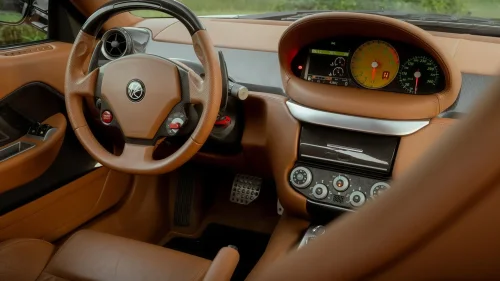
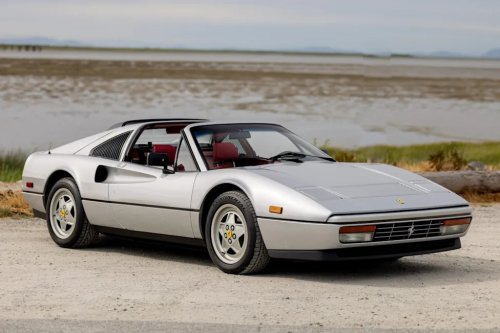
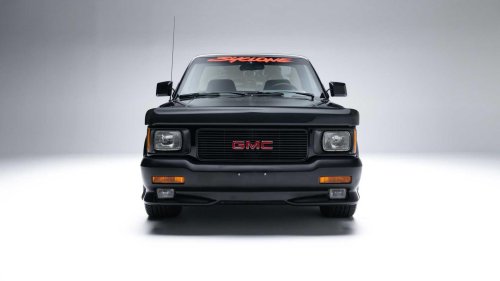
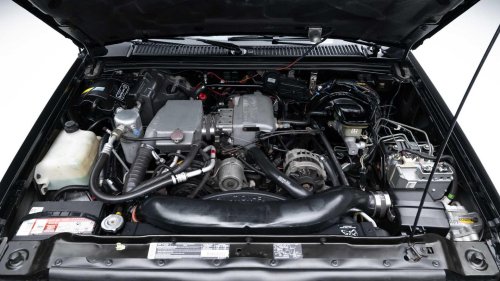
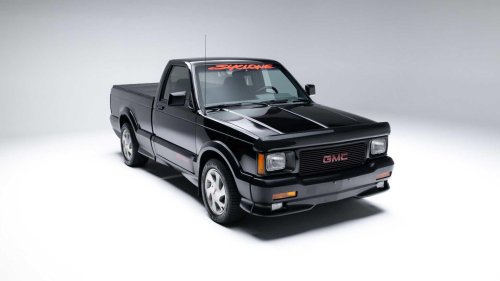
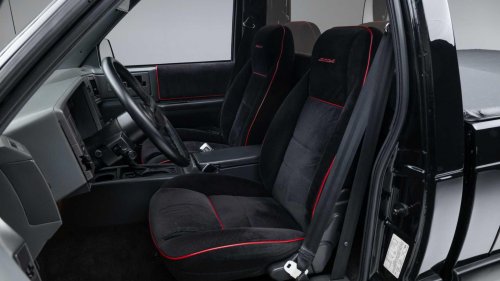
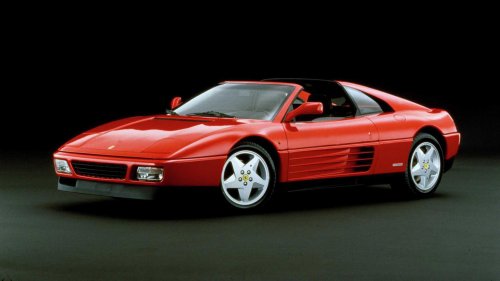
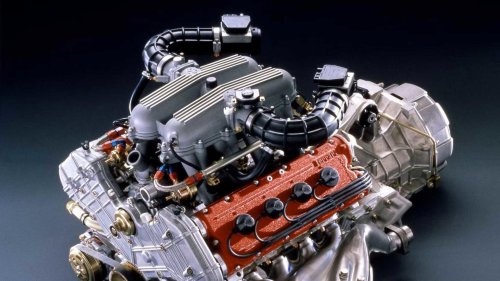
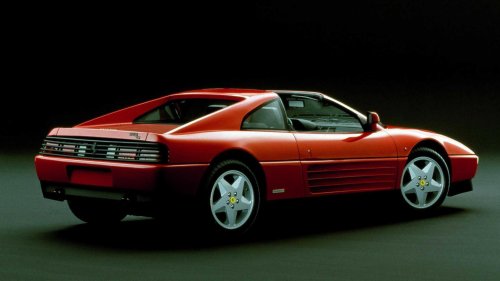
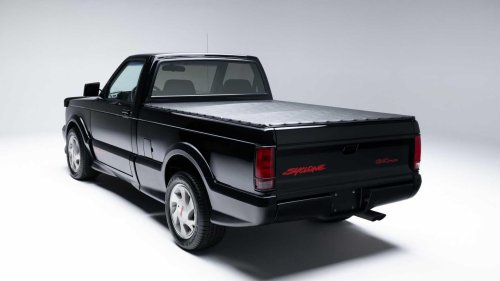
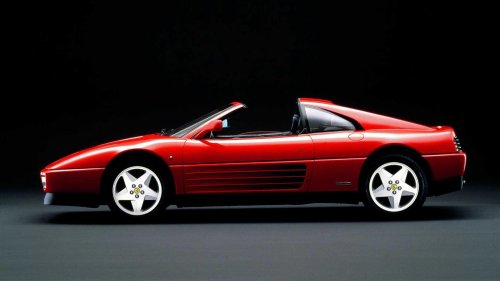
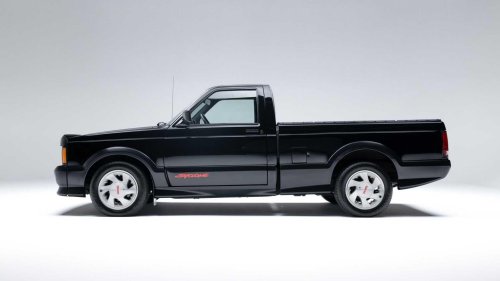
It’s possibly the most unorthodox head-to-head any of us could think of. In the red corner, we have the Ferrari 348 ts, featuring a removable roof panel. A model that, with its ultra-low-profile nose and Testarossa-like side strakes, is among the most distinctive, if perhaps not the prettiest, Prancing Horses of the early 1990s. It was the final, V8-powered road car developed during Enzo Ferrari’s lifetime, and it packed a sonorous wail from the powerplant. One might even argue, given its analog styling and the more structurally rigid longitudinal rather than traverse engine layout, that the 348 bridged the gap from Ferrari’s classic era to Maranello’s more modern, technically astute approach to sports car development we know today.And in the blue corner, we have a 1991 GMC pickup. A vehicle that weighs close to two tons, uses a front-mounted V6 truck engine, and, low ride height aside, is as far from a sports car as one could get. On the face of it, this should be an easy win for the V8-powered Prancing Horse, right? Normally, yes. But then, this was no ordinary 1991 GMC pickup truck. Not even close. The GMC Syclone The Project Begins Bring A TrailerIn 1987, Buick’s brief run with the limited-edition Grand National Experimental (GNX) ended. The company had shifted nearly 550 GNXs (which, incidentally, are worth quite a bit today), and reminded everyone that the aging, G-body platform could still go. However, it was time for the division to get back to selling big, comfy sedans.A determined group of engineers didn’t feel like letting the project die, however, and later crowbarred the GNX’s heavily tuned, turbocharged 3.8-liter V6 into a pickup truck as a proof of concept for sister brand Chevrolet. When the Bowtie passed on the project, an intrigued GMC took up the baton for its own, S-15-based pickup. The nascent project even adopted the energetic Syclone name in short order, too, with the spelling allegedly due to Ford owning the Cyclone trademark and having previously used it on a Mercury. The Turbocharged Engine Bring A TrailerHowever, GMC company higher-ups weren’t entirely convinced by Buick’s turbo V6, though, and requested an alternative. Out went the GNX’s 3.8-liter V6, and into its place was slotted the Sonoma’s heavier, bored-out 4.3-liter example. While this does sound underwhelming for a GNX successor, the pistons, individual port fuel injectors, and the throttle body were borrowed from the L98-code V8 that powered Chevrolet’s fourth-generation Corvette. The ‘Vette’s heavily modified, four-speed 700R4 automatic transmission similarly made the jump, and a liquid-cooled, Mitsubishi turbocharger, capable of firing 14 psi of boost, was also brought in.As a result, the Syclone’s spruced-up, turbocharged V6 produced a mighty 280 hp, and if that sounds feeble by contemporary standards, bear in mind that a 1990 Corvette ZR-1 produced only 95 hp more. The Suspension, The All-Wheel Drive, And The Revised Design Bring A TrailerUnsurprisingly, raw power was far from the Syclone’s only achievement. The rear-biased all-wheel-drive system, for example, despite being lifted from a Chevrolet Astro panel van, was heavily retuned to send at least 65% of the V6’s lofty 360-pound-feet of torque to the rear axle. Suspension had a lower ride height, to the point that there was barely any wheel travel left. Indeed, so aggressively tuned were the spring rates and anti-roll bar that axle tramp would kick the driver in the spleen if they even looked at a rutted off-road trail.Bring A TrailerThe Sonoma’s 16-inch wheels, meanwhile, were fitted with much wider Firestone V-speed-rated tires, developed specifically for the Syclone for maximum grip. Ironically, despite the slammed ride height and barring some not-so-subtle "Syclone" red decals across the flanks and tailgate, the exterior design stayed much the same. Even the cabin was largely untouched, save for slightly bolstered sports seats and a new instrument panel from the turbocharged Pontiac Sunbird GT.Impressed with its new hotrod pickup, the GMC board announced in 1990 that between 2,500 and 3,000 Syclone pickups could be sold each year for less than $26,000—or half the price of a Corvette ZR-1. So keen was the board to push the engineering prowess behind the Syclone – and, fingers crossed, attract a younger clientele in the process – that it allowed for a collaborative build with Production Automotive Services, the mad scientists behind the 1989 Pontiac Turbo Trans Am. The Test The Opponent FerrariWhile GMC’s new muscle truck didn’t have any de facto production rivals to speak of – even the original Ford F-150 SVT Lightning didn’t arrive until 1993 – few expected the Syclone’s most famous rival to be a nearly 300-horsepower supercar from Maranello. One that promised big things for Ferrari.FerrariUpon its arrival in 1989, Ferrari’s new 348 tb coupe featured a sleek design from Pininfarina that, while slightly shorter than the 328 it replaced, was much wider and featured a longer wheelbase. Customer calls for a more generously-sized cabin had finally been answered. Crucially, this also left room for Ferrari’s brand-new 3.4-liter V8 to be mounted longitudinally rather than transversely, and thus much lower on the chassis, significantly reducing the vehicle’s center of gravity in the process.To this new V8 were mounted new intake and exhaust systems and a new Bosch Motronic engine-control system, among other upgrades. Capable of 171 mph at the top end, the Ferrari 348 tb was, in short, one of the fastest production cars in the world upon its arrival, and the removable-roof counterpart was no slouch either. The Head-To-Head Ferrari“The $96,000 Sting!” article from Car & Driver’s September 1991 issue is unquestionably one of the unique duels in the magazine’s history. Prices for the targa-topped 348ts, for example, started from $122,180, an eye-watering $96,000 more than the GMC pickup. Both were two-seaters, true, but the Syclone could at least haul 500 pounds of cargo under its tonneau cover. The Ferrari was also… well, a Ferrari, with all the mid-corner balance and darting front-end to match.With a heavily-tuned V6 hanging over its front axle, meanwhile, the much heavier Syclone needed little motivation to understeer, and, towering as it did over the Ferrari, even more inclination to roll. Forget ‘practicality’ then. C&D’s “Sting!” would be a head-to-head sprint over the quarter-mile, from a standing start. One run, no do-overs. Winner takes all. The Result Bring A TrailerIn one of the most ignominious defeats for Ferrari, the lightweight, mid-engined 348ts was handed its side-straked posterior by the Syclone. The GMC’s turbo V6 can take some of the plaudits. There was only a 16 hp difference in Maranello’s favor. However, most of the credit goes to the Astro-derived all-wheel drive system. Where the 348, already hobbled by a reportedly jittery five-speed manual gearbox, sent all its power to the rear wheels, all four of the pickup’s bespoke Firestones bit into the asphalt and refused to let go.Smooth shifts from the Corvette’s four-speed automatic transmission meant the GMC was already two lengths clear before the 348 was out of first gear. The gap, inevitably, began to close, but it was already too late. The Syclone completed the quarter-mile in 14.1 seconds. The Ferrari, despite traveling 6 mph faster, was four-tenths behind at the stripe. The pickup had defeated the Ferrari. The Fallout FerrariDespite the loss, C&D’s 1991 test did little to rattle Ferrari, which, quite famously, had already started developing the 348’s more technically astute successor. Despite its early promise, bold looks, and improved everyday usability, the 348ts was not universally well-received, with many critics at the time noting its tail-happy tendencies at high speed. A notable contrast to the beautifully balanced Honda NSX that had put even Porsche’s hallowed 911 on notice. Indeed, it was a more composed, more civilized, though no less devastatingly quick, F355 that was unveiled midway through 1994.Bring A TrailerThe Car and Driver shootout would also, it turns out, be the day of days for the GMC Syclone. Even though a reported 2,995 examples were sold during its sole year of production (all of them black), GMC ultimately deemed the project too expensive and too obscure, and the Syclone was dropped just one year later in 1992.Unsurprisingly, pre-owned models have continually grabbed collectors' attention over the last three decades. Unmodified models have sold for between $13,250 for higher-mileage models and an incredible $130,000 for one pristine model that’s traveled just 380 miles since 1991. Why such a high asking price? Well, it’s the pickup that beat the Ferrari.


















 +45 others