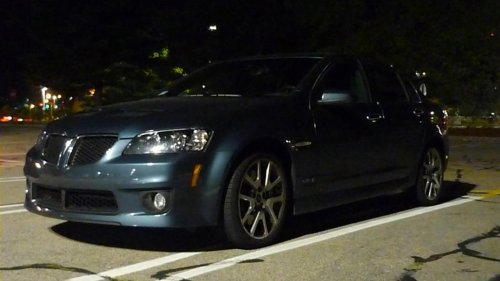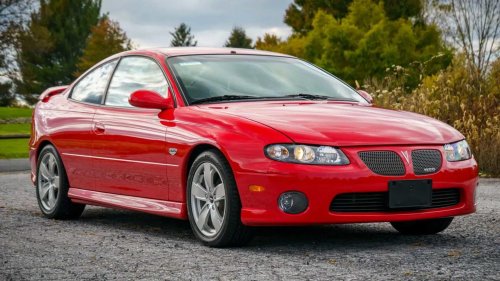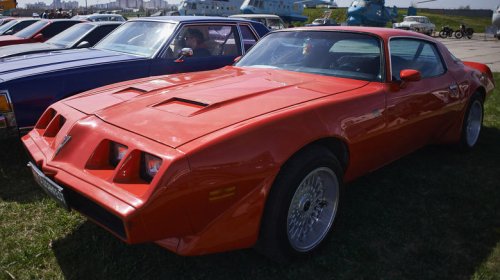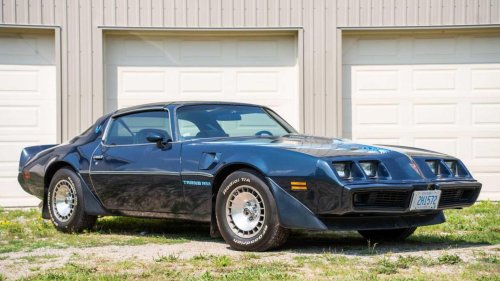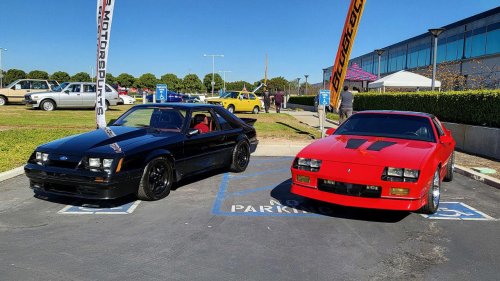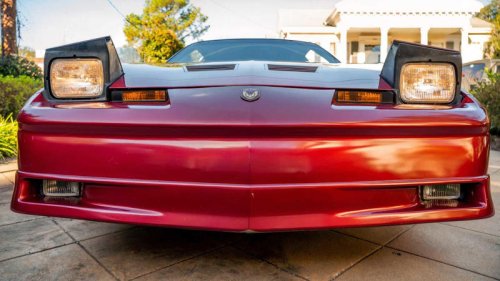
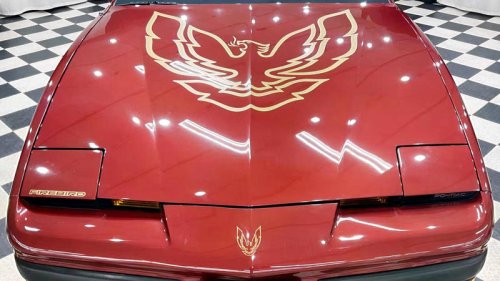
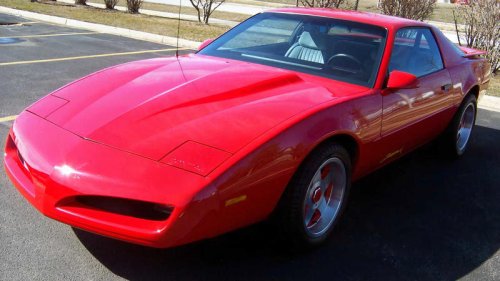
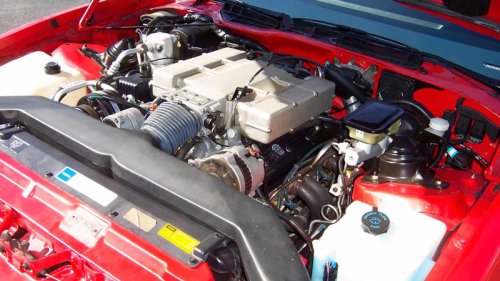
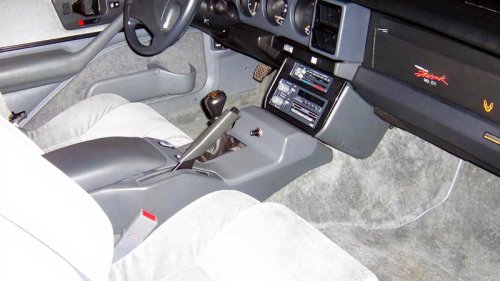
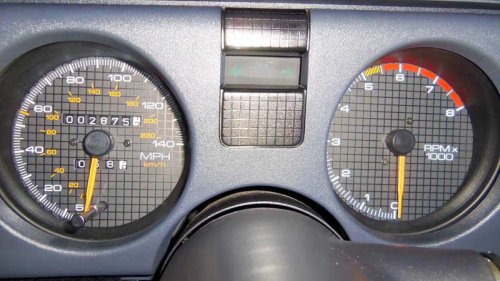
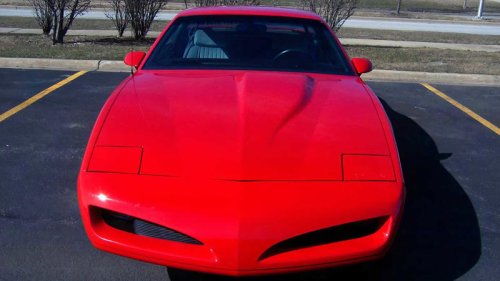
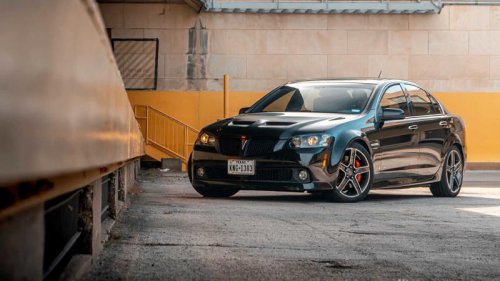
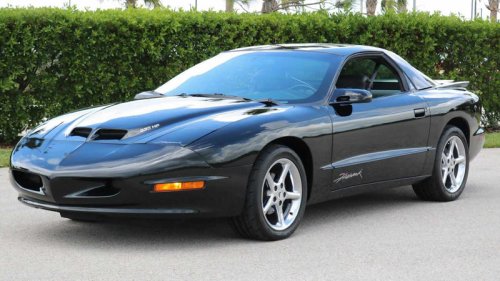
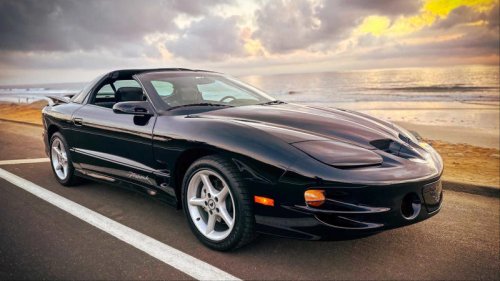
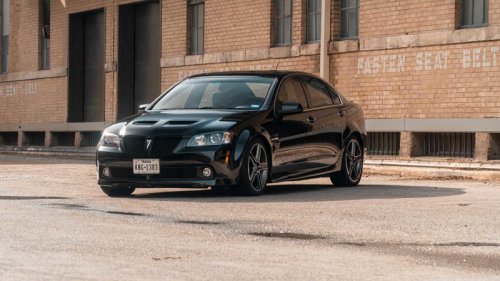
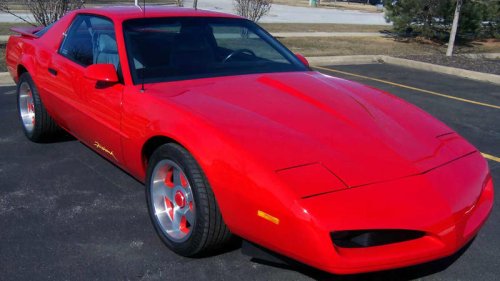



















Everyone seems to have an opinion about the Pontiac Firebird, and for the record, ours is that it was a pretty sweet ride. Well, for the most part. With more than 2 million examples built across four generations in a production run that spanned from the 1960s to the early 2000s, the Firebird was and still is one of the most recognizable cars on American roads. As you'd expect from a car with that kind of staying power, Pontiac built multiple special versions over the years, including cultural icons like the 1977 Firebird Trans Am Special Edition, whose starring role in Smokey and the Bandit earned it worldwide fame and recognition.But while most enthusiasts can usually spot a Firebird from a mile away, and many can name its more famous special edition variants on sight, a few versions slipped through the cracks and now even lifelong Pontiac guys would struggle to identify them. Some were built in tiny numbers, some arrived at the wrong moment, and some never got the attention their performance deserved. The 'Bird we're discussing today belongs in that category of overlooked Firebirds, even though it played a central role in rebuilding Pontiac's performance image after a difficult 1980s decade. It came from the third generation, a chapter often dismissed as the weakest in the Firebird story, yet it hid one of the most interesting and often forgotten machines ever to wear the badge. The Third Generation Was A Dark Chapter In The Firebird's History via Bring A TrailerDebuting in the 1982 model year, the third-generation Firebird arrived at the worst time possible for an American performance car. After a decade marked by tightening emissions and safety regulations, not to mention two oil crises, industry-wide performance was at a low point, and both manufacturers' and buyers' priorities had shifted. This generation also debuted right after Pontiac had discontinued its V8 engines, leaving various forms of Chevy's 305 as the Firebird's range-topping engine for several years. It was a dark period, but there was some light at the end of the tunnel, and Pontiac executives knew it.While Pontiac prioritized fuel efficiency over performance at the start of the third generation, even offering the woeful 90-hp "Iron Duke" four-pot as the entry-level Firebird engine, the engineers ensured that it had a modern platform that was capable of handling a lot more power than was available at the time. A huge step up compared to its predecessor, the third-gen Firebird had major improvements, starting with its aerodynamic design. It was sculpted in the wind tunnel and featured a low-slung body with hidden headlights, a functional rear spoiler, and other aerodynamic enhancements that helped make it one of GM's most aerodynamic cars of the era, with later Trans Am configurations reaching a drag coefficient as low as 0.29. The third-generation Firebird also lost about 500 pounds compared to the second-generation version and gained a more advanced and aggressive suspension system with MacPherson struts up front and coil springs in the rear, and stopping power was improved by new 10.5-inch power disc brakes on the front wheels.Via Mecum AuctionsThe most powerful engine you could get in the 1982 Firebird was the Trans-Am-exclusive 305 cubic-inch Chevy V8 cranking out 165 hp, but as the decade progressed, engineers found clever ways to extract more power from the engines without breaking the rules, and the Firebird started gaining more power and speed, just as Pontiac had anticipated. The 1989 Turbo Trans Am marked a turning point for the third-gen Firebird in the performance department. Built to celebrate the Trans Am's 20th anniversary, the 1989 TTA used a Buick-derived, turbocharged 3.8-liter V6 specially adapted for the car, and with a 0-60 of just 4.6 seconds, it was one of the quickest American production cars of the day. As fast as the TTA was, an American tuning company called Street Legal Performance (SLP) felt that the third-generation Firebird had more potential, so they partnered with Pontiac to create the rarest, fastest, and most extreme factory-backed version of the third-generation Firebird — the 1992 Firebird SLP Firehawk. Let's dive in! 1992 Pontiac Firebird SLP Firehawk: The Corvette Killer That No One Remembers Via Mecum AuctionsEstablished by Hall of Fame drag racer and entrepreneur Ed Hamburger, SLP made a name for itself in the 1980s as one of the first aftermarket companies to develop a fully integrated performance package that met all OEM and strict environmental standards while significantly boosting horsepower. In the early 1990s, SLP saw an opportunity to inject more performance into the third-generation Firebird platform just before it bowed out. The Firebird Formula was selected as the base for the project, and buyers who selected "RPO B4U" on the order form got the SLP treatment.SLP chose the Formula because it offered the best power-to-weight ratio in the Firebird lineup, especially when compared to the luxury flagship — the Trans Am. Not just any Formula was picked, though. To qualify for a B4U Firehawk conversion, a customer had to order a Formula with a specific set of factory equipment, including the top-tier 350 cubic-inch "L98" V8 and the 1LE performance package. A Bright Red paint job was also a requirement, but SLP sold a few units in other colors. SLP originally wanted to build 250 cars, but plans changed. It Was A Powerhouse Via Mecum AuctionsFrom the factory, a 1992 Firebird Formula 350 with the L98 made about 240 hp — decent power for the time, but nowhere near the power levels the Firebird had just two decades earlier and certainly nowhere near the level SLP envisioned. To convert the Formula into the Firehawk, SLP retained the stock block but designed upgrades like a forged steel crankshaft, lightweight cast aluminum pistons, special connecting rods, ported aluminum cylinder heads, and a free-flowing intake system with two air cleaners. The engines were built by GM according to SLP specifications. With an output of 350 hp and 390 lb-ft of torque, a monster was starting to take shape, but power was just one piece of the puzzle.To ensure it could handle the power, SLP also equipped it with the ZF 6-speed manual used in the C4 Corvette ZR-1, paired with a carbon fiber clutch, and routed the power to a Dana 44 rear axle with 3.54 gears and Positraction via a lightweight aluminum driveshaft. While the car retained the stock 1LE suspension, SLP added 17-inch Ronal aluminum wheels wrapped in beefier P275/40ZR17 Firestone Firehawk SZ tires. Total MSRP was around $39,995, making the Firehawk far more expensive than the Formula it was based on. The Competition Package Took Things A Notch Higher Via Mecum AuctionsThe Firehawk looked ready to dominate stoplight-to-stoplight battles, but for buyers who wanted a track weapon straight from the factory, the optional Competition Package was available for a cool $9,995. It added cross-drilled 13-inch Brembo front brakes from the iconic $400,000 Ferrari F40, a 6-point roll bar, a lightweight aluminum hood, rear-seat delete, and a Recaro driver's seat with a Simpson 5-point harness. Passenger-side competition seating could be added separately.With a total price of around $50,000 with the Competition Package, the 1992 SLP Firehawk cost more than twice the car it was based on and was more expensive than the standard C4 Corvette. Considering the performance hardware it had from the factory and the fact that SLP's installed components were covered by a 12-month/12,000-mile warranty, it's easy to see why Pontiac and SLP believed there was room in the market for a car like this. It Could Outrun Genuine Sports Cars Via Mecum AuctionsThe 1992 SLP Firehawk was a performance titan, specifically engineered to boost Pontiac's performance image by outperforming the era's most respected sports cars. At its release, it was arguably the fastest street-legal Pontiac ever produced, rivaling European exotics and American halo cars alike, with period tests recording 0–60 times as low as 4.6 seconds and quarter-mile passes in 13.2 seconds at 107 mph.These numbers put it ahead of exotics like the Ferrari 348ts, Porsche 911 Carrera (964), and Acura NSX, yet you never really hear much about the Firehawk. Even domestically, the SLP Firehawk put up similar numbers to the Corvette ZR-1, but Chevy's flagship cost nearly $25,000 more. All of a sudden, its price tag looked like a bargain. Why No One Remembers It Via Mecum AuctionsThe 1992 SLP Firehawk is a stylish Pontiac with enough punch to run with some of the most famous exotics of its era, plus the kind of rarity collectors love. Unfortunately, it doesn't get the respect and recognition it deserves, and there are several reasons why. For starters, the RPO B4U option that buyers had to select to get the SLP Firehawk was not publicly advertised by Pontiac, and many dealers did not even know it existed. It was an insider-knowledge situation.The other reason is its scarcity. SLP originally planned to build 250 units, but an astronomical sticker price and a tough economic climate resulted in only about 25 cars built, making it one of the rarest Pontiacs ever. The Firehawk also arrived right at the tail end of the third-gen Firebird, which means it had too little time in the spotlight to make a name for itself. The SLP-Pontiac Partnership That Birthed Legends Bring A TrailerAfter years of learning the tricks of the horsepower trade by selling speed parts to racers, Ed Hamburger established SLP in 1987 to create emissions-legal performance parts for American performance cars. The 1992 Firehawk was SLP's first complete car, and even though it was an expensive sales flop, it proved to Pontiac that SLP could build world-class, emissions-legal performance cars.After the costly but successful 1992 'experiment', Pontiac decided to continue the partnership because SLP provided a way to build excitement and enhance its performance image without the massive R&D costs of a factory-led program. SLP became a high-volume supplier for Pontiac and moved just down the road from the GM plant, allowing them to process cars more efficiently. However, they pivoted to a more affordable approach for the fourth-generation Firebird and other Pontiac models. We have highlighted some of the notable ones. 1997 Firehawk LT4 Bring A TrailerWhile SLP started converting fourth-gen Firebirds in 1993, we have highlighted the 1997-only LT4 because it was truly special. Considered to be the holy grail Firehawk of that generation, the LT4 came about when SLP convinced GM to let them use the Chevrolet Grand Sport's LT4 engine in the Firebird to celebrate its 30th anniversary.GM obliged, and SLP equipped 29 Firebird Formulas with the Corvette's high-revving, blue-painted LT4 engine. With an output of 330 hp and 340 lb-ft, the 1997 Firehawk LT4 was quicker than the standard Corvette of the same year, and with such rarity, it is no surprise that collectors love it. 1999–2002 SLP Firehawk Bring a TrailerThis particular model marked a key chapter in the Firehawk's story, as it was the first time SLP offered the Firehawk package in the top-of-the-range Trans Am and not just the Formula. It came just after GM introduced the all-aluminum LS1 engine in the C5 Corvette, giving SLP a chance to achieve the Firehawk's performance peak.The LS1 produced up to 345 hp depending on the exhaust option, allowing the Firehawk to reach the performance heights SLP desired. This particular iteration spawned roughly 3,500 units from 1999 through 2002, which is why it's far easier to acquire than the 1992 version. 2009 Pontiac G8 Firehawk Bring A TrailerThe 2000s were tough for Pontiac, and the marque had pivoted to a business model of selling Holden-derived models. The G8 was an Australian-built sedan that Pontiac hoped would help revive sales, and SLP saw it as the perfect platform to create a super sedan, especially with the high-performance GXP trim. SLP launched the 2009 Firehawk on the G8 GT, though a small number of GXP-based examples were also built. In total, 29 G8 Firehawks were produced, including only nine GXP examples.SLP's headline version used the G8 GT's 6.0-liter V8 and added a supercharger, cold-air induction, and a freer-flowing exhaust system to raise output to 500 hp and 489 lb-ft of torque. With a 0-60 mph time of around 4.0 seconds, the G8-based Firehawk was one of the wildest late-era Pontiacs. Sadly, GM discontinued Pontiac shortly after. 1992 Formula Firehawk Collectibility Today Via Mecum AuctionsSource: Hagerty Valuation ToolThe 1992 Firehawk is a rare 1990s performance car with incredible performance hardware that allowed it to eclipse exotics for half the price. It is a recipe that usually translates to exceptional auction prices, but that is not the case for the 1992 Firehawk. Average prices for a 1992 SLP Firehawk hover around the $54,000 region, but the market is thinly traded, so values are difficult to pin down precisely. But with such rarity, well-maintained units with proper documentation could one day become blue-chip collector cars.The 1992 SLP Firehawk is a testament to the great things that can happen when aftermarket visionaries like Ed Hamburger collaborate with a major manufacturer to push the boundaries of what a factory car can achieve. It was sharper than many remember, rarer than most realize, and proof that even in an era better known for compromise, Pontiac and its partners still knew how to build something genuinely exciting.Sources: Hagerty Valuation Tool, Car and Driver, Hot Rod