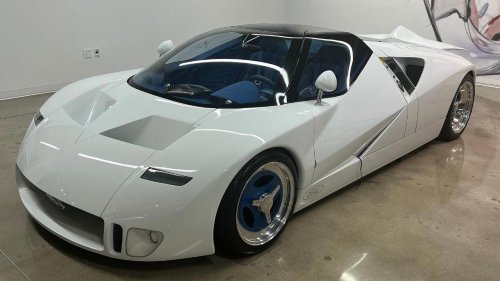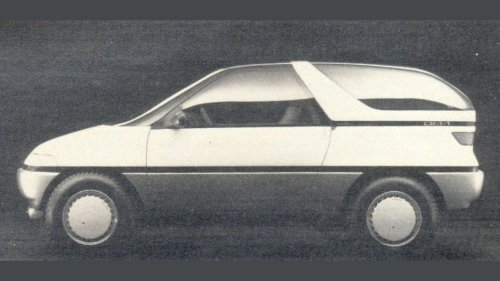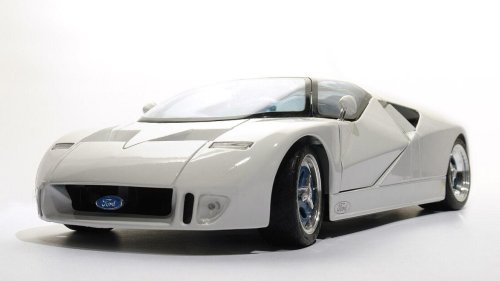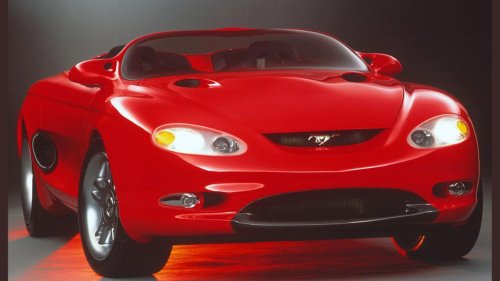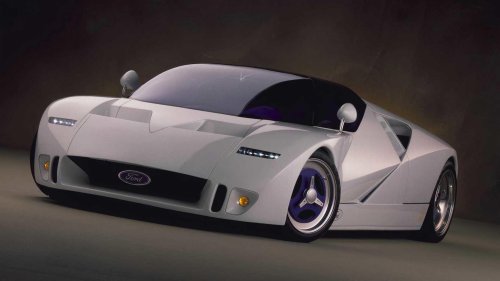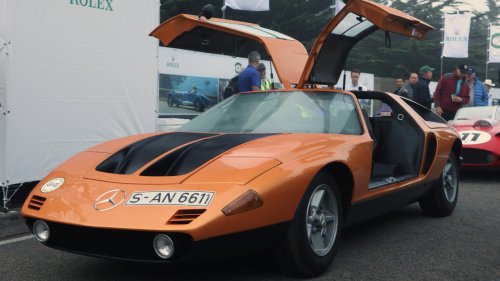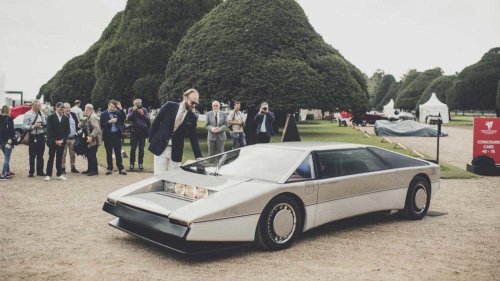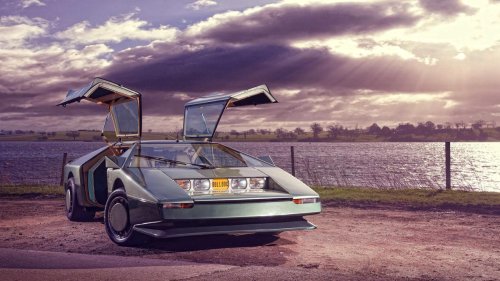
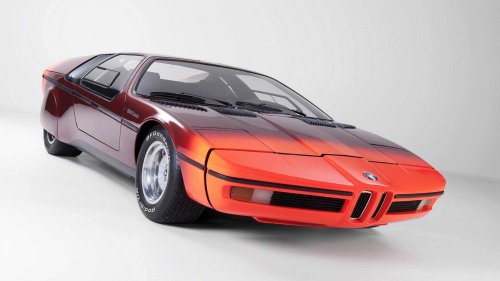
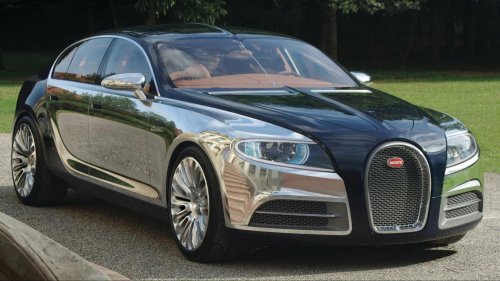
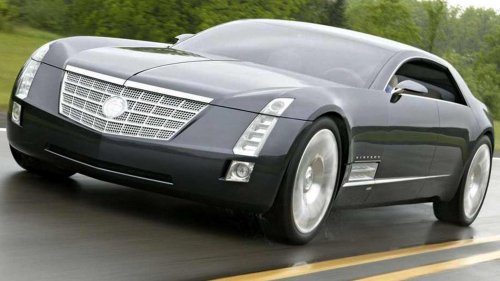
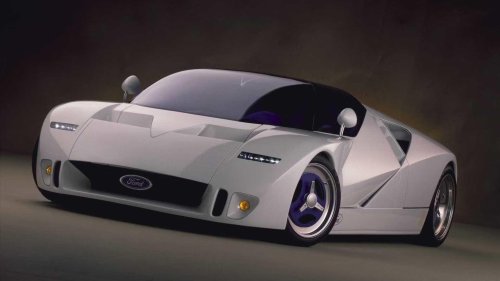
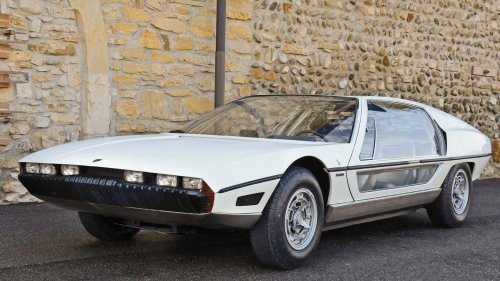
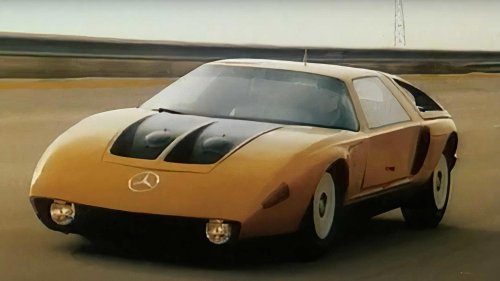
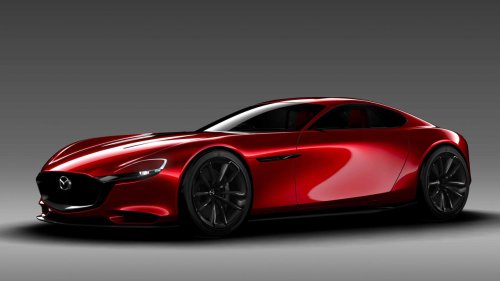
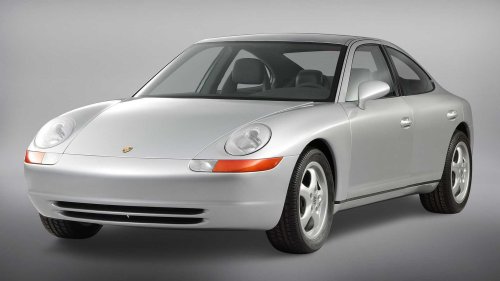
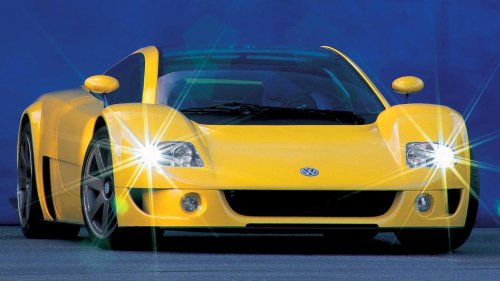


















Concept cars do a few different jobs. Some test wild tech, some tease a new design language, some are pure fantasy, and some exist to preview a real model… until the plan dies. Through the ’60s, ’70s, and ’80s, automakers built stunning concepts that looked like tomorrow but never reached the line, and that trend continued in the 90s and the new century. Enthusiasts still talk about them online because the stance was right, the surfaces were daring, and the ideas felt fresh. You look at these cars and think: that should’ve been in showrooms.Here’s the twist for this list: it isn’t about lap times or top speed. It’s about presence, proportions, and the emotional punch – then tempered by real-world plausibility. These are cars that looked production-ready enough to sell, not vaporous sculptures. You’ll see a spread of decades and badges, and the focus stays on the look and the “want it now” factor.The 10 picks below are listed alphabetically by brand (one per brand). Each one: (1) debuted as a functioning prototype or a fully realized design study that could plausibly be homologated; (2) influenced later road cars or showcased usable tech; and (3) holds strong design credibility today. For most entries, we evaluated where the car could've been positioned in terms of price and market position. Aston Martin Bulldog (1980) via Aston Martin The Bulldog was Aston Martin flexing. Think razor-edged wedge, five hidden headlamps, and proper gullwings. William Towns drew it with brutalist clarity, and the engineering team stuffed a twin-turbo 5.3-liter V8 behind the seats. Aston said 237 mph and period testing saw 191 mph at MIRA. The plan called for a small run, 15–25 cars, but the bills were savage and the project died, only one Bulldog exists. Years later, it crossed continents, got restored, and even took a Pebble Beach class win – proof the shape still stops time.Had Aston built it, pricing would’ve sat well above the 1980 Mercedes-Benz 450SL ($35,839 base) and even the Rolls-Royce Corniche ($140,925). That’s the company it kept: super-low volume, hand-built exotic with bespoke turbo hardware. BMW Turbo (E25) (1972) Via: BMW BMW’s E25 Turbo was the Munich manifesto – a low, mid-engine coupe with a safety-cell mindset, trick radar braking ideas, and a look that previewed late-’70s BMW surfacing. It set up the M1 spiritually – even if the tube-frame, powertrain, and timing changed. It ran, it toured the shows, and it felt like a real object, not a foam buck with wheels. You can read the lineage straight into the M1’s proportions and the brand’s future stance on high-speed stability and driver focus.Pricing, if built mid-to-late ’70s, probably would have mirrored the BMW M1, which launched near the end of the decade with a U.S. sticker in the $115,000 ballpark. For a low-volume composite body, mid-engine super-coupe from BMW, there wasn’t any cheaper way to do it then. It’s not hard to imagine E25s prowling Autobahns if the company had decided to chase its own halo earlier. Bugatti 16C Galibier (2009) Bugatti Bugatti asked a bold question: what if the world’s fastest brand built an ultra-luxury sedan? The 16C Galibier answered with a front-mounted, twin-supercharged 8.0-liter W16, all-wheel drive, and an interior that blended jewel-box materials with daily-usable packaging. It kept Bugatti drama – split clamshell hood, horseshoe grille, exposed engine bay – but wrapped it in a grand-touring fastback that looked as expensive as the rumored price tag. Early reports pegged the car around$1.4–$1.5M, and for years the rumor mill said it was happening, then not, then maybe again.Why it never happened? Internal second-guessing and changing corporate priorities. Bugatti bosses kept reshaping the design after customer clinics, and the sedan morphed away from the show car’s elegance. According to later accounts, VW leadership soured on the revised look, and Bugatti pivoted to what became the Chiron. The brand’s CEO at the time publicly closed the door on Galibier to protect Bugatti’s “purity” as a hypercar maker. Cadillac Sixteen (2003) Via: Cadillac Detroit swagger, turned up to V16. The Sixteen rolled into the 2003 Detroit show with a 13.6-liter jewel of an engine claiming 1,000 hp and 1,000 lb-ft, silk carpets, and enough hand-finished detail to make the Europeans glance over their shoulders. It wasn’t vapor: Cadillac built a running prototype, and media documented the engineering story behind that one-off V16. The clear target was the ultra-luxury set – Rolls-Royce and Maybach – where early-2000s sticker prices sat in the $330k–$430k range. A realistic production Sixteen would’ve needed to live in that money, likely mid-$300Ks and up.So why didn’t GM build it? Timing and priorities. The 2000s brought financial strain, and the business case for a low-volume flagship powered by a bespoke V16 got thin fast. Cadillac used the car as a compass for design – vertical lamps, crisp surfacing – and you can trace the aesthetic knock-on effects for years after. But the V16 dream never out-ran the balance sheet. For fans, the Sixteen remains the “what if” moment when an American luxury brand nearly went for the throne again. Ford GT90 (1995) Ford Motor Company If the 1990s supercar boom had a poster from Dearborn, this was it. The GT90 arrived with Ford’s “New Edge” design, quad-turbo 6.0-liter V12 (720 hp), and numbers that made headlines – 235 mph claimed. Built in a blur, the project borrowed from the Ford family parts bin and Jaguar know-how, and cost about $3 million to create as a single, drivable one-off. In contemporaneous testing and features, media treated it as a legitimate technology mule, not just a static showpiece.Production? Never seriously in scope. But had Ford tried, the sticker would’ve needed to rival the era’s exotics – Ferrari F50 launched at about $475k and the McLaren F1 at about $778k–$815k – to cover a carbon chassis, bespoke powertrain, and ultra-low volumes. Corporate reality said “no,” and Ford instead gave the world the 2005 Ford GT as the attainable halo. Still, the GT90’s origami shape and white-hot spec sheet live rent-free in every 90s kid’s memory. Lamborghini Marzal (1967) RM Sotheby's Where the Miura was a two-seat sculpture, the Marzal was a true four-seater grand tourer with all-glass gullwing doors and silver leather. It used a 2.0-liter inline-six made from half a Lambo V12, mounted transversely out back. The design language bled straight into the Espada production car, but the Marzal’s extravagance – the hexagon motifs, the skylight doors – stayed in dreamland. Watching it circle Monaco with Prince Rainier and Princess Grace locked it into pop history. Mercedes-Benz C111 (1969–1979) YouTube/ Motorvision Deutschland Mercedes used the C111 to try Wankel engines first, then brutal diesel record cars. The shape – low, cab-forward, with dramatic vents – looked like it could roll out of Sindelfingen tomorrow. It was a real testbed, too, with high-speed runs and hard data. Emissions, thirst, and the oil crisis killed the rotary dream, and Mercedes never sold it, but the C111 set the tone for the brand’s aero-heavy ’70s thinking.Where would a potential production car have landed? Above the SL, no question. Car and Driver pegged a 1980 450SL at $35,839 base and a C111 road model – exotic materials, unique powertrain – would have pushed at least $60,000 in late-’70s/1980 dollars. It would have been Stuttgart’s halo, not a mass model. Mazda RX-Vision (2015) Via mazda Every rotary fan held their breath in Tokyo when Mazda revealed the RX-Vision. It wasn’t wild, it was right – long hood, rear-drive proportions, and an achingly pretty body draped over a proposed Skyactiv-R rotary. Mazda spoke about bringing the rotary back, then walked that back, then circled it as a range-extender. Meanwhile, the RX-Vision collected design awards and lived on digitally as a GT3 concept in Gran Turismo. In metal, though, it remained a tease.Could it have sold? Absolutely. Mazda’s brand equity around “RX” is real, and a mid-$50k-$60k sticker against the Supra/Z/GR86 stack seemed plausible. But emissions, durability, and investment realities kept a pure rotary sports car on ice. Mazda still uses a small rotary as a generator in select markets, so the engine survives – just not the way RX diehards wanted. Porsche 989 (1988–1991) Porsche Before Panamera, Porsche tried a V8 four-door fastback called 989. It went far: clay shoot-outs, full-scale models, 928 mules, even a Mercedes 230CE hacked into a hidden 989 test car. The design language bled into the 996, and the idea (a practical Porsche with feel) basically waited until 2009 to land. Cancellation came in the early ’90s as costs spiraled and the market wobbled. Today, the prototype lives in museums as a “what if.”We actually have a period number: internal planning had the showroom price at no less than 150,000 Deutschmarks – punchy for 1991 – after sales projections fell and development costs climbed. In today’s money, that’s stout executive-express cash. The math didn’t work then, but the blueprint did. When Porsche finally returned to the idea, the world was ready for the Panamera. Volkswagen W12 Nardò (1997–2001) Via: HD Cars Before Audi’s R8 or Bentley’s W12s went mainstream, Volkswagen built a string of W12 concepts to prove the compact 12-cylinder architecture and show it could keep pace with the Italians. It culminated in the W12 Nardò, a sleek, mid-engine coupe that smashed endurance records – most famously averaging 200.6 mph for 24 hours at Italy’s Nardò ring. As a statement of engineering and durability, it was spectacular. As a business case for a VW-badged supercar, it was a bridge too far.Had it sold, the sticker would’ve landed in Murciélago territory. That car launched in 2001 with an MSRP around $273,000, and a limited-run VW supercar with a bespoke 12-cylinder would have needed similar or higher money to make sense. VW instead routed the W12 hardware upmarket into Bentley and fed the broader group’s performance aspirations. The Nardò’s records, plus its simple, clean surfacing, still make it a cult favorite.